


Madrid, Community of Madrid, Spain, is one of the European cities with the highest proportion of green areas per inhabitant, specifically 70 m² compared to the average of 20 m² in Europe. In addition, with nearly 300,000 trees, it is the second city in the world in number of these in the streets and walkways, only surpassed by Tokyo.
Two of the three regional parks existing in the Community of Madrid protect portions of the municipality of Madrid. More than a quarter of its area is protected by the Regional Park of the Upper Manzanares Basin, which includes the El Pardo mountain and the Soto de Viñuelas, natural spaces located to the northwest and north of the city centre, respectively. To the south, 783 ha are protected within the Regional Park of the Southeast.
Retiro Park is located in the heart of the city, and with 118 hectares, is one of the most significant places in Madrid. It is part of the so-called Landscape of Light, which in 2021 was added to the World Heritage list. It has numerous monuments and places of interest inside, such as the Crystal Palace, the Puerta de España, from Calle Alfonso XII, La Rosaleda, the pond and a large number of fountains. It also has the first statue in the world dedicated to the devil: that of the Fallen Angel.

Royal Botanical Garden is located next to the Prado Museum‘s art gallery. It has four terraced terraces, the Terrace of the Paintings, the Terrace of the Botanical Schools, the Terrace of the Flower Plan and the Terrace of the Laurels, which contain plants from America and the Pacific, as well as European plants. It is included within the Landscape of Light.
The Sabatini Gardens, in neoclassical style, are located on the north façade of the Royal Palace, between Calle de Bailén and Cuesta de San Vicente. They are located in the place occupied by the Royal Stables, which after their disuse gave way to the new gardens. Next to the Sabatini Gardens are the gardens of the Plaza de Oriente, on the east façade of the Royal Palace, where a sculptural group of great interest is located.
Madrid Río park is a new river park around the Manzanares River between the Puente de los Franceses and the Nudo Sur, and which is 121 ha and 6 km long. It connects some of the main green areas of the city and the central and southwestern districts. Some of its most notable areas are the Salón de Pinos, the Jardines de la Virgen del Puerto and the Jardines del Puente de Toledo. The continuation of the Madrid Río park is the Manzanares linear park, which runs parallel to the river between the districts of Usera, Puente de Vallecas, Villaverde and Villa de Vallecas; with a surface area of 530 ha, it is appreciated for its ecological value within the urban core.

Located in the district of Moncloa-Aravaca, Casa de Campo park is the true lung of Madrid, with an area of 1,722.60 ha. It is so large that it houses the Madrid Amusement Park, the Madrid Zoo, and the Cable Car that connects to the Parque del Oeste. Historically belonging to the Royal Family, the proclamation of the Second Republic meant that it was handed over to the people of Madrid in 1931, opening this forest park for the first time to the enjoyment of the people of Madrid.
El Capricho Park is located in the Alameda de Osuna, in the northeast of the city, and has an area of 14 hectares. It is considered one of the most beautiful parks in the city. Its highlights include the Plaza de El Capricho, the palace, the pond, the Plaza de los Emperadores, and the Fountain of the Dolphins and the Frogs.
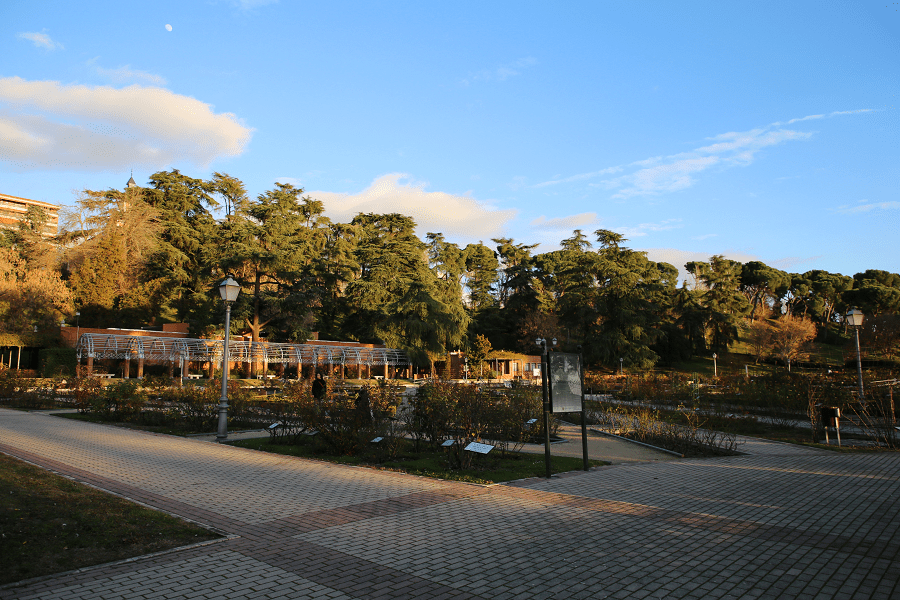
Quinta de la Fuente del Berro is located in the Salamanca district, and has an area of 13 hectares. It is a historic 17th century garden in a landscape style where a series of water elements (pond, river, waterfall and lake) are developed, which provide a romantic character. The peacocks that live freely and walk around the park and the surrounding streets stand out.
Parque Cuarto Depósito, opened in late 2004, is located at the northern end of La Costa Fleming, very close to Plaza de Castilla. It is built on the roof of the Cuarto Depósito water storage facility of Canal de Isabel II, currently in use.
Jardines de Las Vistillas or simply Las Vistillas is a secluded urban park Madrid located on the top and slopes of the old hill of Campillo de las Vistillas, on a natural balcony delimited to the west by the valley of the Manzanares River and to the north by the old bed of the San Pedro stream.

The Finca de Vista Alegre is a historic garden declared a Site of Cultural Interest, with an area of 45 hectares, located in the Carabanchel district. Built in 1802, it was the summer residence of Queens Maria Cristina de Borbón and Isabel II. Inside, the highlights are the Vista Alegre Palace, the Old Palace, the navigable estuary and its romantic surroundings.
The Parque del Oeste is located between the A Coruña highway, the Ciudad Universitaria and the Moncloa area. It has an area of 98.60 ha and contains species such as Lebanon cedars, poplars, lindens and beech trees. In addition, the International Competition of New Roses of the City of Madrid is held in the park every year. The Temple of Debod is located there.
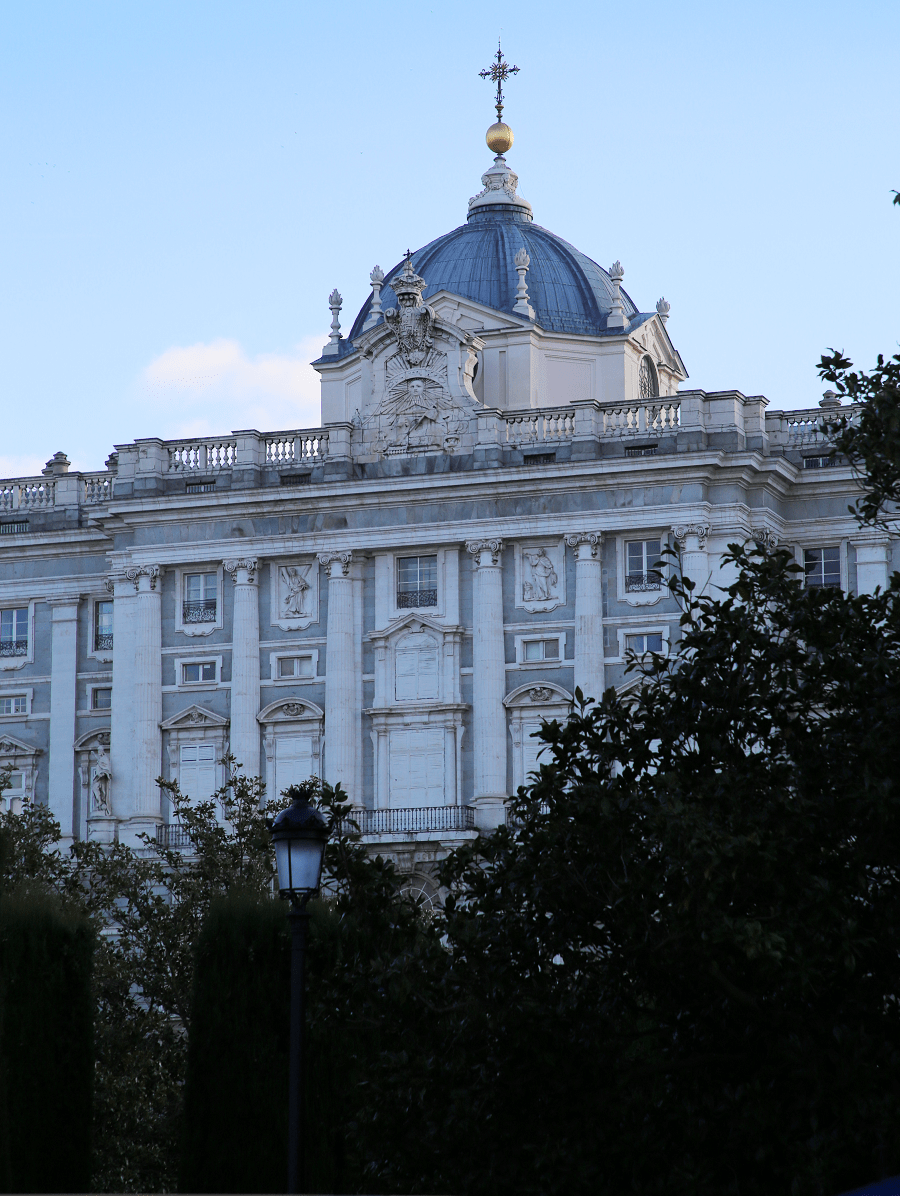
Montaña del Príncipe Pío is located between Plaza de España and the streets of Princesa, Marqués de Urquijo and Ferraz.
The Dehesa de la Villa is located to the northwest of the city of Madrid. Its main characteristic is that it maintains its condition of forest, and is mostly unlandscaped. The most common tree in the dehesa is the pine, of which there are six species, mainly stone pines and holm oaks. Among these there are many other species such as oaks, acacias and cypresses. The most common birds are, as in the rest of the city, pigeons, sparrows and magpies. Other species that are frequently seen are the hoopoe, the woodpecker and the robin.

The Pinar de San José park is located in the Peseta neighbourhood, west of the city of Madrid. Its main characteristic is that it maintains its condition of an unlandscaped forest. In the Pinar de San José there are still thousands of stone pines that were planted in 1906 by the Order of San Juan de Dios. The most common birds in this pine forest are: starlings, hoopoes, wood pigeons, magpies, tree sparrows, Argentine parakeets, green woodpeckers, tree creepers, coal tits and blue tits. The Pinar de San José has an area of 27.03 ha, and could occupy 50 ha according to the current expansion project of the forest park.
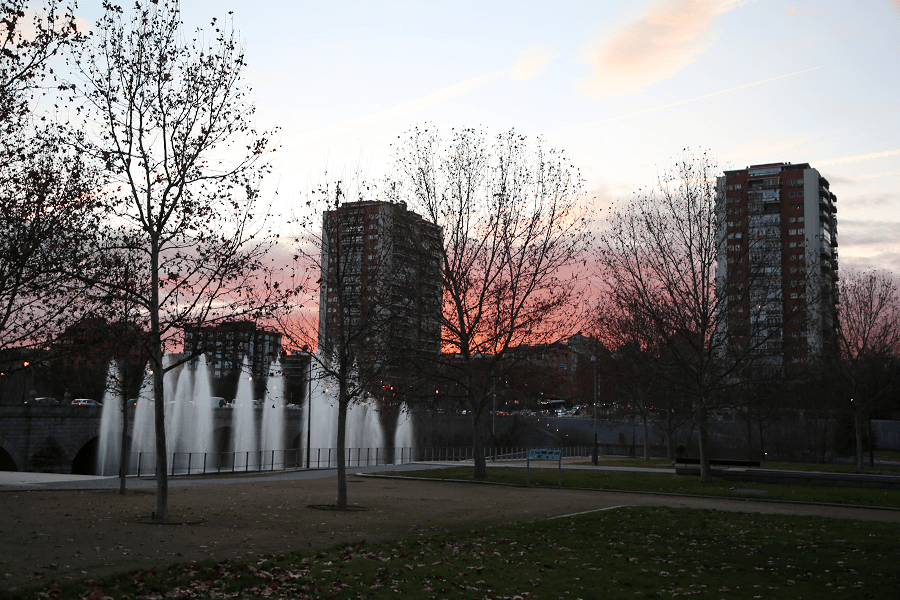
Quinta de los Molinos is located in the district of San Blas-Canillejas, with an area of 25 ha. It is a historic park that includes large areas of trees, in which the almond trees stand out, which flower in February and March, offering a fantastic spectacle.
Quinta de Torre Arias is located in the district of San Blas-Canillejas, with an area of 17 ha. Inside, the 16th-century palace and its gardens with 300-year-old oak trees stand out.

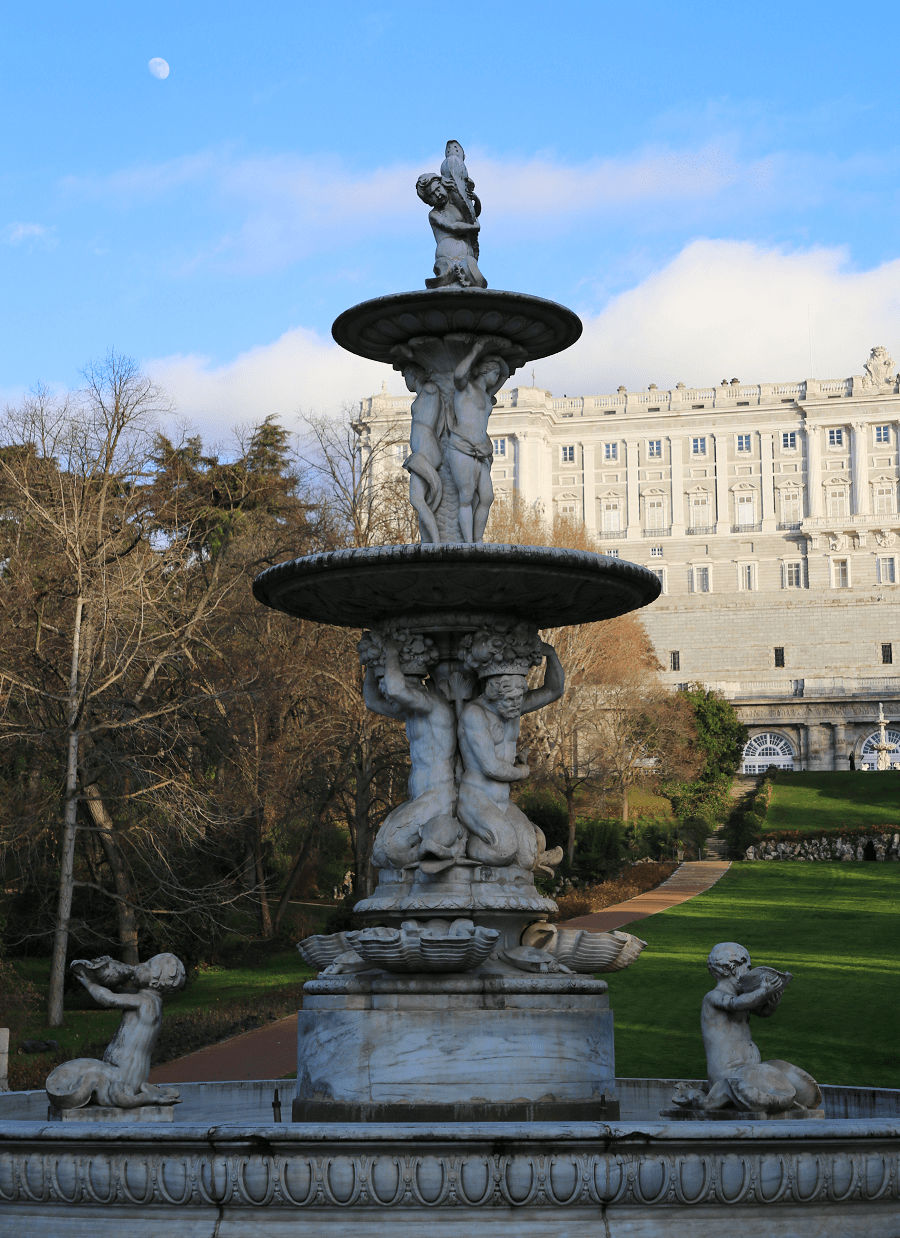
Campo del Moro is a historic park located in Madrid, designed in the 19th century during Queen Maria Cristina’s reign. Characterized by an English garden style and influenced by romanticism, it was initially challenging to design due to the height difference with the Royal Palace, which delayed its creation. Today, it stands as one of the most picturesque landscapes in the Spanish capital. The park’s name references a 12th-century event involving the Muslim general Ali Ben Yusuf, who sought to reconquer Madrid by attacking King Alfonso VI’s fortress from the banks of the Manzanares River. During this confrontation, the Muslim troops occupied the area, adding historical significance to the site.
The Valdebebas-Felipe VI forest park is located in the northeast of the city, in the Valdefuentes neighborhood. With 470 ha, it is the second largest park in the city after the Casa de Campo.
The Juan Carlos I Park is one of the largest in the city, with 220 ha. It is located next to the IFEMA exhibition center, where some of the most important annual exhibitions in Europe such as SIMO are held. Also noteworthy is the so-called Garden of the Three Cultures, with three garden areas representing the Christian, Jewish and Muslim cultures.
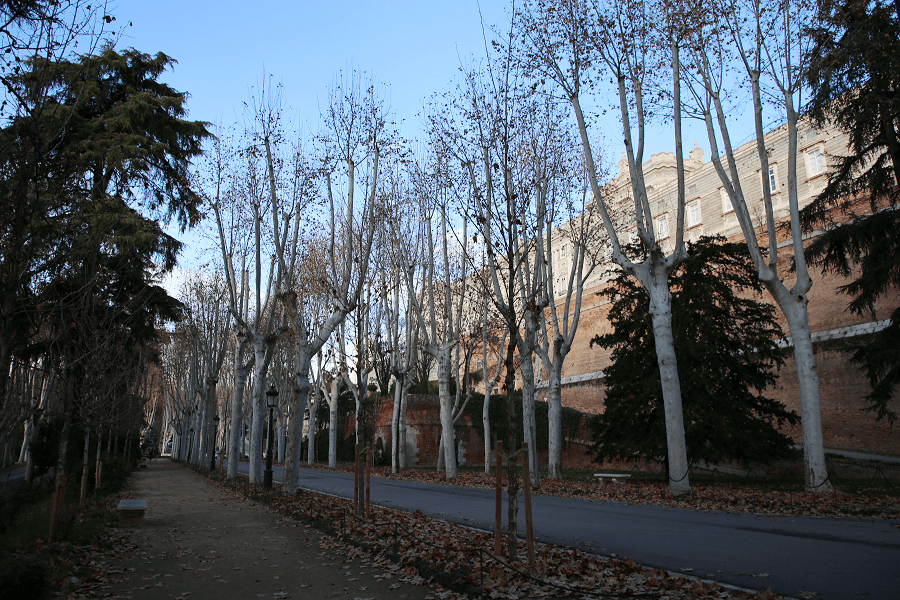
Enrique Tierno Galván park is located in the Arganzuela district, has an area of 45 hectares and is located next to the Planetarium and the Railway Museum (former Delicias station), with a beautiful image of earlier times.
Casino de la Reina park is, probably, one of the most unknown parks in the center of Madrid. It is very popular among the residents of Lavapiés and Embajadores, especially among young people, because of the basketball court that is also located there.

Madrid: full guide
- Administrative structure
- Architecture
- Churches and Cathedrals
- Entertainment
- Museums
- Shopping and markets
- Restaurants
- Squares
- Streets
- Transport
See here Pyrenees travel guide
See here France travel guide
See here Spain travel guide




