

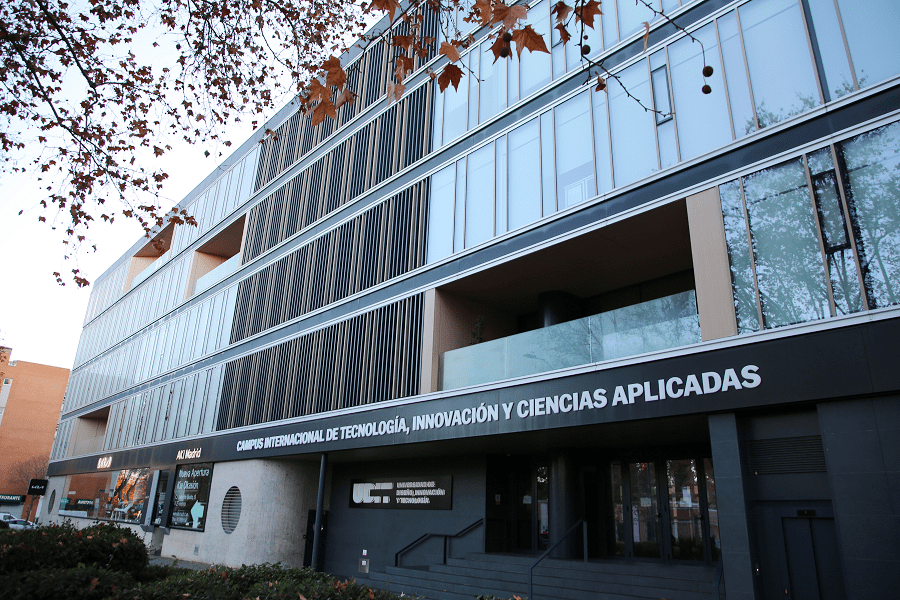
San Blas-Canillejas (formerly San Blas) is the 20th of the 21 districts that make up Madrid, Community of Madrid, Spain, administratively organized into the neighborhoods named Simancas, Hellín, Amposta, Arcos, Rosas, Rejas, Canillejas and Salvador.
It is bordered to the north by the districts of Hortaleza and Barajas via Avenida de América first and then the Autovía del Nordeste (A-2); to the east by the municipalities of Coslada (with which it shares Calle Rejas) and San Fernando de Henares, as well as the M-21 and M-214 motorways; to the south it is also bordered by the district of Vicálvaro via the R-3 motorway, Avenida de Canillejas a Vicálvaro and the M-40 ring road; to the west, it is bordered by the district of Ciudad Lineal via Calle de los Hermanos García Noblejas, Plaza de Alsacia, Plaza de Ciudad Lineal and Calle de Alcalá and Calle General Aranaz.
History
The Municipality of Canillejas, one of the oldest towns in the Community of Madrid, was annexed to Madrid on 24 June 1949. Unlike other districts of the capital that retained their historical names, such as Barajas, Vicálvaro, Carabanchel or Vallecas, Canillejas did not regain its name during the city’s administrative division into districts.
The district is named after the San Blas neighbourhood, which today is home to over sixty thousand residents. This neighbourhood originated from the Madrid Social Emergency Plan of 1957, which aimed to construct twenty thousand new homes in the southeast region of the city.
The Gran San Blas operation, initiated in 1958 by the Obra Sindical del Hogar, aimed to address workers’ housing needs in Spain. The project started with four plots and expanded to include directed and absorption villages, as well as charitable colonies constructed by future residents. It served as a concrete example of government solutions to the housing crisis faced by workers.
Despite being labeled as the “largest working-class neighborhood in Spain,” the reality for its initial residents—established couples with young children from rural areas—was challenging. They found themselves in small, poorly built houses lacking necessary facilities and urban infrastructure. However, the sense of community and solidarity among the residents fostered a civic movement that successfully advocated for improved conditions, resulting in the establishment of schools, parks, and essential infrastructure during the 1960s and 1970s.
The establishment of democracy in 1977 led to significant improvements in housing, with many plots remodeled and repaired. However, new challenges emerged in the 1980s, as the neighborhood faced high rates of youth unemployment, drug issues, and educational failure, exacerbated by overcrowded family environments.
Madrid initiated the construction of various infrastructures for the Olympic Games in anticipation of hosting the XXX and XXXI Olympiads in 2012 and 2016. However, after failing to secure the Games, significant projects like the Olympic Stadium and Aquatic Centre were halted despite earlier commitments to their completion.
In 2012, the Municipal Board of the District unanimously agreed to rename the district to San Blas-Canillejas, reflecting historical recognition of the former municipality of Canillejas that was merged into Madrid in 1949. This name change was formally approved by the Madrid City Council on September 26, 2012.
Education
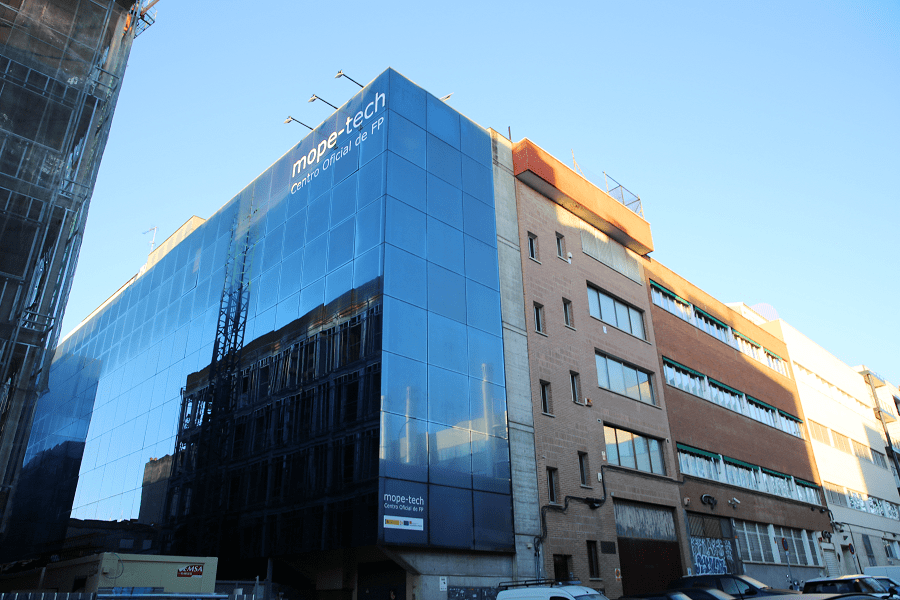
In the district of San Blas-Canillejas, there are 31 preschools (5 public and 26 private), 14 public infant and primary schools, 7 secondary schools and 13 private schools.
The secondary schools of the district met with the Municipal Board in the 2017-2018 academic year to form the RID, the Network of Institutes of the District of San Blas-Canillejas, and since then they have carried out some training actions with the students to improve coexistence in the district and in the educational centers.
The Mediation Commission of the RID facilitates participation from district institutes in School Mediation meetings and training for ESO students, involving support from Vocational Training Cycle students and teachers from IES San Blas. Alongside this, the Equality Commission, led by the District Equality Agent, organizes annual collaborations among district institute representatives to promote gender equality through shared activities on significant dates like November 25th and March 8th.
Additionally, a Sports Commission was established, engaging 1st ESO students from various centers in a Solidarity Race. Participants contributed non-perishable food items as registration for the event, which supported the Solidarity Pantry and the Food Bank, assisting unemployed individuals. The race culminated in a food donation to these organizations and a celebratory festival organized by students from all grade levels.
The Facultad de Óptica y Optometría (Faculty of Optics and Optometry) of the Complutense University of Madrid is located on Arcos de Jalón Street .
Transport
Madrid Metro line 2; there are three stations in the district:
- Alsacia: under Plaza de Alsacia.
- Avenida de Guadalajara: at the junction of Guadalajara and Canillejas avenues to Vicálvaro.
- Las Rosas: at the junction of Paseo de Ginebra with Calle de Suecia.
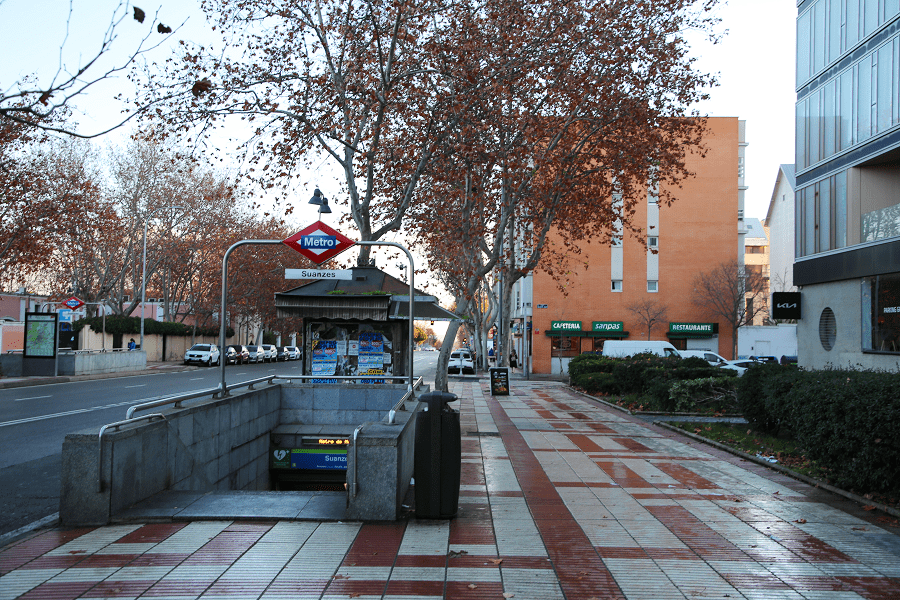
Madrid Metro line 5; there are four stations in the district:
- Ciudad Lineal: at the junction of Alcalá and Arturo Soria streets with Calle de los Hermanos García Noblejas.
- Suanzes: under Calle de Alcalá, next to Parque Quinta de los Molinos.
- Torre Arias: under Calle de Alcalá on the corner of Avenida de Canillejas to Vicálvaro.
- Canillejas: at the junction of Calle de Alcalá with the A-2 and Avenida de Logroño.
Madrid Metro line 7; There are five stations in the district:
- García Noblejas: at the confluence of Hermanos García Noblejas street and Luis Campos street.
- Simancas: under Arcentales Avenue, with access from Castillo de Uclés, Zaratán and Amposta streets.
- San Blas: under Pobladura del Valle street, next to Polígono F.
- Las Musas: on Niza Avenue on the corner of María Sevilla Diago street.
- Metropolitan Stadium: under the confluence of Arcentales Avenue and Estocolmo street, next to the Metropolitan Stadium.
Madrid: full guide
- Administrative structure
- Architecture
- Churches and Cathedrals
- Entertainment
- Monuments
- Museums
- Parks and gardens
- Restaurants
- Shopping and markets
- Squares
- Streets
- Transport
See here Pyrenees travel guide
See here France travel guide
See here Spain travel guide




