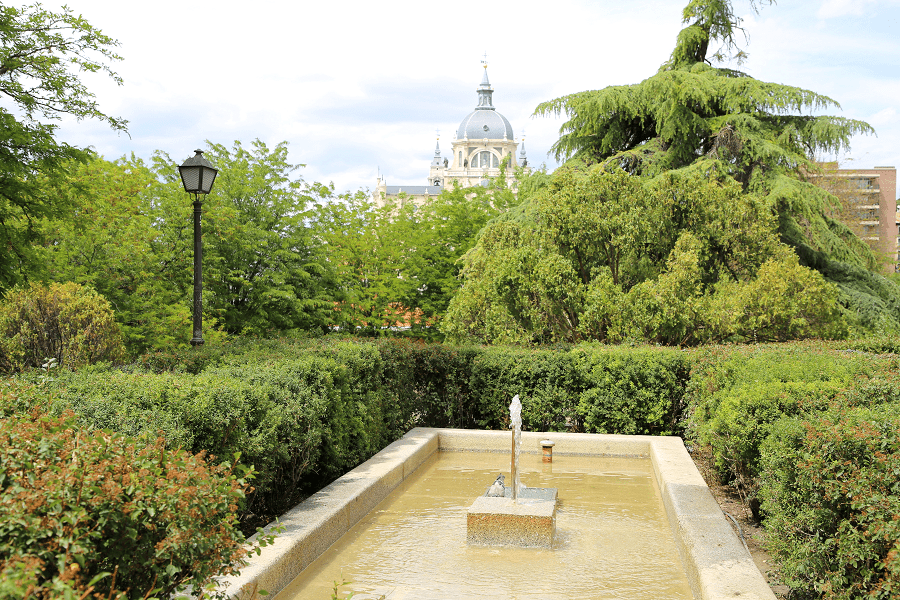
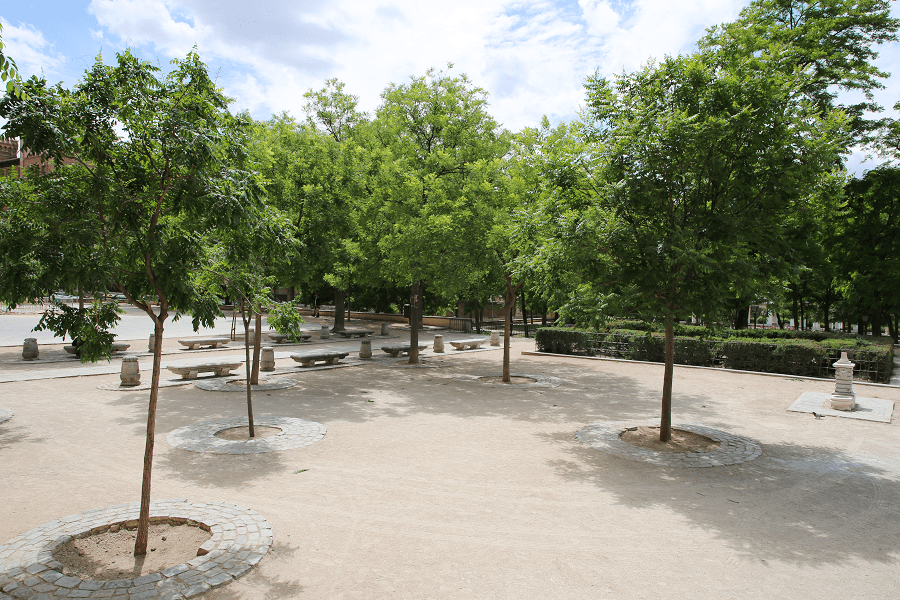
The Vistillas Gardens or simply Las Vistillas are a secluded urban park in Madrid, Community of Madrid, Spain located on the top and slopes of the old hill of the Vistillas camp, on a natural balcony delimited to the west by the valley of the Manzanares River and to the north by the old bed of the San Pedro stream, on which Segovia Street was projected. The southern limit is marked by Rosario Street and the eastern limit by the road axis formed by Bailén Street and San Francisco Street.
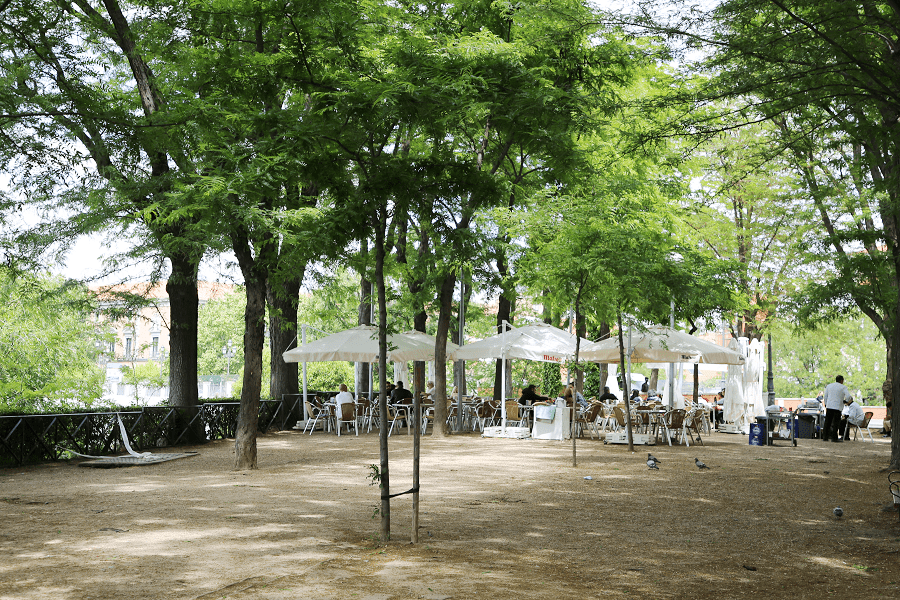
They have two very distinct sections. In its northern part are the Gabriel Miró Square and the garden areas laid out on the existing embankments next to the Segovia Viaduct. In its southern part, the gardens are called the Cornisa Park, so called because it is on the edge of the ravine overlooking the western facades of the monumental complexes of the Royal Basilica of San Francisco el Grande, the San Dámaso Ecclesiastical University and the Conciliar Seminary of Madrid.
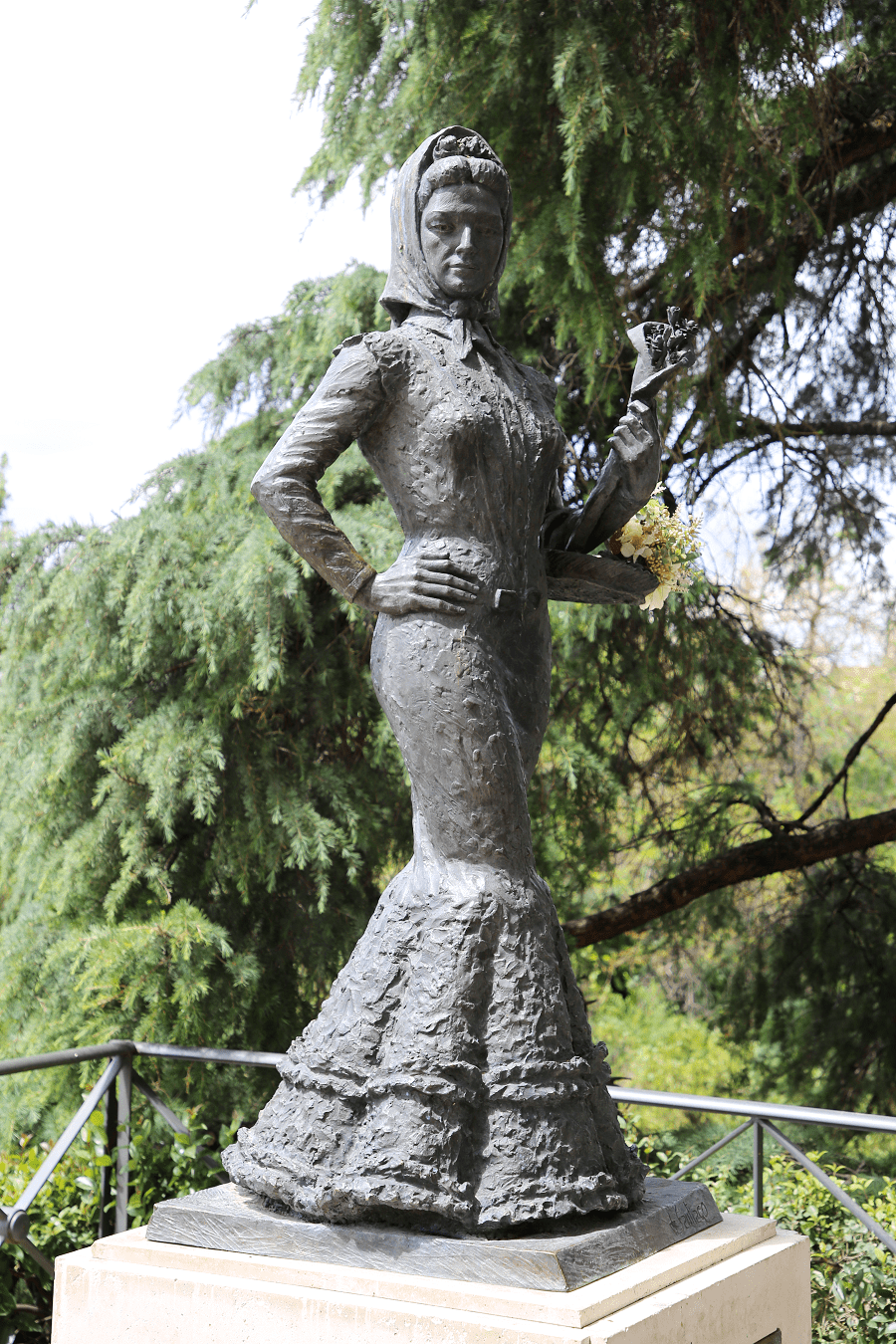
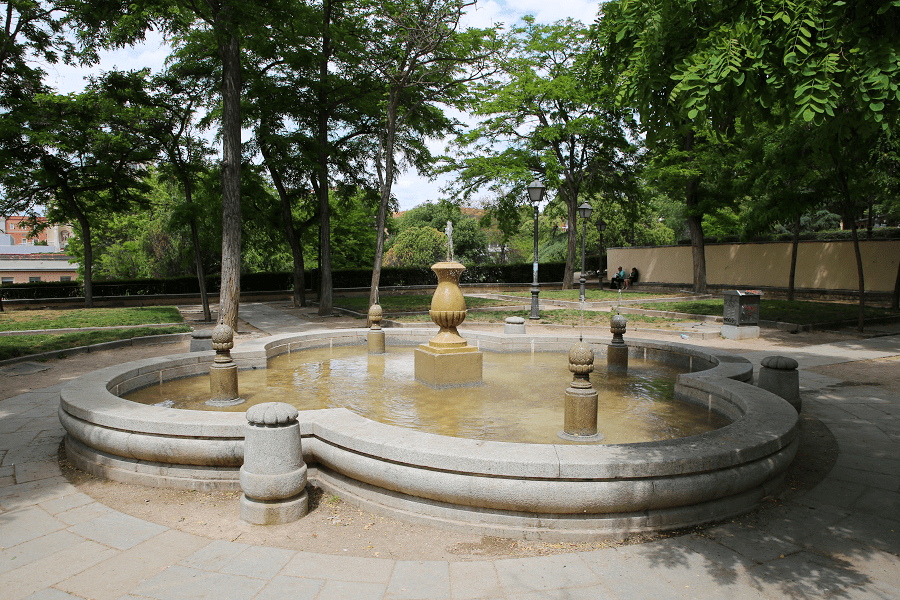
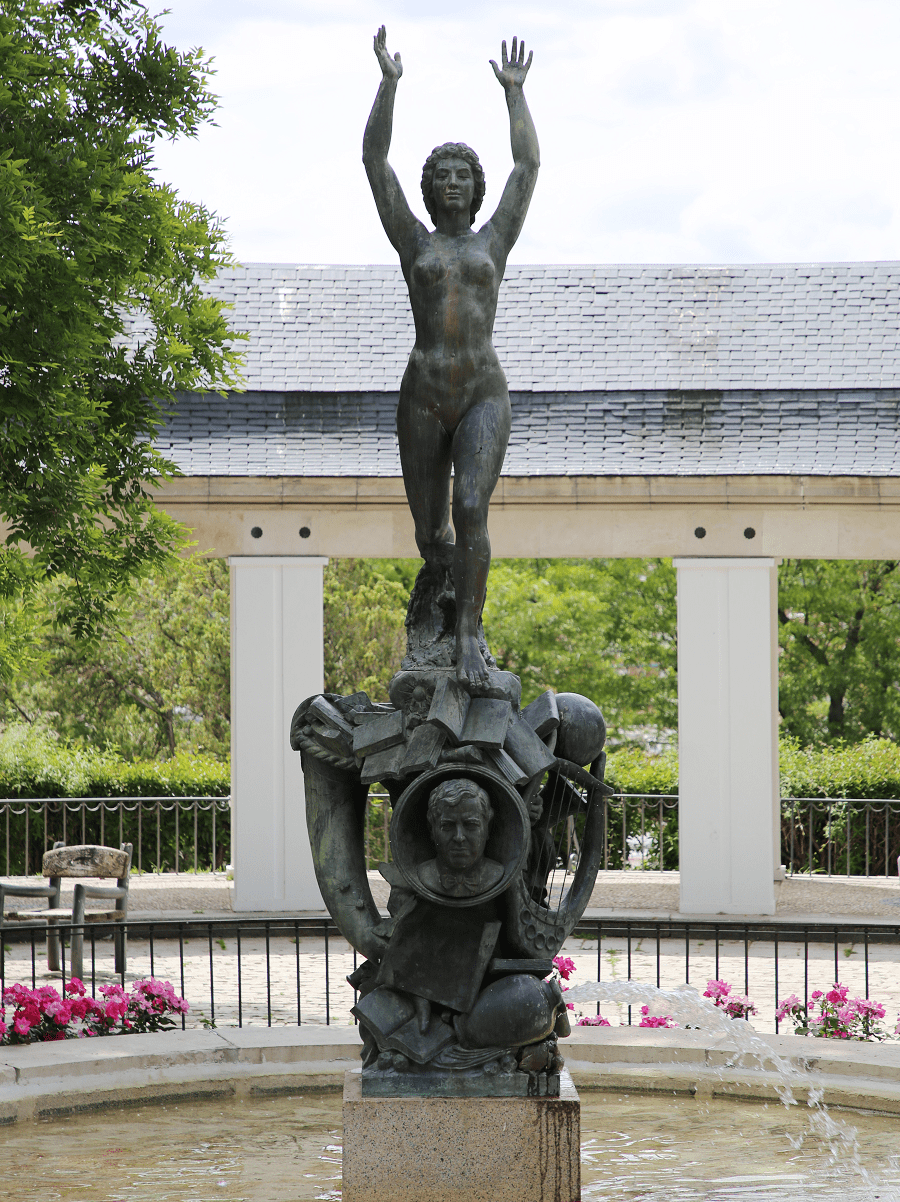
The gardens were designed in 1932 by the architect Fernando García Mercadal and remodelled in 1945 by Manuel Herrero Palacios. They occupy the highest part of the Las Vistillas hill and are distributed in two stepped platforms. The highest platform is almost rectangular in shape and is surrounded by a low wall. A lobed fountain decorates its central part and, on either side, there are two monuments: a bust dedicated to Ignacio Zuloaga, carved in limestone by Juan Cristóbal González Quesada in 1947, and the sculpture known as La violetera, a work by Santiago de Santiago Hernández (1925), which was originally located at the junction of Calle de Alcalá and Calle Gran Vía and was moved to the square on 13 June 2003.
Madrid: full guide
- Administrative structure
- Architecture
- Churches and Cathedrals
- Entertainment
- Monuments
- Museums
- Parks and gardens
- Restaurants
- Shopping and markets
- Squares
- Streets
- Transport
See here Pyrenees travel guide
See here France travel guide
See here Spain travel guide