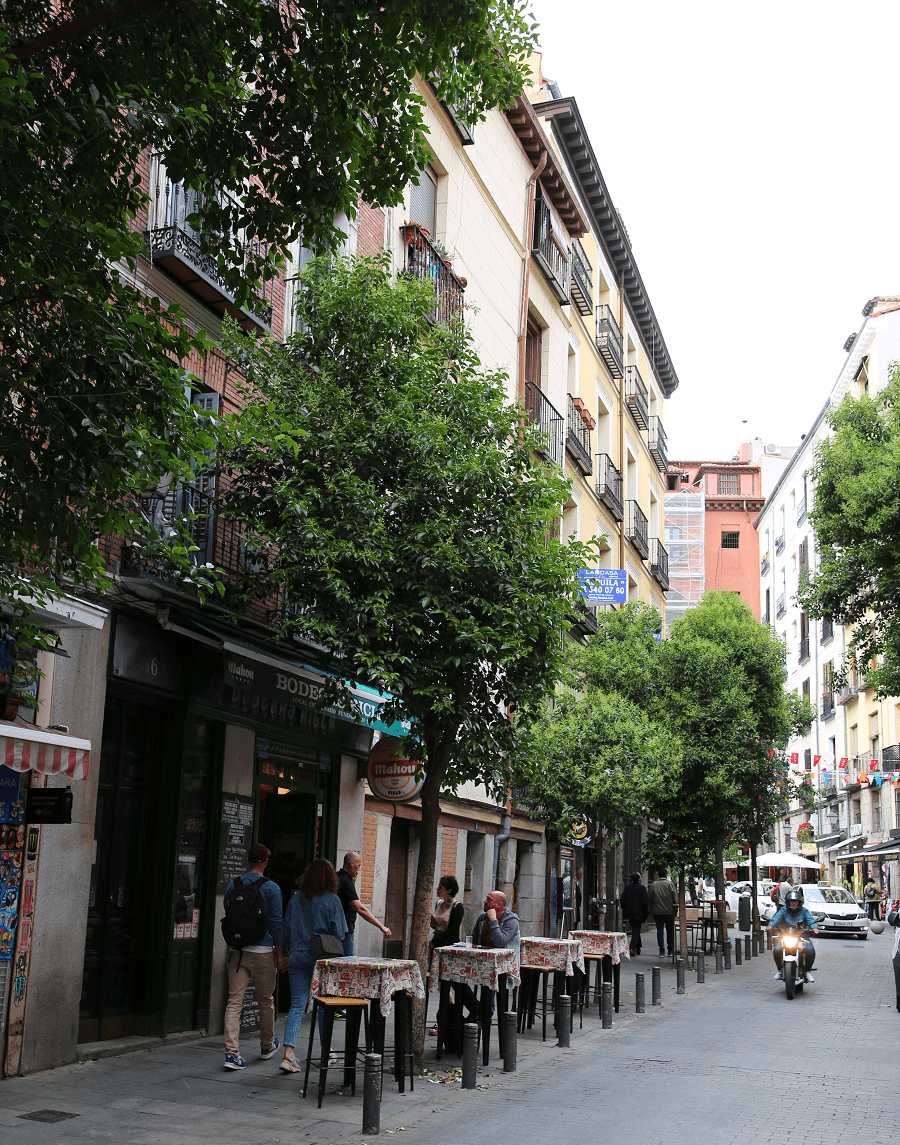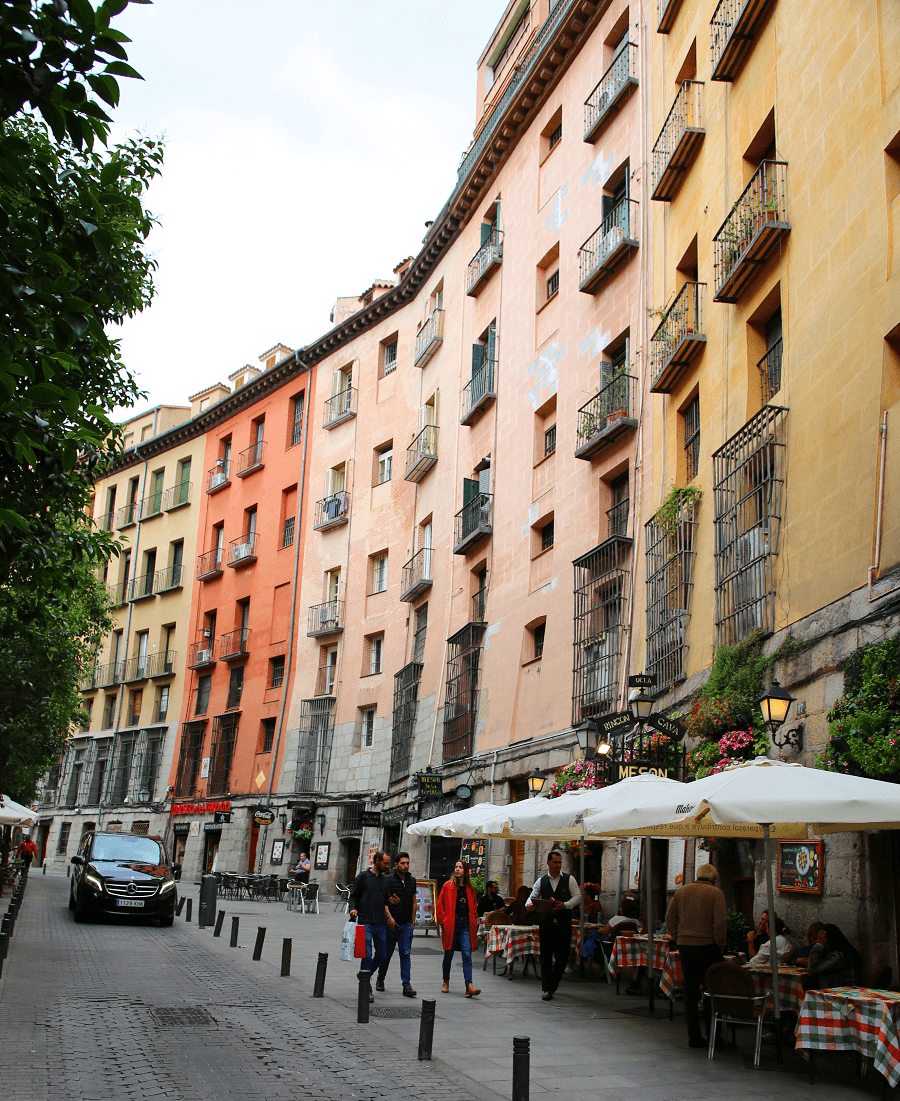
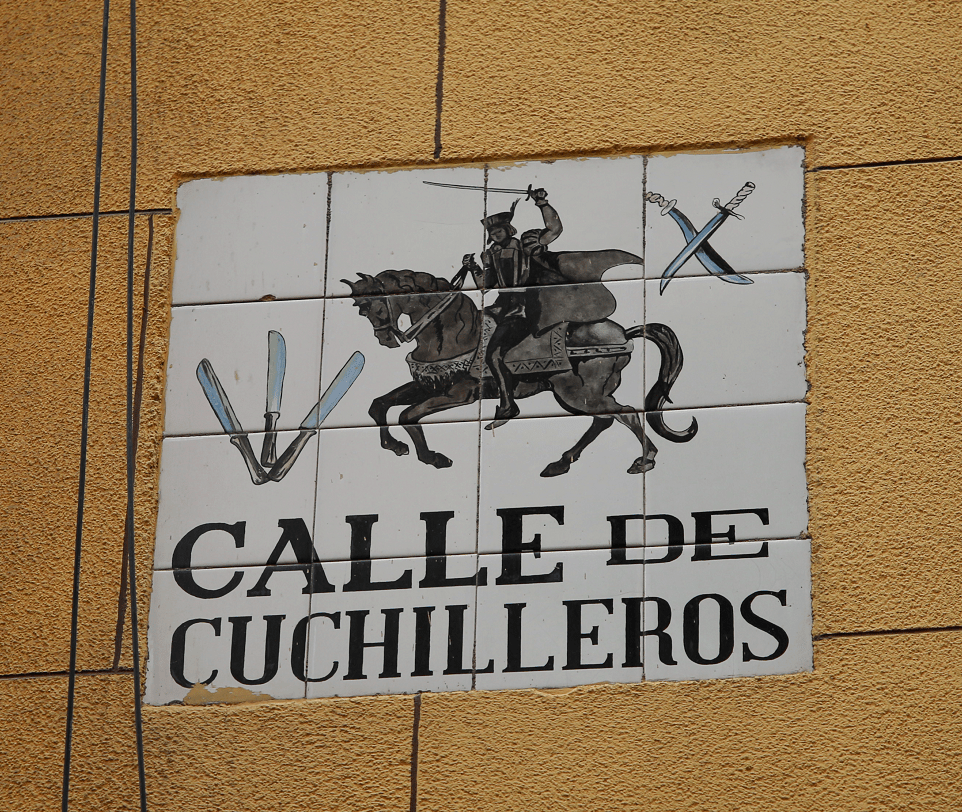
Cuchilleros Street is a public road in Madrid, Community of Madrid, Spain, located in the Embajadores neighborhood of the Centro district, which runs, in a north-south direction, from the San Miguel cave, next to the Cuchilleros arch (at the foot of the Plaza Mayor), to the Puerta Cerrada square.
It is part of the Puerta Cerrada moat or cave that ran at the foot of the wall. It is named after the guild of cutlers established there since the 17th century.
History
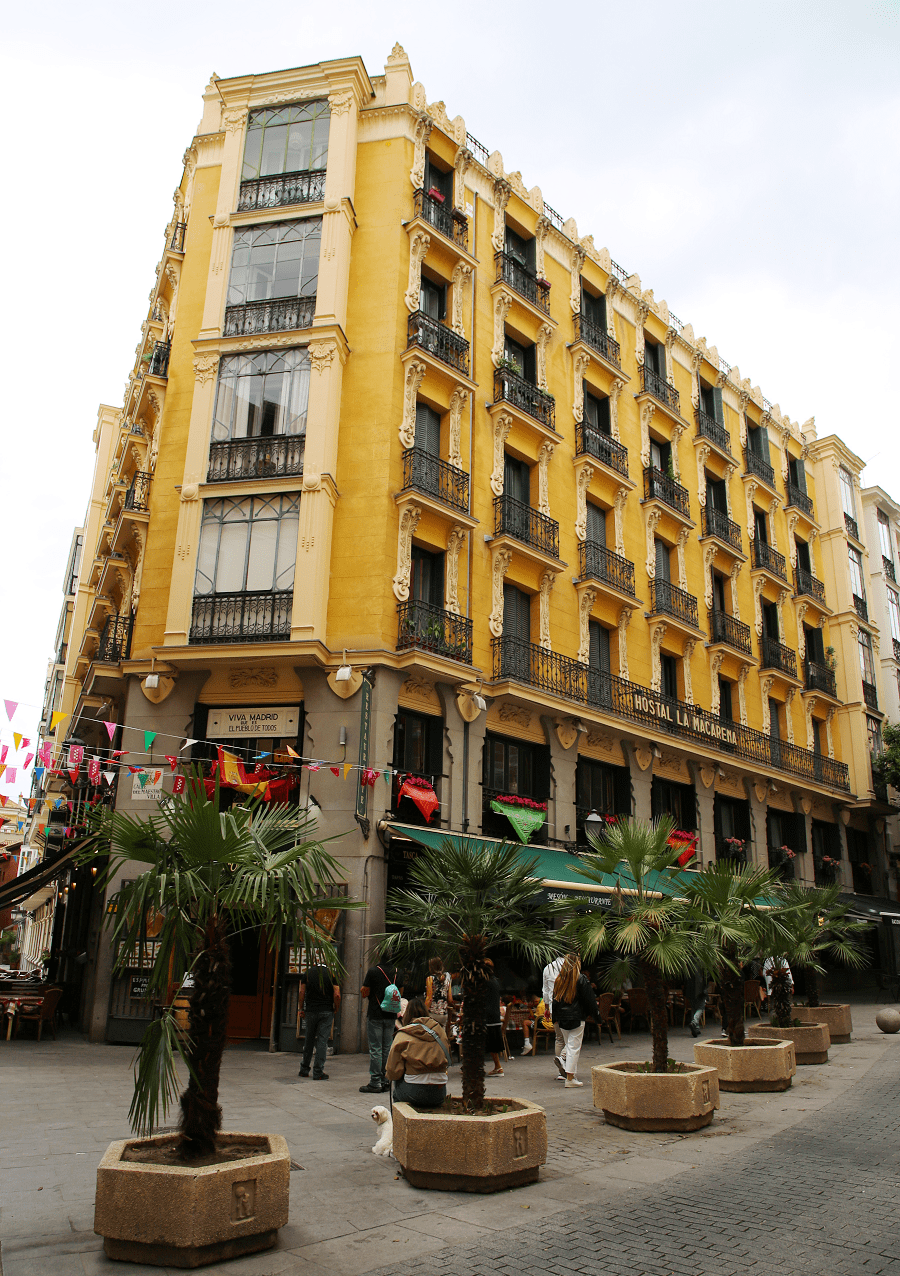
Also known as Calle de la Cuchillería due to the abundance of sword and knife shops established here due to its proximity to the Casa de la Carnicería, on the south side of the Plaza Mayor, next to the Arco de Cuchilleros. It does not appear labelled however on the map of the Portuguese cartographer Pedro Teixeira, although it does bear its current name on the later one by Espinosa.
Pedro de Répide says that the master cutlers gathered here had as their patron the apostle Santiago el Mayor, with their own brotherhood and altar in the church of San Pedro el Viejo. He describes the area around the Cuchilleros arch as a “curious corner of Madrid that looks like an etching” and mentions the “famous inn, split from another famous one of the same name, where Madrid’s gluttony can be satisfied with roast lamb and baked sea bream.”
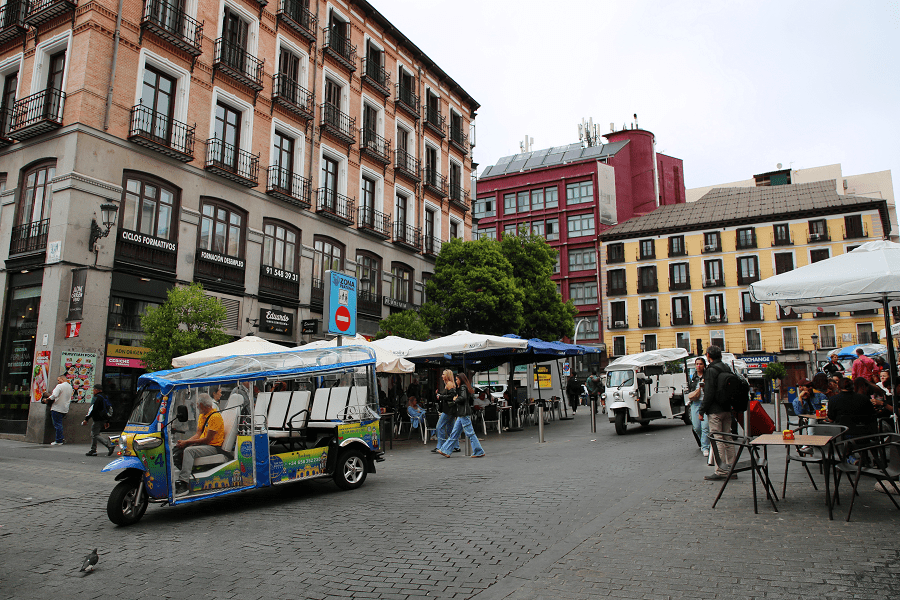
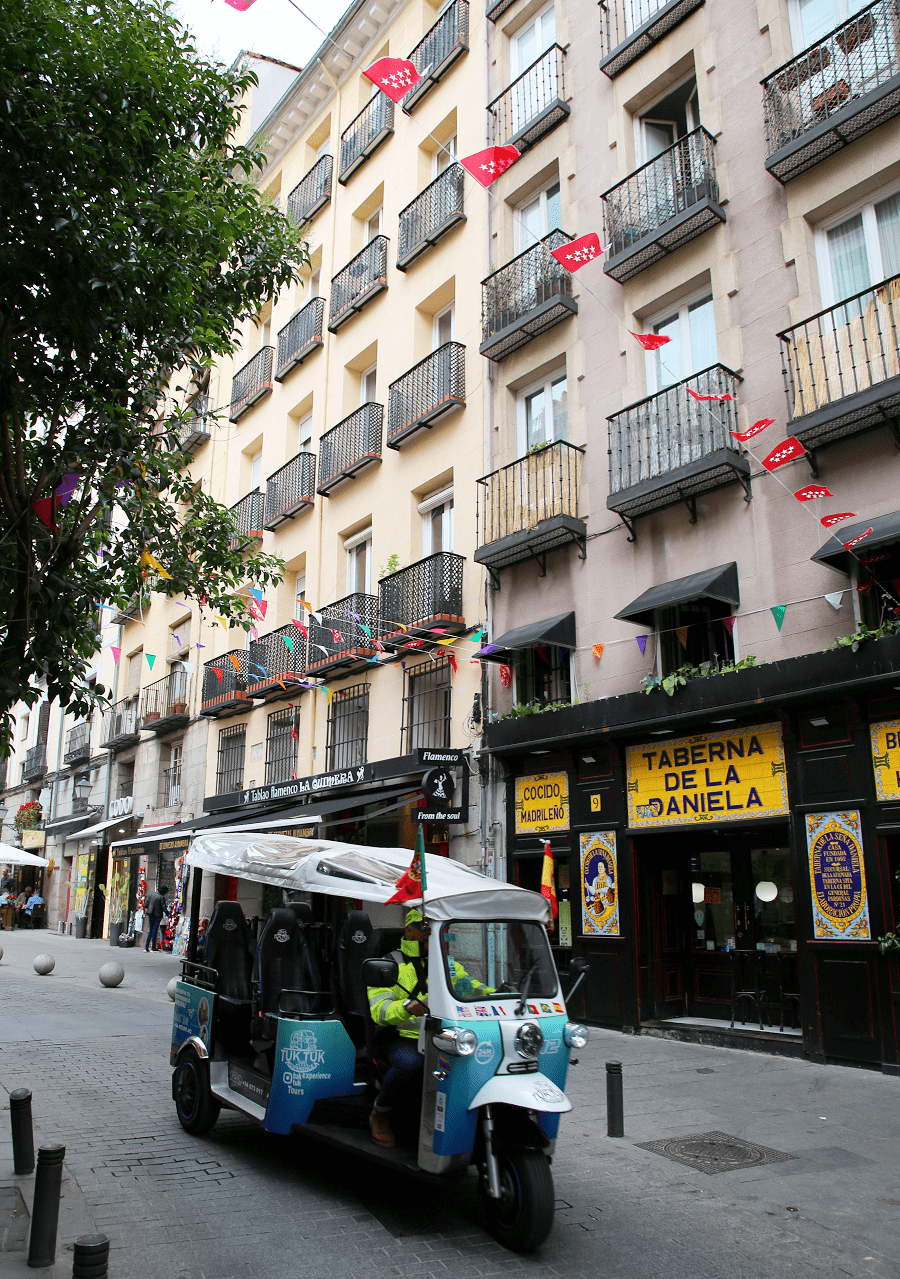
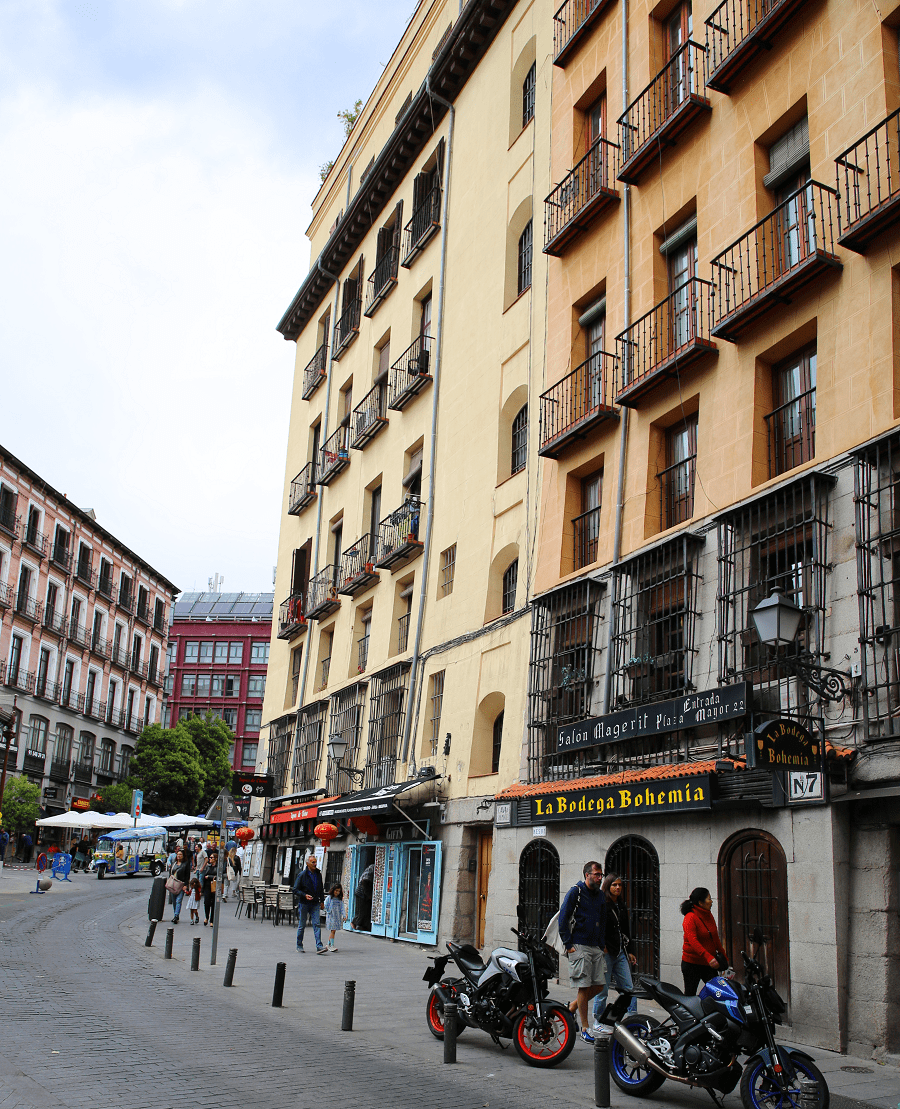
Répide also warns that it is a street “with little animation during the day, and at night a field of exploration for low gallantry.” Of this “murky splendor” gates and buildings of singular antiquity (with archaeological basements and medieval galleries) are preserved, as well as the later creation of some taverns, inns or wine cellars with a pretended tradition such as La Daniela, La Traviesa, Asquiniña, Bodegas Ricla or Las Cuevas de Luis Candelas (at the beginning of the Cuchilleros numbering), among which the already mentioned Botín can be highlighted.
The novelist Benito Pérez Galdós placed several passages from his Contemporary Spanish Novels on this street, thus incorporating it into the map of the “Galdosian territory” in the capital of Spain.
Madrid: full guide
- Administrative structure
- Architecture
- Churches and Cathedrals
- Entertainment
- Museums
- Parks and gardens
- Restaurants
- Shopping and markets
- Squares
- Streets
- Transport
See here Pyrenees travel guide
See here France travel guide
See here Spain travel guide