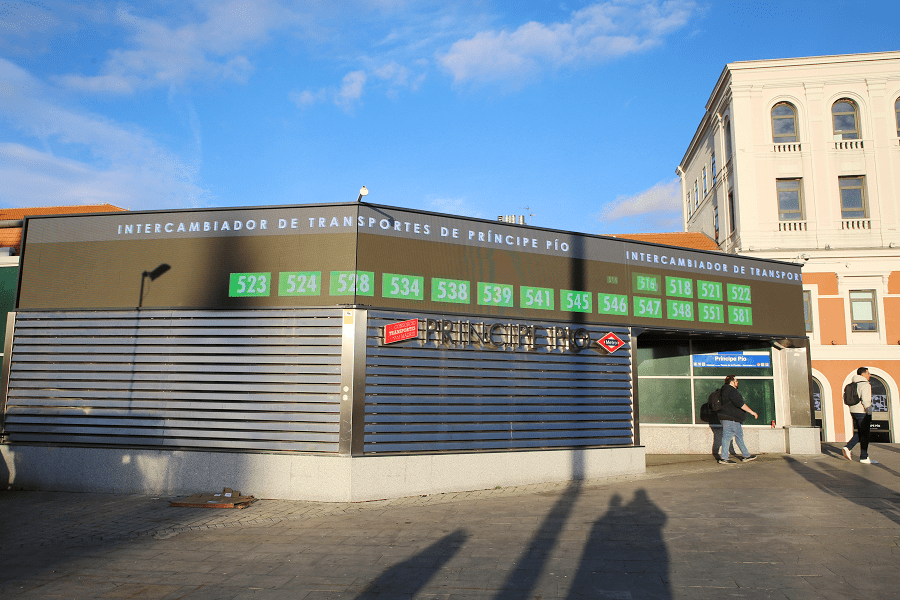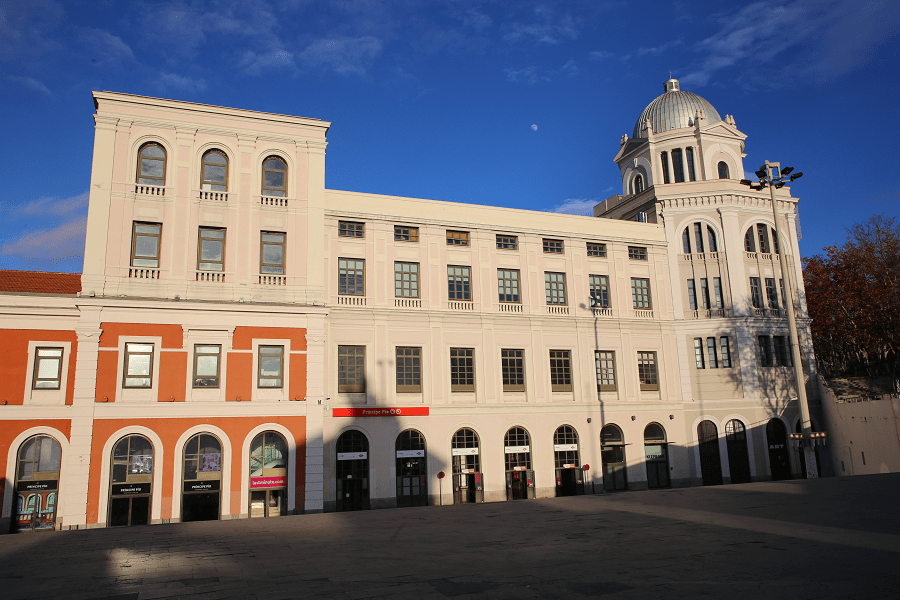
Príncipe Pío, also known as Madrid-Príncipe Pío, is a transport interchange in Madrid (Community of Madrid, Spain), where several metro, Cercanías, Media Distancia and urban and interurban bus lines converge, delimited by the Glorieta de San Vicente, Cuesta de San Vicente, Paseo de la Florida and Paseo del Rey, in the Moncloa-Aravaca district. Currently the station also includes a cultural and leisure centre.
Its fare corresponds to zone A according to the Regional Transport Consortium, although it belongs to zone 0 according to the Cercanías Madrid zoning.
is a multimodal train station in Madrid, Spain that services Madrid Metro‘s Line 6, Line 10, and Ramal; Cercanías Madrid’s commuter rail lines C-1, C-7, and C-10; and city buses and intercity and long-distance coaches. It is located next to the River Manzanares.
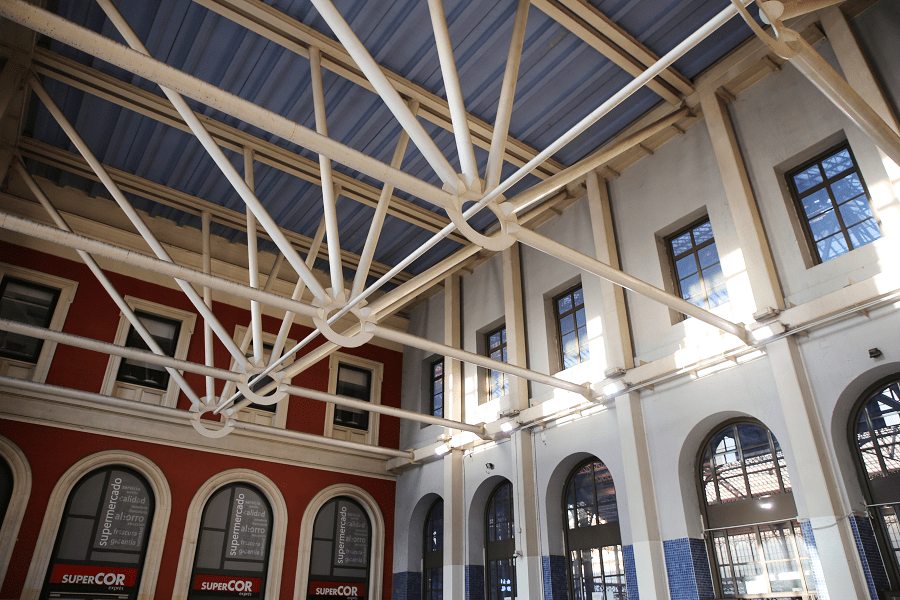
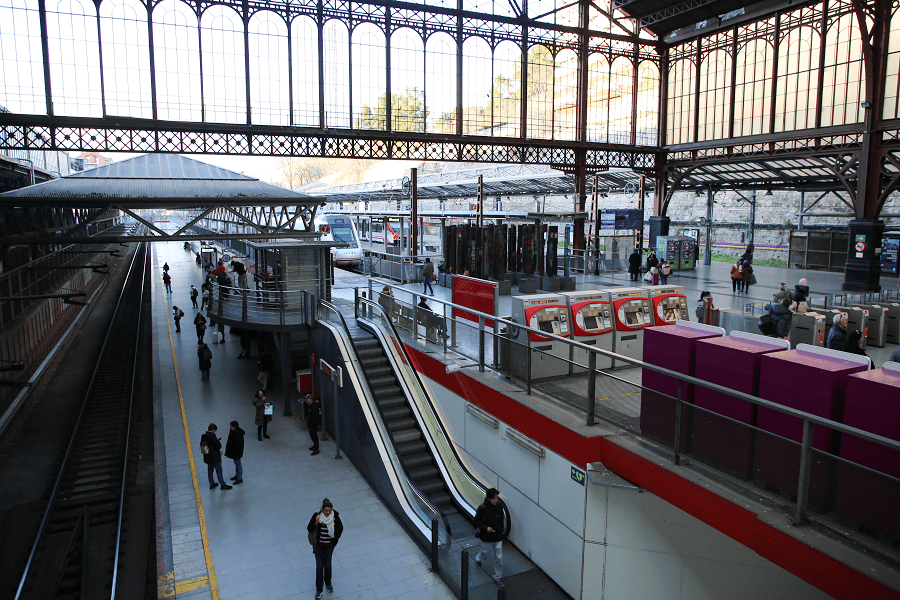
Príncipe Pío’s train station has three levels. The highest level, which is used by Cercanías trains, is elevated and has an island platform. The middle level, which is used by Madrid Metro Lines 6 and 10, is partially underground and has a dual-island platform with four tracks arranged to facilitate cross-platform transfers. The lowest level, which is used by Madrid Metro Ramal trains, is underground and uses two side platforms. An underground bus terminal is located next to the train station. Additionally, the station houses a shopping center and a theater.
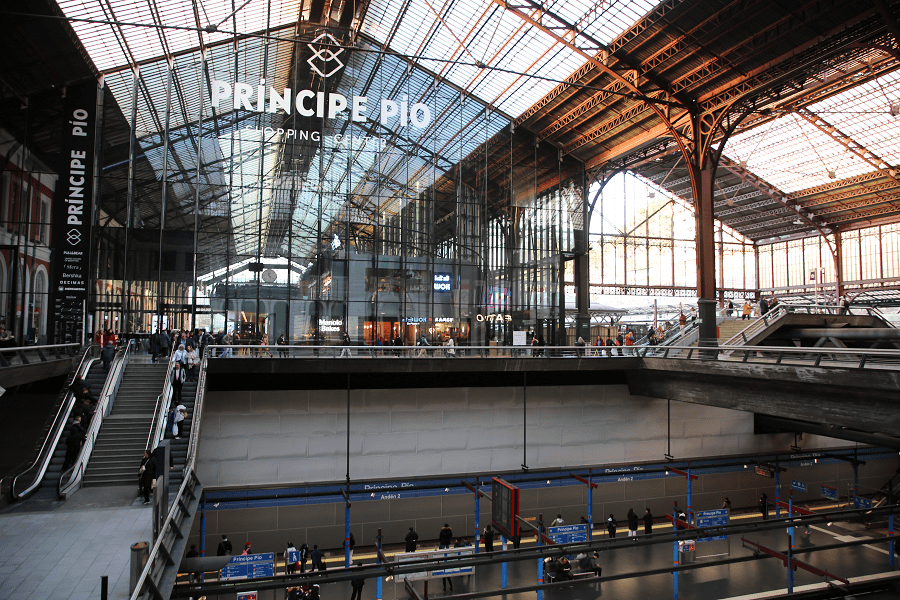
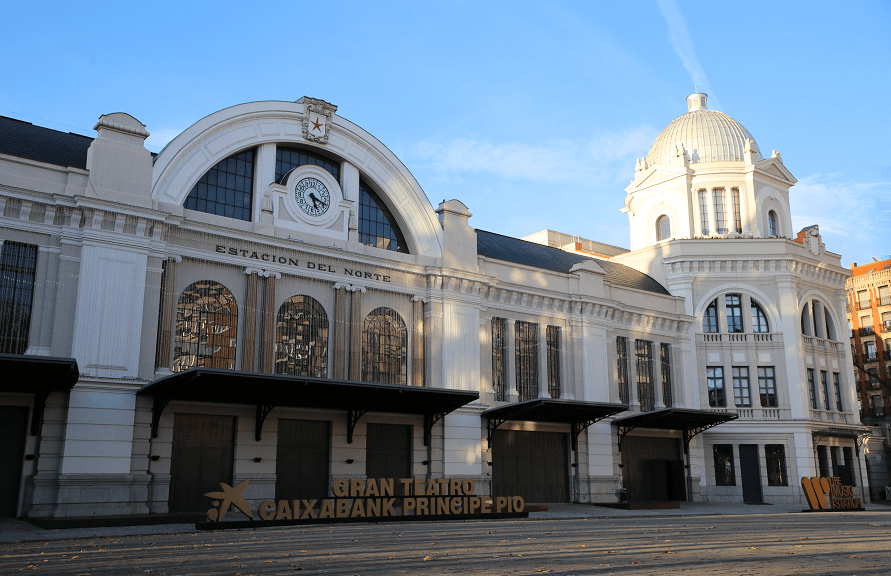
Príncipe Pío station was originally known as the Estación del Norte (North Station), which was built as the Madrid terminus for the Compañía de los Caminos de Hierro del Norte de España (Railway Company of Northern Spain). The company operated a line northward to Irun on the border with France, where passengers could continue on to the rest of Europe. Work began on the Madrid-Irun line in 1856, and work began on the station in 1859. Around the same time, surface-level tracks were built to connect the Estación del Norte with Atocha station. The Madrid-Irun line was built by French engineers, and a nearby railway bridge over the River Manzanares, the Puente de los Franceses (Bridge of the Frenchmen), was named after them. The original station had a simple construction and opened in June 1861, although the line initially only offered service to El Escorial near Madrid.
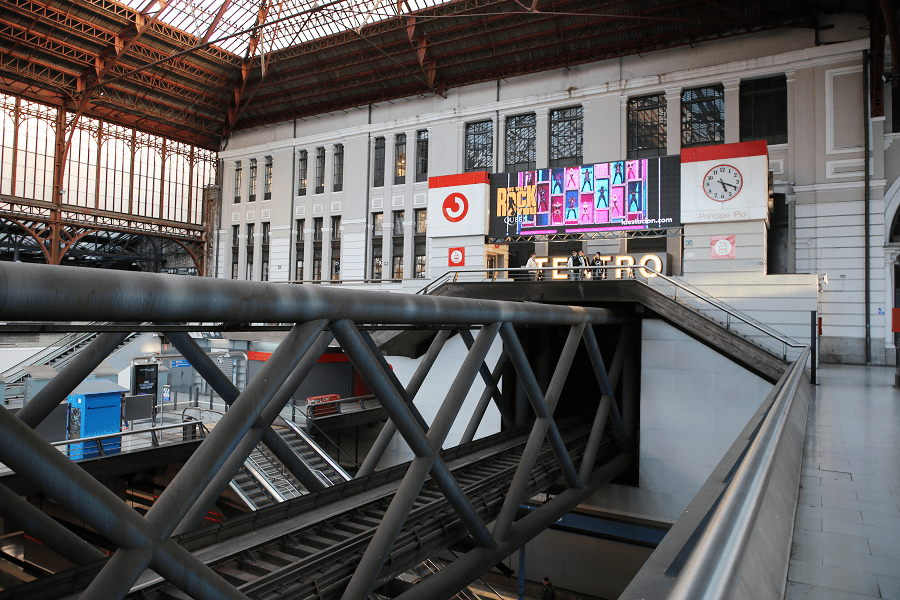
Due to a lack of space, maintenance facilities were built alongside the track between the station and the Puente de los Franceses. On 16 July 1882, the first of the station’s two passenger halls was inaugurated, located parallel to the tracks and facing the Paseo de la Florida. At the end of the tracks, a garden was planted between the station and the Cuesta de San Vicente.
Madrid: full guide
- Administrative structure
- Architecture
- Churches and Cathedrals
- Entertainment
- Monuments
- Museums
- Parks and gardens
- Restaurants
- Shopping and markets
- Squares
- Streets
- Transport