El Escorial, or the Royal Site of San Lorenzo de El Escorial, or Monasterio del Escorial, is a historical residence of the King of Spain located in the town of San Lorenzo de El Escorial in Spain (the Community of Madrid), 2 km from the town of El Escorial and about 45 kilometres northwest of the Spanish capital Madrid.
El Escorial is situated at the foot of Mount Abantos in the Sierra de Guadarrama.
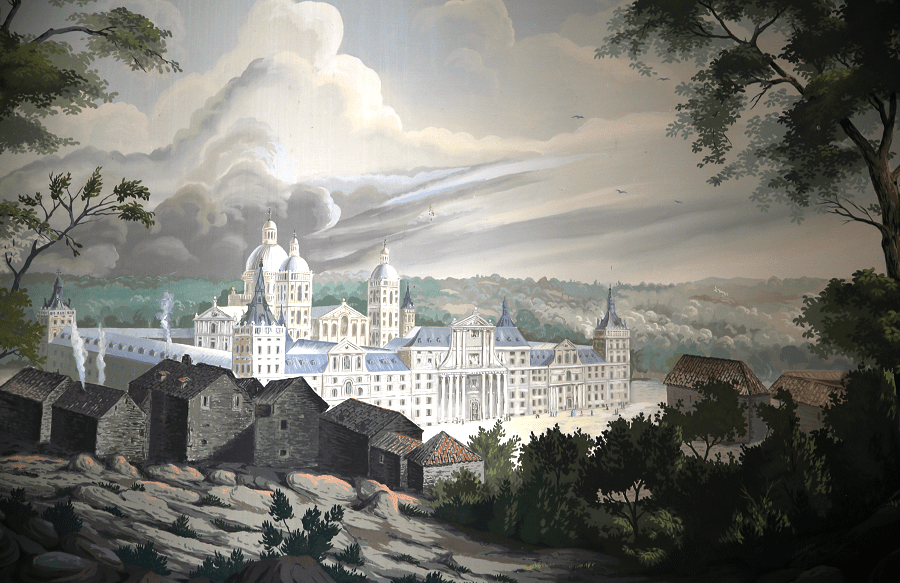
Built between 1563 and 1584 by order of King Philip II of Spain (who reigned 1556–1598), El Escorial is the largest Renaissance building in the world. It is one of the Spanish royal sites and functions as a monastery, basilica, royal palace, pantheon, library, museum, university, school, and hospital.

Philip II engaged the Spanish architect Juan Bautista de Toledo to be his collaborator in the building of the complex at El Escorial. Toledo had spent the greater part of his career in Rome, where he had worked on St. Peter’s Basilica, and in Naples serving the king’s viceroy, whose recommendation brought him to the king’s attention.

Philip appointed him architect-royal in 1559, and, together, they designed El Escorial as a monument to Spain’s role as a center of the Christian world.

The building’s cornerstone was laid on 23 April 1563. The design and construction were overseen by Juan Bautista de Toledo, who did not live to see the completion of the project.

With Toledo’s death in 1567, direction passed to his apprentice, Juan de Herrera, under whom the building was completed in 1584, in slightly less than 21 years.

Since then, El Escorial has been the burial site for most of the Spanish kings of the last five centuries, Bourbons as well as Habsburgs.

The Royal Pantheon contains the tombs of the Holy Roman Emperor Charles V (who ruled Spain as King Charles I), Philip II, Philip III, Philip IV, Charles II, Louis I, Charles III, Charles IV, Ferdinand VII, Isabella II, Alfonso XII, and Alfonso XIII. Two Bourbon kings, Philip V (who reigned from 1700 to 1724 and again from 1724 to 1746) and Ferdinand VI (1746–1759), as well as King Amadeus (1870–1873), are not buried in the monastery.

On 2 November 1984, UNESCO declared The Royal Seat of San Lorenzo of El Escorial a World Heritage Site. It is a popular tourist attraction, often visited by day-trippers from Madrid – more than 500,000 visitors come to El Escorial every year.

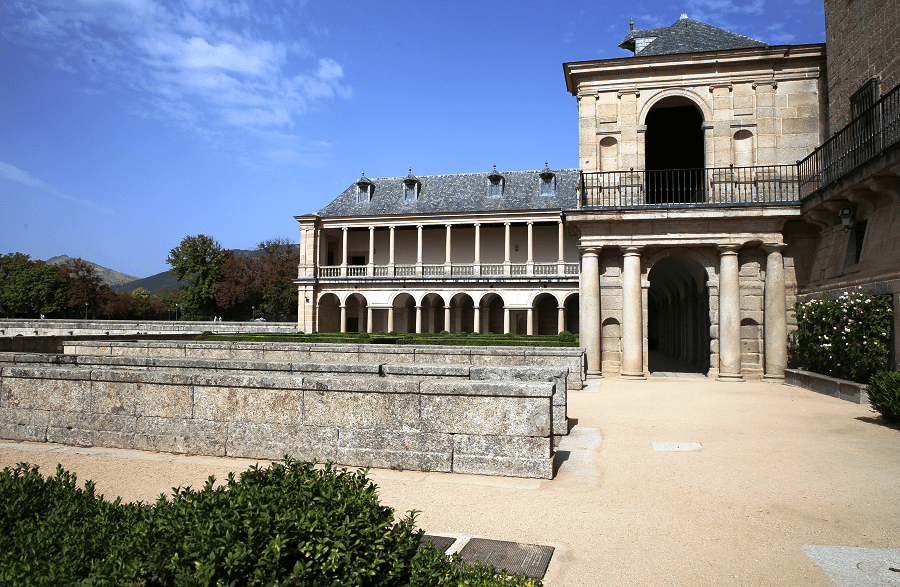
Arranged within a quadrangle, the buildings include:
the church (1582);
the monastery, royal palace, and college (1584);
and the library (1592).

The interior of the Escorial was decorated by many notable Spanish and Italian artists of the 16th and 17th centuries.

Pellegrino Tibaldi and Federico Zuccaro were among the earliest painters to execute frescoes there.

Other masters who painted works for the Escorial were El Greco, Luca Giordano, and Claudio Coello.

An important collection of paintings by Renaissance and baroque artists donated by the crown is among the many artistic treasures housed in the complex.
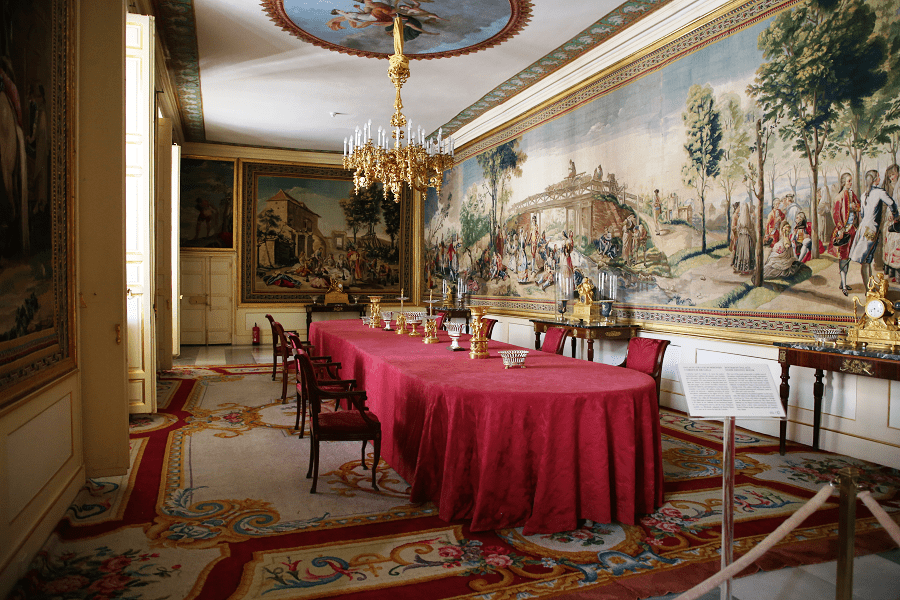
The decoration of El Escorial was carefully coordinated with the architecture to create a unified artistic effect. The sober statue of San Lorenzo on the main façade and the six statues of Old Testament kings on the façade of the basilica prepare the way for a splendid display of saints and kings inside the basilica.

How to get to?
Address: Av Juan de Borbón y Battemberg, s/n, 28200 San Lorenzo de El Escorial, Madrid, Spain
From Madrid 54 min (57.8 km) via A-6
GPS coordinates: 40°34′54″N 4°07′35″W
Working hours
Monday
Closed
Tuesday
10AM–6PM
Wednesday
10AM–6PM
Thursday
10AM–6PM

Friday
10AM–6PM
Saturday
10AM–6PM
Sunday
10AM–6PM
The prices start from 15 euro. Kids under 5 – free entrance.
See here Pyrenees travel guide
See here France travel guide
See here Spain travel guide