
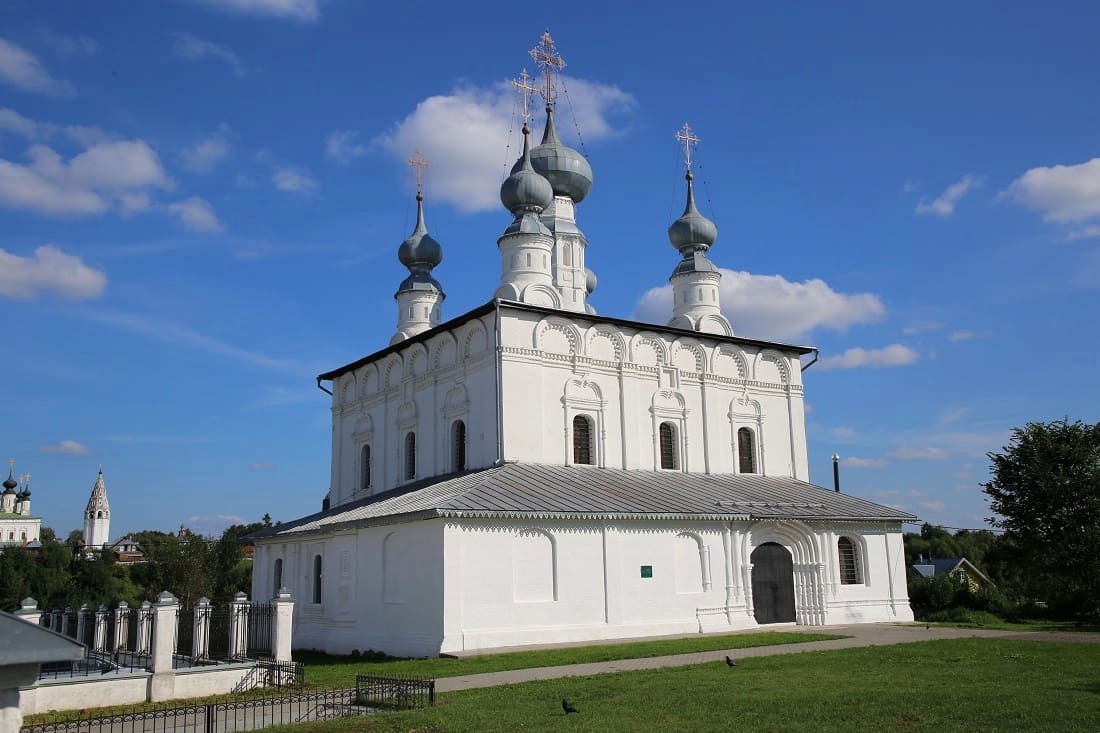
Suzdal (Russian: Суздаль) is a city-reserve located in the Vladimir Oblast of Russia. It is the administrative center of the Suzdal District and the only settlement forming a municipality with city status. It was founded no later than the late 10th century, with the first mentions dating back to 999 or 1024.
Suzdal is located on the Kamenka River, which flows into the Nerl River, 26 kilometers north of Vladimir. The city is part of the famous Golden Ring of Russia.
The village is part of the Most Beautiful Villages of Russia association.
See also Museum of wooden architecture
History
The exact date of Suzdal’s founding is unknown. The first mention of it in chronicles dates back to 1024, and this year is generally considered the date of its foundation. However, a settlement existed on this site earlier. In 1024, Yaroslav the Wise arrived here to suppress a revolt of the Magi caused by a poor harvest.
During the era of feudal fragmentation, Suzdal experienced periods of both rising and falling importance. Yuri Dolgoruky made it the capital of the Rostov-Suzdal Principality, although the prince’s residence was in the small village of Kideksha (4 kilometers from Suzdal). In 1152, a church dedicated to Saints Boris and Gleb was built there, which still stands today.
After the death of Yuri Dolgoruky, his son Andrei Bogolyubsky moved the capital to Vladimir. He contended with the Suzdal boyars for sole power. After Andrei’s death, Suzdal lost its former importance and became subordinate to Vladimir.
In 1238, during the Tatar-Mongol invasion, Suzdal was destroyed and burned. The decisive battle, which the Vladimir-Suzdal army lost, took place on the Sit River. Around this time, the Suzdal land became a separate principality. In the 13th and 14th centuries, the city became an important center of church life, with monasteries being actively built there. The wealthy and independent city of Suzdal long rejected Moscow’s authority, which was uniting the disparate Russian lands. Only in 1392 did the city become part of the Moscow Principality. However, even after this, Suzdal’s governors repeatedly attempted to regain their independence.
In the 16th century, under Ivan the Terrible, Suzdal was incorporated into the oprichnina—a special territory with its own army, answerable only to the tsar.
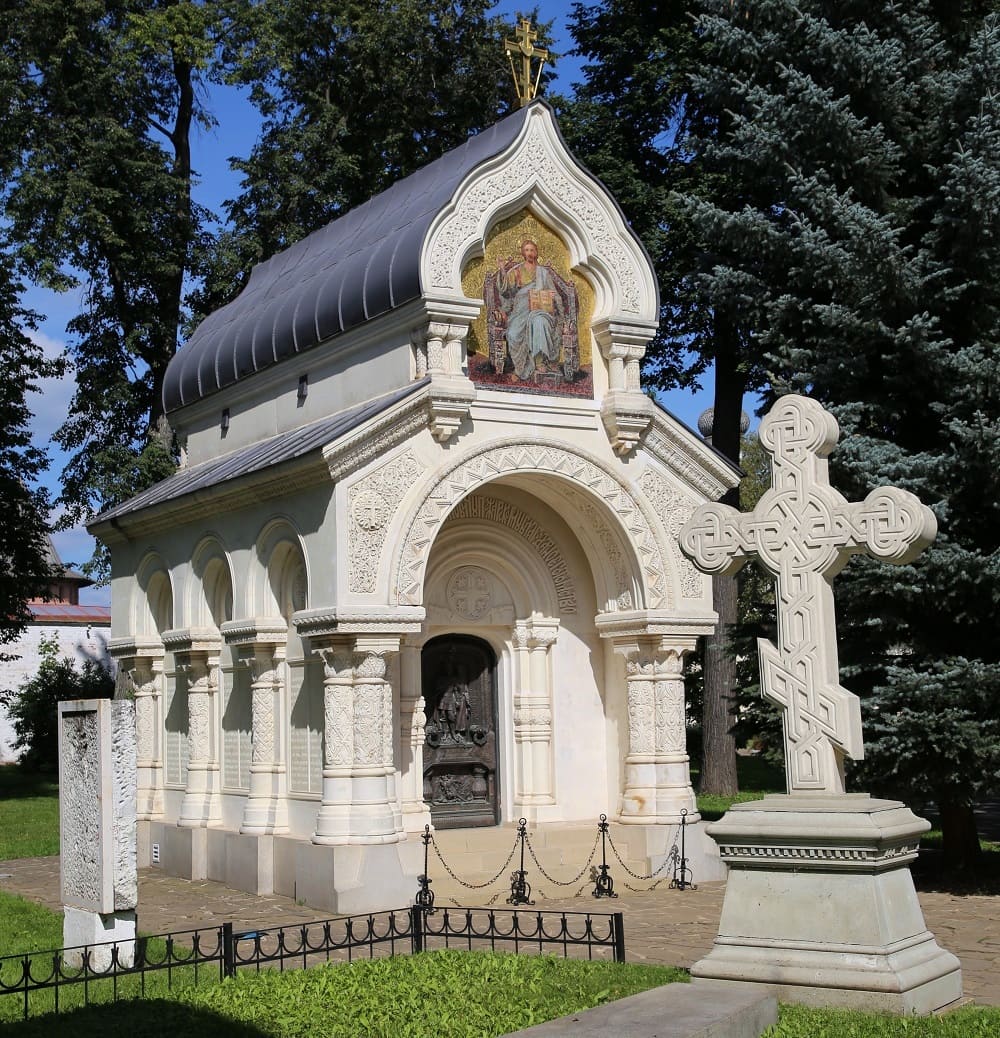
In the early 17th century, Suzdal was attacked by Polish-Lithuanian troops. In 1612, the townspeople joined the people’s militia that fought the invaders. The militia was led by Dmitry Pozharsky, a member of the Suzdal nobility. He was buried in the Spaso-Evfimiev Monastery.
In the 17th century, Suzdal endured many disasters: famine, fires, and the plague. But even in these difficult times, the city saw the active construction of stone buildings. Churches, secular buildings, and merchant houses were erected. One of the oldest merchant houses still stands at 148 Lenin Street, next to the Spaso-Evfimiev Monastery.
In 1709, Suzdal became the center of the Suzdal Province, which became part of the Moscow Governorate. In the first half of the 19th century, the city was an important trade hub, through which goods passed from southern Russia to the north, to St. Petersburg and Arkhangelsk. However, after the construction of the Moscow-Nizhny Novgorod railway in 1862, Suzdal lost its significance.
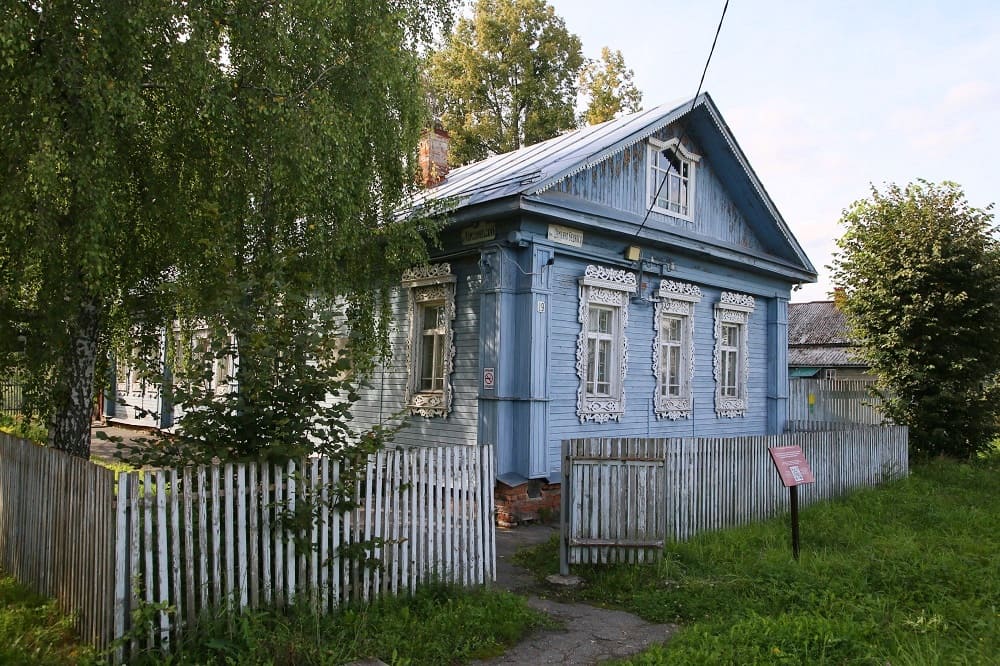
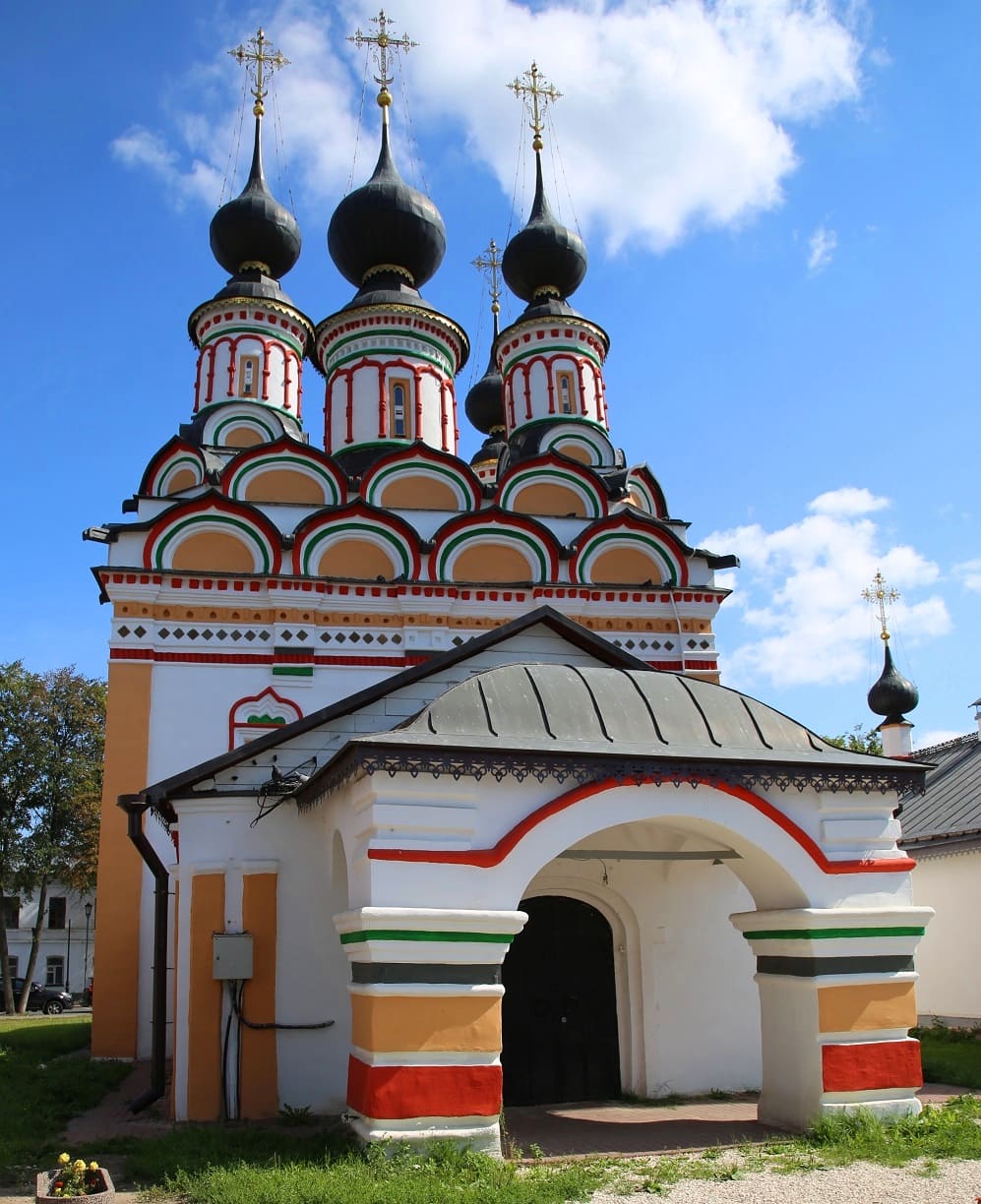
By the early 20th century, Suzdal was a small provincial town without major industrial enterprises. The lack of a railway made it difficult to reach and unattractive for trade. During the Soviet period, the center of Suzdal, with its low-rise buildings, remained virtually unchanged. This allowed the unique character of the ancient city to be preserved, with its many white-stone churches, monasteries, and wooden houses with carved window frames.
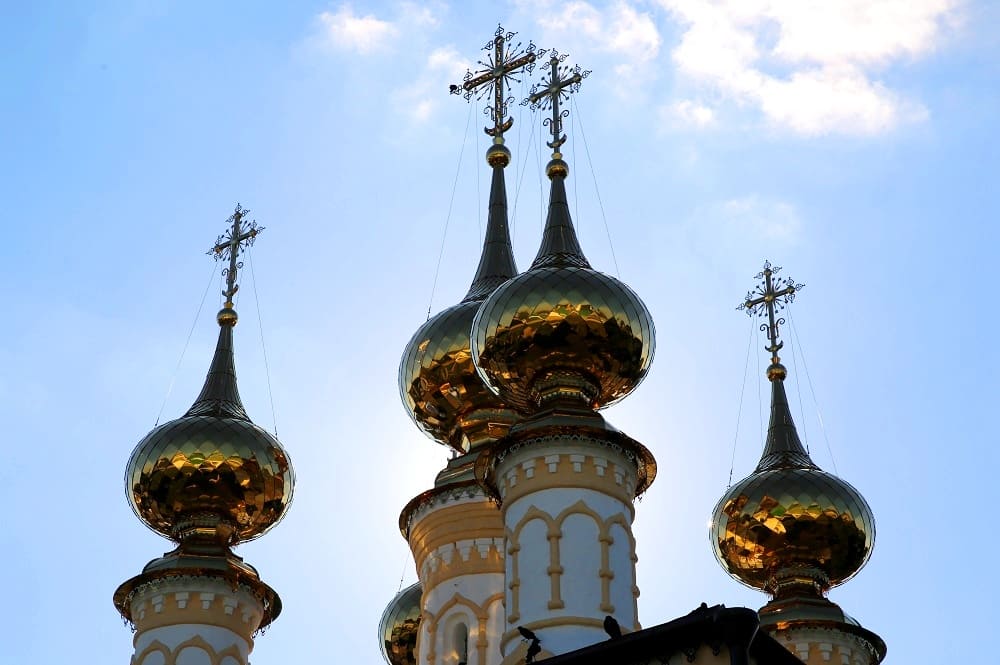
Suzdal began to develop as a tourist destination in the second half of the 20th century. It was awarded the title of “museum city.” In 1992, many of Suzdal’s architectural monuments were added to the UNESCO World Heritage List. Today, this city in the Vladimir region is part of Russia’s famous Golden Ring.
Attractions
Suzdal Kremlin
In the Middle Ages, no city was complete without defensive fortifications, which in Rus’ were called a kremlin. Suzdal began to grow around its kremlin in the 10th century. Its mighty walls housed the prince’s chambers, the warriors’ barracks, and the city’s main cathedral. The wooden fortifications burned down in the early 18th century, and building new ones was deemed impractical.
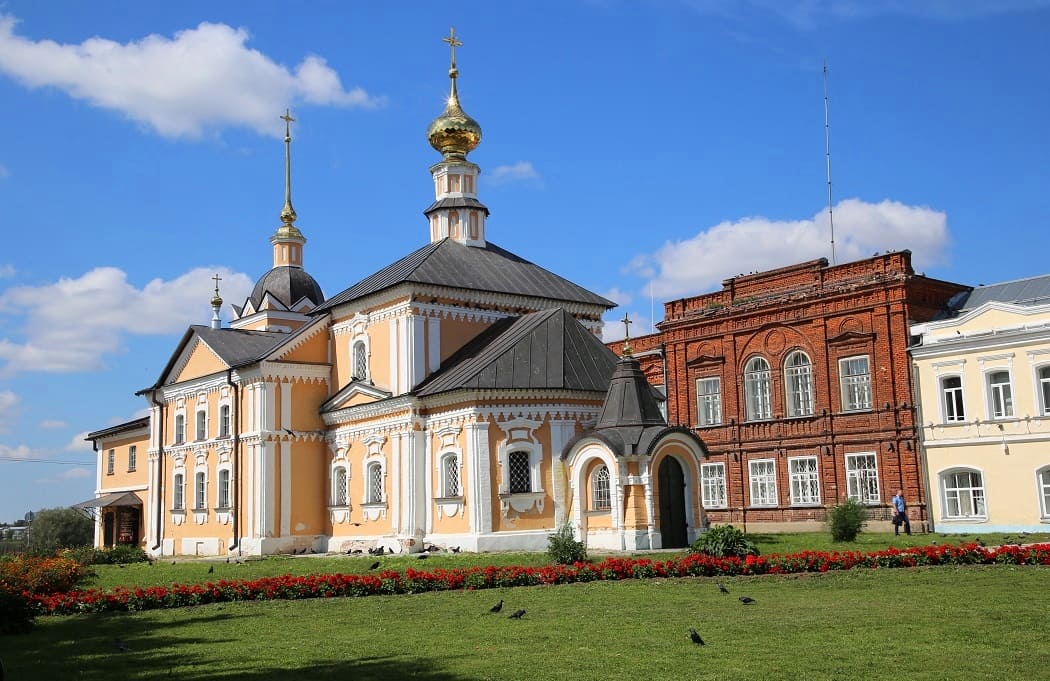
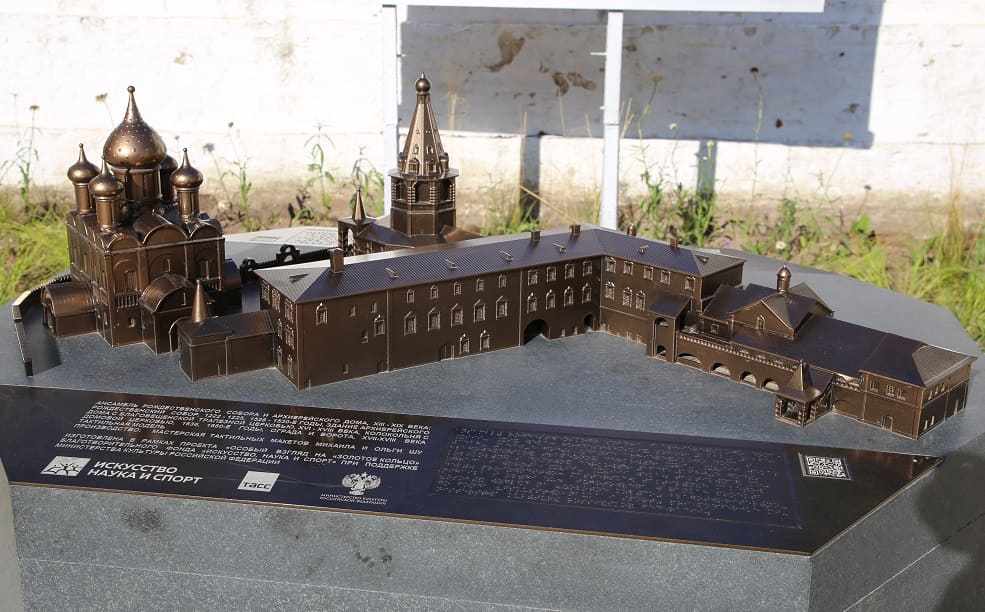
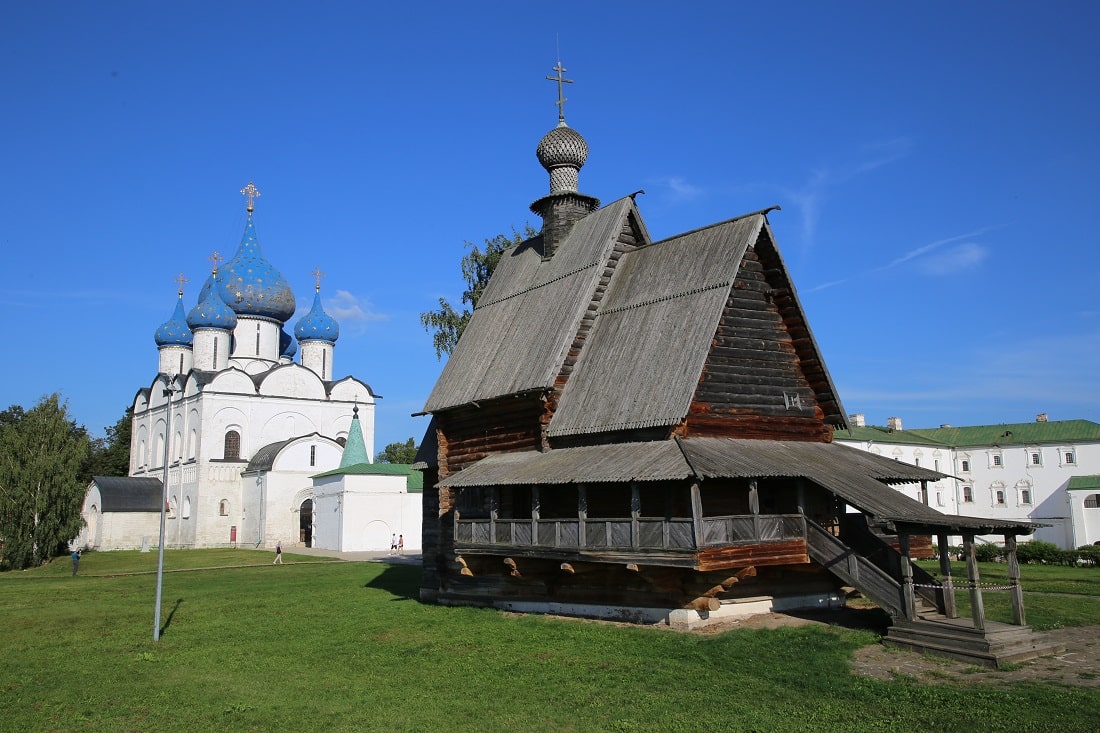
Although neither the walls nor the towers of the kremlin survived, many buildings remain in excellent condition. The Bishop’s Chambers, built for the clergy in the 15th–18th centuries, are a striking example. Today, they house a museum where you can learn more about the history of the Suzdal Kremlin. The chambers are closely connected with the Nativity of the Mother of God Cathedral, which deserves a separate mention.
The kremlin grounds include the Bishop’s Chambers, the Nativity of the Mother of God Cathedral, and the wooden St. Nicholas Church.


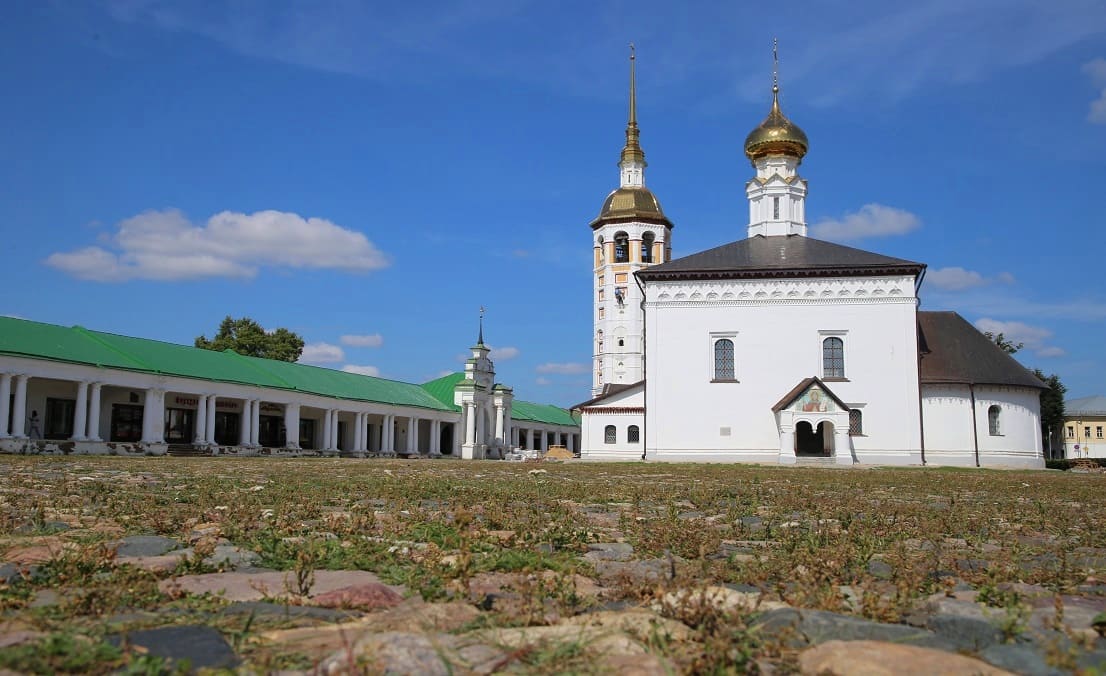
Market Arcade
Provincial architect A. Vershinsky designed the building in the Empire style. The Gostiny Dvor became a jewel of the city, but it failed to stand the test of time. Within half a century, the building began to deteriorate, requiring extensive restoration. Subsequently, repairs were carried out repeatedly, and a major restoration was completed in the 1970s. Today, the Gostiny Dvor continues its commercial activities.
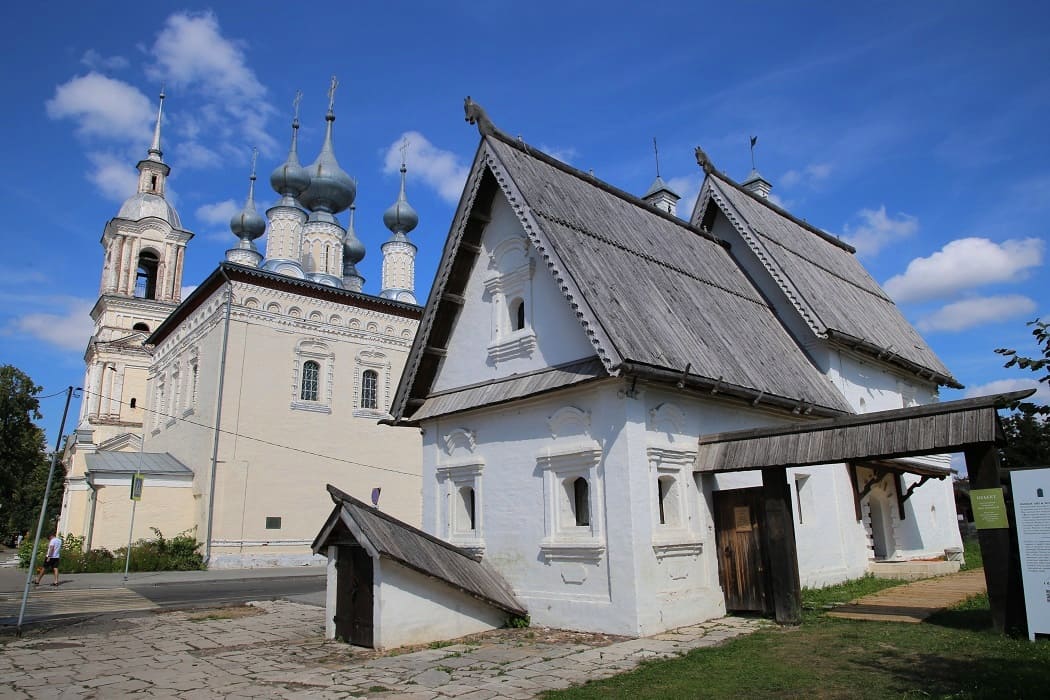
Posad House
The Posad House, also known as the Moskvina House, is a monument of 18th-century stone architecture in Suzdal. It is located opposite the Spaso-Evfimiev Monastery, next to the Smolensk Church.
The building now belongs to the Vladimir-Suzdal Museum-Reserve. The interior has been recreated, conveying the atmosphere of the life of a Suzdal kalachnik and tavern keeper in the 18th century. The room features wide benches, an oak chest, a carved table, a painted sideboard, and a tiled stove.
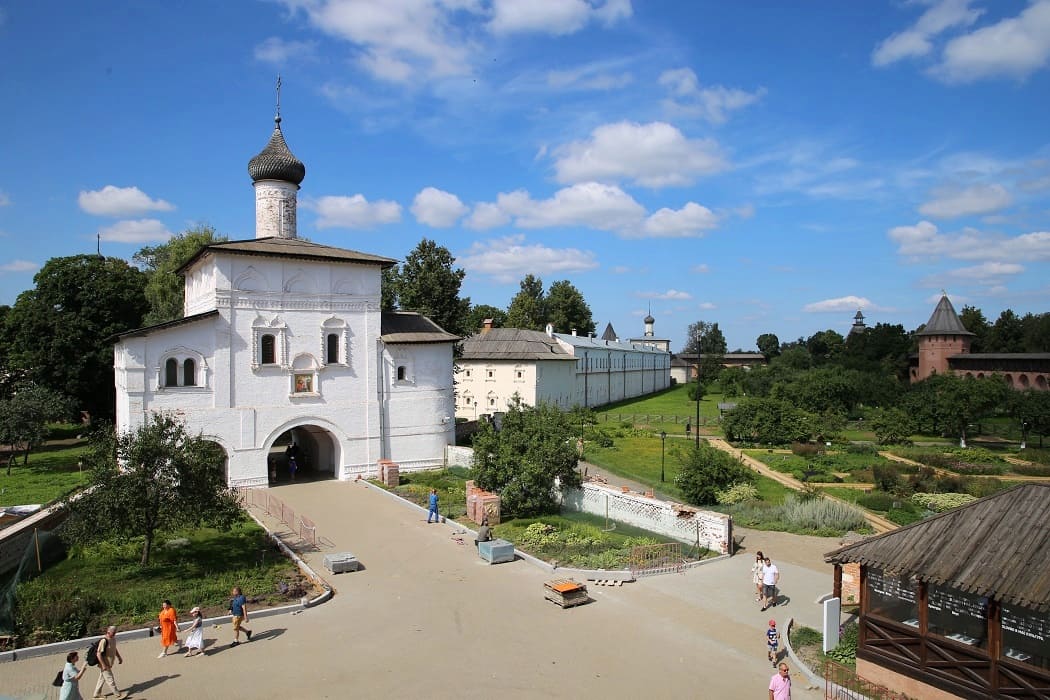
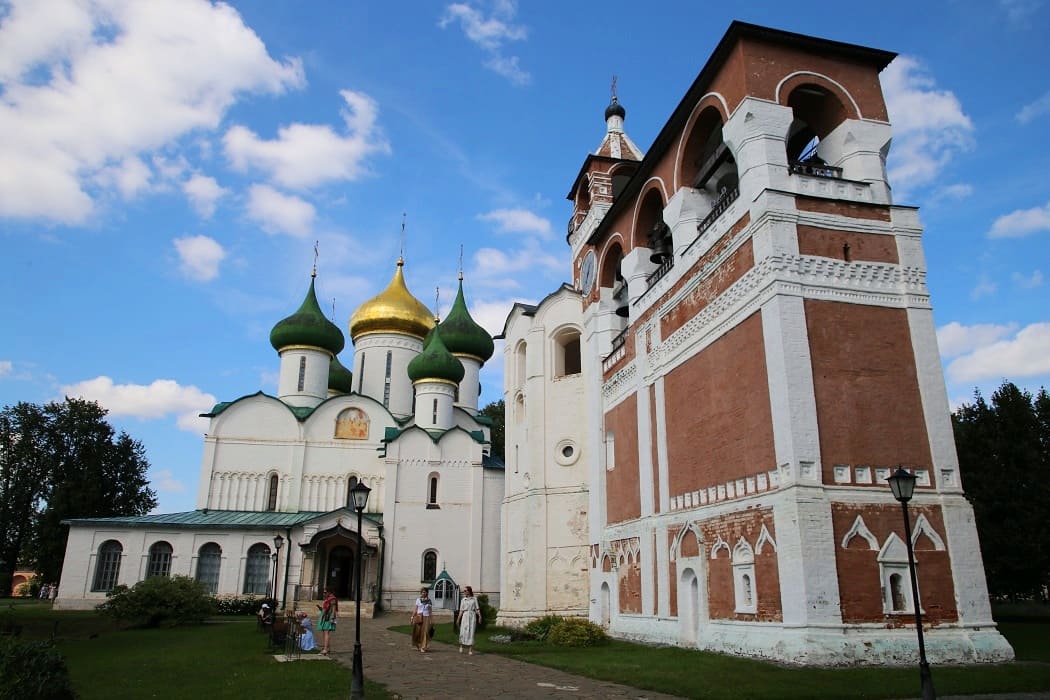
Savior-Euthymius Monastery
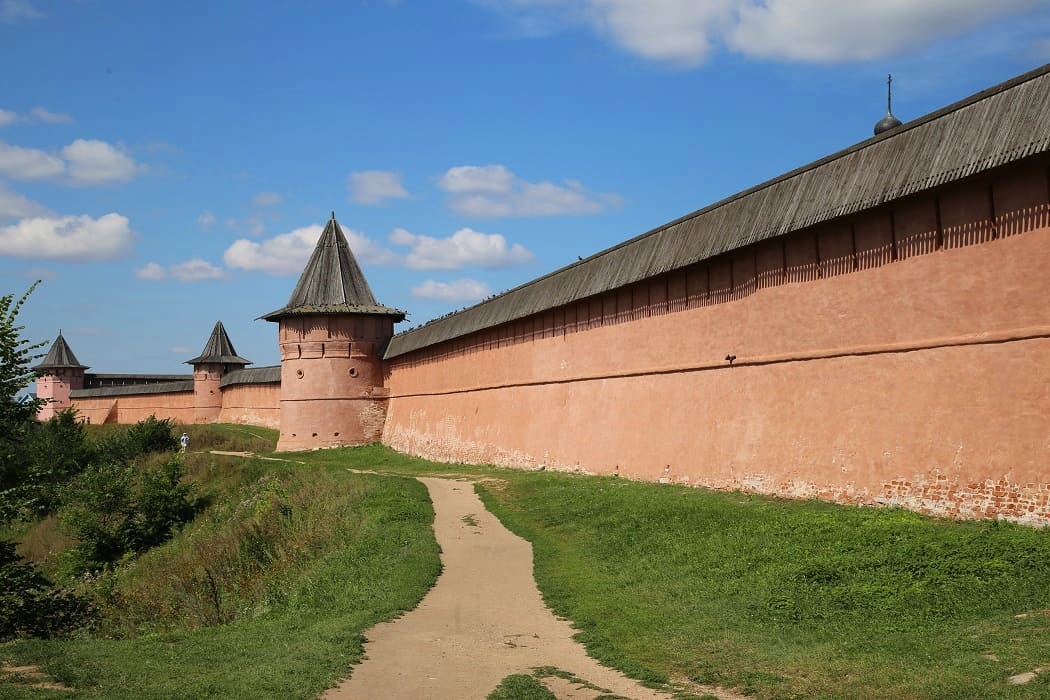
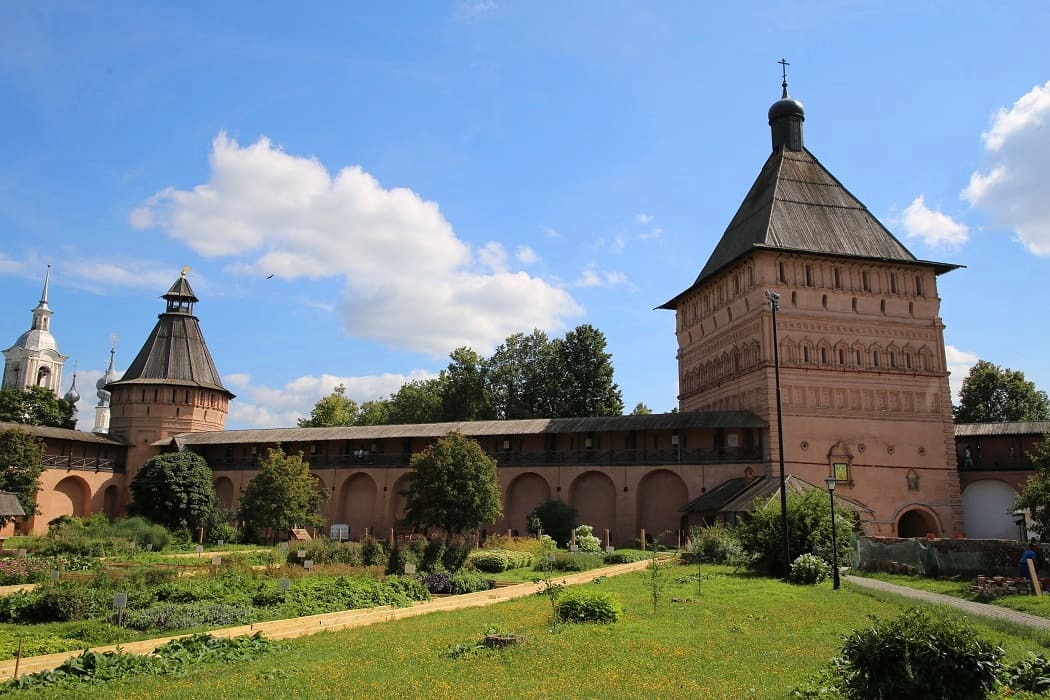
The monastery was founded in 1352 by Prince Boris Konstantinovich of Suzdal and Nizhny Novgorod. It was conceived as a fortress to protect the city from external and internal threats.
Along with other architectural masterpieces of Vladimir and Suzdal, this monastery is listed as a UNESCO World Heritage Site. The entire monastery complex is part of the Vladimir-Suzdal Museum-Reserve.
Near the eastern wall of the Transfiguration Cathedral is the presumed grave of Prince Dmitry Pozharsky.
Museum of Wooden Architecture
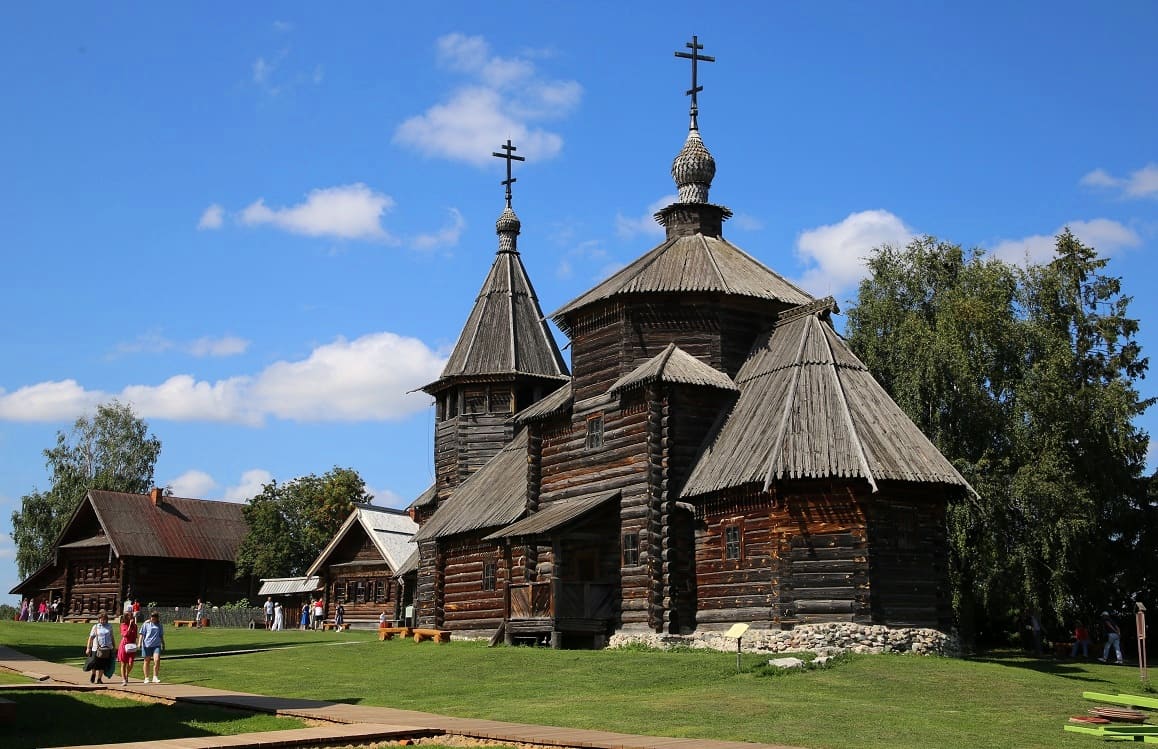
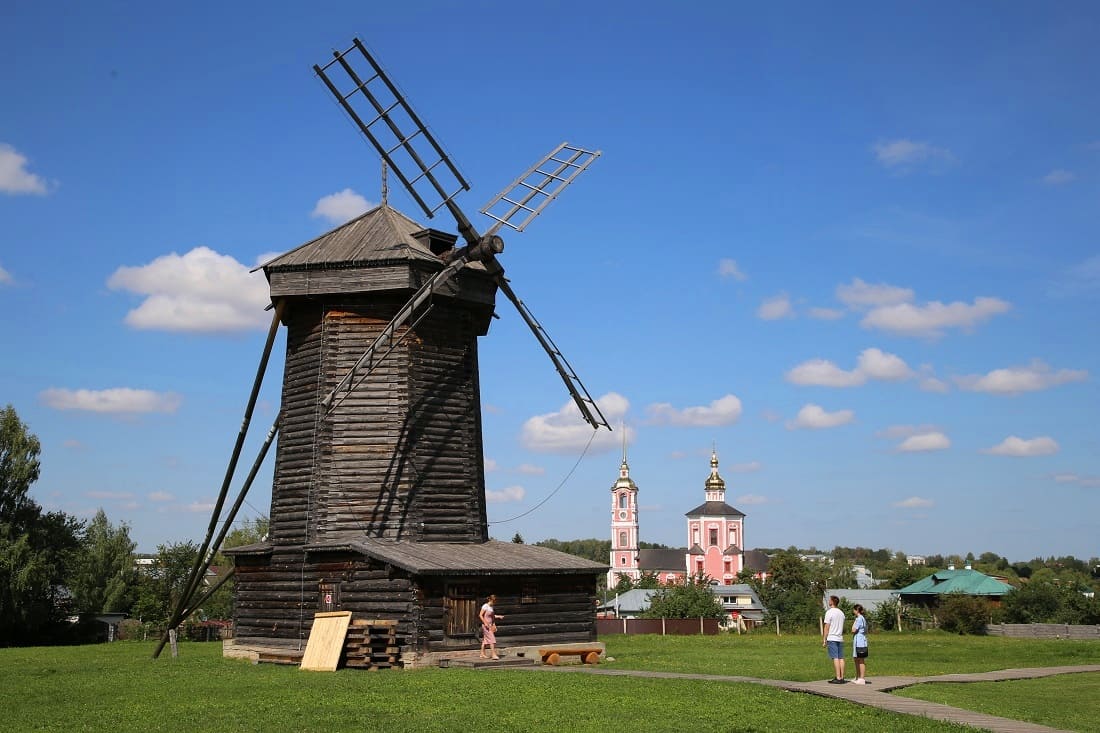
The Suzdal Museum of Wooden Architecture offers a unique opportunity to immerse yourself in the atmosphere of the 18th and 19th centuries, learn about the architecture of that time, and see how people lived. The museum’s exhibits were collected from throughout the Vladimir region and then meticulously restored. Each house can be viewed not only from the outside but also from the inside, allowing you to imagine the everyday life of Vladimir peasants two hundred years ago.
Monastery of the Deposition of the Robe
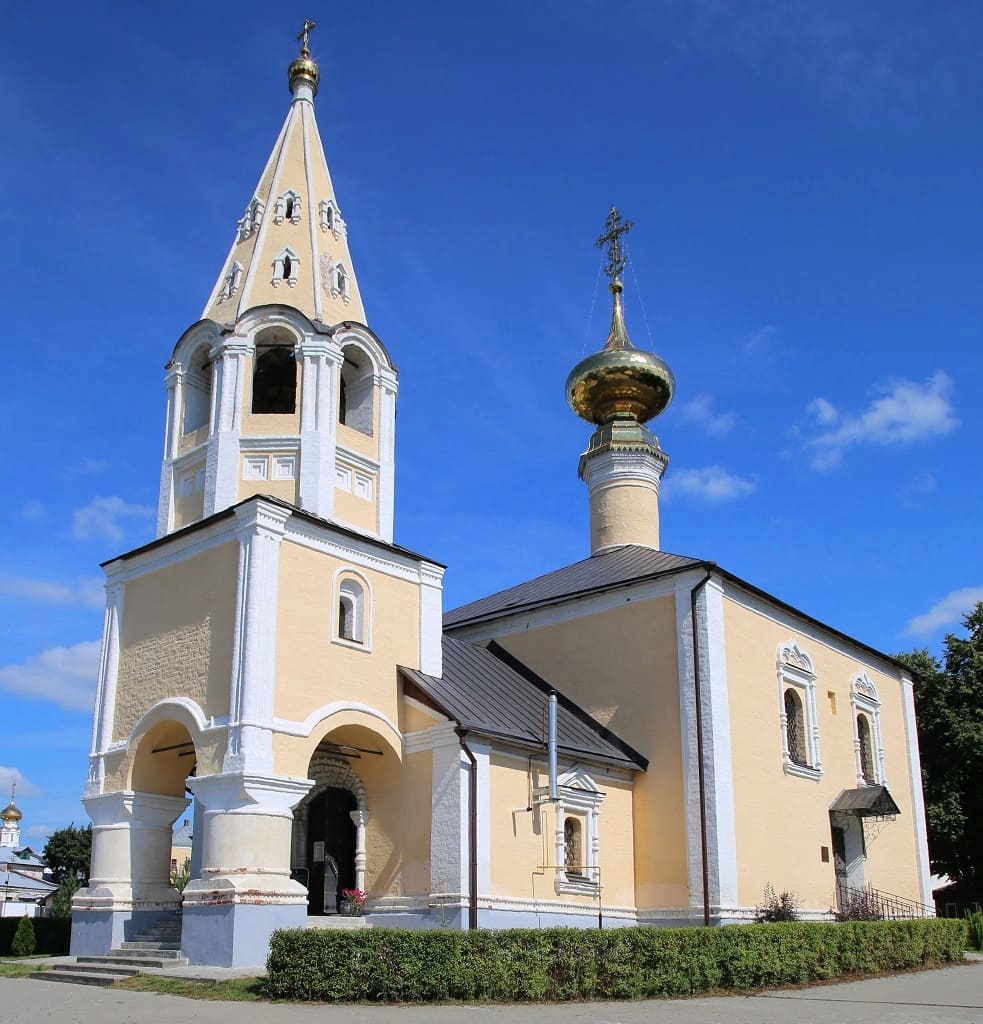
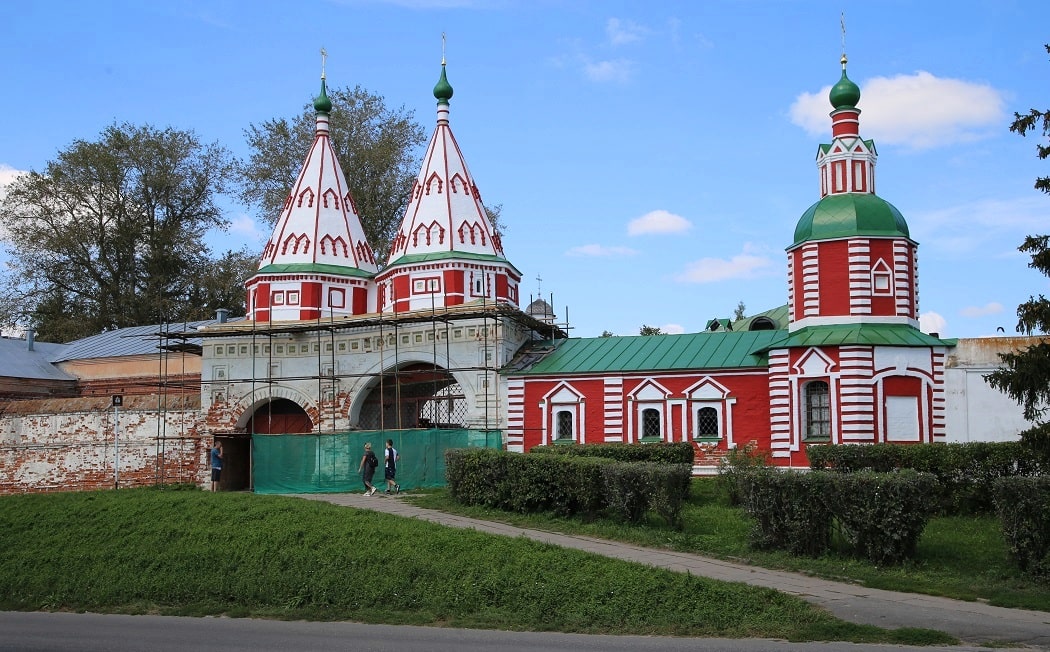
The history of the Monastery of the Deposition of the Robe began in 1207. In 1238, it was threatened by the Mongol-Tatars. However, the monastery was restored. Buildings from that time and later additions have not survived. The current architectural ensemble began to take shape in the 16th century with the construction of the Cathedral of the Deposition of the Robe. Later came the Trinity Cathedral, the Sretensky Church, and the Holy Bell Tower. The bell tower has survived almost in its original form. Trinity Cathedral was destroyed during the Soviet era. Sretensky Church was luckier: it was not completely destroyed. In 2024, the church underwent extensive restoration to restore its original appearance.
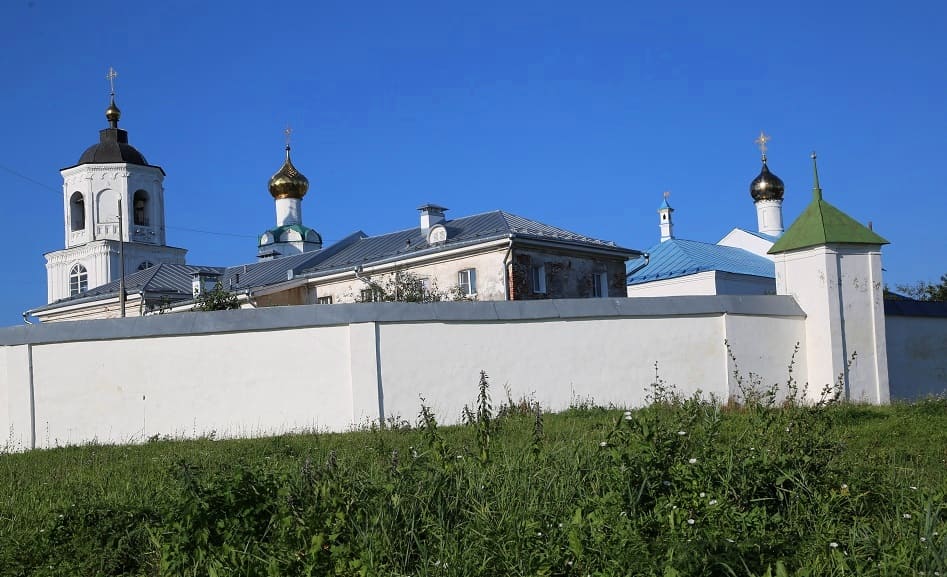
St. Basil’s Monastery
It is believed that a thousand years ago, residents of Suzdal were baptized in a church that may have once stood on the site of the present-day monastery. The monastery itself was built in the 13th century as a defensive fortification and later converted into a monastic community. The wooden structures have not survived, and the current architectural ensemble dates from the 17th century. At that time, St. Basil’s Cathedral and the Sretensky Refectory Church were built—the monastery’s main landmarks. A bell tower was added in the 19th century, after which no significant changes took place.
With the advent of Soviet power, the monastery was closed and used as a warehouse. In the 1960s, restoration began, as its historical value was recognized. In 1995, the monastery was returned to the Russian Orthodox Church, and today it functions as a monastery.
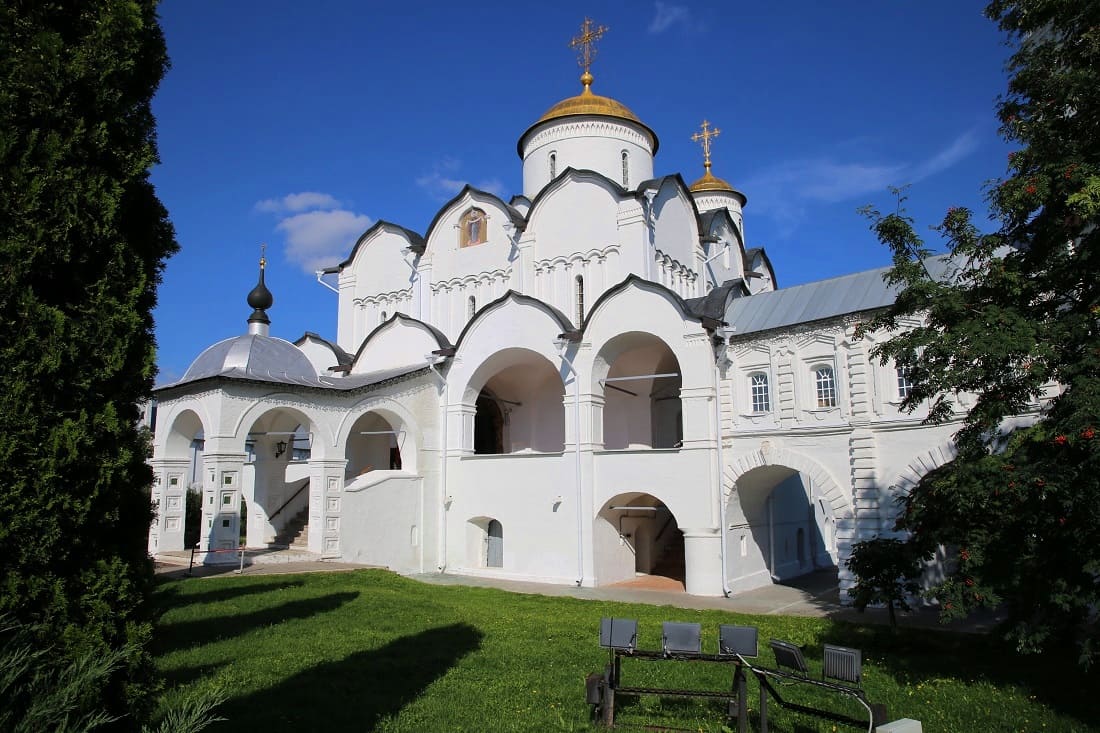
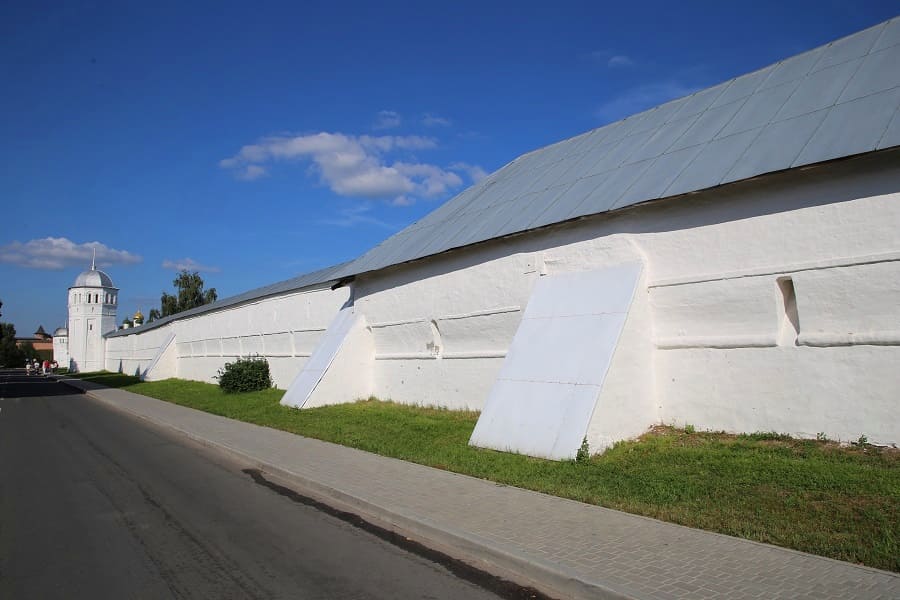
Pokrovsky Monastery
Pokrovsky Monastery is a convent in the Vladimir Diocese of the Russian Orthodox Church. It is located on the right bank of the Kamenka River, in the northern part of Suzdal.
The monastery was founded in 1364 on the orders of Prince Dmitry Konstantinovich. However, its current appearance did not take shape until the 16th century. At that time, the monastery became a place of confinement for nuns from aristocratic families. In the 16th and 17th centuries, it was one of the largest monasteries in Rus’.
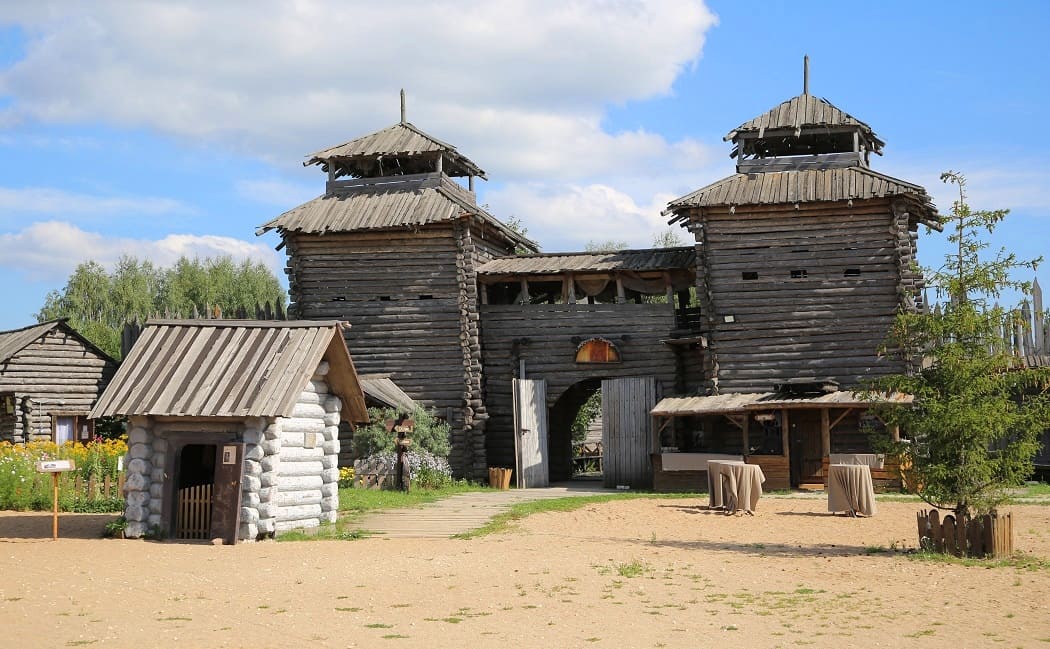
Shchurovo Settlement Museum
The Shchurovo Settlement open-air museum has everything you need to immerse yourself in the past. Ancient wooden houses, mills, and a church create a medieval atmosphere. Here you can forget that the 21st century lies beyond the walls of the settlement. It offers entertainment for every taste: excursions, a sauna, horseback riding, archery, a corral with domestic animals, and traditional cuisine. Shchurovo Settlement is not only a place to relax, but also an opportunity to learn more about life in the past.
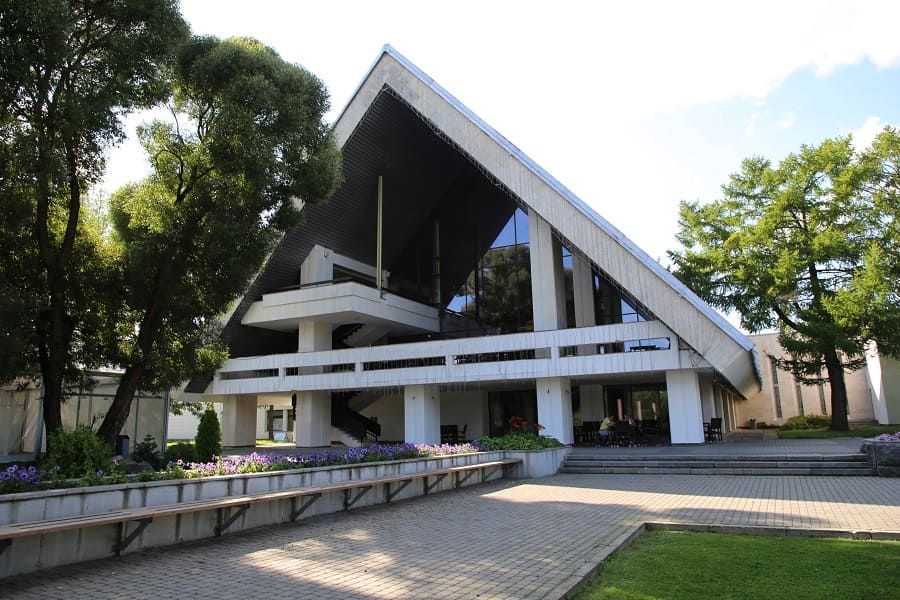
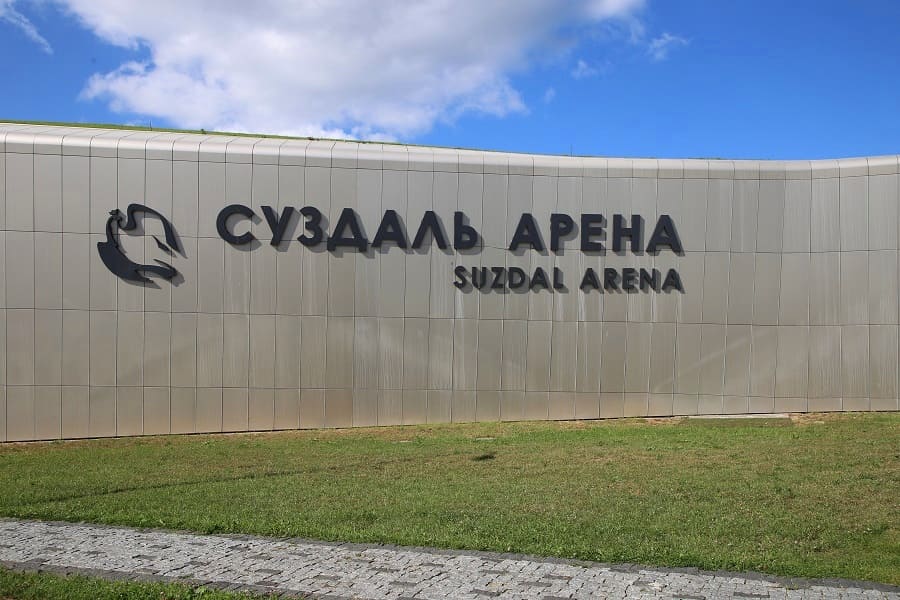
Suzdal Arena
Suzdal Arena is a modern sports complex in Suzdal. It opened in 2021 as part of the city’s main tourist complex. It is managed by Stivas Joint-Stock Company.
How to get to?
From Moscow:
Bus
The cheapest, but not the fastest, way to get to Suzdal is by bus. Buses depart from Moscow’s Central Bus Station, near the Shchyolkovskaya metro station. Buses bound for Ivanovo, Shuya, and Kineshma stop in Suzdal.
Train and Bus
This is the most popular route. Travelers first take the train to Vladimir, then transfer to a bus. More than 30 trains run daily from Moscow to Vladimir, including both regular and express trains. The fastest are the Lastochka trains from Kursky and Vostochny railway stations, covering the journey in 1 hour and 40 minutes. Regular commuter trains take 2.5 hours, but are cheaper.
It’s only 35 kilometers from Vladimir to Suzdal. Regular buses depart every 30-60 minutes from the Vladimir bus station, which is located next to the train station. Travel time is 50 minutes. Tickets can be purchased online or at the ticket office before departure.
Car
To reach Suzdal quickly, drive via Vladimir. The shortest route is the toll freeway M-12 “Vostok.” Before reaching Vladimir, switch to the free highway, go around the city, and then take the R-132 “Golden Ring” highway. The non-stop drive from Moscow to Suzdal takes about three hours.
Main information
Area: 15 km²
Coordinates: 56°25’13.1″N 40°26’53.8″E
Population: 9286
Language: Russian
Currency: Russian Ruble (₽)
Visa: Russia
Time: UTC+3:00 (MSK)