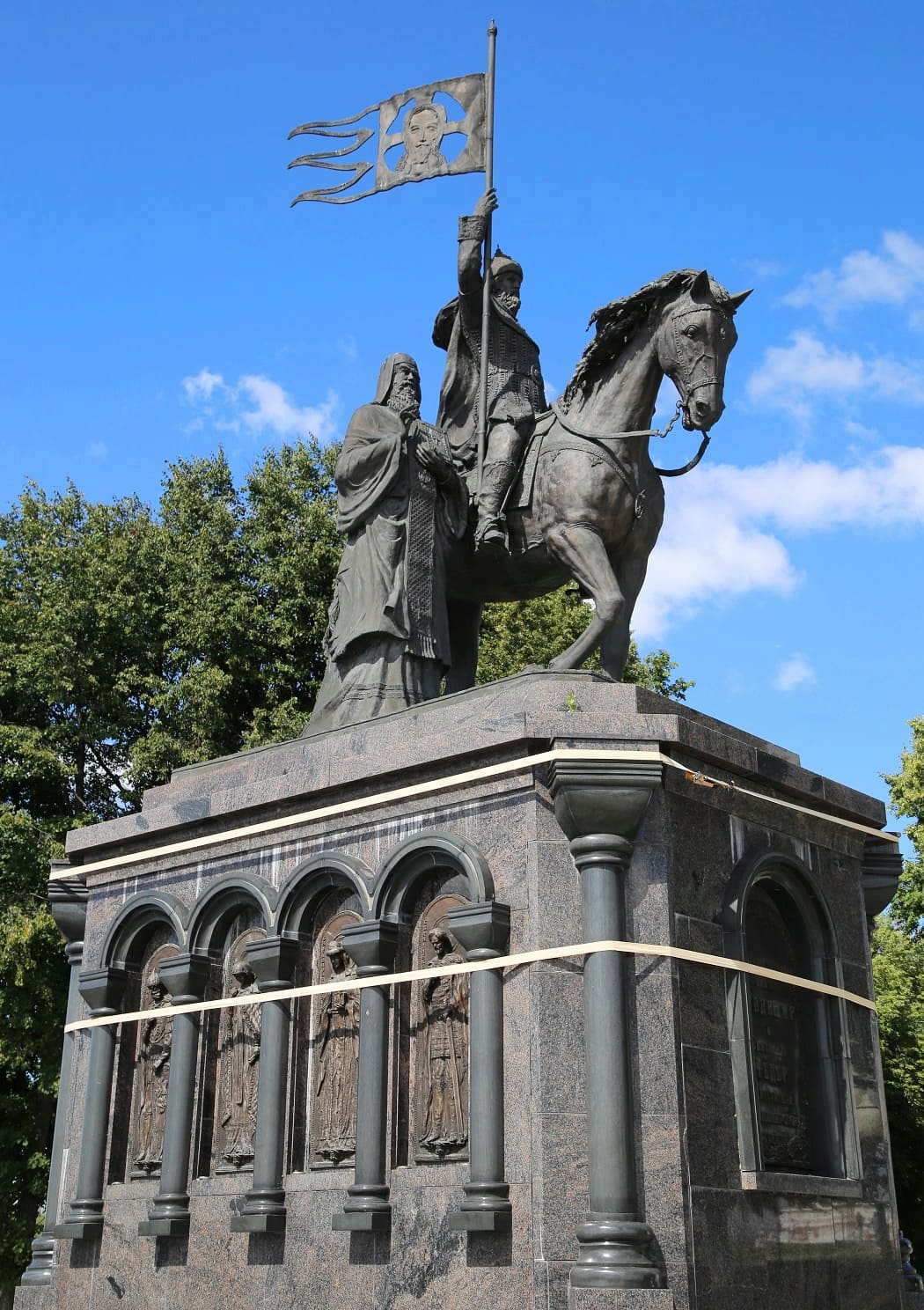
Vladimir (Russian: Владимир / Old Russian: Володимѣрь) is a city in Russia, the administrative center of Vladimir Oblast and the Vladimir urban district.
Historically known as Vladimir-on-Klyazma or Vladimir-Zalessky, as opposed to Vladimir-Volynsky.
The city was founded in 1108, although chronicles also mention the year 990. Archaeological research, which began in the first half of the 20th century, found no traces of a settlement in the late 10th century. Therefore, scholars favor the date of 1108. From the 12th to the 14th centuries, Vladimir was the capital of the Grand Duchy of Vladimir.
Today, Vladimir is one of the largest tourist destinations in European Russia and is part of the famous Golden Ring. The city is located on the left bank of the Klyazma River, 176 kilometers east of Moscow. Vladimir is an important transportation hub, where the Volga and Vostok highways intersect, as well as the Nizhny Novgorod section of the Trans-Siberian Railway.
The city’s area is 137,014 km², and the population as of 2025 is 341,579.
History
- 990 — According to chronicle sources, Prince Vladimir Svyatoslavich founded a city on the Klyazma River, naming it after himself.
- Circa 1108 — Vladimir Monomakh built a fortress known as Pecherny Gorod.
- 1157 — Prince Andrei Bogolyubsky moved the capital of the Rostov-Suzdal Principality to Vladimir, leading to the creation of the Grand Duchy of Vladimir. The city began to expand rapidly, with the emergence of Novy (New) and Vetshany (Vetshany) Towns.
- 1176–1212 — Under Prince Vsevolod the Big Nest, Vladimir reached its peak.
- 1238 — The city was destroyed by the Mongol-Tatars.
- 1243 — Vladimir Prince Yaroslav Vsevolodovich received the title of “the oldest prince in the Russian land.” Vladimir became the capital of the Russian lands.
- 1263 — After the death of Prince Alexander Nevsky, Northeastern Rus’ was divided into independent principalities. A period of struggle for the Vladimir throne began between the most powerful princes of the region.
- 1328 — Metropolitan Peter moved from Vladimir to Moscow. The struggle for the Vladimir throne unfolded between Tver, Suzdal, and Moscow.
- 1360 — Vladimir transferred from the Moscow Principality to the Suzdal-Nizhny Novgorod Principality.
- 1362–1363 — Suzdal-Nizhny Novgorod Prince Dmitry Konstantinovich recognized the primacy of Moscow Prince Dmitry Ivanovich to the Vladimir throne. As a result, Vladimir finally came under Moscow’s control.
- 1491 — A major fire broke out in the city, after which new fortifications were erected.
- 1609–1614 — Vladimir was repeatedly raided by Polish-Lithuanian invaders.
- 1719 — The Vladimir Province was established.
- 1778 — Vladimir became the center of the Vladimir Governorate and Viceroyalty.
- 1861 — A railway station was built in the city.
- 1929 — Vladimir became part of the Ivanovo Industrial Region.
- 1944 — The city became the administrative center of the Vladimir Region.
- 1973 — Vladimir was divided into the Leninsky, Oktyabrsky, and Frunzensky districts.
- September 11, 2023 — The President of Russia awarded the title “City of Labor Valor.”
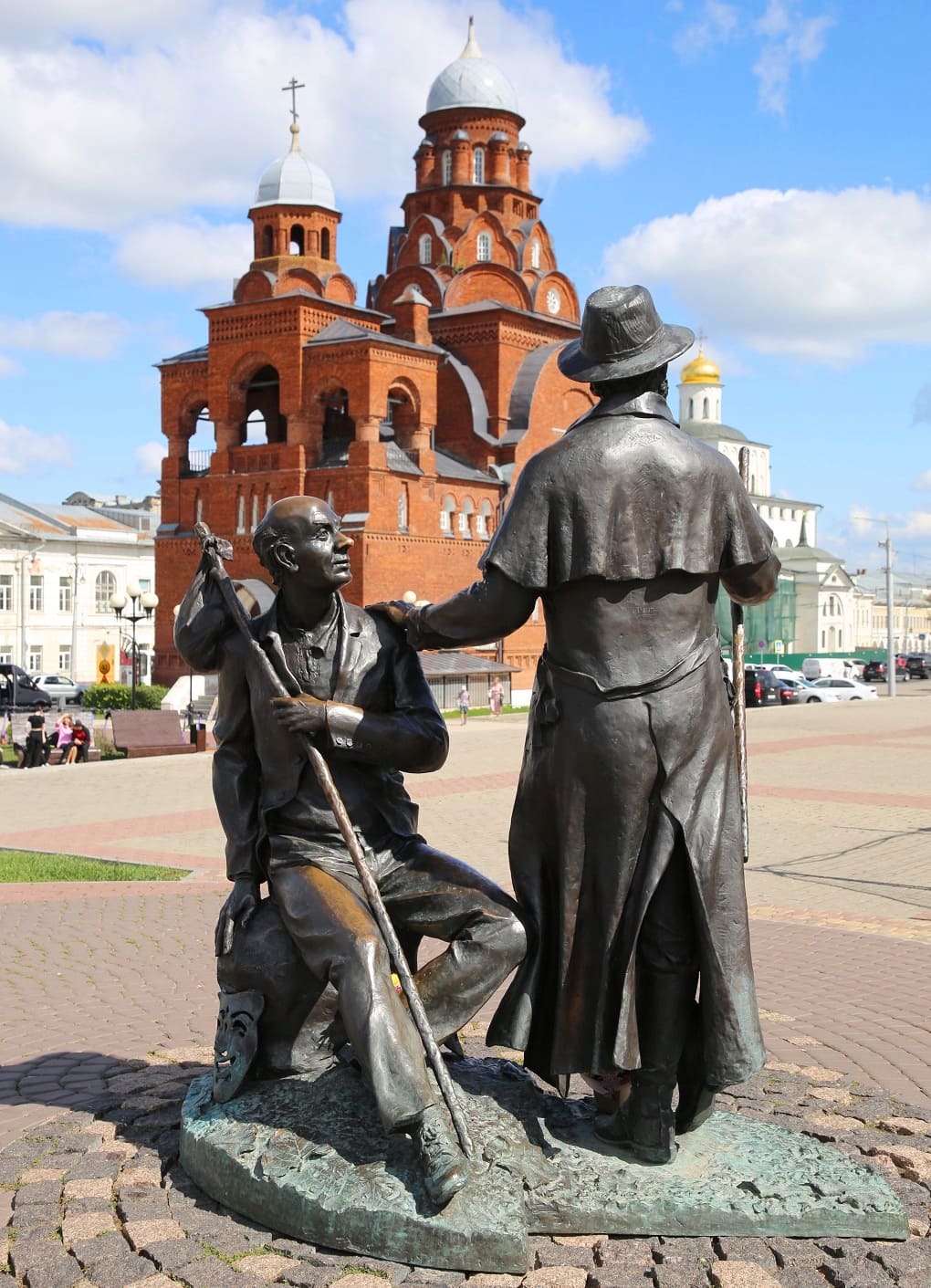
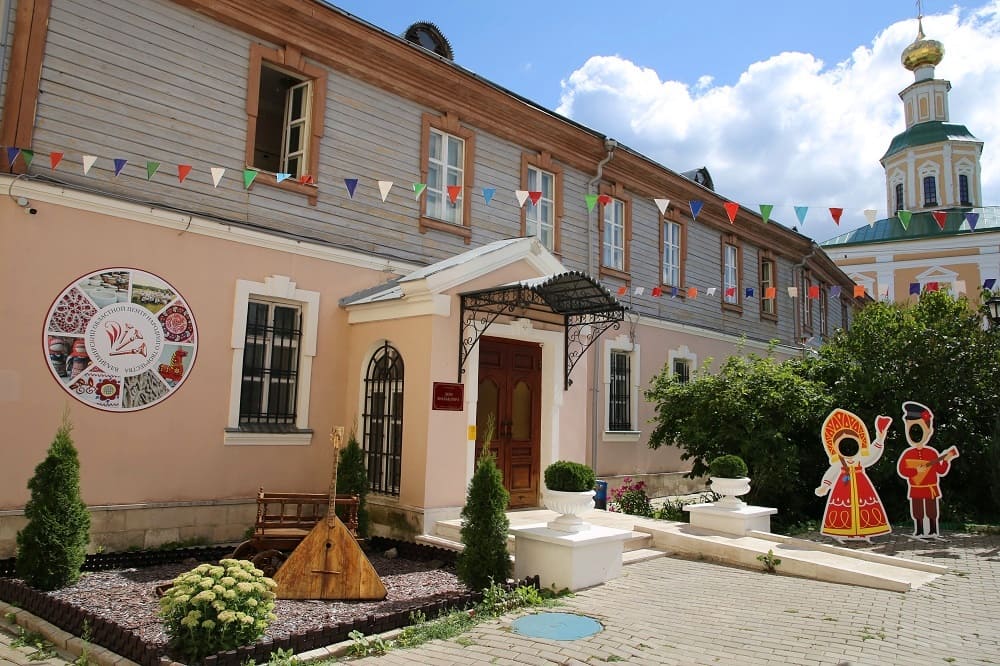
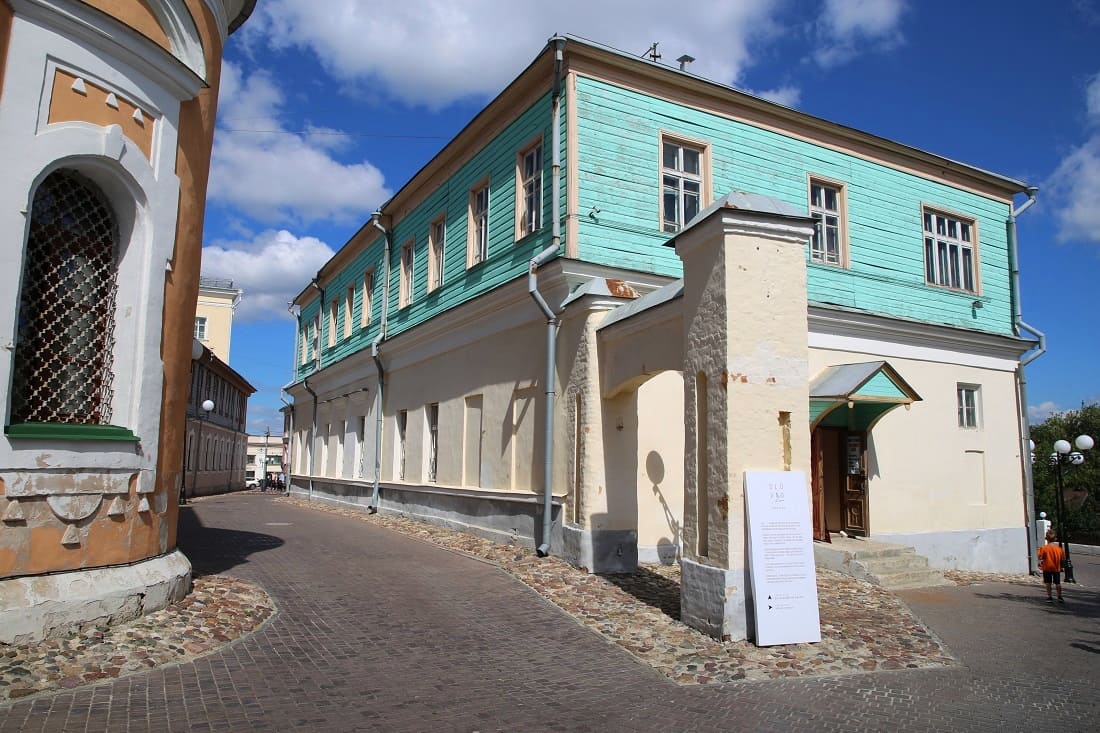
Attractions
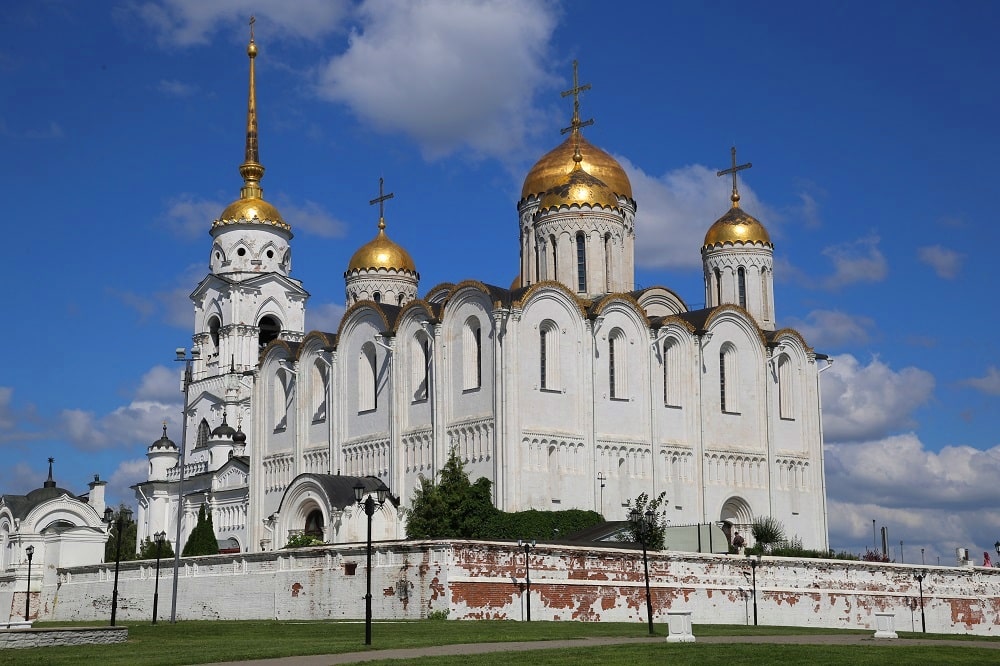
The Cathedral of the Dormition of the Blessed Virgin Mary (Uspensky Cathedral) is an Orthodox church and the cathedral of the Vladimir Diocese of the Russian Orthodox Church. It is an outstanding example of white-stone architecture of Ancient Rus’. Historically, before the rise of Moscow, it was the main church of Vladimir-Suzdal Rus’, where the princes of Vladimir and Moscow were crowned as Grand Dukes.
It is a monument of 12th-century Russian architecture that served as a model for several later cathedrals, including the Dormition Cathedral in the Moscow Kremlin. Today, the cathedral is jointly administered by the Russian Orthodox Church and the Vladimir-Suzdal Museum-Reserve.
It is the only church where authentic, documented, and precisely dated frescoes by Andrei Rublev, as well as works by Daniil Cherny, have been preserved.
In 1992, the Dormition Cathedral was inscribed on the UNESCO World Heritage List.
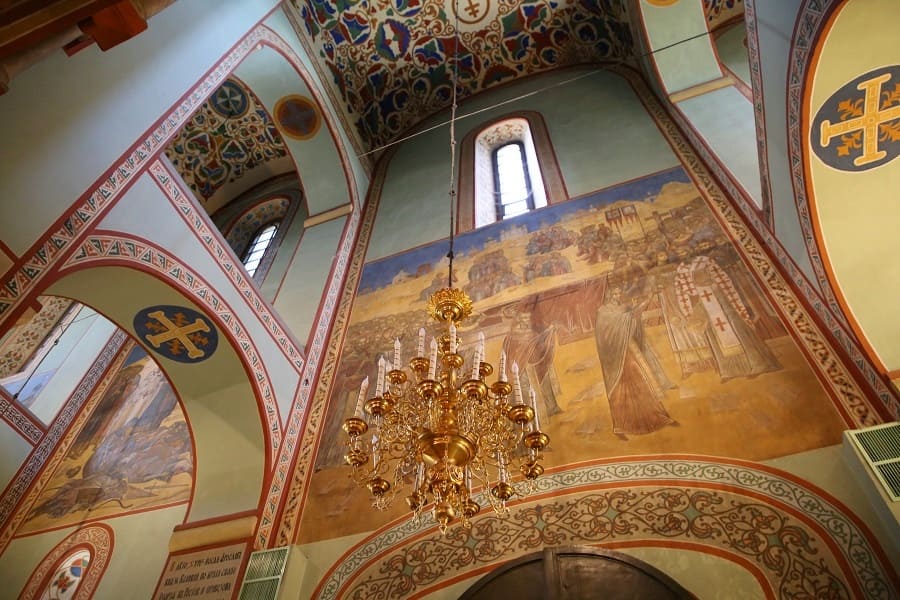
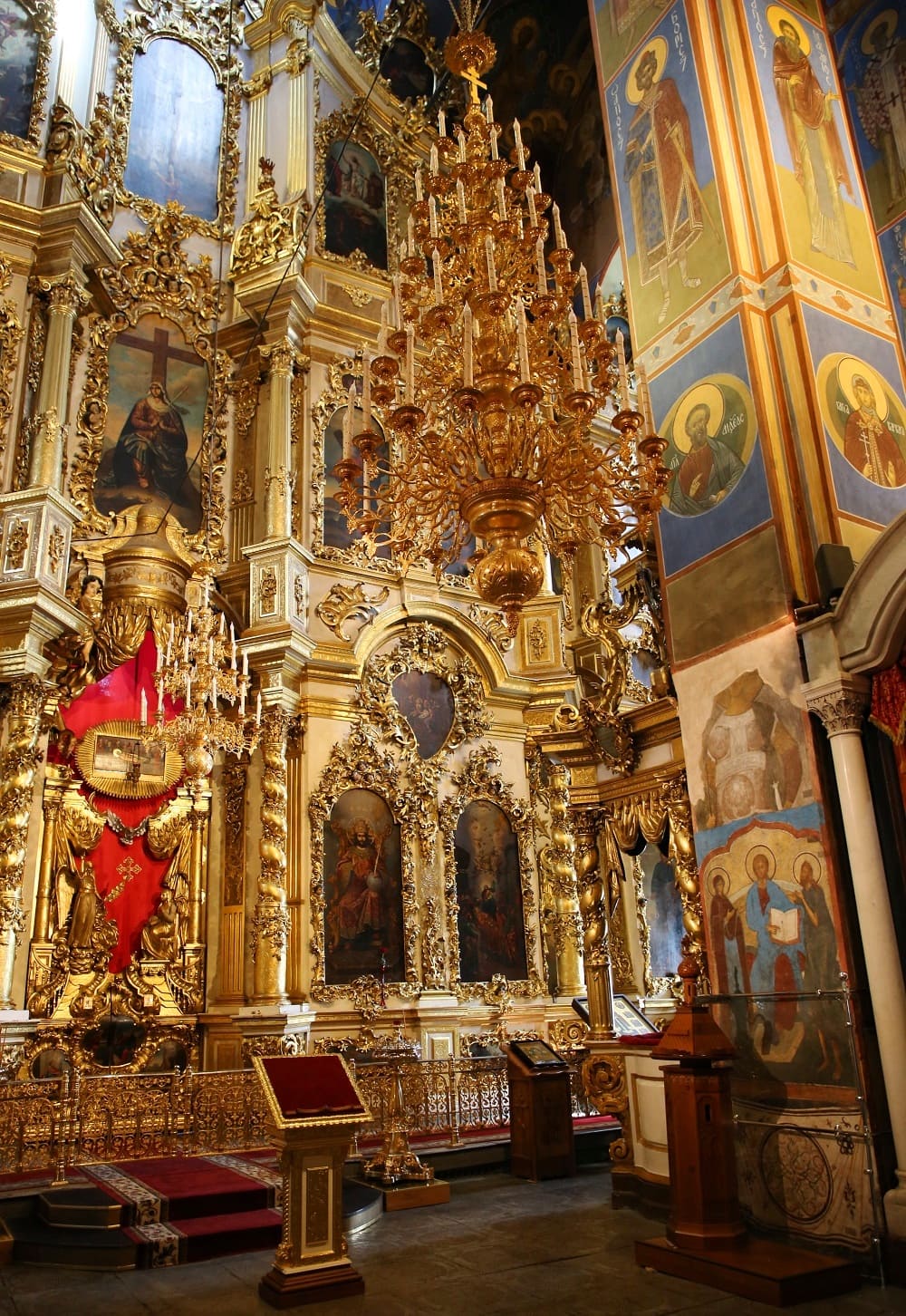
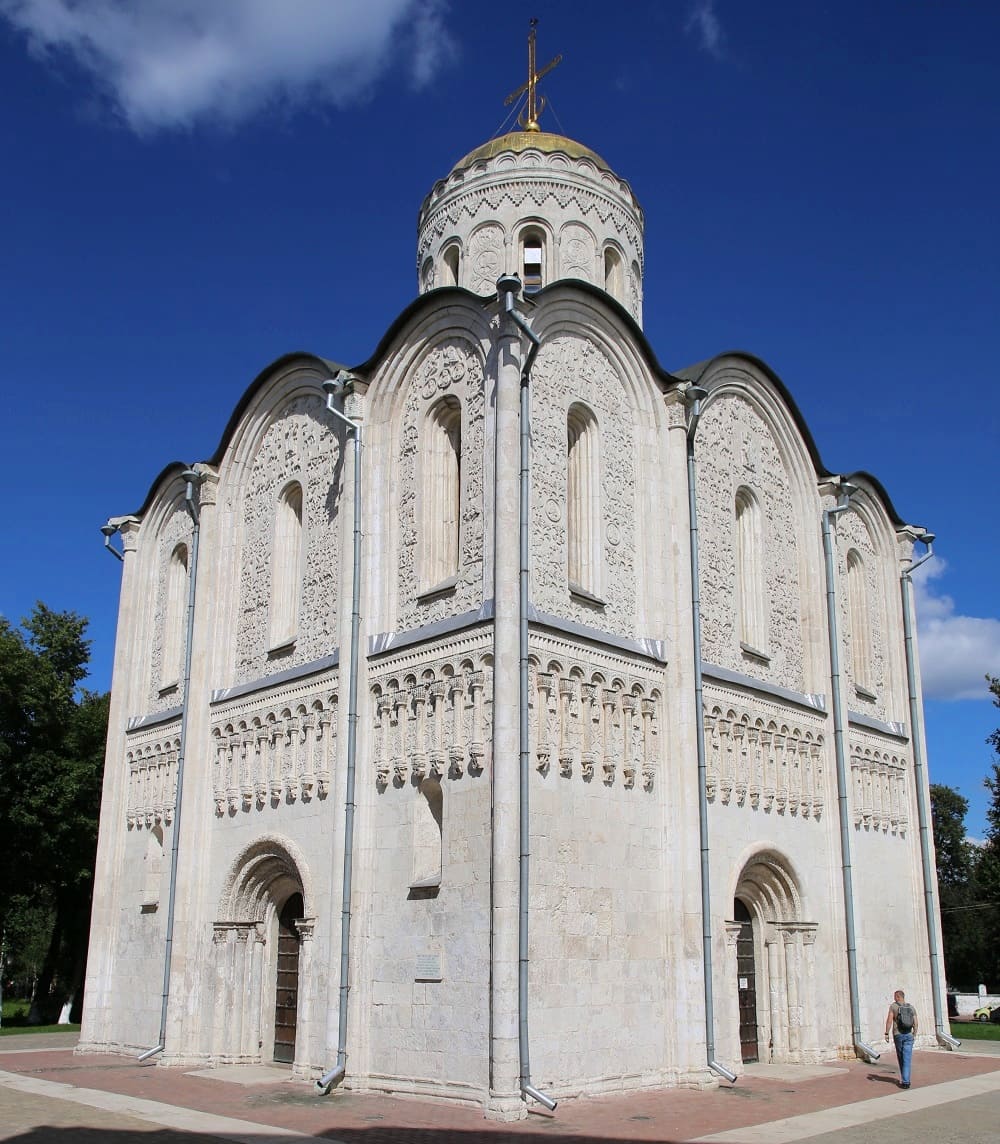
The St. Demetrius Cathedral is an active Orthodox church in Vladimir. It was built by Prince Vsevolod the Big Nest at his princely court and is dedicated to the Great Martyr Demetrius of Thessaloniki. The cathedral is a canonical example of a cross-in-square white-stone church of the Vladimir-Suzdal architectural school, and it is particularly renowned for its intricate white-stone carvings. The cathedral is also listed as a UNESCO World Heritage Site under the title “White-Stone Monuments of Vladimir and Suzdal.” It is currently managed by the Vladimir-Suzdal Museum-Reserve.
The Golden Gate is an outstanding example of Old Russian architecture in Vladimir and a UNESCO World Heritage Site. It was built in 1164 by order of Prince Andrei Bogolyubsky, who moved the principality’s capital from Suzdal to Vladimir. The gate served not only as a defensive structure but also as a triumphal arch, marking the main entrance to the princely and boyar district of the city, known as the New Town.
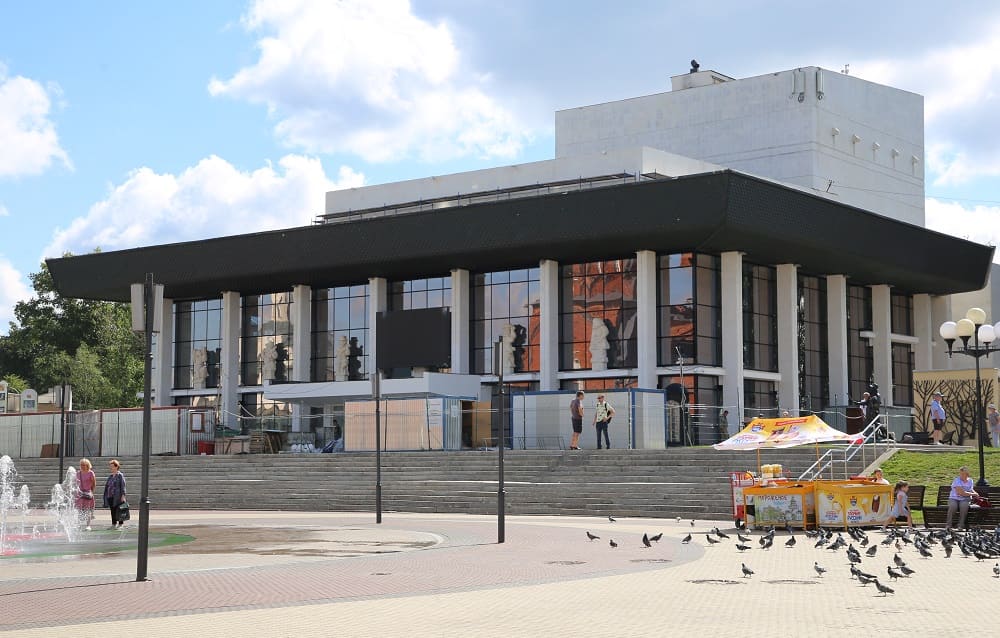
The Vladimir Academic Drama Theater is the cultural heart of Vladimir. It is located in the city center, at 4 Dvoryanskaya Street.
The City Duma Building is located in Vladimir, at 54 Bolshaya Moskovskaya Street. It is an architectural landmark of the early 20th century.
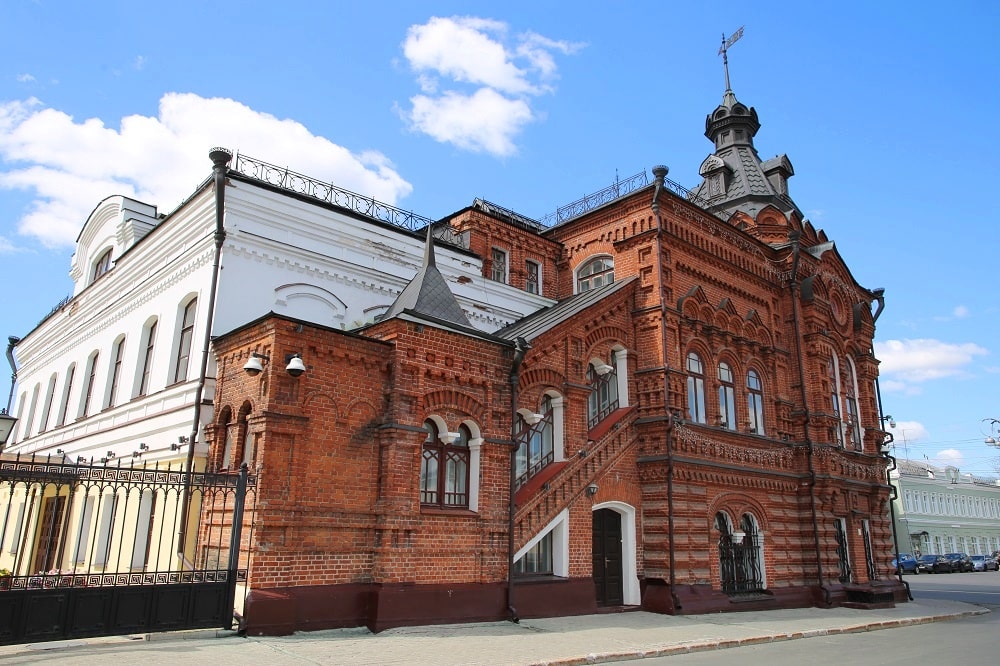
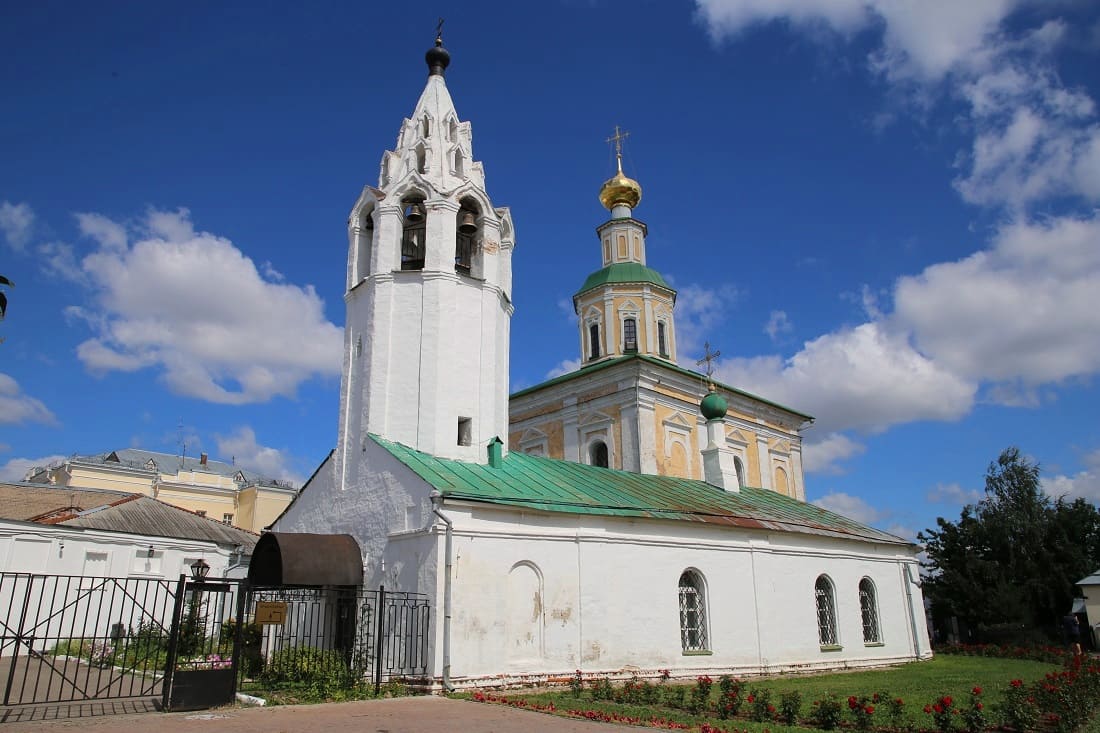
The Nikolay-Kremlin Church is an inactive Orthodox church in Vladimir. It is an architectural monument of federal significance.
The church received its name from its location on the site of the former city kremlin.
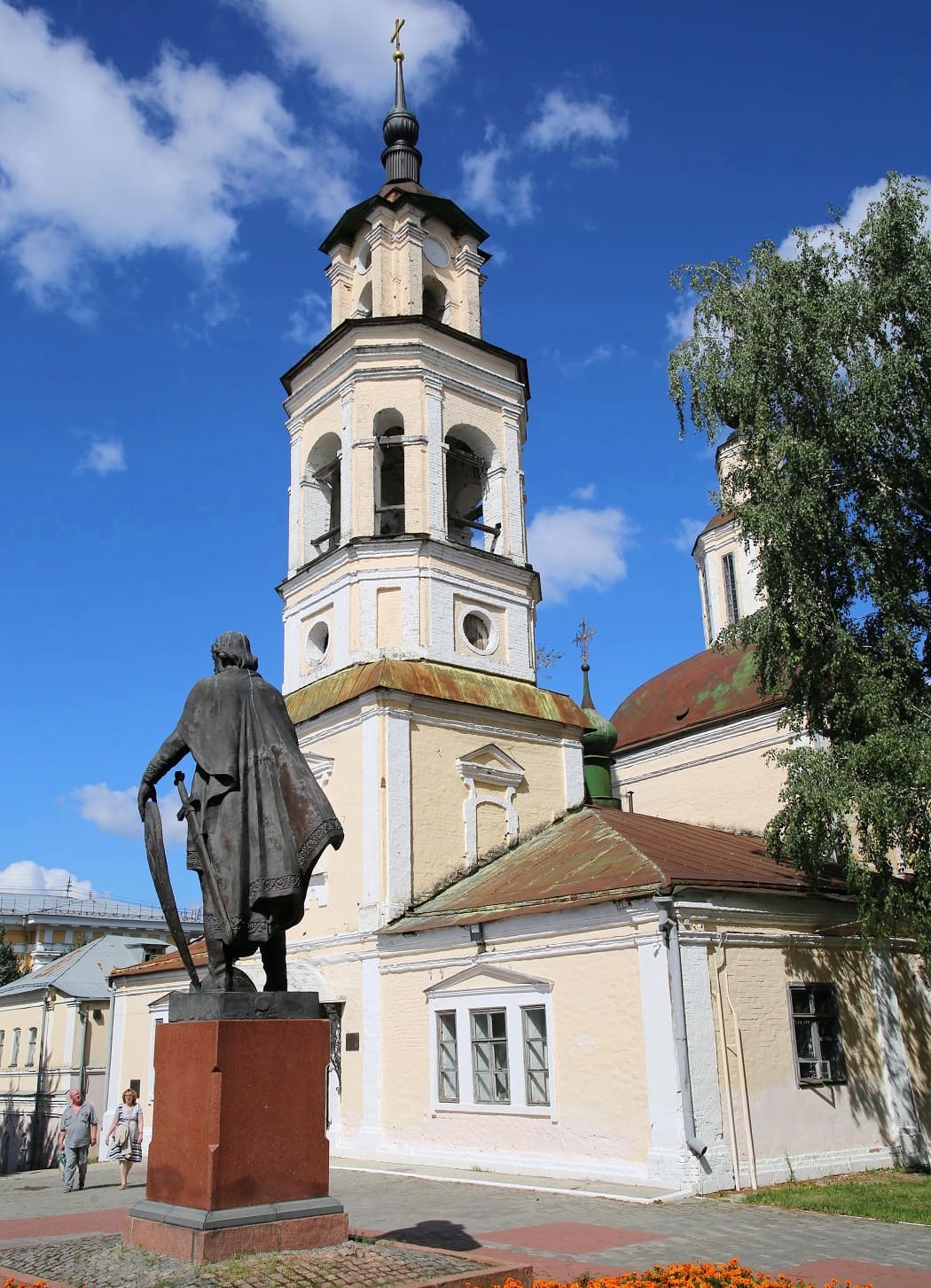
The Old Pharmacy Museum opened in August 2017 in the city’s historic center. It is housed in a former pharmacy building that is over two hundred years old. The museum’s exhibits include rare apothecary artifacts from the 18th and 19th centuries. The interior is decorated with unique 18th-century furniture from a private collection.
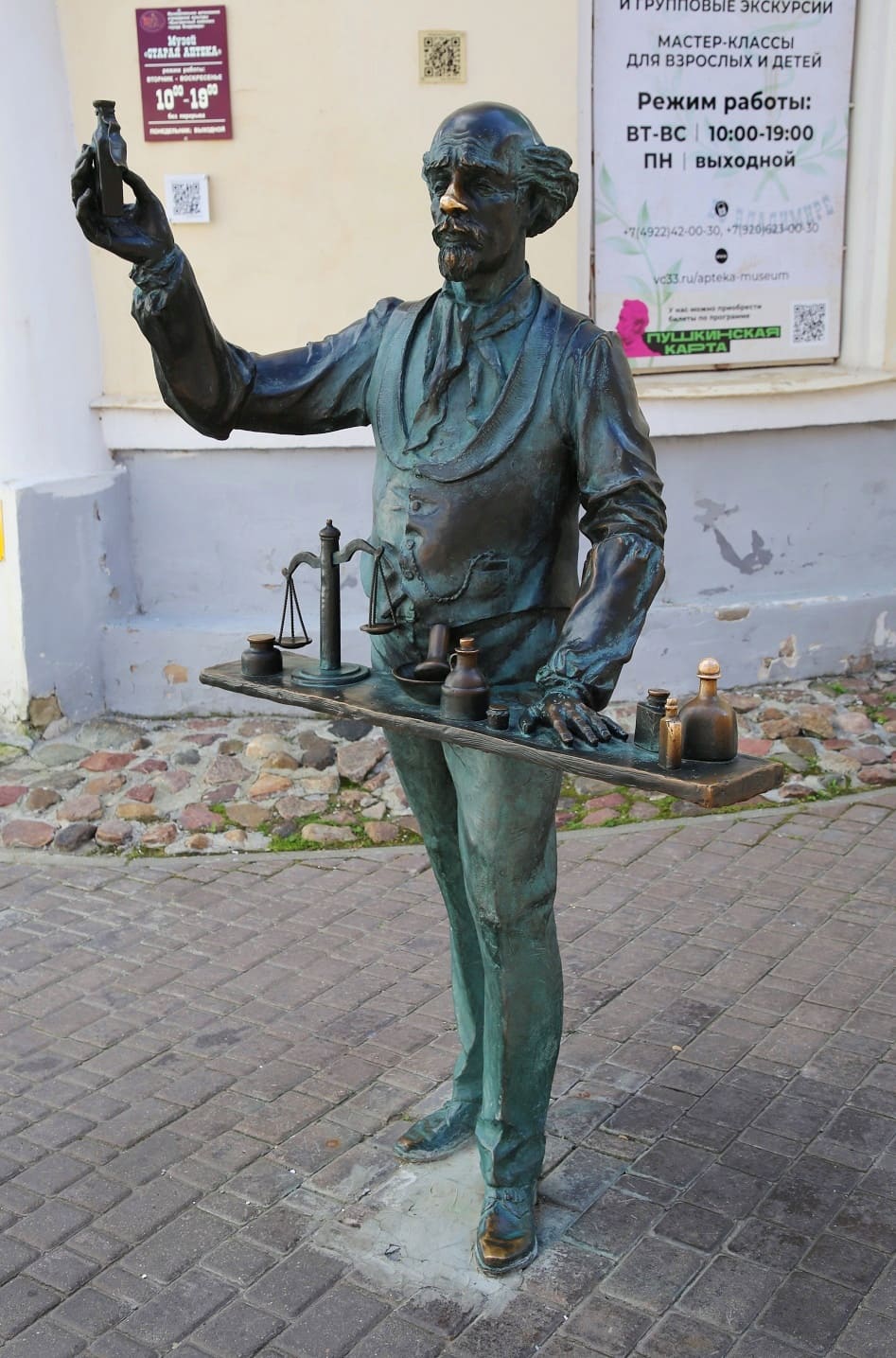
The Water Tower in Vladimir is a regional landmark of engineering and industrial architecture. Today, it is a museum and part of the Vladimir-Suzdal Museum-Reserve. The tower is located at 10 Kozlov Val Street.
The tower was built in 1912 according to the designs of architect S. M. Zharov. By the 1950s, it had lost its utilitarian function when the city’s water supply system was reconstructed. Since 1975, the tower has housed the “Old Vladimir” exhibition.
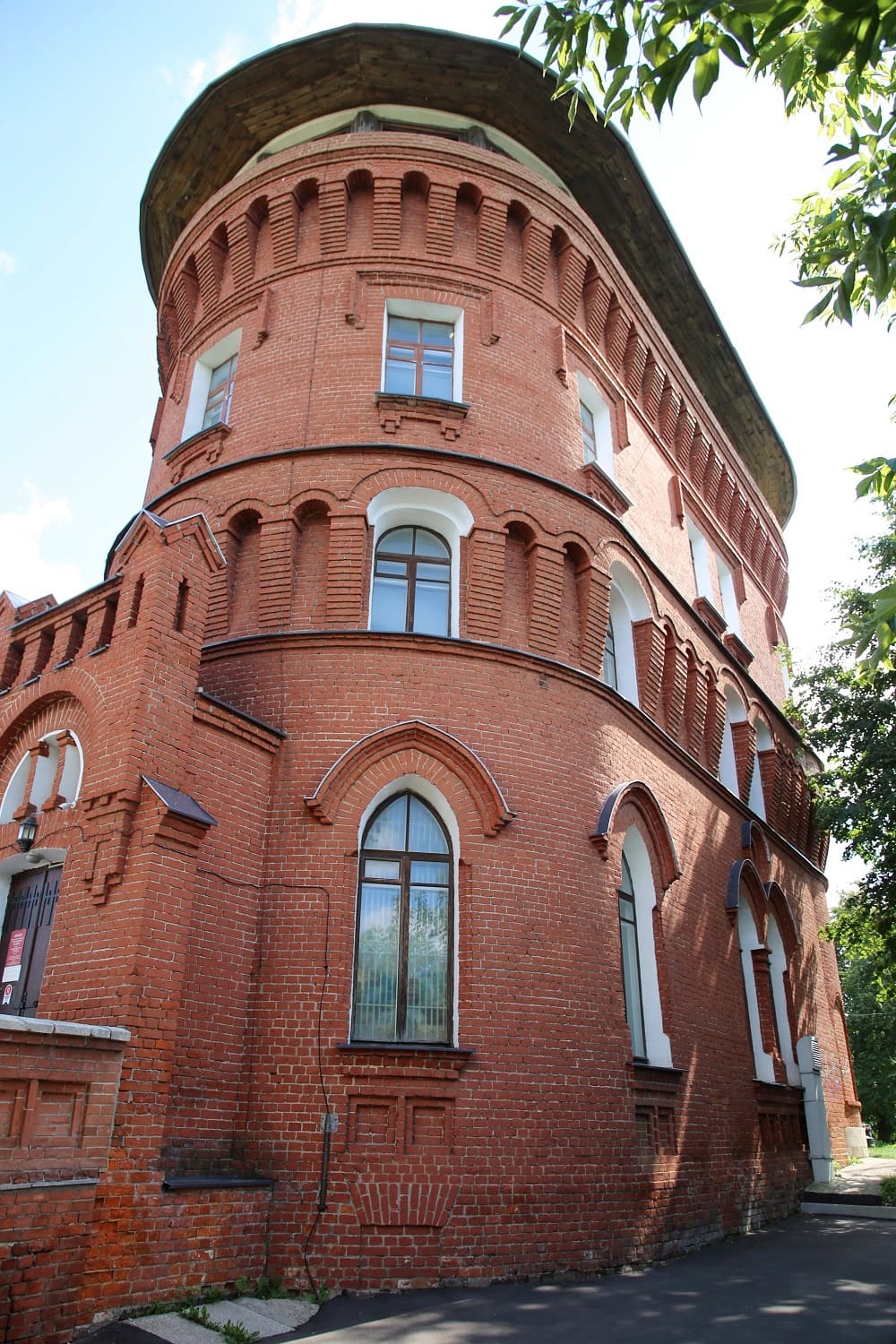
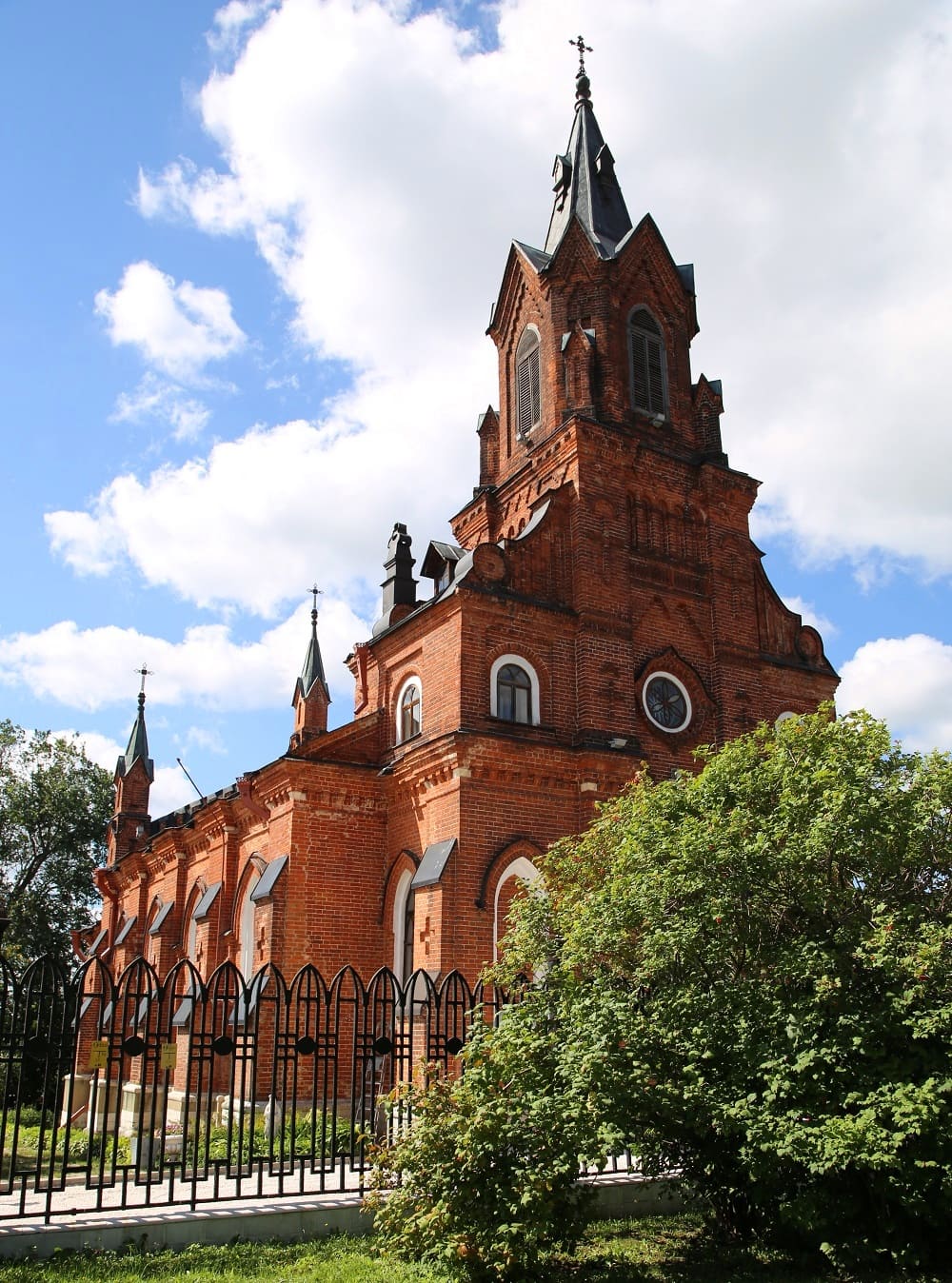
The Church of the Holy Rosary is the only Catholic church in the Vladimir Region. It belongs to the Archdiocese of the Mother of God, whose center is in Moscow, and is headed by Archbishop Metropolitan Paolo Pezzi. Services are regularly held in Russian, and the parish also hosts catechesis courses, sacred music concerts, and social initiatives. The church includes a bookstore offering religious literature.
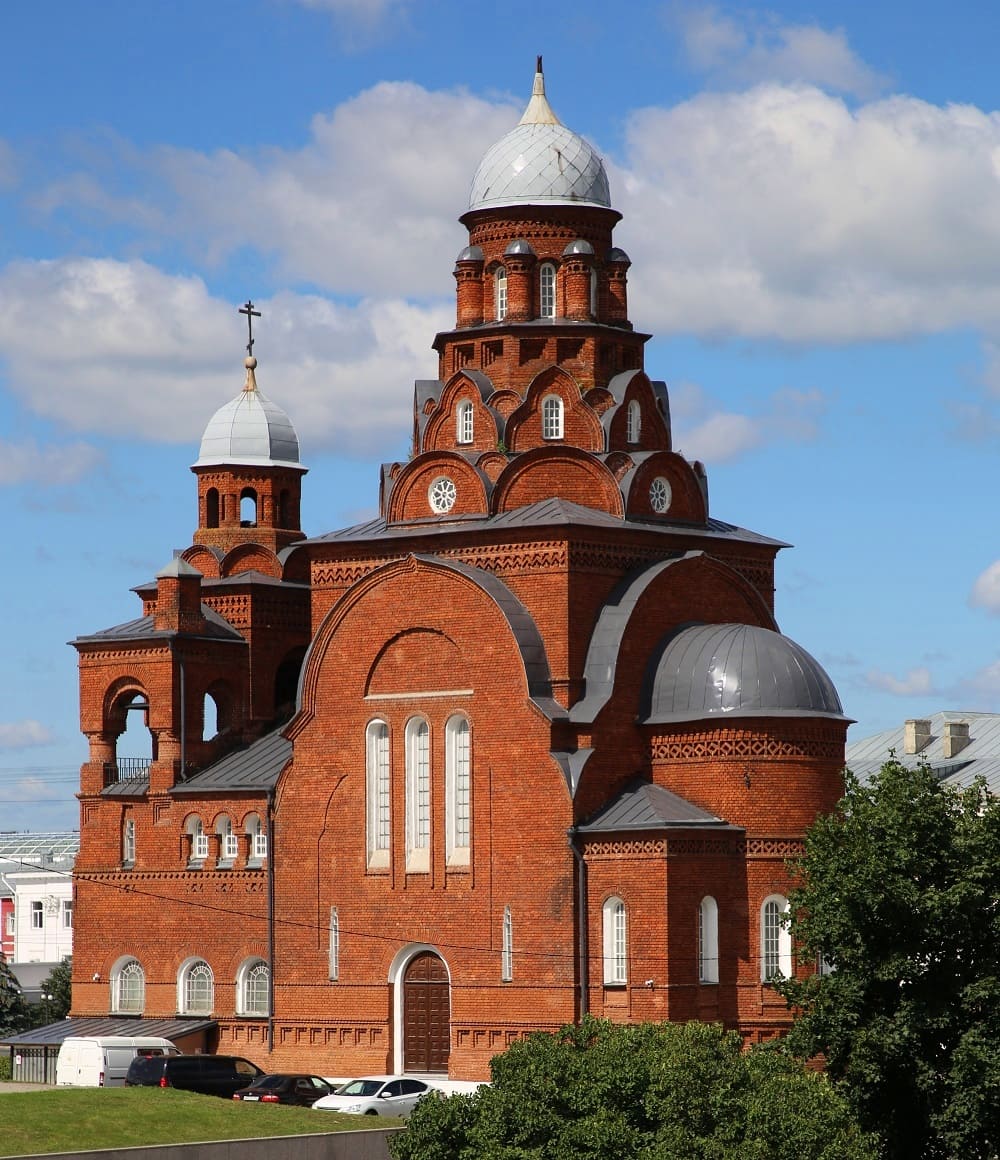
The Church of the Holy Trinity is a former Old Believer church in Vladimir, built in the Neo-Russian style between 1913 and 1916. It was closed in 1928 during the persecution of the Church and is now an architectural landmark of regional significance. Since 1974, the building has served as an exhibition hall of the Vladimir-Suzdal Museum-Reserve.
Transport
Vladimir is a city with a well-developed transportation network. Vladimir has well-established trolleybus and bus service. Buses connect Vladimir with district centers in the Vladimir region, Moscow, Ivanovo, Kostroma, Nizhny Novgorod, Ryazan, Yaroslavl, and other cities.
Semyazino Airport, owned by the Ministry of Defense, is located 5 km west of the city center. Regular flights between Vladimir and St. Petersburg, operated by Pskovavia, began in 2015. However, these services ceased in 2018.
Vladimir Railway Station is a junction on the Gorky Railway, serving at least 20 pairs of long-distance trains daily. From 2010 to 2015, Vladimir was connected to Moscow and Nizhny Novgorod by high-speed Sapsan trains.
Main information
Area: 137.14 km²
Coordinates (Vladimir): 56°07’42.2″N 40°23’58.1″E
Population: 341,579
Language: Russian
Currency: Russian Ruble (₽)
Visa: Russia
Time: UTC+3:00 (MSK)