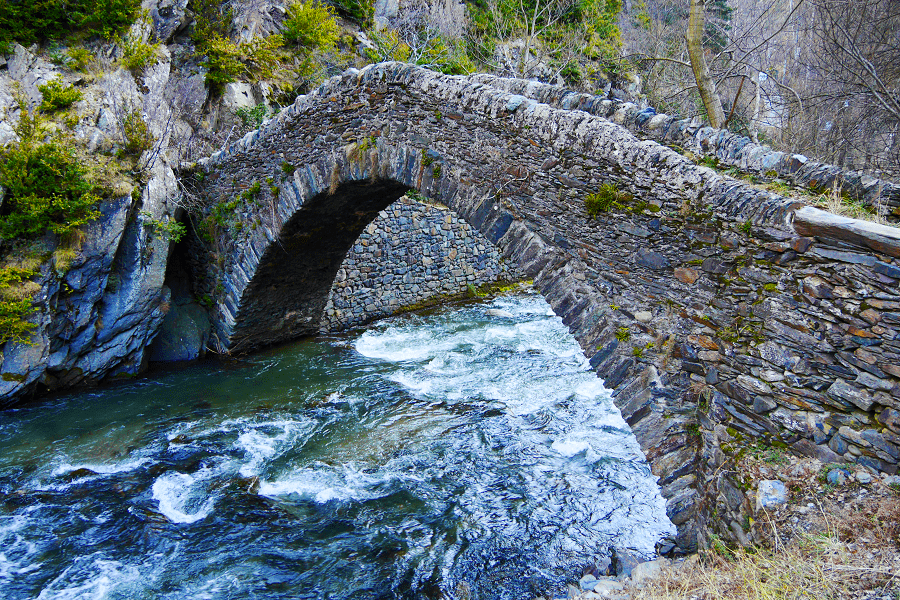
The Duero or Douro river (in Spanish, río Duero; in Portuguese, rio Douro) is one of the largest rivers of the Iberian Peninsula (Spain, Portugal). The second is the Ebro river.
It rises at an altitude of more than 2,000 meters in the Sierra d’Urbión (Iberian system), crosses the Castilian and Leonese plateau and enters Portugal, where it flows into the Atlantic Ocean near the city of Porto. Basin: 98,200 km².
In Roman times, the river was personified as a god, Durius.
The Douro Valley is known for its wines, from the Ribera del Duero appellation of origin in the Kingdom of Spain on the northern plateau of the Iberian Peninsula, to vinhos do Douro and the famous Porto wines in its mouth.
It has a length of 897 km, of which about 213 km are Portuguese, 112 km are border (international) and the remaining 572 km are Spanish. The basin belongs, for the most part, to areas with a dry climate, although the northern tributaries collect water from the Cantabrian mountain range, which is much more humid, in addition to the abundant contributions of the Tormes, Huebra and Àgueda rivers from the south.
In 1998, Portugal and Spain signed the Albufeira Convention, an agreement on the sharing of trans-boundary rivers to include the Douro, Tagus and Guadiana. The convention superseded an agreement on the Douro, signed in 1927, that was expanded in 1964 and 1968 to include tributaries.

Tributaries
Spain
Pisuerga, Esla, Adaja, Tera, Valderaduey and Tormes
Portugal
Côa, Tua, Sabor, Corgo, Tavora, Tâmega, Balsemão and Sousa.
Irrigated cities
Among the cities located on the banks of the Douro, the following stand out in Spain: Sória, Almazán, Aranda de Duero, Tordesillas and Zamora and in Portugal Miranda do Douro (in Miranda deI Douro), Foz-Coa, Peso da Régua Lamego, Vila Nova de Gaia and Porto. In Portugal, the Duero crosses the districts of Bragança, Guarda, Vila Real, Viséu, Aveiro and Porto.
The scenic Douro railway line runs close to the river. Adjacent areas produce port (a mildly fortified wine) and other agricultural produce. A small tributary of the river has the Côa Valley Paleolithic Art site which is considered important to the archaeological pre-historic patrimony, designated a UNESCO World Heritage Site. Within Spain, it flows through the middle of the autonomous community of Castile and León, with the basin spanning through the northern half of the Meseta Central. The latter includes wine producing areas such as the Ribera del Duero DOP.
See here Andorra travel guide
See here Pyrenees travel guide
See here France travel guide
See here Spain travel guide