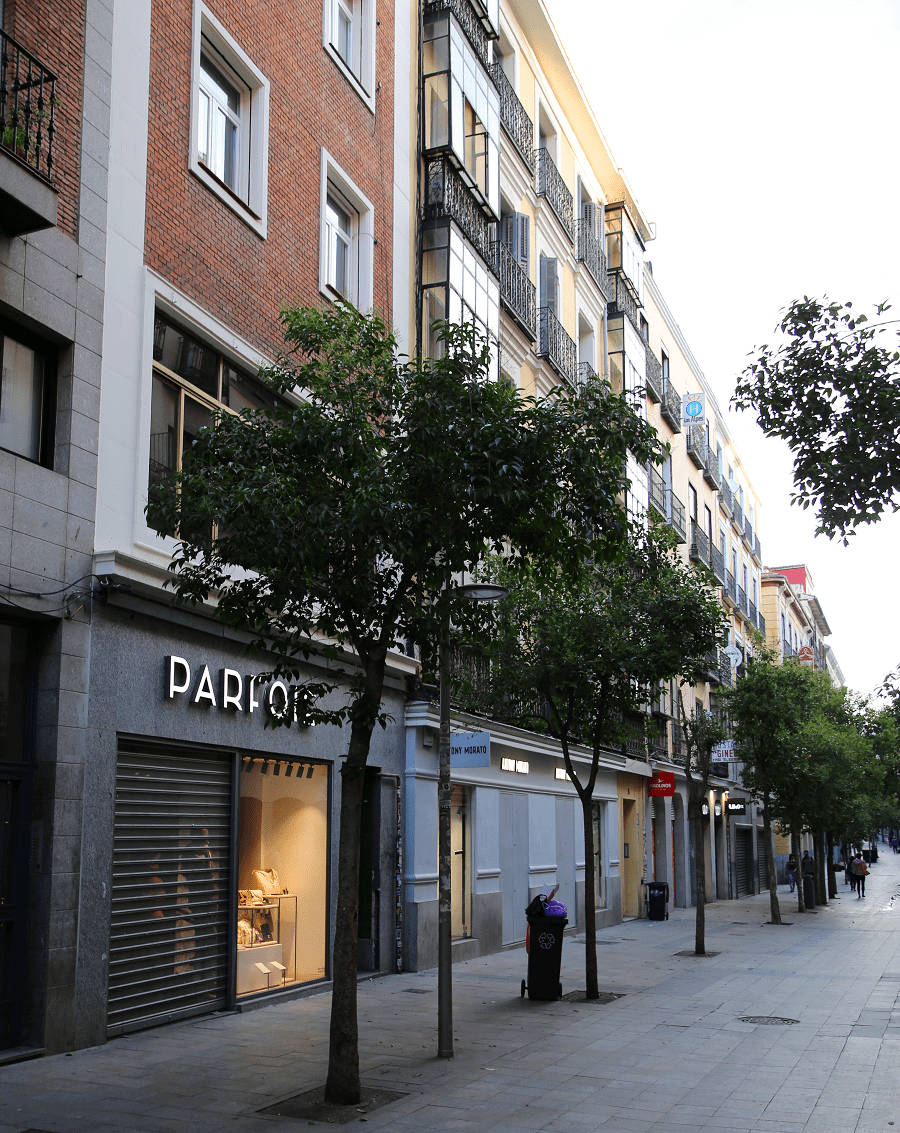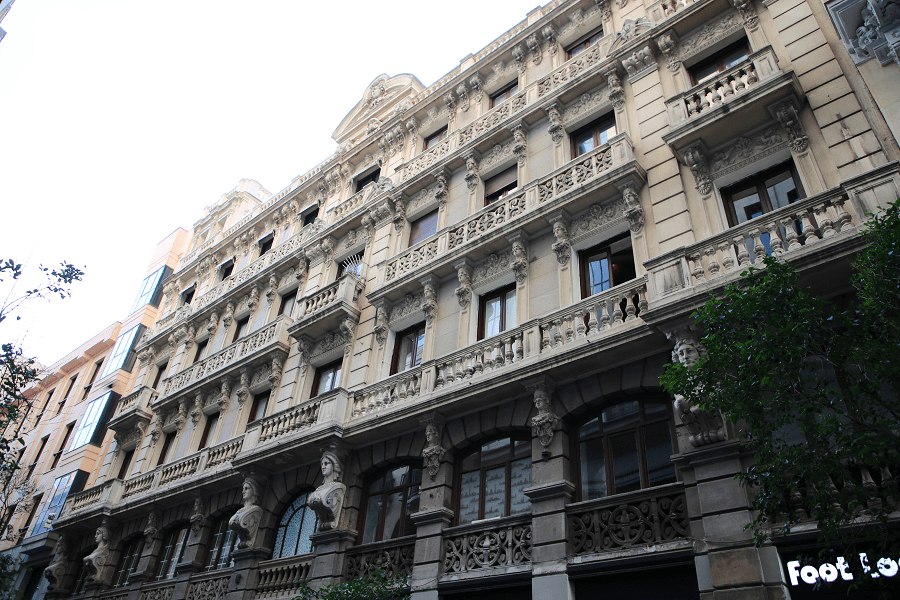
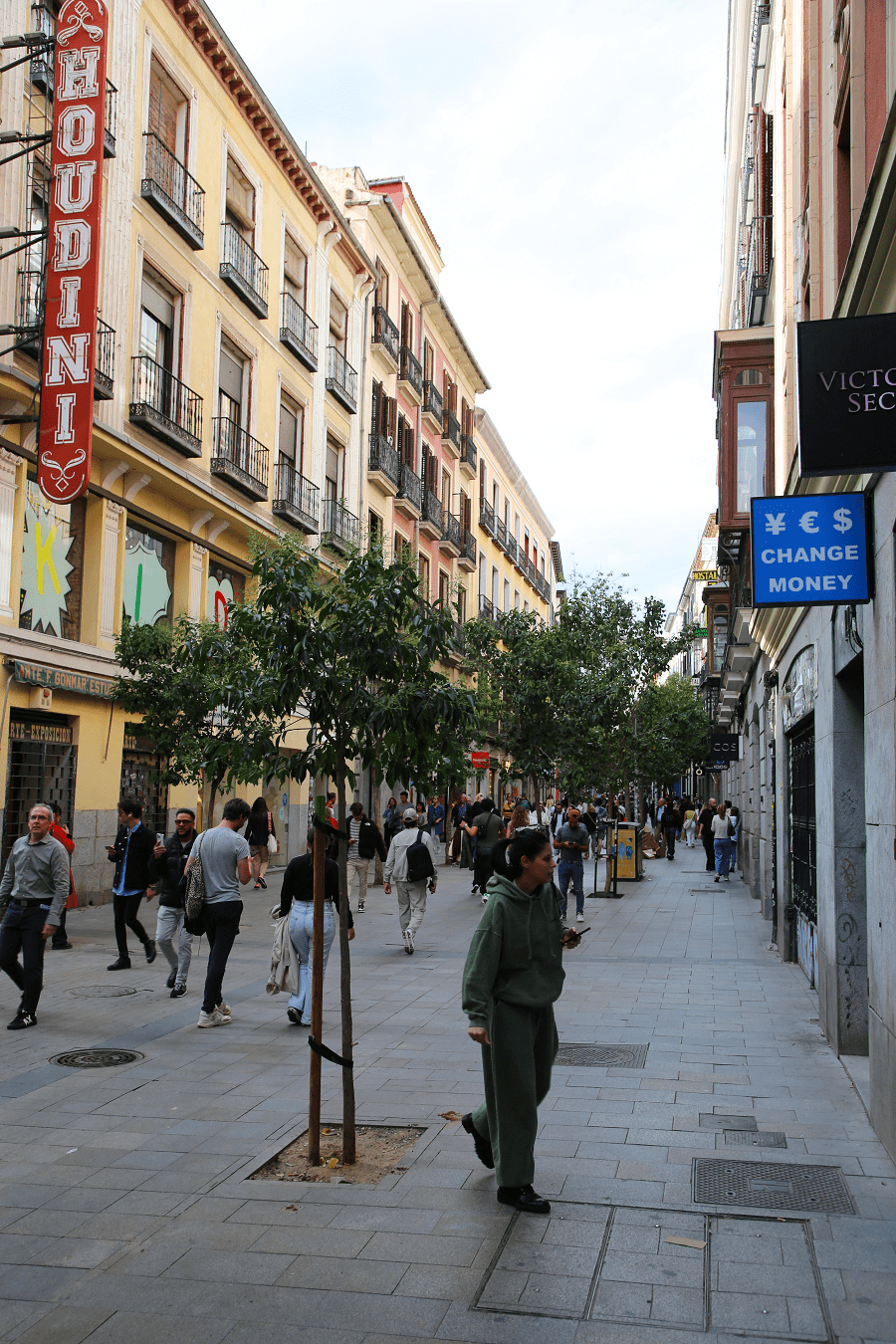
Fuencarral Street is a commercial street in Madrid, Community of Madrid, Spain, that runs from south to north between the Chueca and Malasaña neighbourhoods, from Gran Vía to the Quevedo roundabout, in the Centro and Chamberí districts.
History
It takes its name from being one of the roads that connected medieval Madrid with the old town of Fuencarral. Since the end of the 19th century it has developed a tradition of being a busy and commercial street, despite the narrowness of the pavements and roadway in its initial part; and already at the beginning of the 21st century different mayors modified some sections as a pedestrian street.
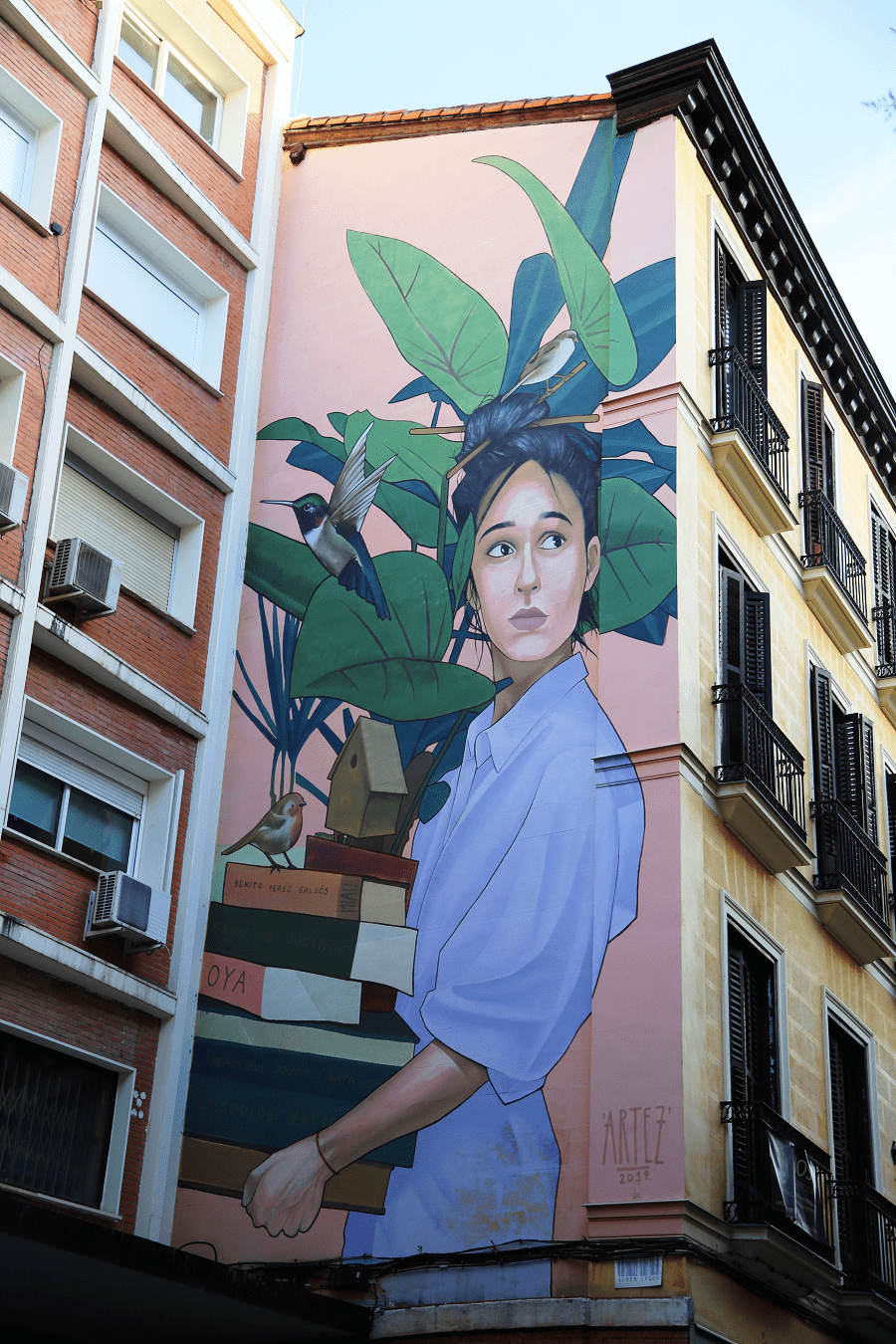
Its layout and name are due to the fact that originally this was one of the roads that led to the village of Fuencarral, together with the almost parallel roads of Valverde (named after the Virgin of Valverde, Patron Saint of the town of Fuencarral) and Hortaleza, which reached the small town of that name.

The surrounding land was occupied by the mountains of the municipality of Fuencarral, during the reign of Philip III, it appears as a “road or street of Fuencarral” in the Texeira plan of 1656 and in that of Espinosa (1769), in which it ends at the Puerta de los Pozos, demolished in 1865 together with the neighbouring Fuencarral gate, actually located on Calle Ancha de San Bernardo. Among the oldest buildings, the chroniclers speak of the Quinta del Buen Pastor or the disappeared hermitage dedicated to Saint Paul and some «rustic houses», registered since 1653.
Initially, the final stretch of the street (between the present-day Bilbao and Quevedo roundabouts) was called Calle de la Mala de Francia, as it was the natural exit for the post offices and stagecoaches of the old Irún road.
At number 48, the Humilladero de Nuestra Señora de la Soledad is preserved, a small brick chapel built in 1712.
Main attractions
At number 78, occupying the most noble part of the former Royal Hospice of San Fernando, is the Museum of History of Madrid, created as a Municipal Museum in 1929 and converted into the Museum of the History of Madrid in 2007. Closed for a long period of remodelling, it reopened in 2014. In its space is the large model of Madrid, built between 1828 and 1830 by the engineer and military cartographer León Gil de Palacio and which shows the city before the confiscations that led to the demolition of numerous convents and the sanitation of urban spaces, giving rise to the major reforms of the Puerta del Sol and the Gran Vía.
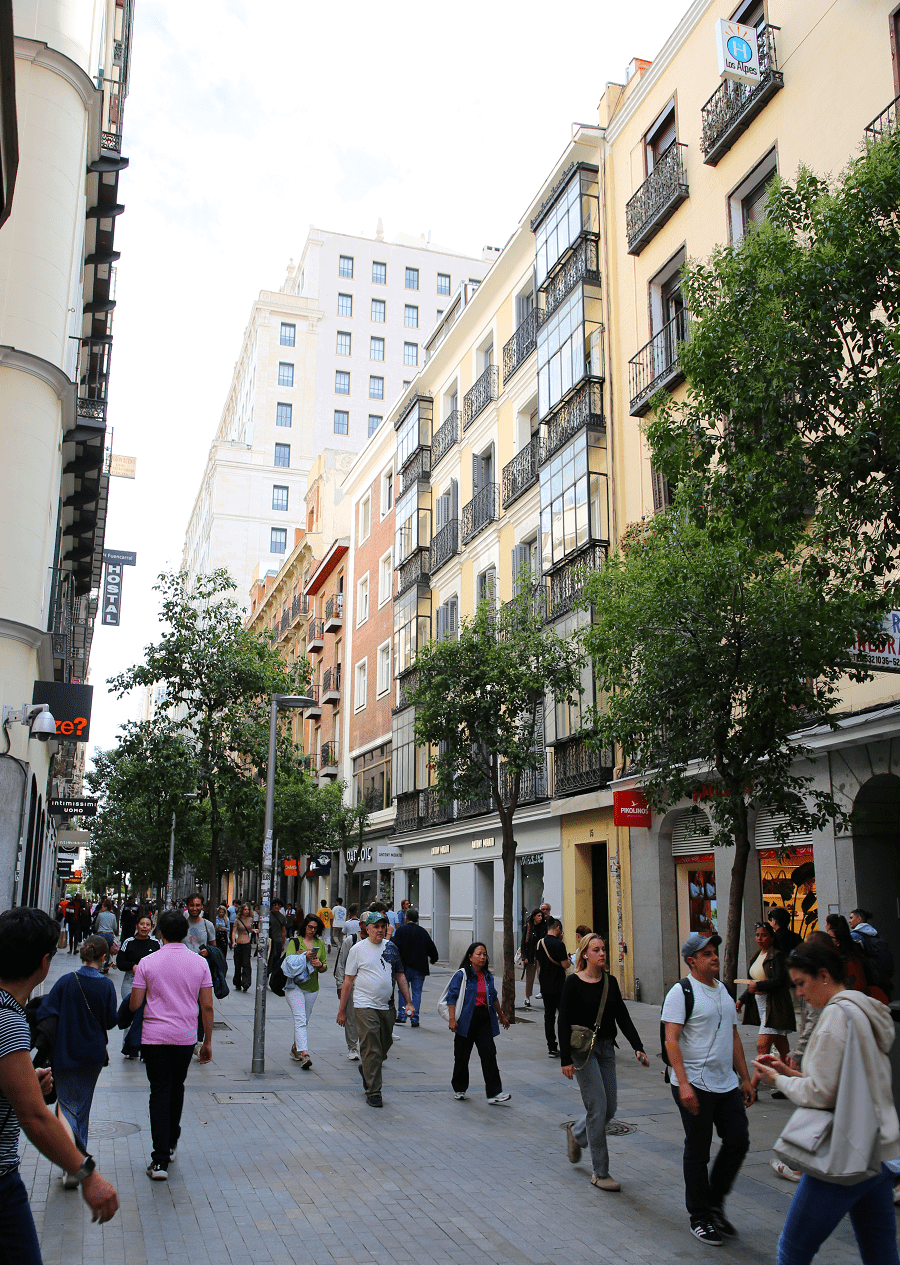
At the height of number 81 is the building of the Court of Accounts, work of Francisco Jareño y Alarcón in 1860, with later reforms, rectifications and the addition of an attic above the original cornice.
At number 129 – at the junction of Sandoval, Ruíz and Fuencarral streets – was the first Maravillas Theatre, inaugurated in 1887 as a summer hall. The last Maravillas Theatre, a permanent theatre designed by Alfonso María Vega and opened in 1918, is located on Manuela Malasaña Street, with a turnoff to San Andrés Street.
Madrid: full guide
- Administrative structure
- Architecture
- Churches and Cathedrals
- Entertainment
- Museums
- Parks and gardens
- Restaurants
- Shopping and markets
- Squares
- Streets
- Transport
See here Pyrenees travel guide
See here France travel guide
See here Spain travel guide