

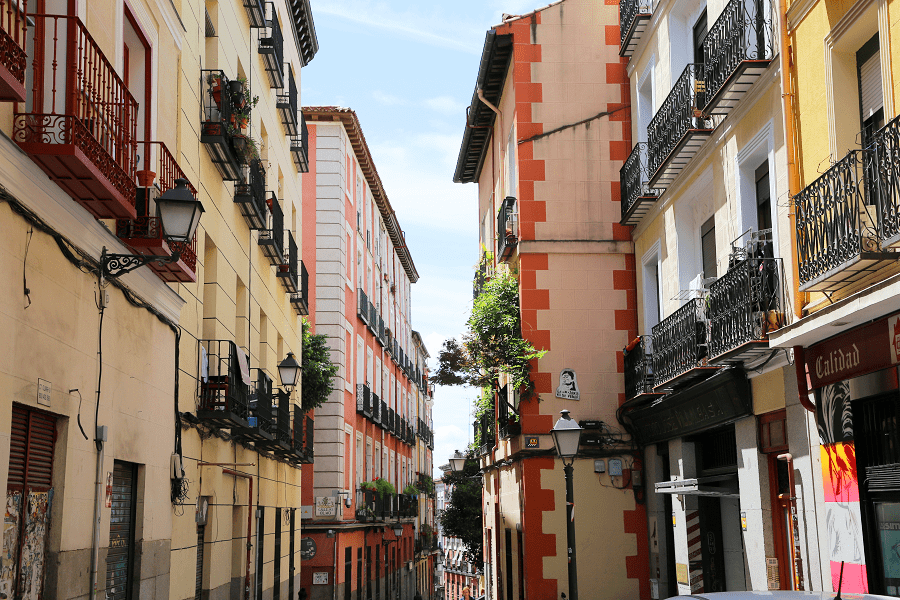
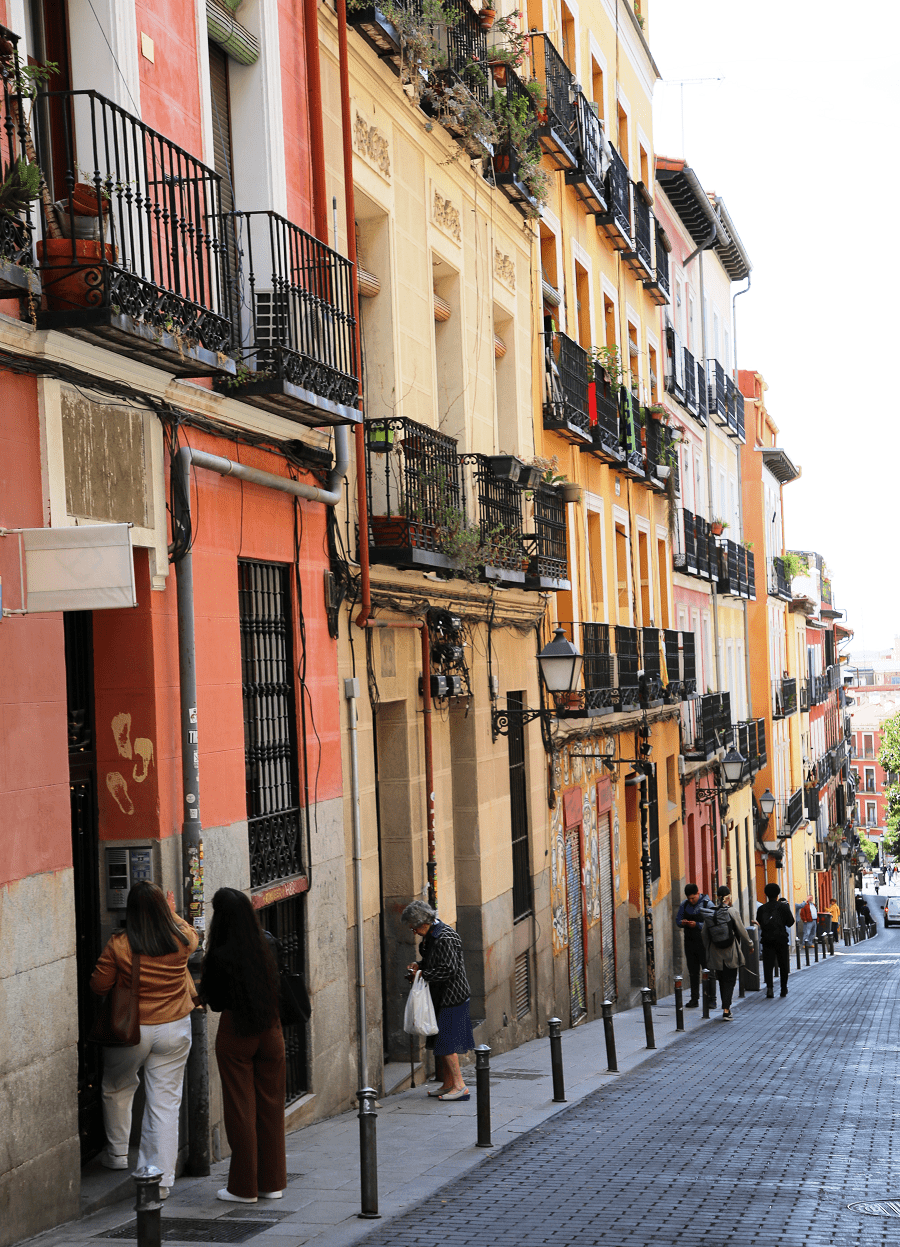
The Calle del Olivar, in the Lavapiés neighbourhood of the Centro district of Madrid, Community of Madrid, Spain, is a narrow street that descends from Calle de la Magdalena to Plaza de Lavapiés, in the labyrinth of alleys of the old Ministriles and Avapiés neighbourhoods of the Hospital district.

History
Chroniclers relate that before being urbanised, the entire area of the upper Lavapiés was a hill populated by an extensive olive grove, a plausible fact given the proximity of the Madrid Jewish quarter, which reached as far as the sanctuary of the Virgen de Atocha.
In relation to this olive grove, the legend of Catholic tradition is preserved of the supposed desecration in 1564 of the crucifix that crowned the Stations of the Cross at the top of the hill (a crime once again attributed to ‘some Jews’).

Legend attributes to Philip II the pious gesture of ordering the court of the empire where the sun never set to wear mourning, and urged Cardinal Quiroga, Archbishop of Toledo, to find an artist to recompose the image and take it in a solemn procession to the convent of Atocha and from there to the hermitage rebuilt in 1598 and which would take the name of the hermitage of Cristo de la Oliva.
Madrid: full guide

See here Pyrenees travel guide
See here France travel guide
See here Spain travel guide




