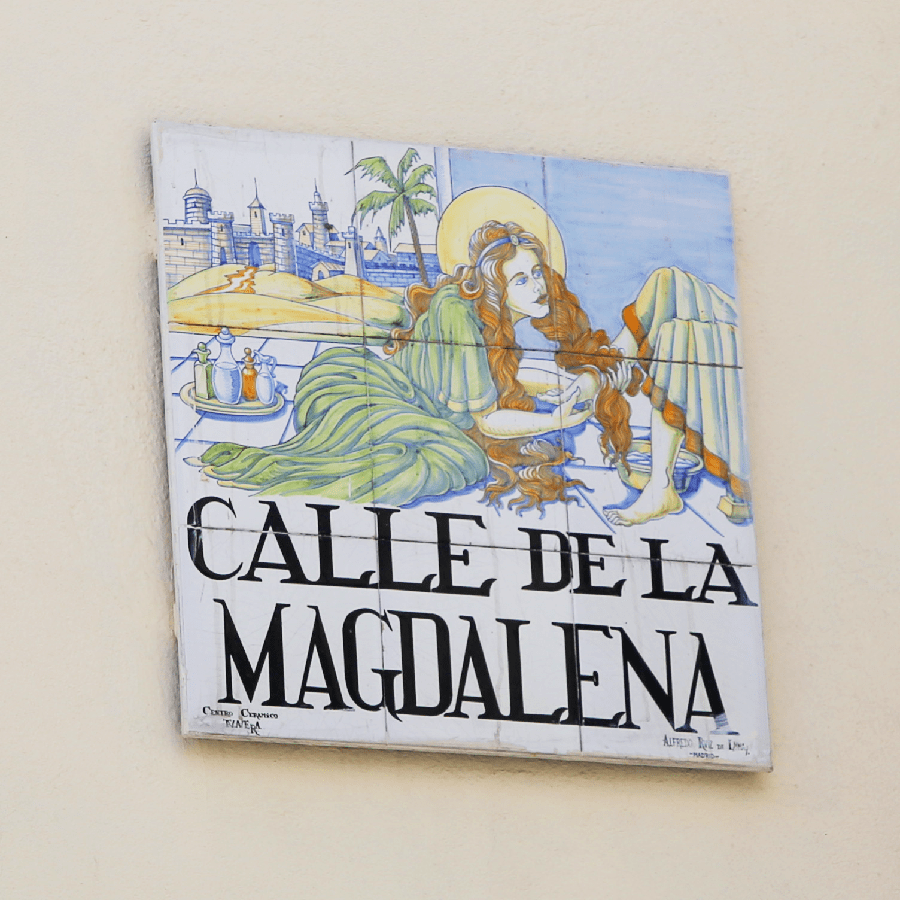
Magdalena Street is a street in the Centro district of Madrid, El Madrid de los Austrias, and borders the Barrio de las Letras. It runs from Plaza de Tirso de Molina to Calle de Atocha, taking its name from the primitive hermitage of Santa María Magdalena. Miguel de Cervantes lived there and Patricio de la Escosura and the mayor Alberto Aguilera died there.
History
It seems probable that the historical origin of this street was the hermitage dedicated to the holy courtesan and friend of Jesus of Nazareth and with more reason when Luis Manrique de Lara, almoner of Philip II founded in the 16th century the convent of Augustinian nuns that, giving access to the neighbouring Calle de Atocha, was dedicated to Magdalena.
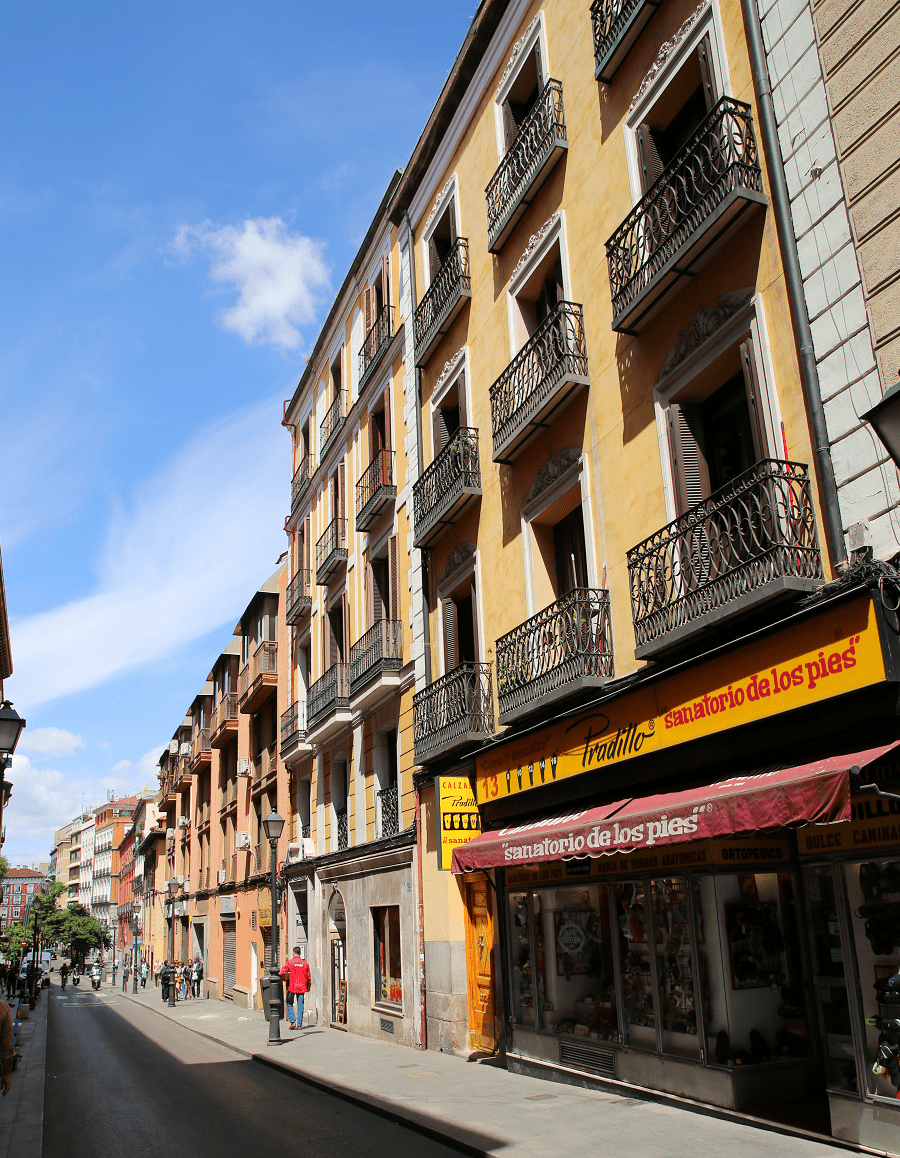
In his entertaining work dedicated to the streets of Madrid, Pedro de Répide adds that at the time of the Christian conquest of the town and the citadel of “Majerit”, along what would later become this street, a path ran between reed beds and an olive grove next to the primitive hermitage of Cristo de la Oliva, where the Calvary that started from the old convent of San Francisco ended; then following this path to the Atochar meadow, passing behind the hermitage of Santa María Magdalena.
Main attractions
Palace of the Marquis of Perales
It’s the headquarters of the Filmoteca Española. The traditional building, with a “leafy Churrigueresque façade” and designed by the architect Pedro de Ribera in the 18th century, was the scene of the bloody assault on the town of Madrid on 1 December 1808.
Teatro Variedades
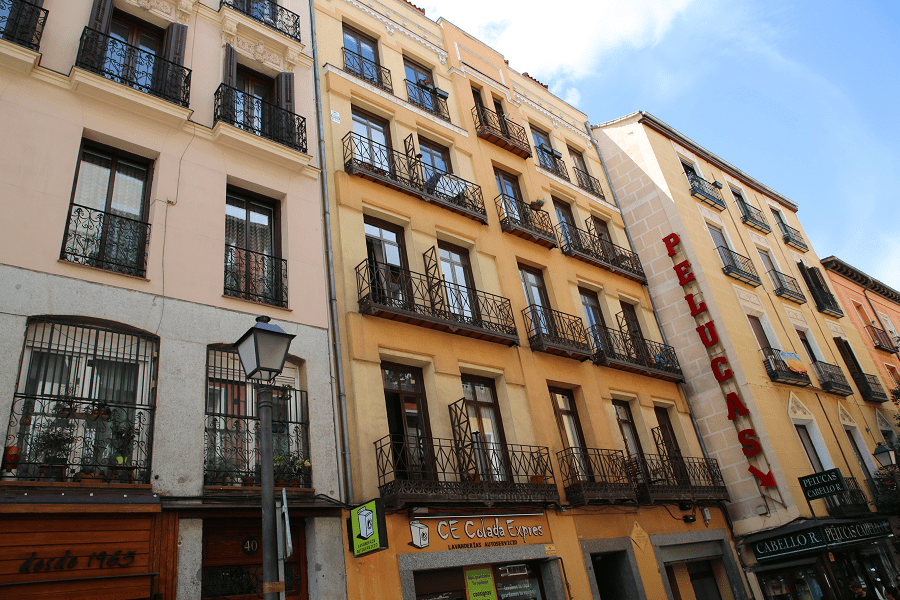
Between 1843 and 1888, the former number 40 (built on the site of a ball court) housed a modest and popular theatre known as Teatro Variedades, where great figures of Spanish comedy worked, such as Teodora Lamadrid, Carolina Civili, Julián Romea, Rodrigo Arjona and Emilio Mario. Here, the entrepreneurs Vallés, Luján and the master of the short genre Antonio Riquelme successfully made a variant of comic theatre fashionable, which materialised in the so-called “theatre by the hour”. On the night of 28 January 1888, the premises were destroyed by fire, and were never rebuilt.
Madrid: full guide
- Administrative structure
- Architecture
- Churches and Cathedrals
- Entertainment
- Museums
- Parks and gardens
- Restaurants
- Shopping and markets
- Squares
- Streets
- Transport
See here Pyrenees travel guide
See here France travel guide
See here Spain travel guide