

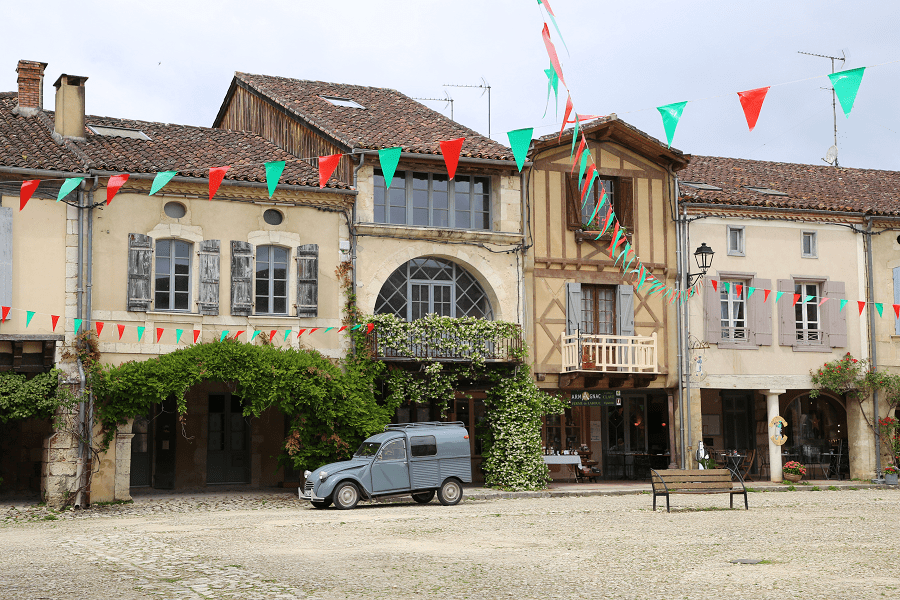
Labastide-d’Armagnac (sometimes spelled La Bastide d’Armagnac) is a commune in southwestern France, located in the Landes department (Nouvelle-Aquitaine region).
The commune is located in the eastern part of the Landes department, in the Eauzan region of Bas-Armagnac. In the first half of the 19th century, it was part of the neighboring department of Gers (Occitania). By the law of February 5, 1850, it was separated from the canton of Cazaubon, arrondissement of Condom, and merged with the Landes department.
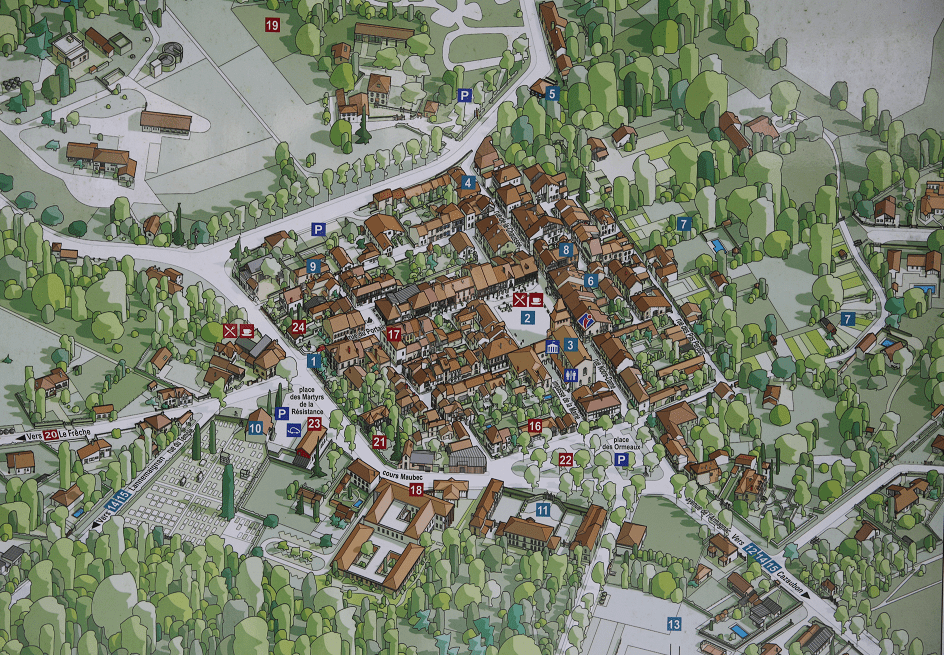
The neighboring communes are Betbezer-d’Armagnac, Cazaubon, Lagrange, Lannemaignan, Le Frêche, Mauléon-d’Armagnac, Mauvezin-d’Armagnac, Monclar, and Saint-Justin.
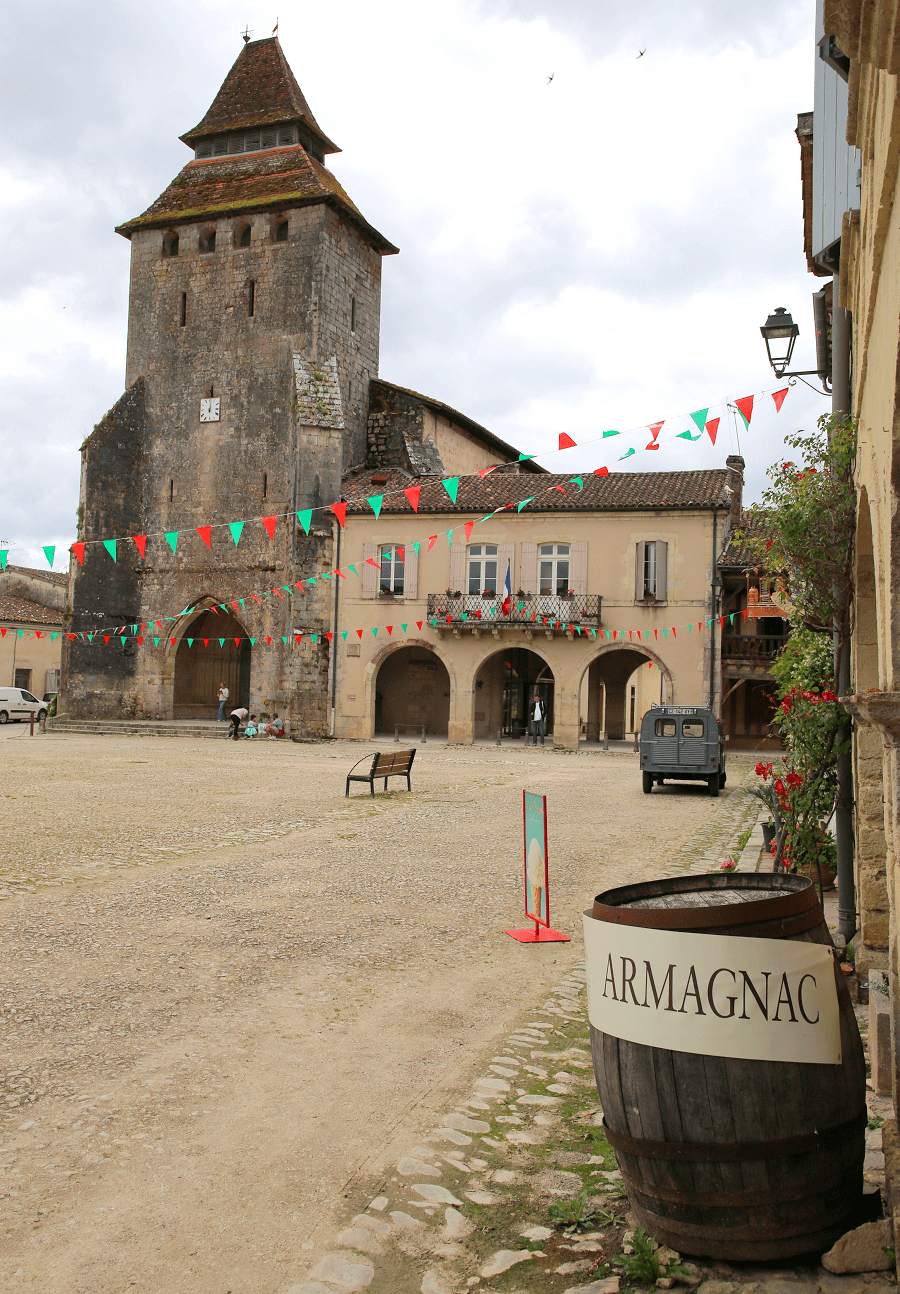
This fortified town was founded in 1291 by Count Bernard VI of Armagnac under the name Bolonia.
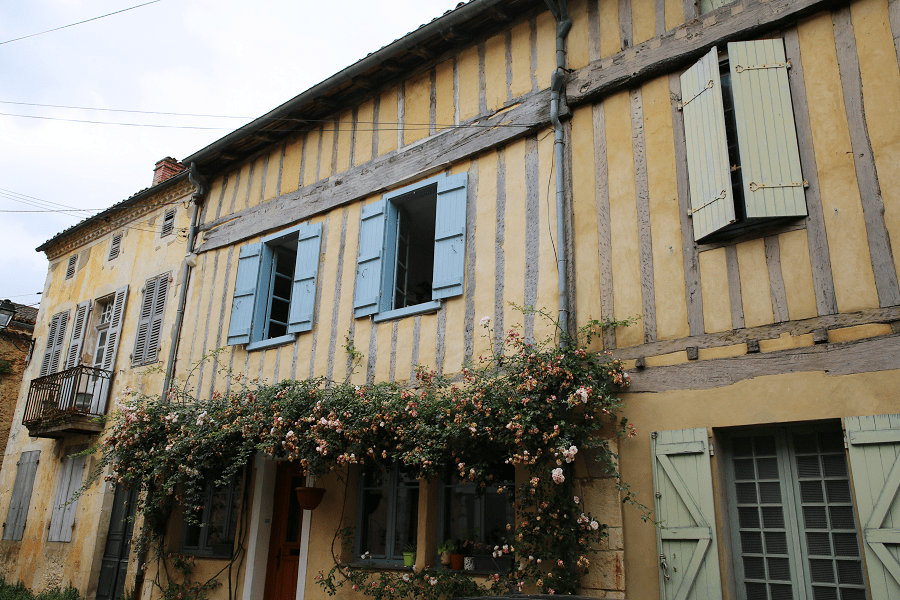
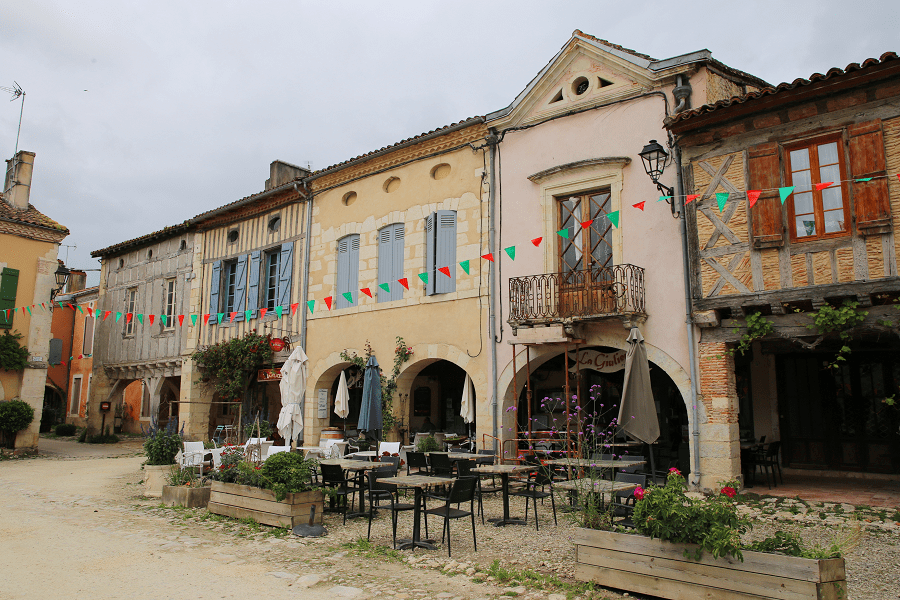
Today, it is the most picturesque of the Landes fortified towns (bastides). King Henry IV (then Henry III of Navarre) loved to visit La Bastide, where he resided in a house overlooking the Place Royale. It is this square that is said to have inspired him to create the Place des Vosges in Paris.
Tourism
Place Notre-Dame (or Place Royale)
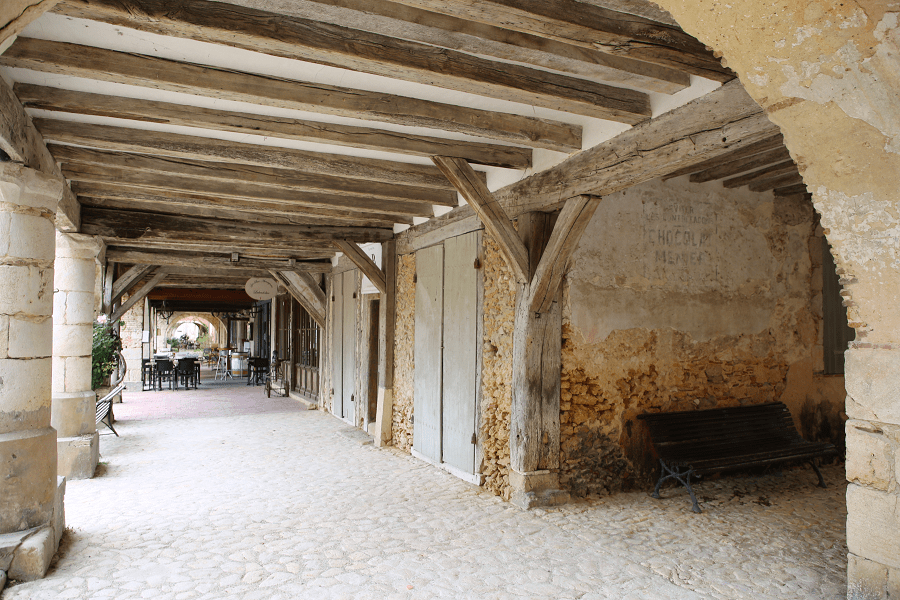
It was here that the stake symbolizing the construction of a new fortified town was planted and blessed in the Middle Ages. From there, the city’s founders demarcated its perimeter and laid out the three main streets up to the walls, which themselves featured three gates. Bringing together almost all of the city’s businesses, the square was the city’s economic hub at the time. A place of trade, it was also, like an ancient forum, a place for debating public affairs.
Built in 1764, it has been listed as a historic monument since 1984.
Town Hall
The building’s architecture is typical of the fortified town. As was the original spirit of the founding of the new town, it unites the grain market (ground floor), the administrative building (first floor), and the prison (between the town hall entrance and the church wall).
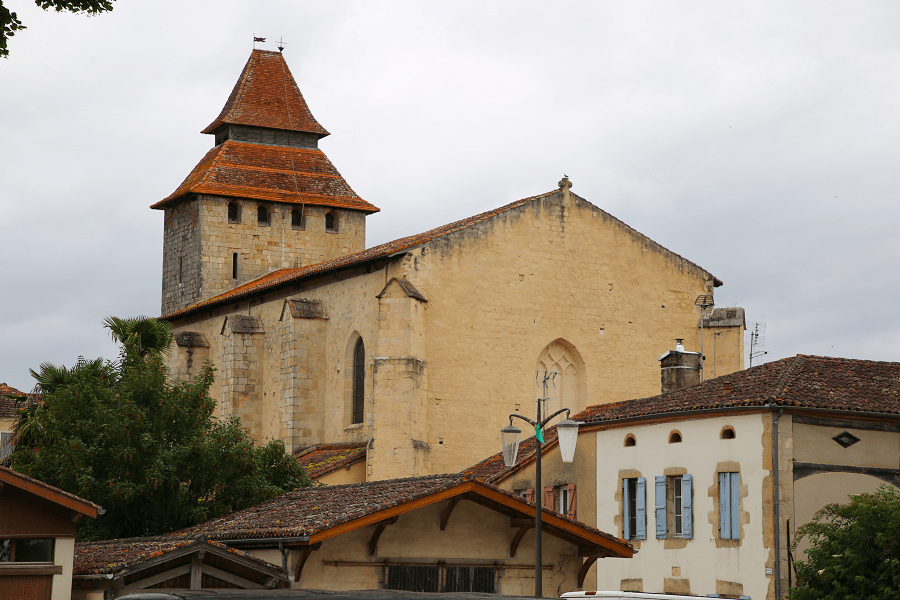
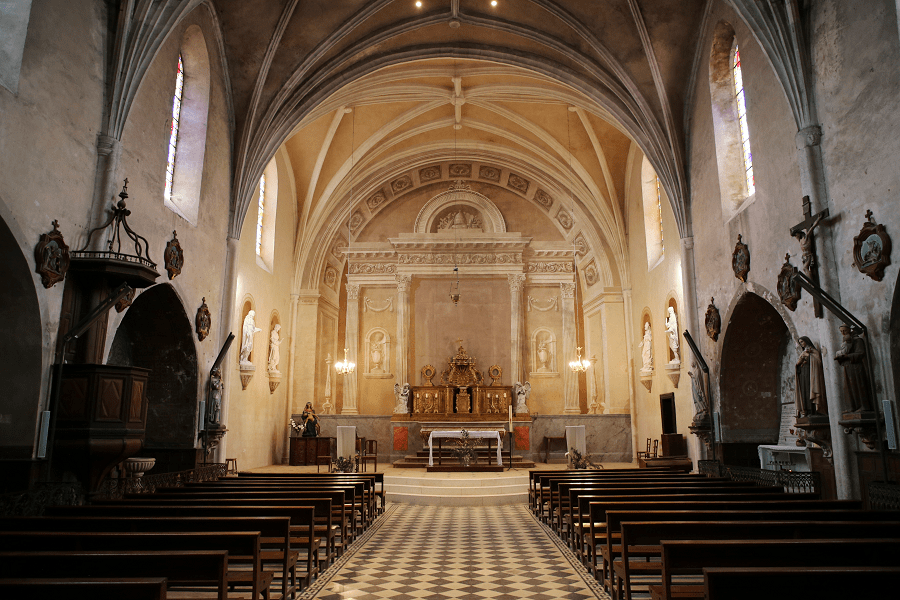
Église Notre-Dame-de-l’Assomption de Labastide-d’Armagnac
The church is a Catholic place of worship located on Place Royale. Its altar has been listed as a historic monument since September 23, 1970.
Chapelle Notre-Dame-des-Cyclistes
In the Géou district, two kilometers from the town, a modest chapel, Our Lady of Cyclists, regularly welcomes enthusiasts of this sport. It was in the 1950s that Abbé Massie, parish priest of Créon-d’Armagnac, nicknamed “the pope of cycle tourism,” created this “national cyclists’ sanctuary.”
Temple des Bastides
The Temple des Bastides is a former Protestant place of worship converted into a museum and exhibition space.

Maison Malartic
In 1576, having escaped from Paris and its dangers, Henry of Navarre took refuge with his mother at the court of Nérac. During his many travels, he liked to visit his friend and comrade-in-arms, Captain de Malartic, who lived on the square. A host of legends were born here, one of which tells that it was while admiring the square from the window of the apartment that he had the idea to build the Place des Vosges in Paris on this model.
Viguerie
A viguerie is a medieval administrative court since the 9th century, in which a representative was in charge of a body dedicated to settling disputes in civil matters on behalf of the count.
Transport
The village is accessible via bus line 442, which operates between Mont-de-Marsan and Agen. The bus runs twice daily, making the trip in about 45 minutes. One ticket costs €3.
By car
From Mont-de-Marsan: 29 min (29.8 km) via D933N
From Bordeaux: 1 hr 37 min (129 km) via A62 and A65
From Andorra: 4 hr 33 min (382 km) via A62
From Barcelona: 5 hr 48 min (591 km) via A61
From Paris: 6 hr 51 min (703 km) via A10
Main information
Area: 31.87 km²
Coordinates: 43°58’11.5″N 0°11’08.5″W
Population: 680
Language: French
Currency: Euro (€)
Visa: Schengen
Time: Central-European UTC +1
See here Pyrenees travel guide
See here France travel guide
See here Spain travel guide
See here Andorra travel guide




