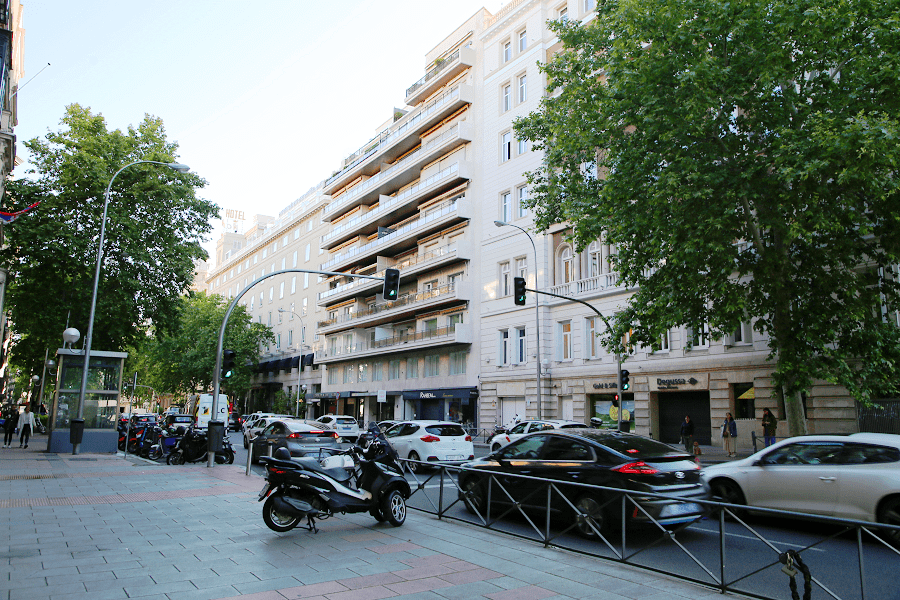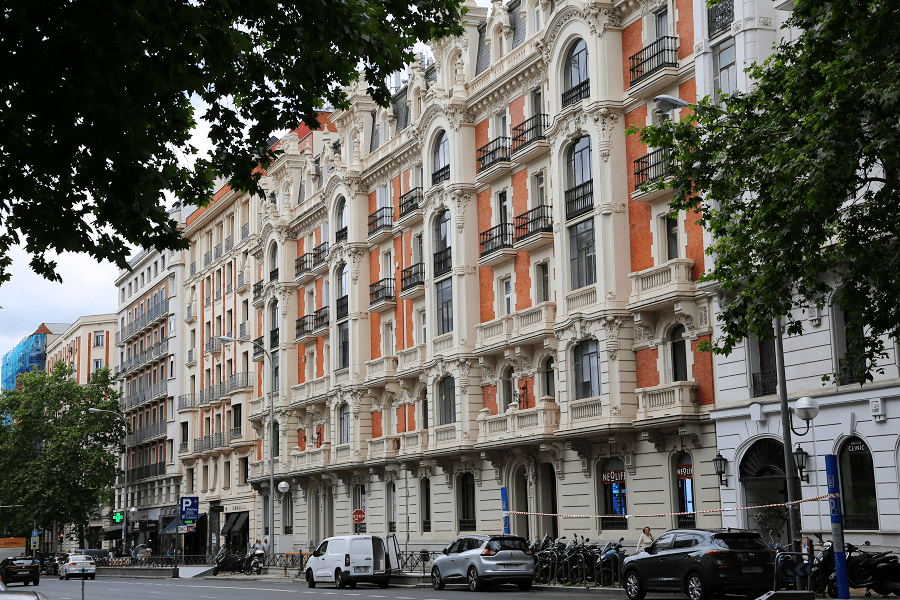
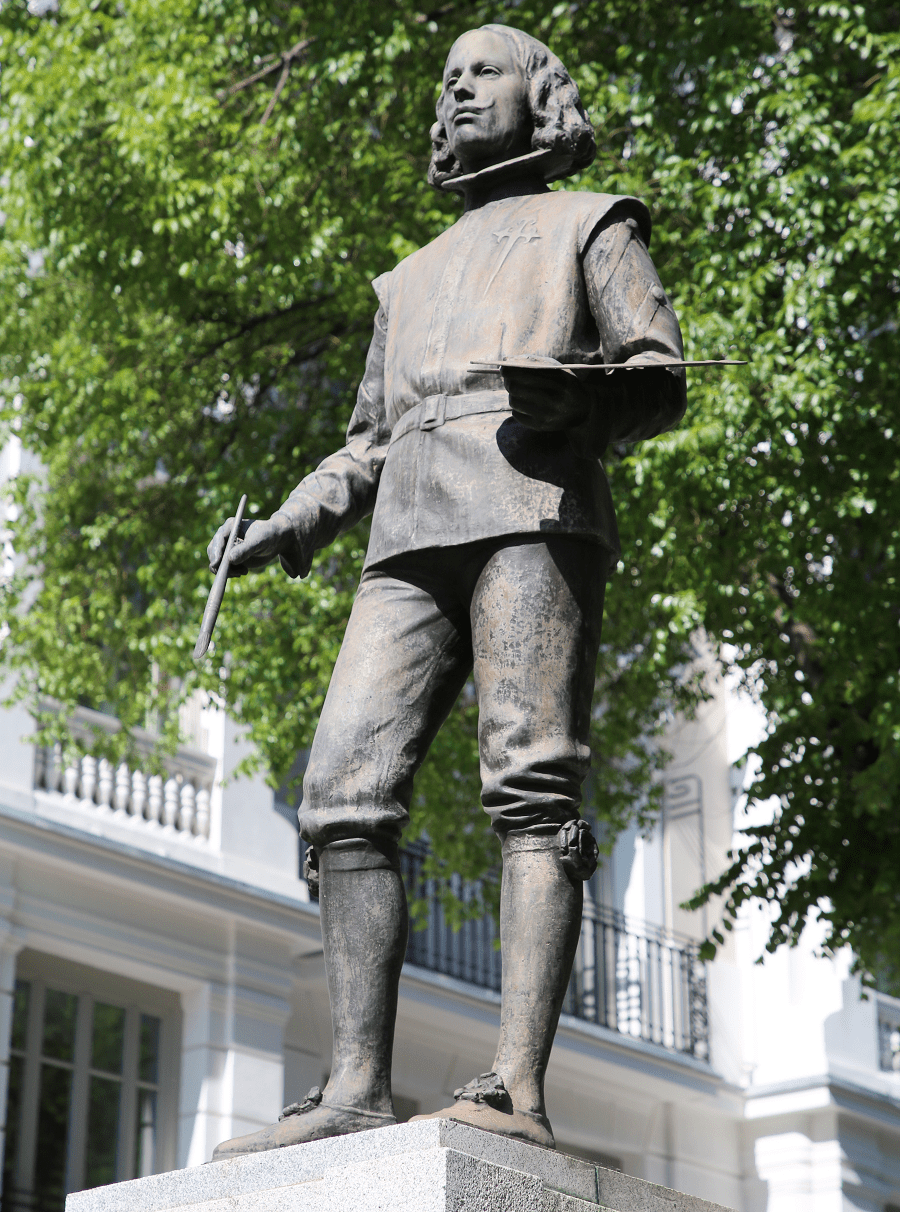
Velázquez Street is a street in Madrid, Community of Madrid, Spain, that was born as a central boulevard in the Salamanca district in the mid-19th century.
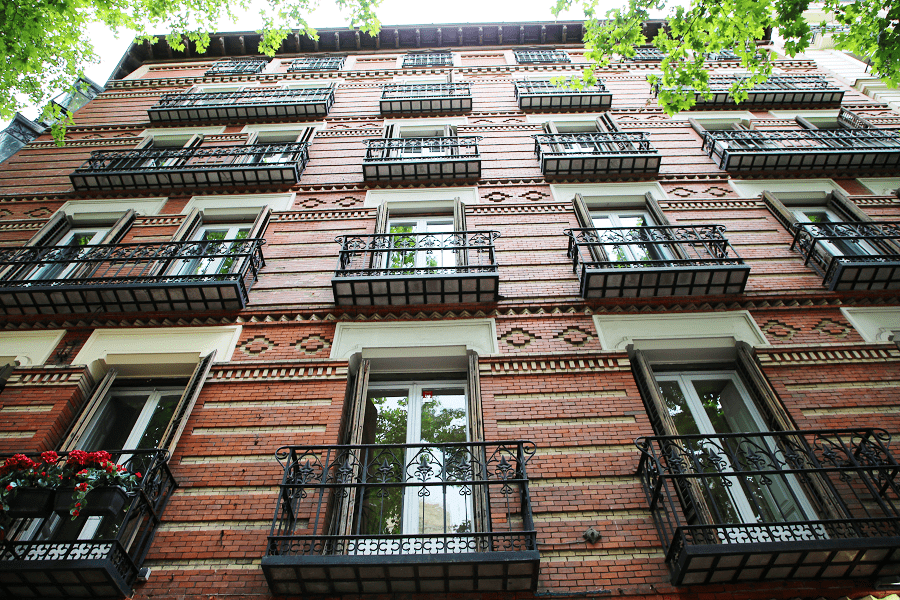
It runs south to north from Alcalá Street, in front of Retiro Park, to Avenida del Doctor Arce. It was named in honor of Diego Rodríguez de Silva y Velázquez, a baroque painter, considered one of the greatest exponents of Spanish painting and a master of universal painting. It is considered one of the most aristocratic streets in the Salamanca district, in the capital of Spain.
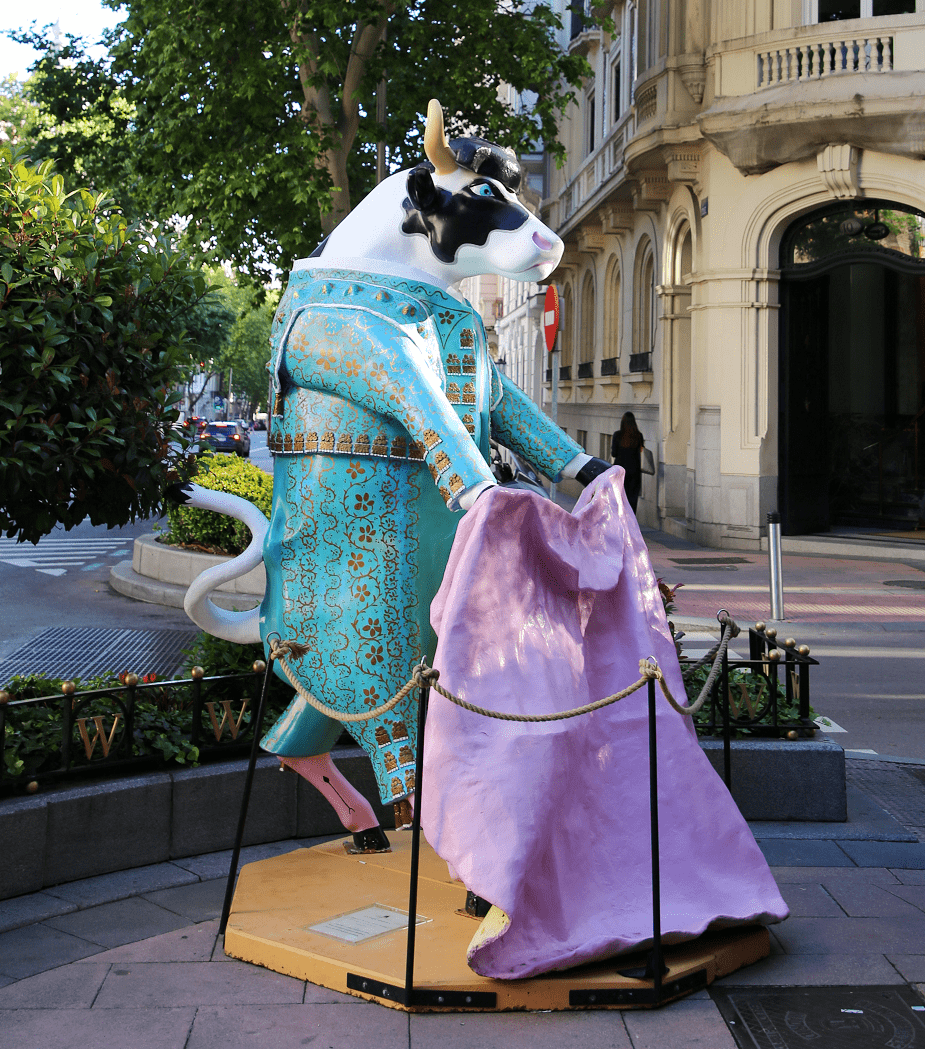
Originally, before the land was developed by the neighbourhood’s promoter, the politician and businessman José de Salamanca y Mayol (who at one time owned the largest fortune in Spain), on its western side, between Villanueva and Goya streets, the Champs-Élysées was built, one of the most ambitious and sterile pleasure gardens in 19th-century Madrid. Precisely on the corner that would later be formed by this street dedicated to Velázquez and Goya, was the modest bullring, which would not be demolished until 1881.
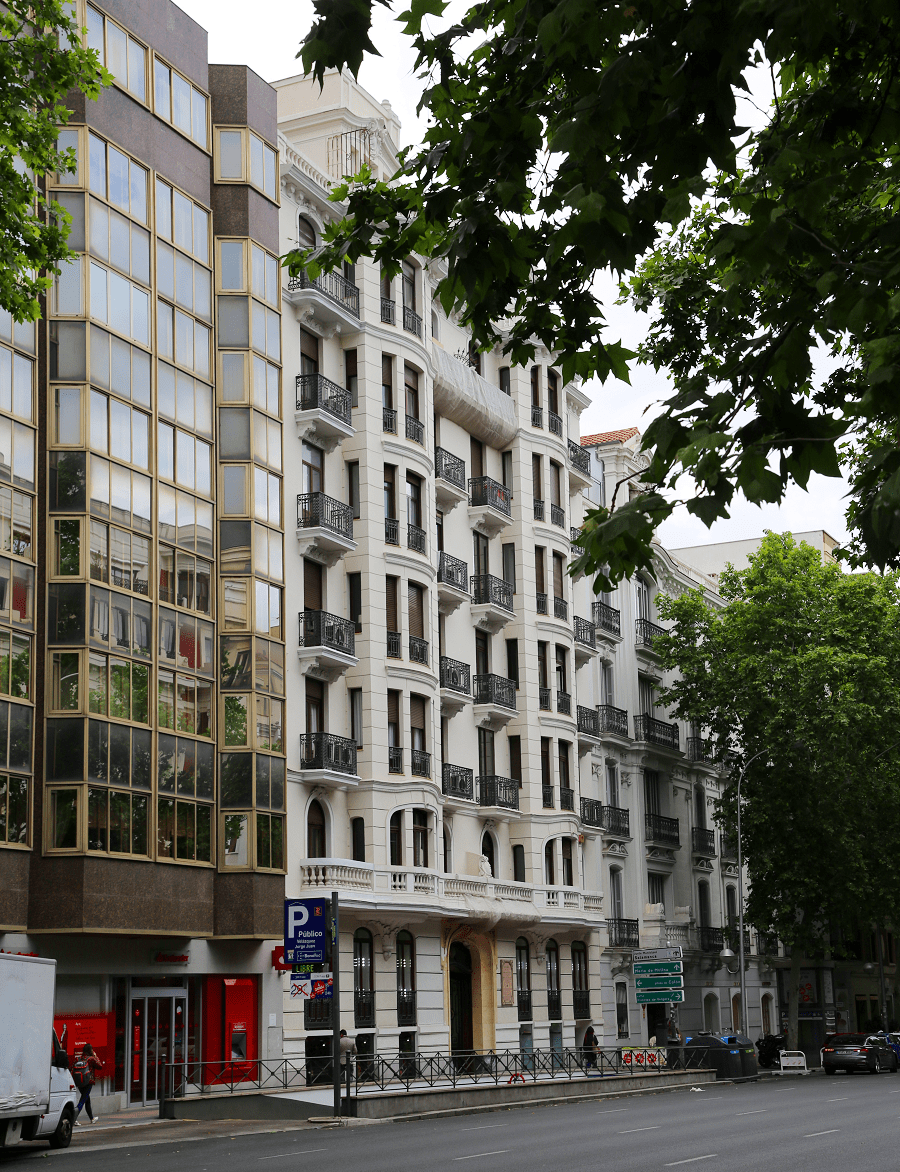
Main attractions
In addition to some buildings on this street that could be classified as assets of cultural interest in the city of Madrid, the following also stand out:
- The Hotel Wellington, at no. 8, was designed in 1948 by Luis Blanco-Soler Pérez and built between 1948 and 1952.
- The residential building of J.J. Nemesio Camino, at no. 10, designed in 1927 by Manuel Sainz de Vicuña Camino and built from 1928 to 1930.
- The Manuela Rodríguez-Arias building, at no. 12, 14 and 16, designed in 1912 by Jerónimo Pedro Mathet Rodríguez and built between 1913 and 1916.
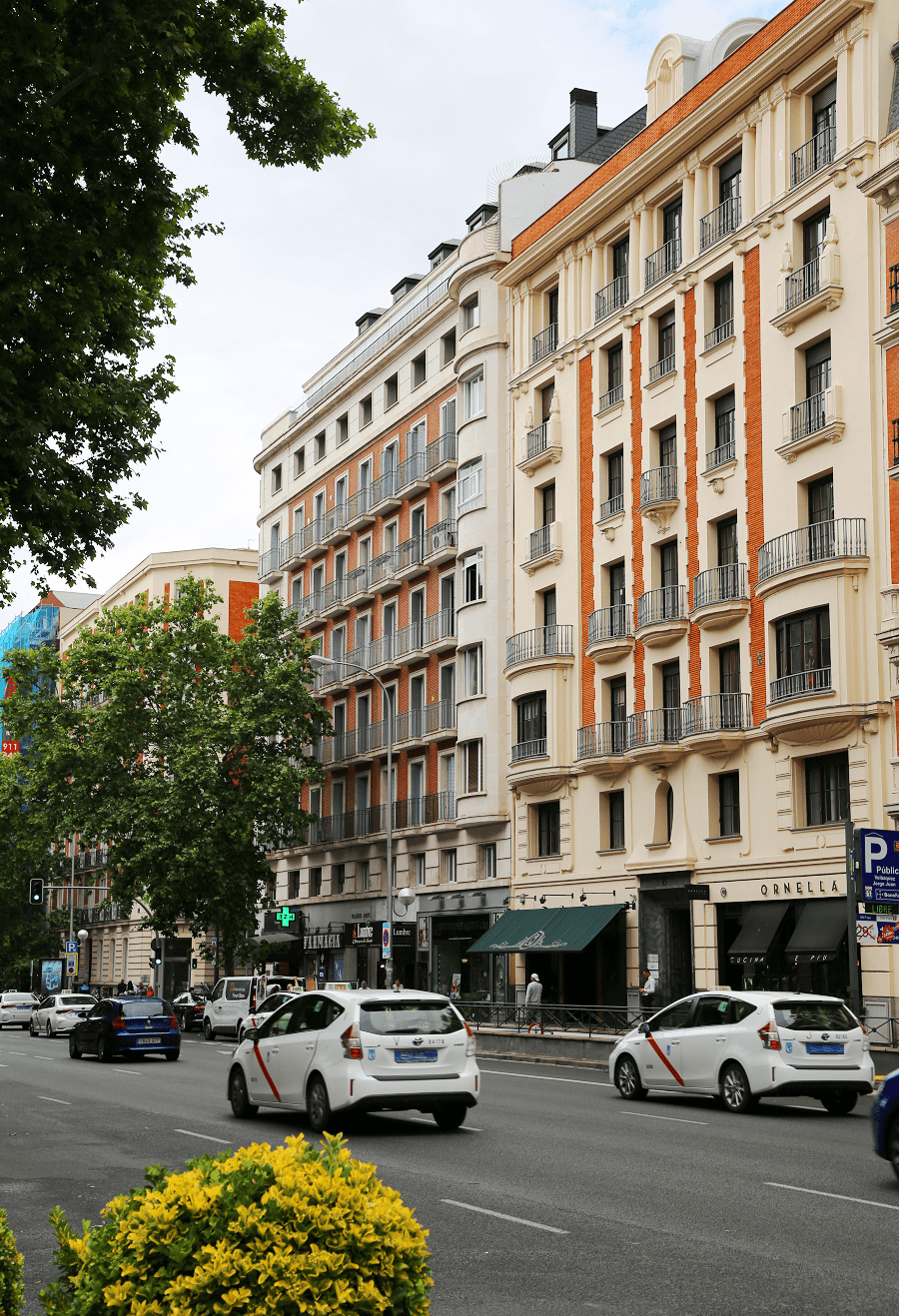
- The mansion for the Marquis of Frómista, at no. 21, designed in 1904 by José Espelius Anduaga and built between 1904 and 1907.
- The former mansion of Julio Castanedo, built from 1906 to 1908 at no. 63, also called Cuatrecasas Abogados (since 2001) and Velázquez 63, designed in 1905 by Tomás Gómez-Acebo y Retortillo.
- The headquarters of the insurance company CESCE, at no. 74, a building designed in 1975 by Eleuterio Población Knappe and built between 1976 and 1979.
- Federico Ortiz’s palace-house, at no. 93, designed in 1901 by Santiago Castellanos Urízar and built from 1901 to 1903. Headquarters of the Spanish University Foundation.
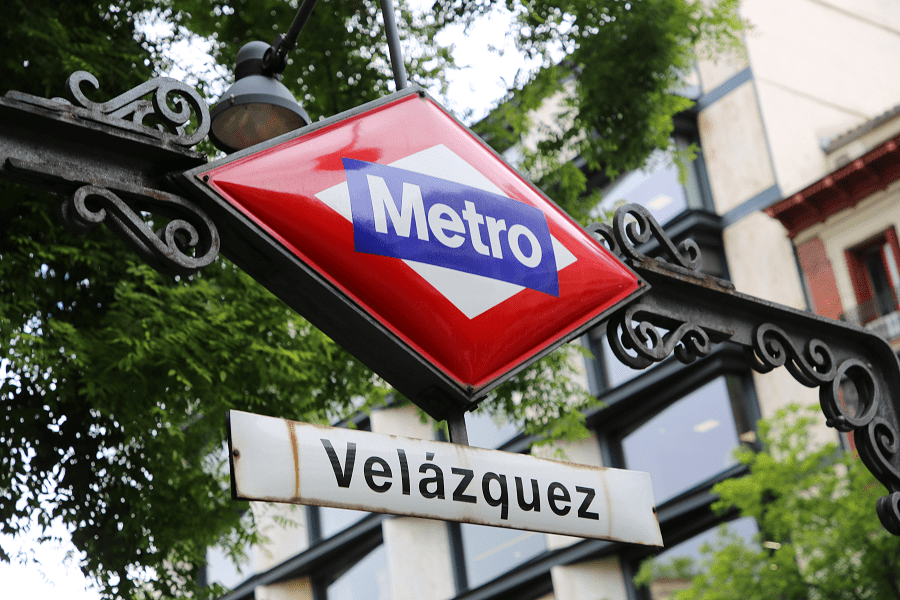
- Beatriz Building, at no. 84, designed in 1968 by Eleuterio Población Knappe and built between 1968 and 1976.
- Italian Embassy, at no. 98 since 1940. The building was designed in 1912 by the architect Joaquín Rojí López-Calvo and built from 1914 to 1917 as a palace-house for the Marquises of Amboage. It was acquired by the Italian Government in 1939.
- Embassy of Russia, at No. 155 since 1991.
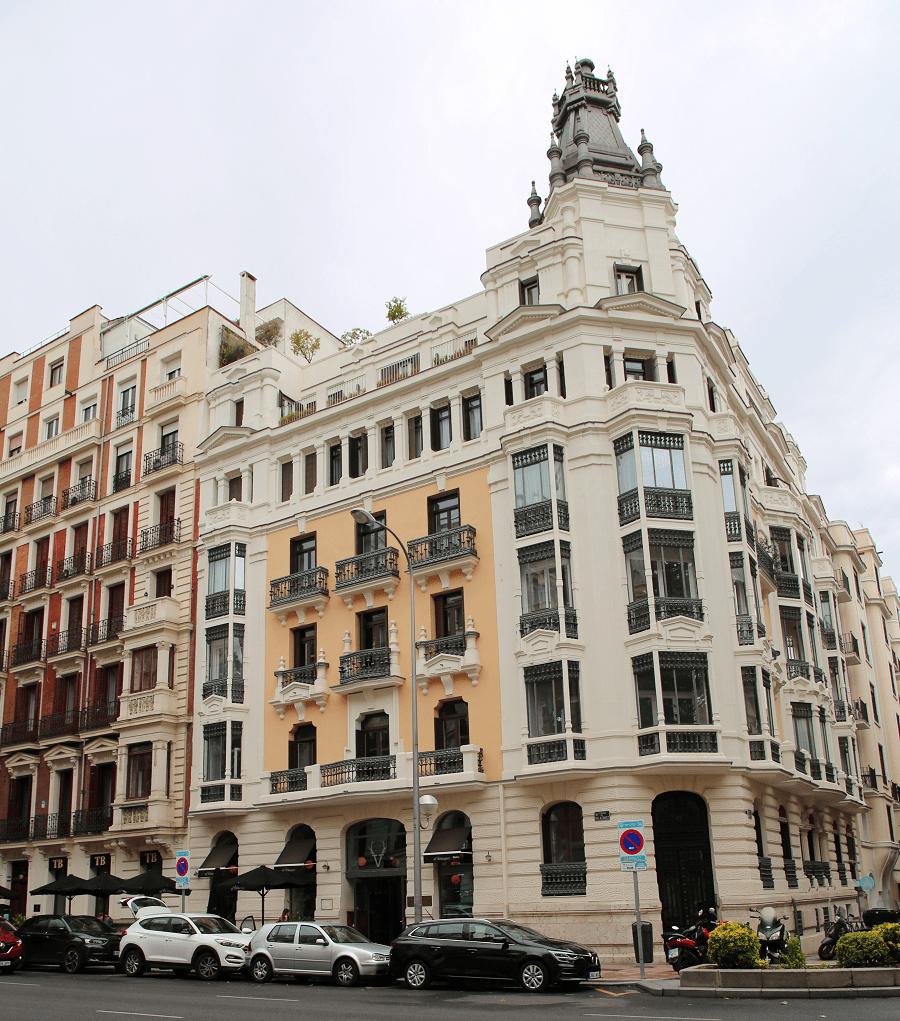
- IBERIA Building, at No. 130, original headquarters of the Spanish airline.
- SEPI’s main headquarters, at No. 132.
Madrid: full guide
- Administrative structure
- Architecture
- Churches and Cathedrals
- Entertainment
- Museums
- Parks and gardens
- Restaurants
- Shopping and markets
- Squares
- Streets
- Transport
See here Pyrenees travel guide
See here France travel guide
See here Spain travel guide