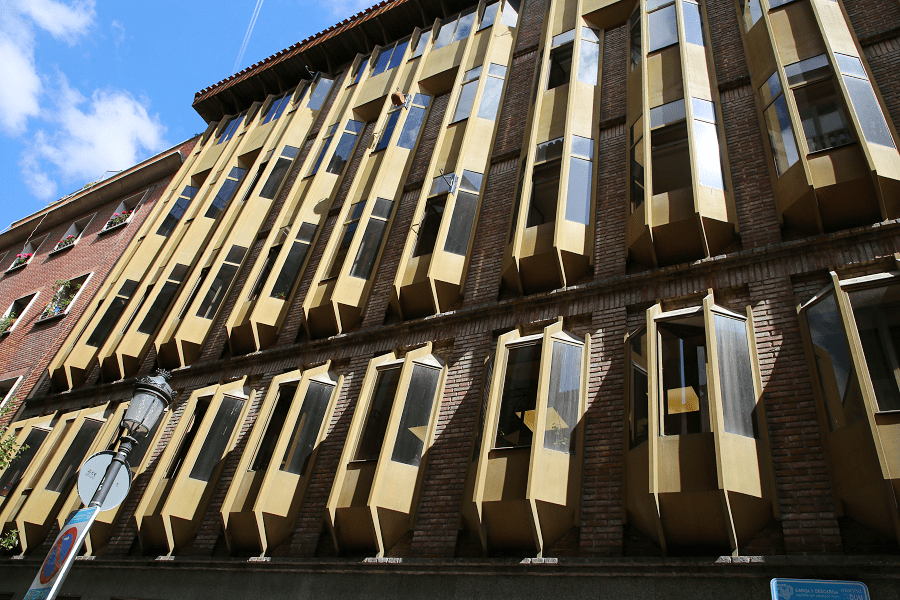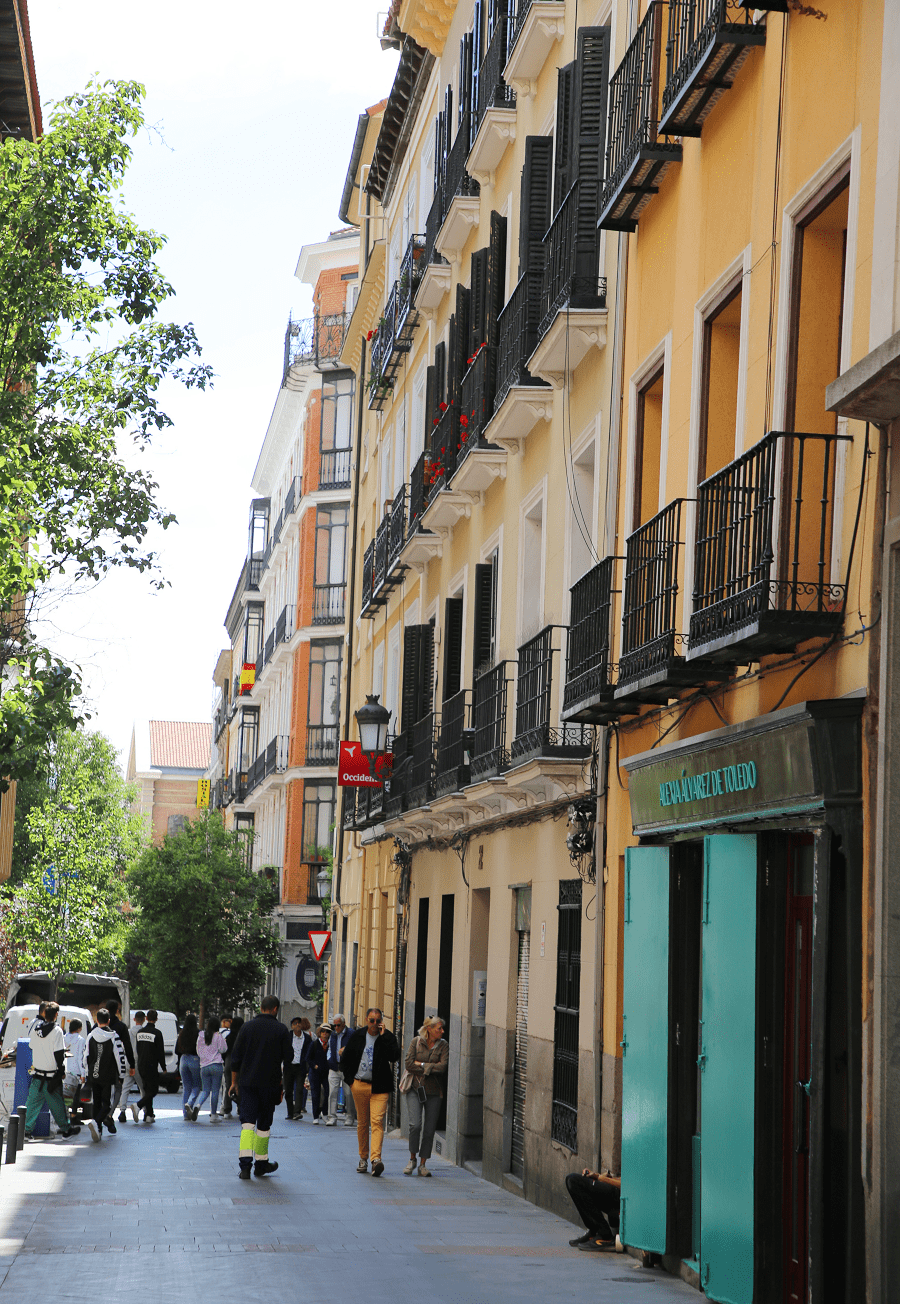
Cervantes Street is a public street located in Madrid, Community of Madrid, Spain, El Madrid de los Austrias, (Cortes neighborhood, Centro district), which goes down, in a north-south direction, from León Street to Cánovas del Castillo Square, on the Paseo del Prado.
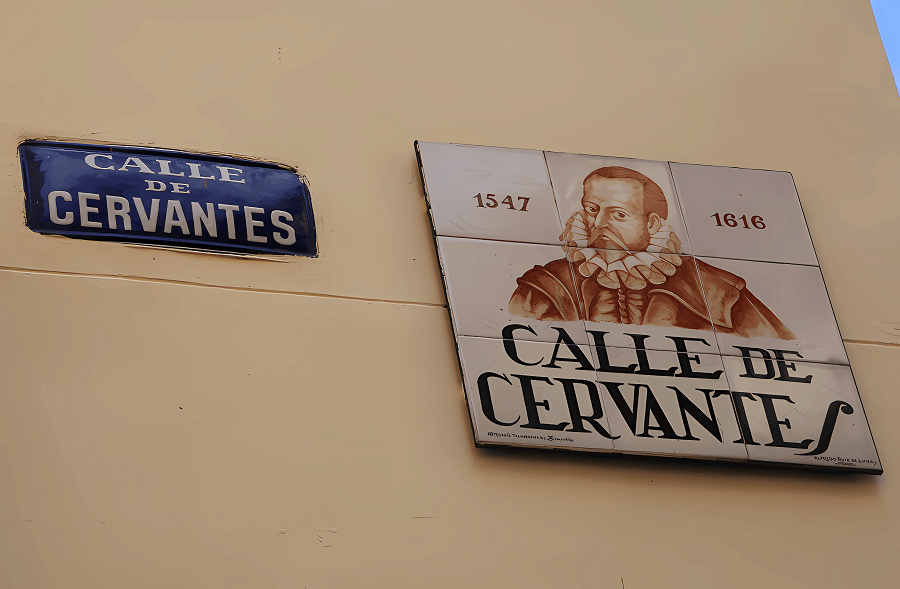
It was previously called Francos Street (and the lower section, Duque de Alburquerque Street), until 1835, when it took the name of the author of Don Quixote. Among its oldest buildings is the one dedicated to the House-Museum of Lope de Vega, within the general complex of the Barrio de las Letras (of the muses or of the comedians).
History
The old Francos Street had its origins, as this was the surname of one of the families of Madrid tradition who for generations were residents of it, from Pedro Suárez de Francos, alderman of the town at the beginning of the 15th century, to Diego Francos de Garnica, “mayor of house and court”.
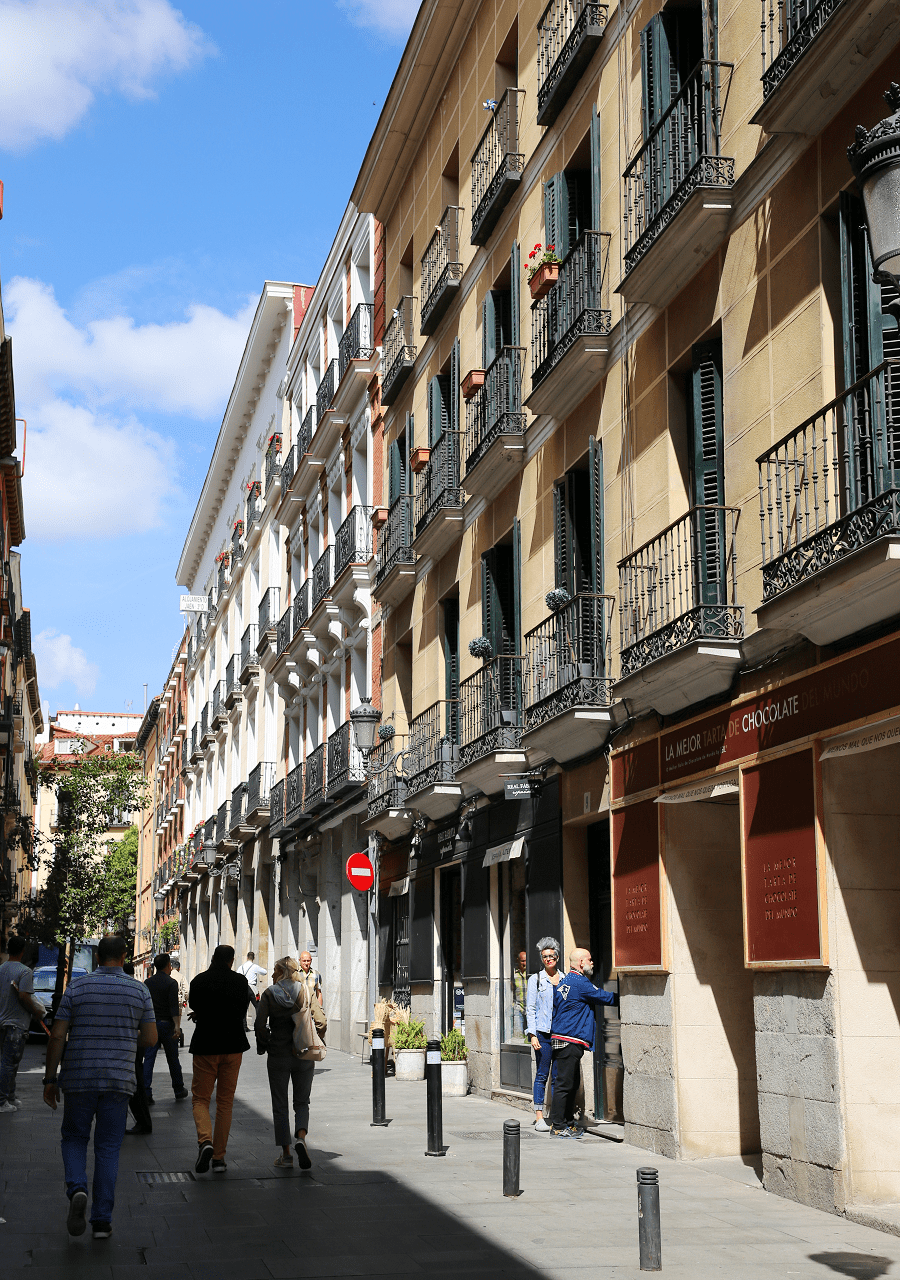
Cervantes and his neighbours
Relief bust and inscription in memory of Cervantes, on the façade of the building that occupies the site of the house where he died in 1616.
Like many other writers, poets and authors of comedies, Miguel de Cervantes Saavedra was a regular resident of the neighbourhood that for this reason would be known centuries later as the neighbourhood of the muses. It is known that he lived there in several houses, first at number 16 on Calle de las Huertas; then he moved to Plazuela de Matute (behind the Loreto school), and from there to number 8 on Calle del León, almost on Plazuela del Mentidero.
At number 11 of this same street is the house-museum of Félix Lope de Vega Carpio, where the “Phoenix” died in 1635. And around the corner, a third party in discord had a house, Francisco de Quevedo, a character who later gave his name to that short alley.

The dean chronicler of Madrid Ramón de Mesonero Romanos cites as neighbors of the neighborhood – before, during and after Cervantes – the most florid of the Spanish showbiz of the seventeenth and eighteenth centuries, actresses and actors such as: María Riquelme, María Calderón, María Ladvenant, María del Rosario Fernández, Rita Luna, Agustín de Rojas Villandrando, Alonso de Olmedo, Manuel García Parra, Mariano Querol, Isidoro Máiquez, or the playwright Eusebio Blasco who, like Cervantes and Lope, wanted to die on this street, in the estate at numbers 5, 7 and 9, in 1903. The politician Adolfo Merelles Caula also lived and died at his home on this street.
Madrid: full guide
- Administrative structure
- Architecture
- Churches and Cathedrals
- Entertainment
- Museums
- Parks and gardens
- Restaurants
- Shopping and markets
- Squares
- Streets
- Transport
See here Pyrenees travel guide
See here France travel guide
See here Spain travel guide