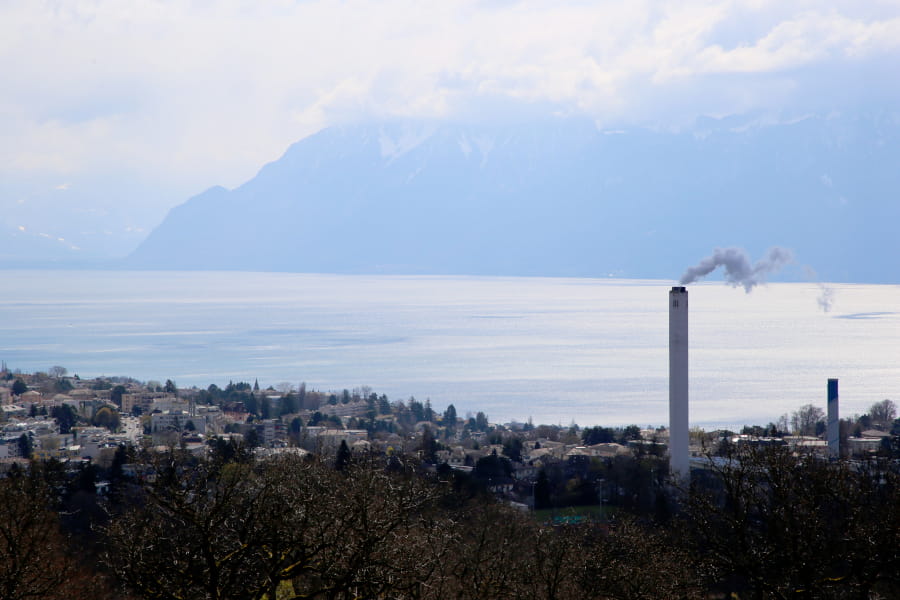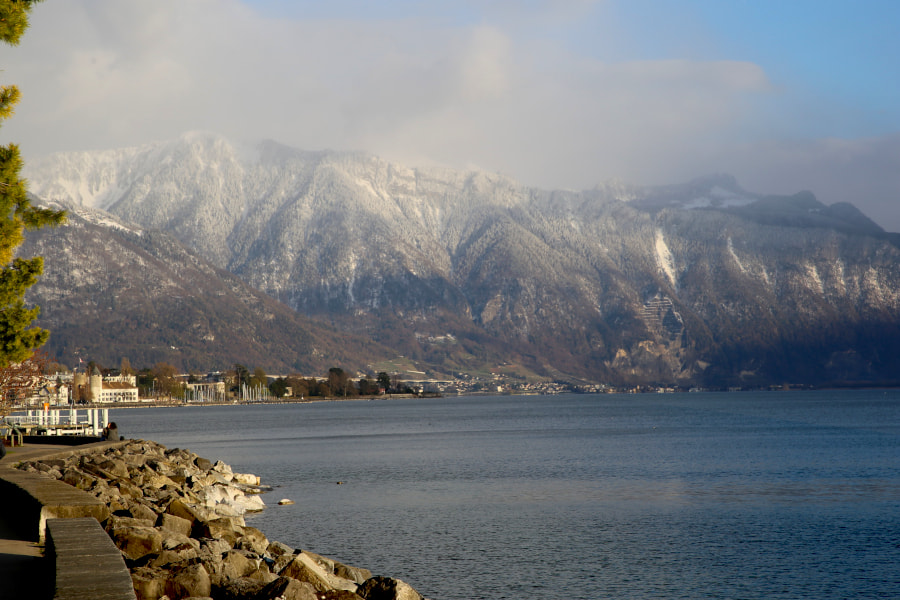
Lake Geneva, also known as Lake Léman, is a glacial lake located in Switzerland and France. By surface area, it is the largest Alpine and sub-Alpine lake. It is also one of the largest lakes in Western Europe.
The lake, which is approximately 72.8 km long and less than 14 km wide at its widest point, is crescent-shaped and runs from east to west. The northern shore and both ends are in Switzerland and are shared among the cantons of Geneva, Vaud, and Valais. The southern shore, meanwhile, is in France and located in the department of Haute-Savoie (Auvergne-Rhone-Alpes). The French-Swiss border runs through the middle of the lake. It has a surface area of 581.3 km² and a maximum depth of 309.7 m.
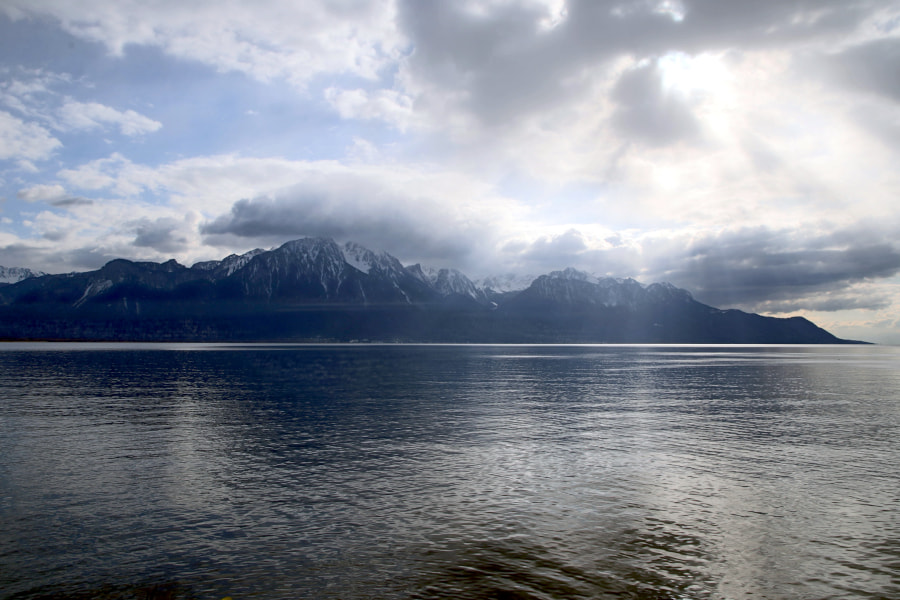
Lake Geneva is mainly fed by the Rhône, a Franco-Swiss river that flows from east to west, accounting for 75% of its inflow. Its formation has multiple origins: tectonic folding for the Grand Lac portion and the action of the Rhône Glacier for the Petit Lac (between Yvoire and Geneva). It was formed during the gradual retreat of the Rhône Glacier after the last ice age, nearly sixteen thousand years ago. Its shores have been heavily altered by human activity.
In 2006, according to a study by the International Commission for the Protection of the Waters of Lake Geneva (CIPEL), only 3% of the shoreline remains wild. Excluding 23% of semi-natural meadows and croplands, approximately 60% of the banks and surrounding areas have been developed, reinforced with riprap, paved, or privatized, which likely limits the site’s ecological potential.
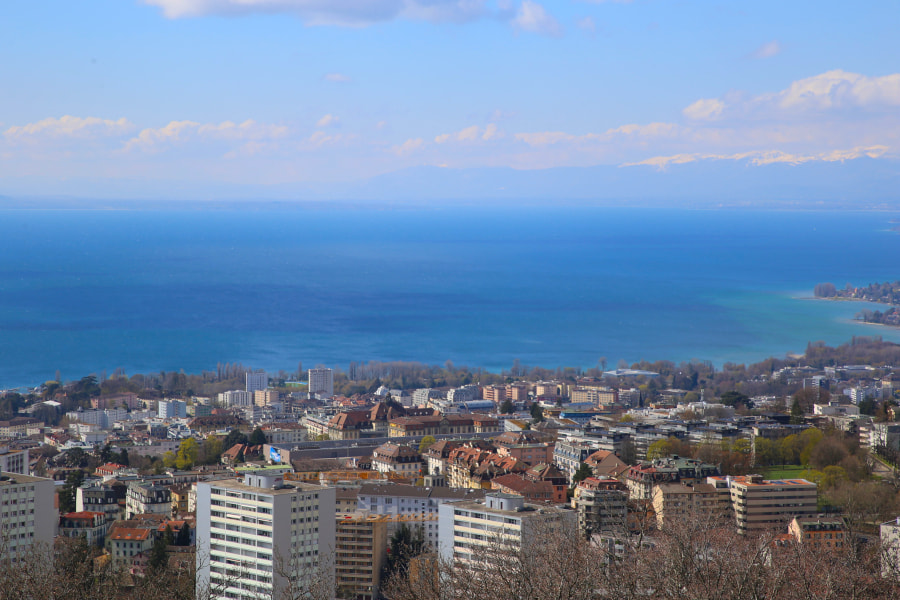
The Lake Geneva basin consists of three main geological units.
The Mesozoic sedimentary rocks of the Jura domain form the deep bedrock, the exposed portion of which comprises the Jura Mountains and the Salève (1,379 m). Its influence on Lake Geneva is limited to the presence of fault lines that traverse the Lake Geneva basin from northwest to southeast but have no impact on the Quaternary surface deposits. Vertically beneath Lake Geneva, these rocks form a basement that dips beneath the reliefs of the Pre-Alps and the outer crystalline massifs as part of the Alpine orogeny.
The depression caused by the flexure of the Eurasian plate subducting beneath the African plate forms the northern Alpine foreland basin, whose molasse fill constitutes the lake’s bedrock. The molasse, dating from the Oligocene and Miocene, is subdivided into two major tectonic units.
The plateau molasse is very little deformed and corresponds to the northwestern half of the lake’s surrounding strata. The southeastern half of the lake is carved into the subalpine molasse or transported molasse (Rupelian). The latter overlaps the plateau molasse and is characterized by numerous deformations leading to the formation of moderately high relief features such as Mont Pèlerin (1,079 m).
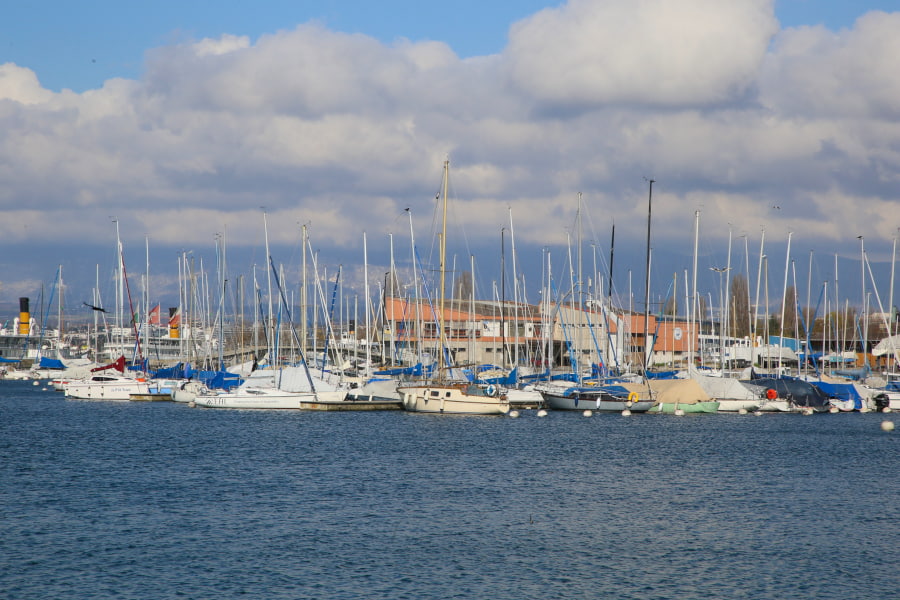
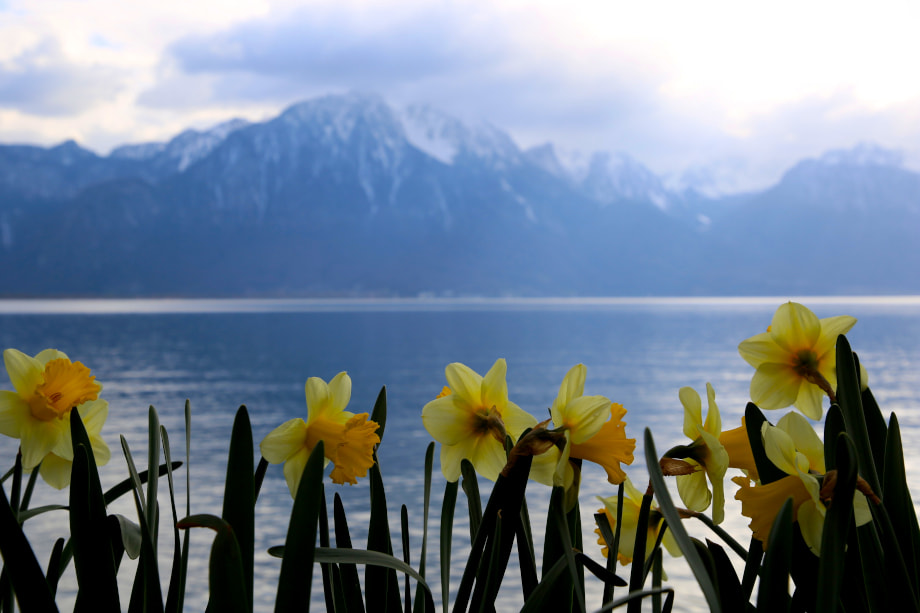
Due to its glacial origin, Lake Geneva has a topography similar to that of glacial valleys, notably featuring a partially flat bottom in the middle of the lake. Variations in depth allow us to distinguish the Upper Lake, which constitutes the upstream side of the lake, from the Main Lake, which defines the central and deepest part of the lake, while the Lower Lake is characterized by a depth of less than 70 meters.
Lake Geneva has more than a hundred ports scattered along its shoreline. While most are managed by public authorities, some are operated by private entities such as boating clubs (Port de la Nautique in Geneva) or cooperatives. The United Nations Office at Geneva also manages its own port facility (UN Port) at the northern end of Geneva. The Port du Vieux-Rhône is the only port not located on the lake shore but along the Vieux-Rhône.
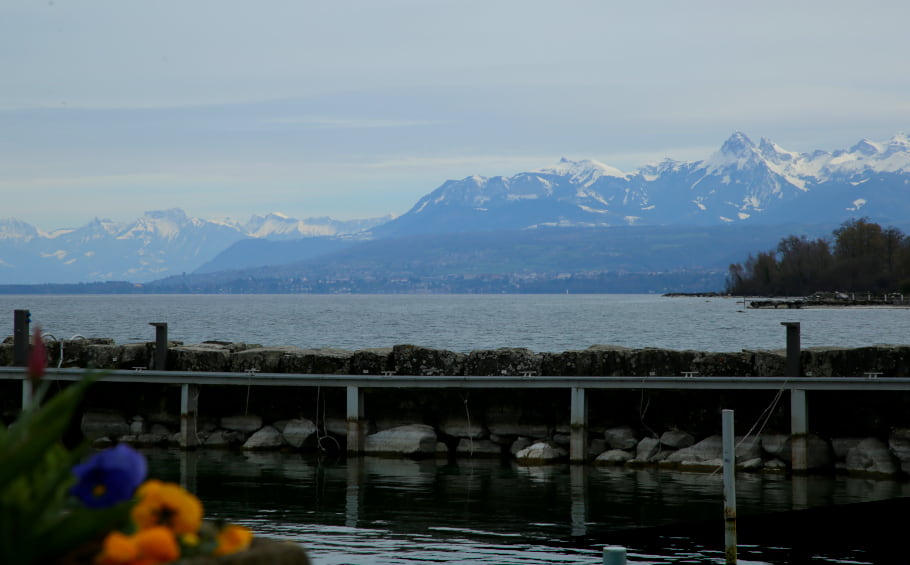
A paddleboat service (whose fleet is known as the Belle Époque) has been serving the main towns and villages around the lake since the 19th century. It is operated by the Compagnie générale de navigation sur le lac Léman (CGN).
The CGN’s mission is the commercial operation of transportation services on Lake Geneva, as well as the maintenance, preservation, and operation of the boats. In addition to its fleet, the CGN owns a shipyard in Lausanne, near the port.
The fleet consists of 5 steam-powered paddlewheel boats, 3 diesel-electric paddlewheel boats, 5 non-paddlewheel boats, 4 motorboats, and 2 water buses.
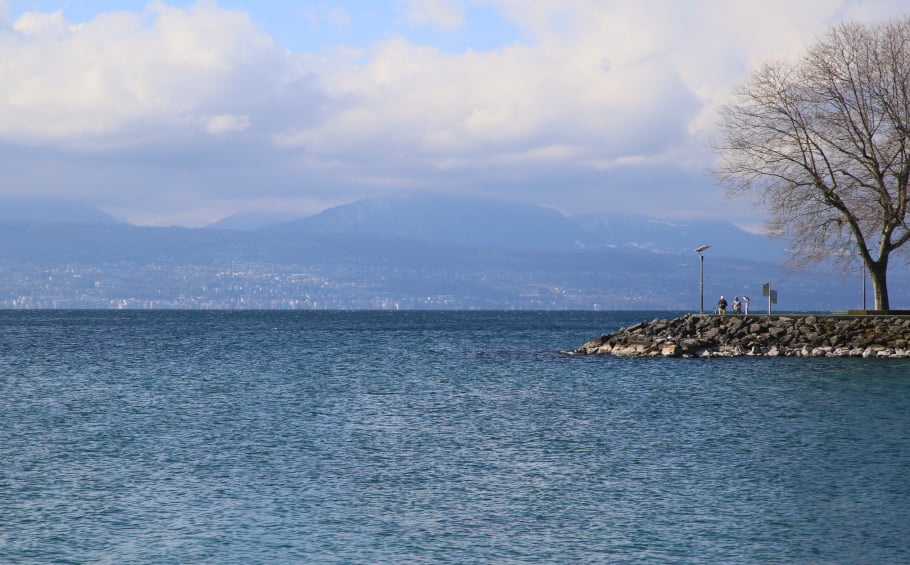
The Société Internationale de Sauvetage du Léman (SISL) is a French-Swiss nonprofit organization dedicated to lake rescue operations. With 2,200 volunteer members, it has been active since 1885. It is organized into 34 sections, each of which is responsible for a rescue station.
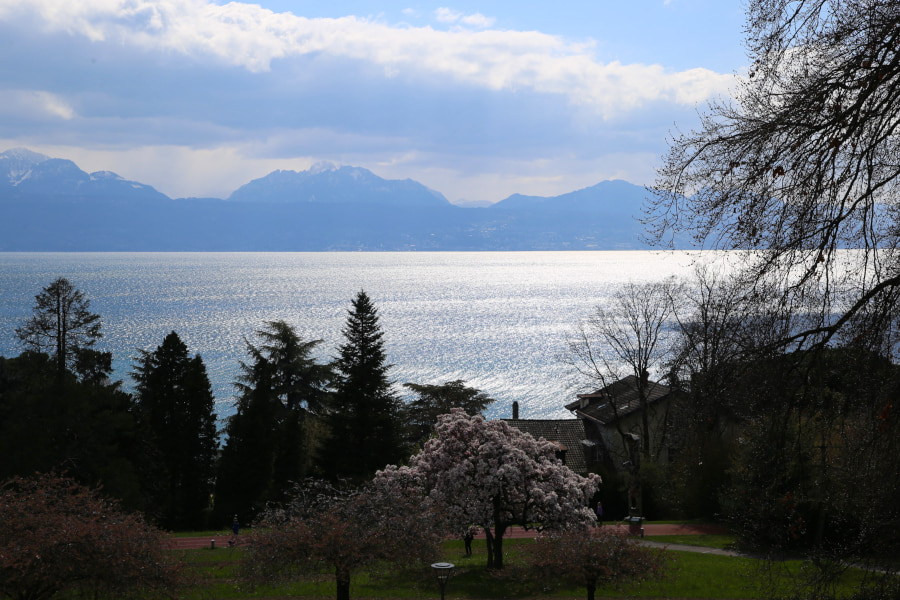
The lake is the venue for numerous sporting events, particularly in the water sports, but also for competitions in other sports held along its shores.
The headquarters of the International Olympic Committee is located on the shores of Lake Geneva at the Château de Vidy, and its museum runs along the Quai d’Ouchy in Lausanne.
- Bol d’Or: Every year in June, the world’s largest sailing competition on a closed body of water (lake) takes place. On average, nearly 600 boats participate. The goal is to complete the round trip between Geneva and Le Bouveret as quickly as possible.
- Cinq jours du Léman: Europe’s longest endurance race on a closed body of water. Throughout the year, numerous other regattas are held on the lake, with multihull classes being particularly well represented.
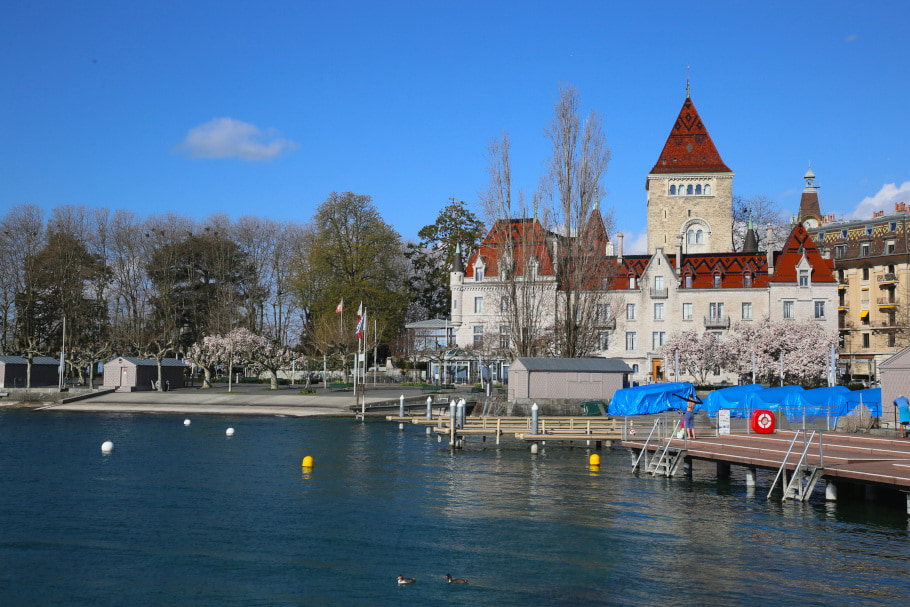
The attractions listed below are situated right on the shores of Lake Geneva:
- Jet d’eau de Genève
- Château de Nyon
- Château d’Ouchy
- Olympic museum
- Château de Chillon
- Vevey
- Montreux
- Yvoire
- Évian-les-Bains
- Meillerie
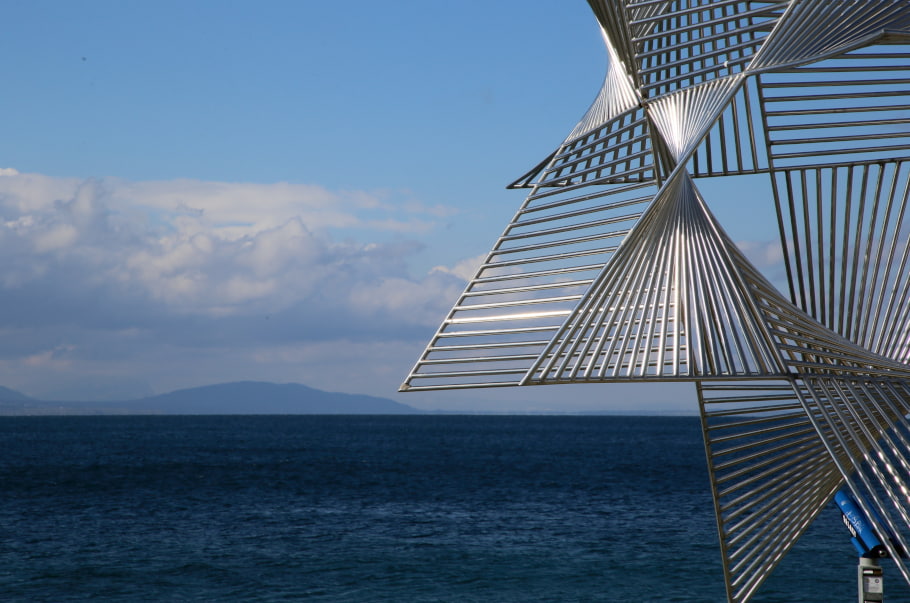
The lake also features numerous beaches, particularly in the major coastal cities. Since June 2018, a new public beach located in the Eaux-Vives neighborhood, near the center of Geneva, has been open to the public free of charge. It stretches for about 400 meters along the lakeshore and can accommodate up to 8,000 swimmers.
Transport
The Léman Express, abbreviated as LEX, is a public transport rail network serving Geneva and its cross-border metropolitan area. Consisting of seven lines, it serves 45 stations along 230 kilometers of track. Due to its cross-border location, straddling Switzerland and France, this network is coordinated by Lémanis, a joint subsidiary of the two operators, the Swiss Federal Railways (SBB) and the French National Railway Company (SNCF), which is also responsible for its promotion.