


Montreux is a town and municipality in the Swiss canton of Vaud, located in the Riviera-Pays-d’Enhaut district.
It is the third most populous town in the canton of Vaud after Lausanne and Yverdon.
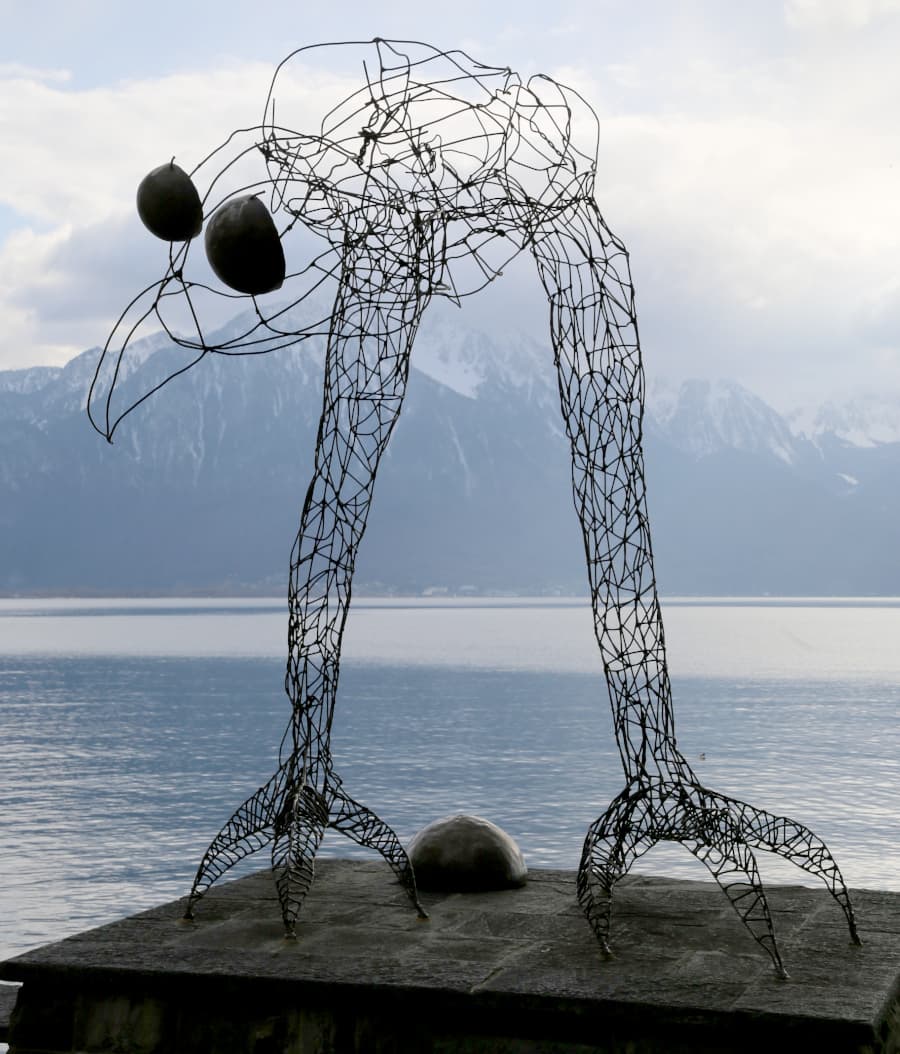
Geography
The territory of Montreux covers an area of 33.37 km². According to the 2013–2018 land use survey, built-up areas and infrastructure accounted for 20.0% of its total area, agricultural land for 25.0%, woodland for 50.3% and unproductive land for 4.9%.
Montreux is situated on the eastern side of the northern shore of Lake Geneva, in the south-east of the Vaud Riviera.
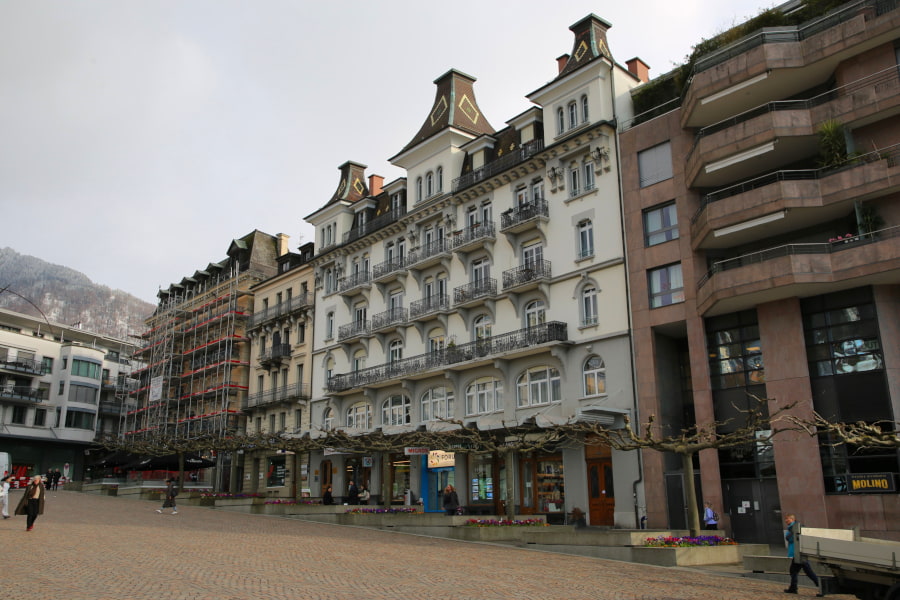
History
The first settlement appeared at the end of the Bronze Age and was located at Baugy. Montreux lies on the north-eastern shore of Lake Geneva, at the junction of the Roman road linking Italy to the Simplon Pass. From there, roads led to the Roman capital Aventicum and on to Gaul, via Besançon. In Roman times, this site became an important centre. A Roman villa dating from the 2nd to 4th centuries and a cemetery from the 6th to 7th centuries have been discovered there.
The municipalities of Le Plan and Le Châtelard, which had been part of the district of Vevey since 1798, were renamed Montreux-Le Plan and Montreux-Le Châtelard between 1953 and 1961. In 1962, they merged to form the single municipality of Montreux.
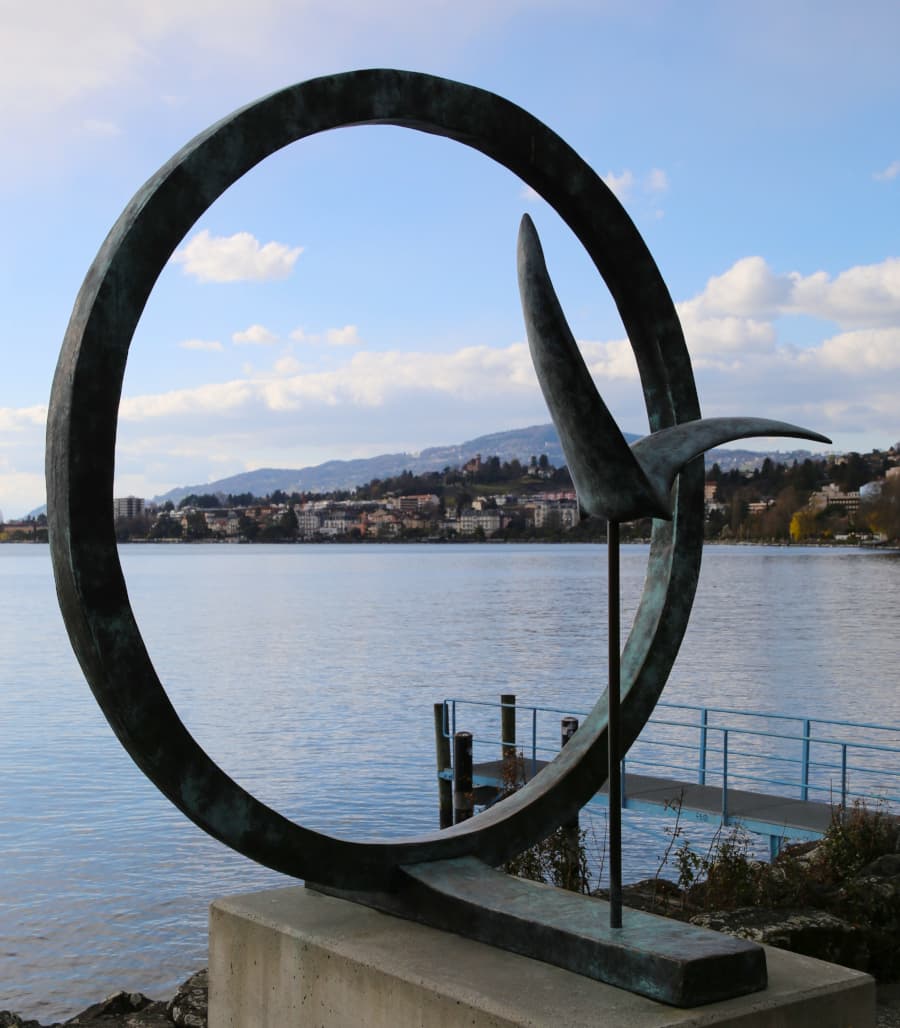
The growth of tourism and the hotel industry began attracting conferences to Montreux as early as the 1880s. In 1882, the Geneva International Congress was held there. Around 500 guests, including Louis Pasteur and Paul Bert, travelled to Montreux.
Subsequently, the town hosted conferences on medicine (1895), transport (1898 and 1910), geography (1908) and journalism (1902), as well as the 1934 International Fascist Congress. Participants made use of the region’s facilities to organise meetings and excursions to La Roche-de-Nay and Chillon Castle.
In 1936, Montreux hosted a conference on the status of the Turkish Straits. The convention that still governs them today was signed on 20 July 1936 and remains in force.
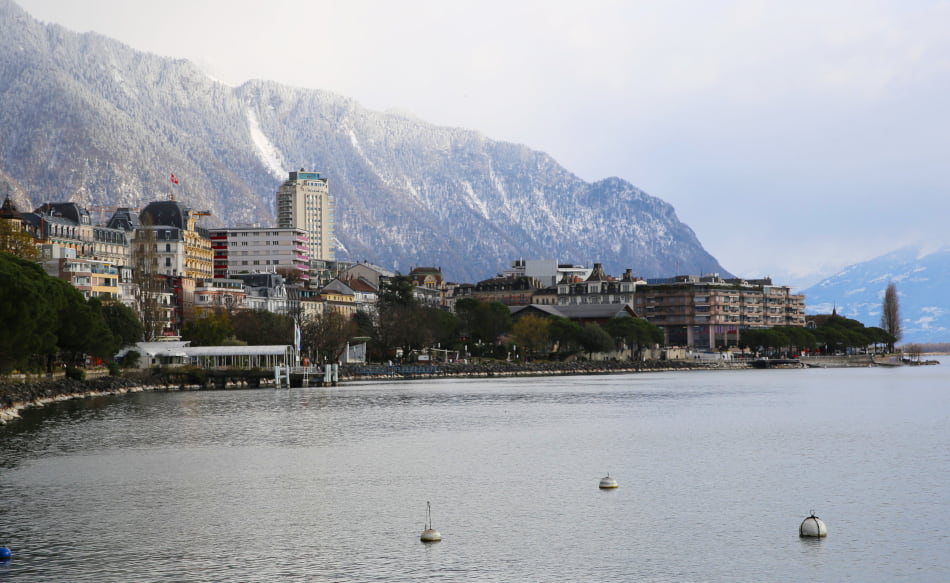
Tourism
The Temple Saint-Vincent was probably built in the 15th century on the site of a small 11th-century church. Its open terrace offers a magnificent view of Montreux and the surrounding area.
Châtelard Castle is a castle located in the village of Clarens. The castle is listed as a cultural property of national importance. It takes the form of a cubic masonry keep topped with brickwork, identical in appearance to the Château Saint-Maire in Lausanne.
The Montreux Museum is situated at the entrance to Montreux’s old town, in the former village of Sâles. It was established around 1920 to house the first collections of natural history specimens and local artefacts. Numerous objects and documents have since enriched these collections: coins, brand marks, carpentry tools, and watercolours by the painter Théodore Renkewitz (1833–1912).
The Château des Crêtes is a private residence located in the village of Clarens. Comprising 36 rooms and a tower with a spiral staircase, it is most clearly visible from the lake. It is listed as a cultural property of national importance.
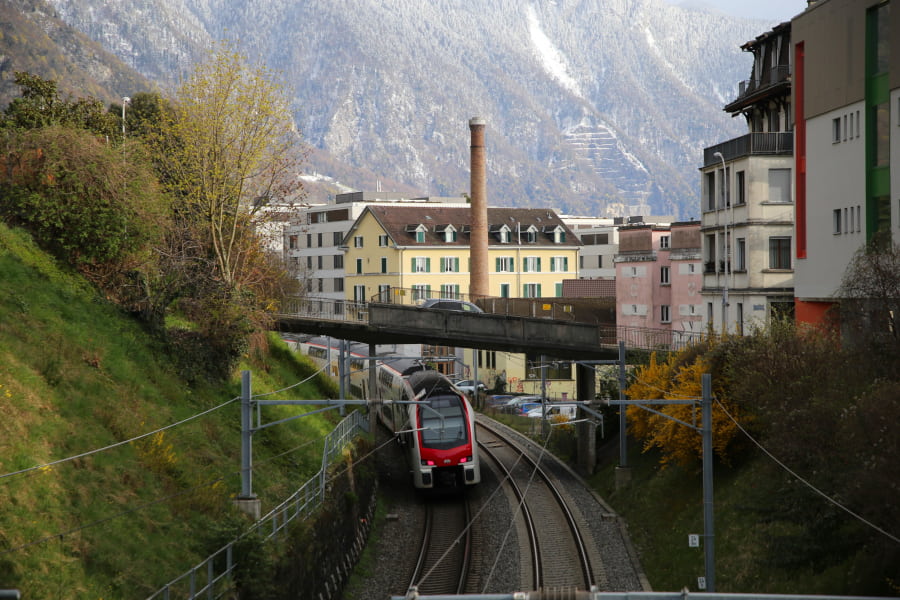
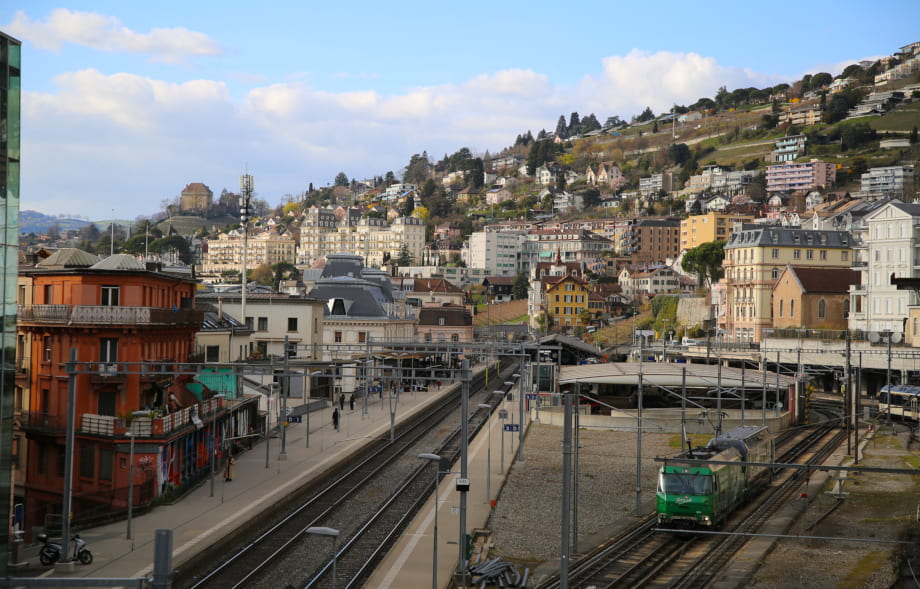
Montreux railway station is the main railway station serving the Vaud municipality of Montreux, and was opened in 1860. It is unique in Switzerland in that it is the only station to feature three different types of track gauge: standard gauge (1,435 mm) for the Swiss Federal Railways lines, metre gauge for the MOB, and narrow gauge (800 mm) for the Montreux-Vevey-Riviera Transport line.
The Île de Salagnon is a small island in Lake Geneva, opposite the Port du Basset. Initially freely accessible to the public, the island was purchased on 20 September 1900 by the French painter Théobald Chartran.
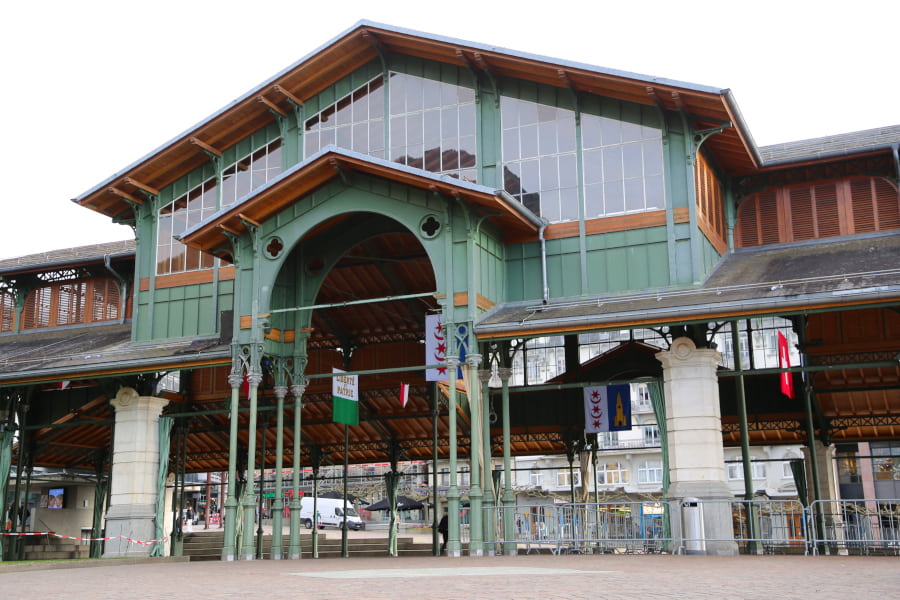
The Montreux covered market was built in 1891–1892 by the architect Henri Chaudet, thanks to a donation of 80,000 francs made by Henri Nestlé, a resident of Montreux. The only example in Switzerland of a market hall made entirely of metal, its structure is reminiscent of the Halles de Paris built by Victor Baltard, with the steel used coming from the same workshop as that used to construct the Eiffel Tower (Paris).
Villa Karma is a masterpiece of modern architecture. The building stands on the site of a former Benedictine priory, which became a leprosarium in the 16th century.
Events
Jazz Festival
The first Montreux Jazz Festival took place in 1967. The inaugural edition featured, among others, Charles Lloyd and Keith Jarrett. From then on, the festival’s programme has been eclectic, offering not only jazz but also blues, gospel, soul, rock and pop. In 1977, it became the longest-running festival in Europe, running from 1 to 25 July.
Today, the festival also features hip-hop, electronic music and world music. It has also contributed to the city’s global popularity.
It still takes place once a year in July.
Montreux Comedy Festival
The Montreux Comedy Festival, formerly known as the Montreux Festival du rire, is a comedy festival held every year in early December in Montreux. It was founded in 1989 by Grégoire Furrer. Over the course of more than thirty-five editions, it has become one of the major events on the French-speaking comedy scene.
Transport
Transports publics Vevey-Montreux-Chillon-Villeneuve (VMCV) is a Swiss public transport company based in Clarens (municipality of Montreux). It provides passenger transport services in the Vaud Riviera region.
Established in its current form in 2008, the company operates a transport network comprising one trolleybus route and sixteen bus routes.
Montreux station is served by the Swiss Federal Railways’ (SBB) national InterRegio and RegioExpress services, the Vaud RER lines R1, R2, R3 and R4, as well as the Montreux–Bernese Oberland and Montreux–Glion–Rochers de Naye railway lines. EuroCity international trains connecting Geneva and Milan also stop there. In winter, the station is also served by the Verbier Express and VosAlpes Express trains.
By car
From Lausanne: 30 min (25 km) via A9
From Geneva: 1 hr 30 min (100 km) via A1 and A9
From Bern: 1 hr (100 km) via A12
Main information
Canton: Vaud
Area: 33.37 km²
Coordinates: 46°25’54.2″N 6°54’46.0″E
Languages: French, English
Population: 26,955
Currency: Franc suisse (CHF)
Visa: Schengen
Time: Central Europe UTC +2
See here Catalonia travel guide
See here Pyrenees travel guide
See here France travel guide
See here Spain travel guide




