

Vevey is a town and municipality in the Swiss canton of Vaud, situated on the north-eastern shore of Lake Geneva. It is the sixth-largest municipality in the canton by population and serves as the administrative centre of the Riviera-Pays-d’Enhaut district.
As of 31 December 2024, the municipality of Vevey had a population of 20,142. The territory of Vevey covers an area of 2.38 km².
Geography
Vevey is situated in French-speaking Switzerland, in the west of the country. It is 23 km from Lausanne, 84 km from the city of Bern, 88 km from Geneva and 205 km from Zurich.
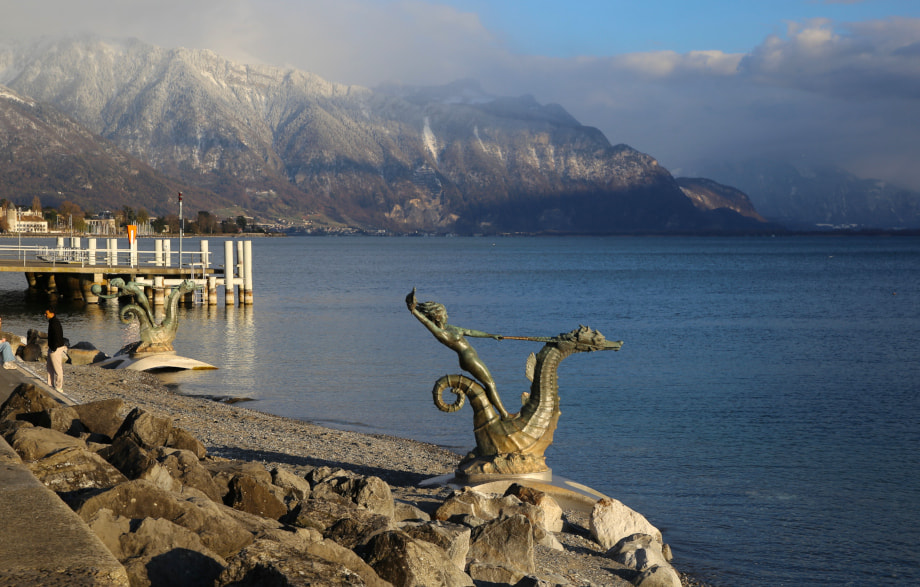
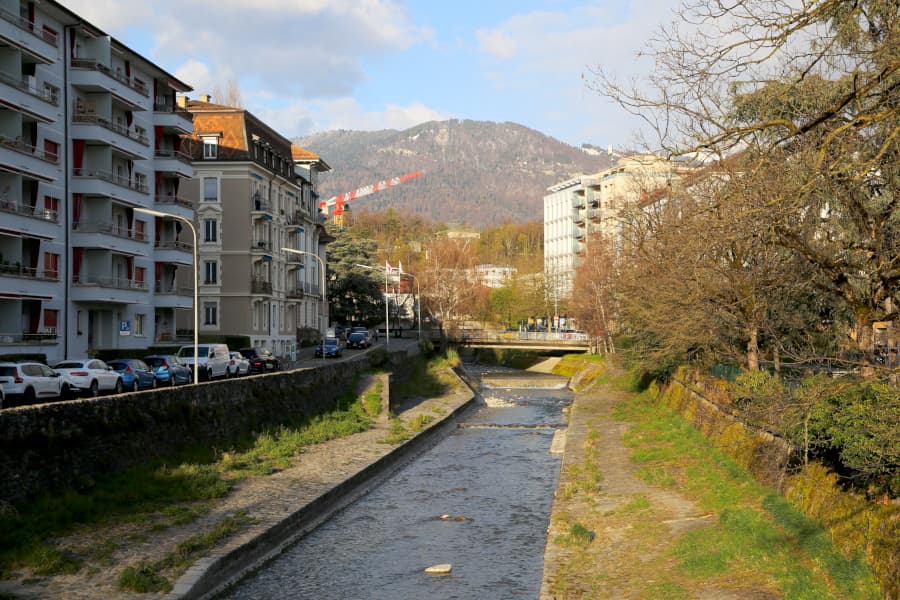
Geographically, it lies on the northern shore of Lake Geneva at the mouth of the Veveyse. To the north-west, it is dominated by the eastern slopes of Lavaux and Mont Pèlerin. To the east lie the Pre-Alps, with Les Pléiades as the first peak. The municipality comprises the town centre to the south, the old town to the south-east and the Charmontey hillside to the north-east.
History
By the 20th century BC, two lake-dwelling settlements built on stilts had already been established in Vevey.
In Roman times, Augustus began construction of a trade and military route from Italy. This route, starting in Milan, passed through the Great St Bernard Pass to reach Lake Geneva. At Vevey, it split into two branches: one headed north towards Aventicum, the other westwards, running alongside the lake and then the Rhône to Lugdunum. Thanks to this route, a settlement, defined as a vicus, emerged between the Veveyse and Oyonne rivers in what is now the town centre, covering an area of around 20 hectares. The settlement was then named Ouikos in Ptolemy’s Geography.
Towards the end of the Roman period, the town was probably largely abandoned for a time in the face of the barbarian invasions. However, the discovery of the very significant Clos d’Aubonne necropolis at La Tour-de-Peilz, situated 500 metres south-east of the Roman vicus and dating from the 5th to the 9th century, proves that the region remained inhabited.
Following the Vaud Revolution of 1798, and throughout the 19th century, Vevey experienced a period of prosperity and expansion. Industries in mechanical engineering (Ateliers de constructions mécaniques de Vevey), chocolate, milk powder (Nestlé) and numerous tobacco factories (Rinsoz, Ormond, etc.) were established.
The rise of tourism in the region became particularly marked with the arrival of the railway, notably with the construction of the Hôtel d’Angleterre in 1866 and the Grand-Hôtel in 1867.
On 4 June 1888, the world’s second electric tramway was inaugurated between Vevey, Montreux and Chillon Castle. This service was finally replaced by buses in 1958.

Nescafé was developed in Vevey in 1936 by the chemist Max Morgenthaler.
The large vineyard situated in the upper part of the town gradually disappeared during the 20th century, making way for residential properties.
Tourism
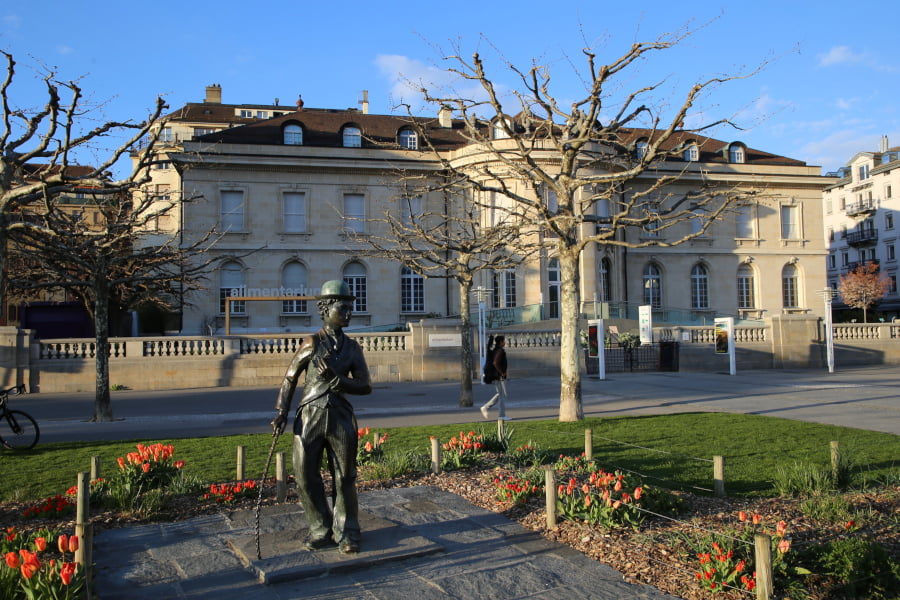
The Alimentarium is a food museum. It is listed as a Swiss cultural asset of national importance. The museum’s permanent exhibition is organised around the theme of ‘cooking, shopping, eating and digesting’ and also traces the history of the Nestlé company.
Notre-Dame Church, also known as the Catholic Church of Notre-Dame de Vevey, is a Catholic church. It is now a cultural asset of national importance.
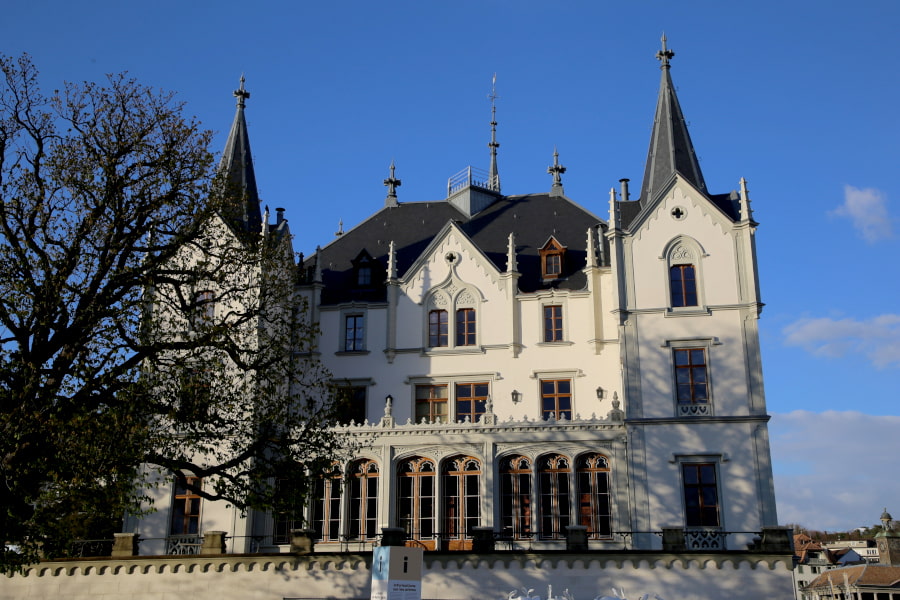
The Château de l’Aile, also known as Château Couvreu, was built between 1840 and 1846. Constructed in the Neo-Gothic style, partly inspired by English architecture, it was designed by Philippe Franel, Henri Perregaux and Jacques-Louis Brocher.
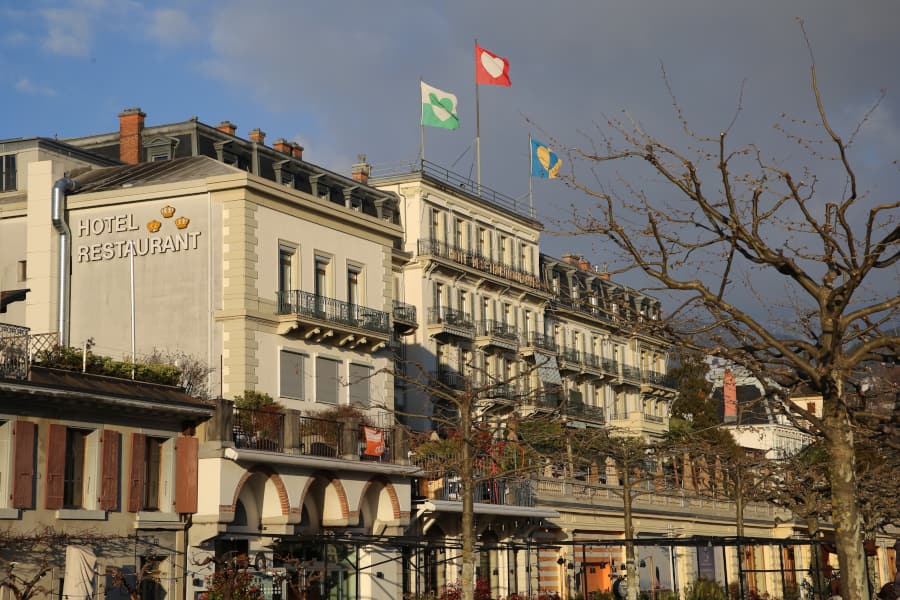
The Hôtel des Trois Couronnes is a five-star hotel situated on the shores of Lake Geneva. It is also one of Switzerland’s first grand hotels. The hotel comprises a central building flanked on either side by smaller, symmetrical wings set slightly back from the main structure.
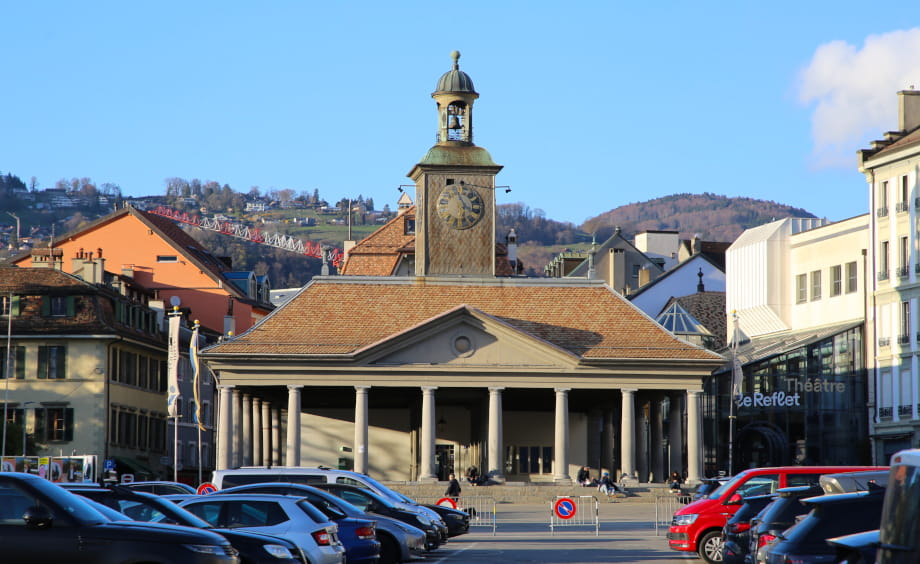
La Grenette is a covered market located on the Place du Marché. The town’s Grenette (‘grain store’) was built in 1808 to a design by the Lausanne architect Jean–Abraham Fraisse. It takes the form of a hall framed by 18 Tuscan columns made of black Saint-Triphon marble.
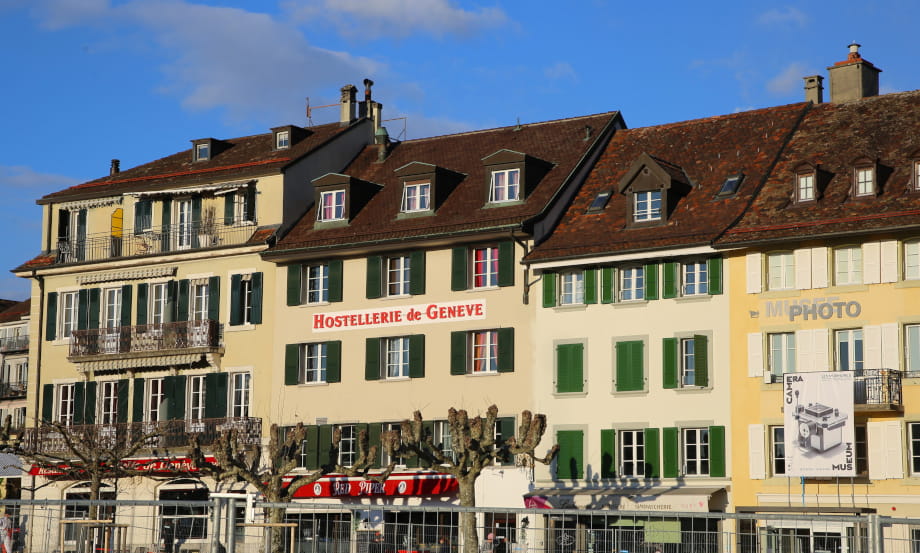
The Swiss Camera Museum is a museum dedicated to photography. The museum’s mission is to preserve the memory of photographic techniques and practices across all fields of application by preserving objects, instruments, as well as photographic products, processes and supplies, and also all photographs, documentation, publications and illustrations related to this medium.
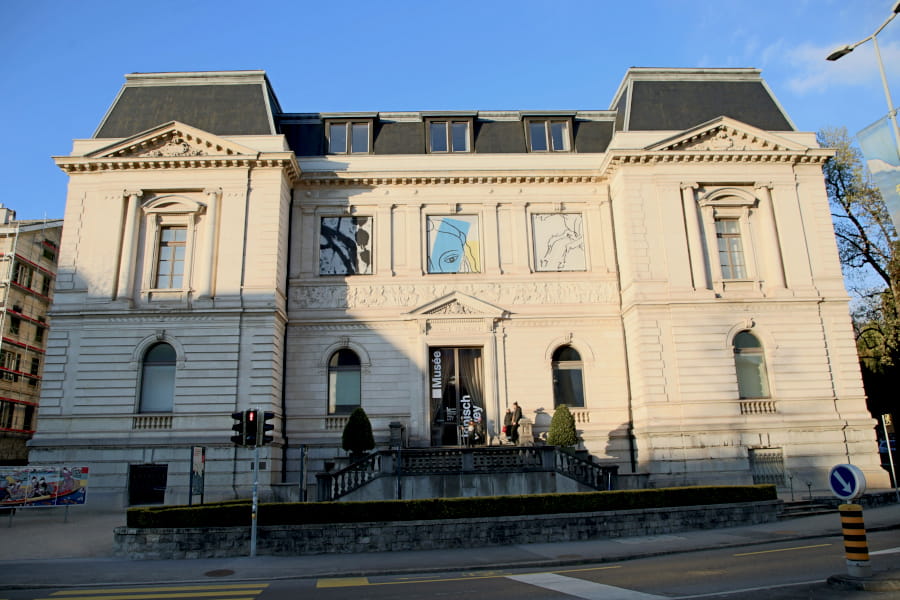
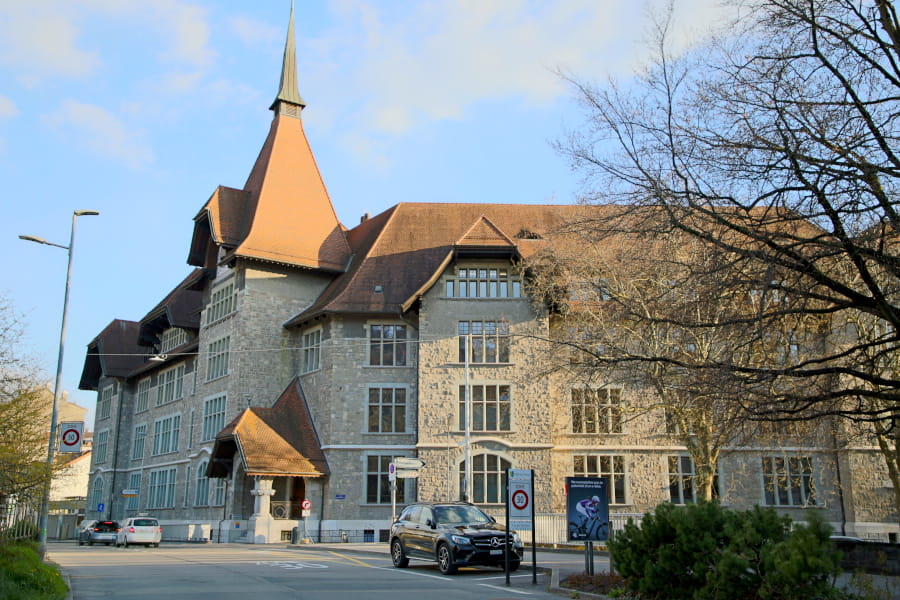
The Jenisch Museum in Vevey is an art museum housing collections of drawings and engravings, as well as the Oskar Kokoschka Foundation collection. Since its opening in 1897, the museum has been enriched by donations from private individuals.
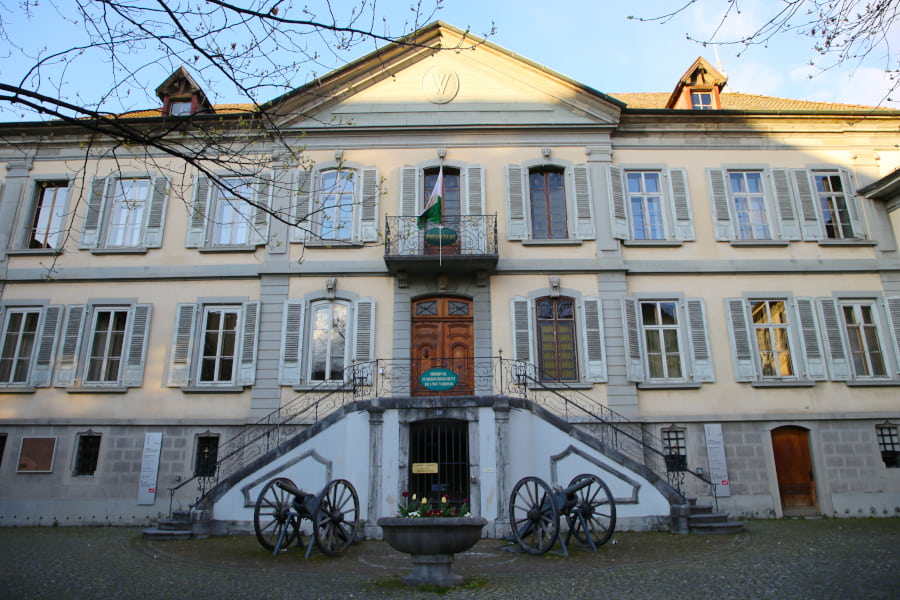
The Museum of the Confrérie des Vignerons is a museum dedicated to the history of the Confrérie des Vignerons and the Fête des Vignerons. The same building is also home to the Vevey History Museum. The museum features a permanent exhibition with models of the festival arenas from 1927 to 2019, costumes, engravings, photographs and films (1905–2019) relating to the Winegrowers’ Festival from 1797 to 2019.
The Nestlé SA administrative building serves as the global headquarters of the Nestlé company. The building, along with the company’s archives, is listed as a Swiss cultural asset of national importance. These archives, established in 1995, contain numerous documents relating to the company’s history, as well as packaging and advertising materials for the brand’s products.
The Church of Saint Barbara the Great Martyr is a Russian Orthodox church. The plans were drawn up in Saint Petersburg by Ippolito Monighetti between 1875 and 1878, and the church was built by the Vaud architect Samuel Késer.
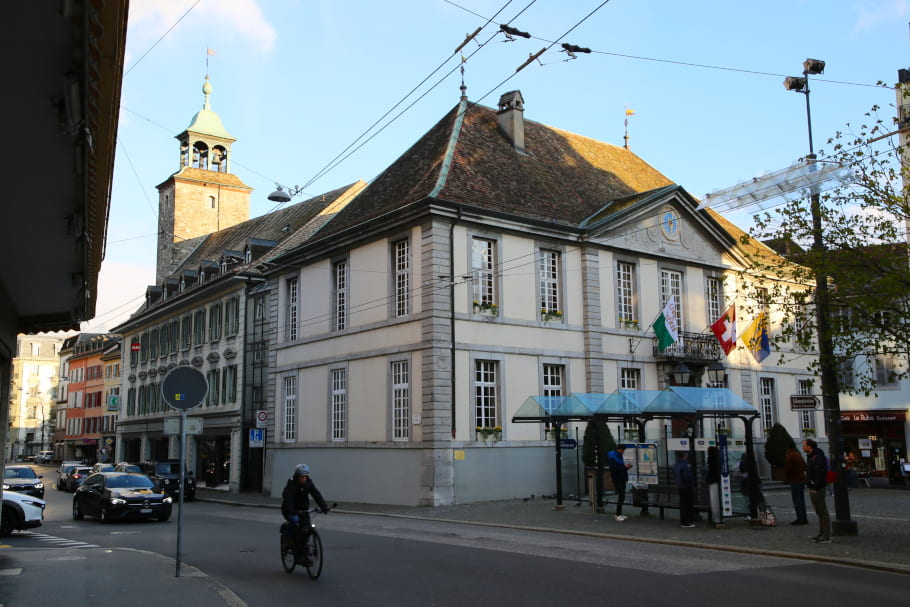
Vevey Town Hall houses the municipal administration of the commune of Vevey. It forms part of an architectural complex comprising three closely linked sections: the Saint-Jean Tower, the former medieval hospital which became the town hall in the mid-14th century, and finally the Town Hall itself, built in the early 18th century.
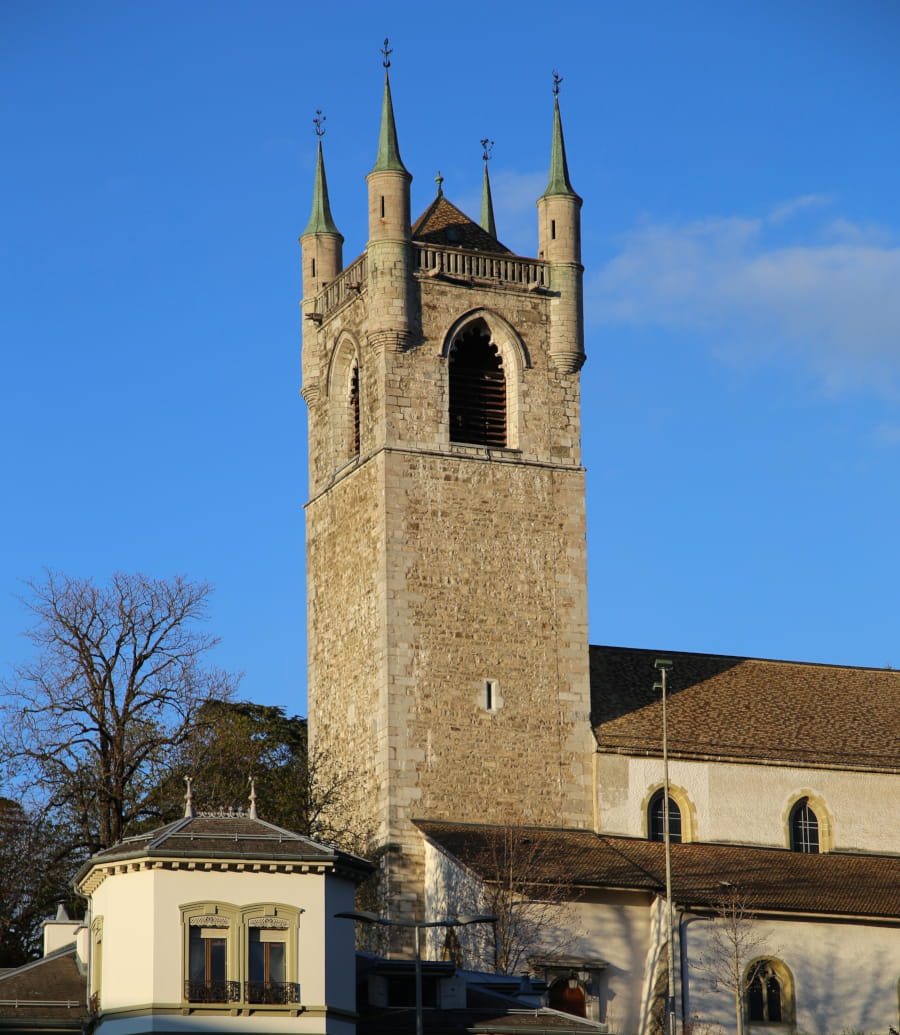
The Reformed Church of Saint-Martin, a major example of late Gothic architecture in the Vaud region, overlooks the town of Vevey. The parish is a member of the Evangelical Reformed Church of the Canton of Vaud.
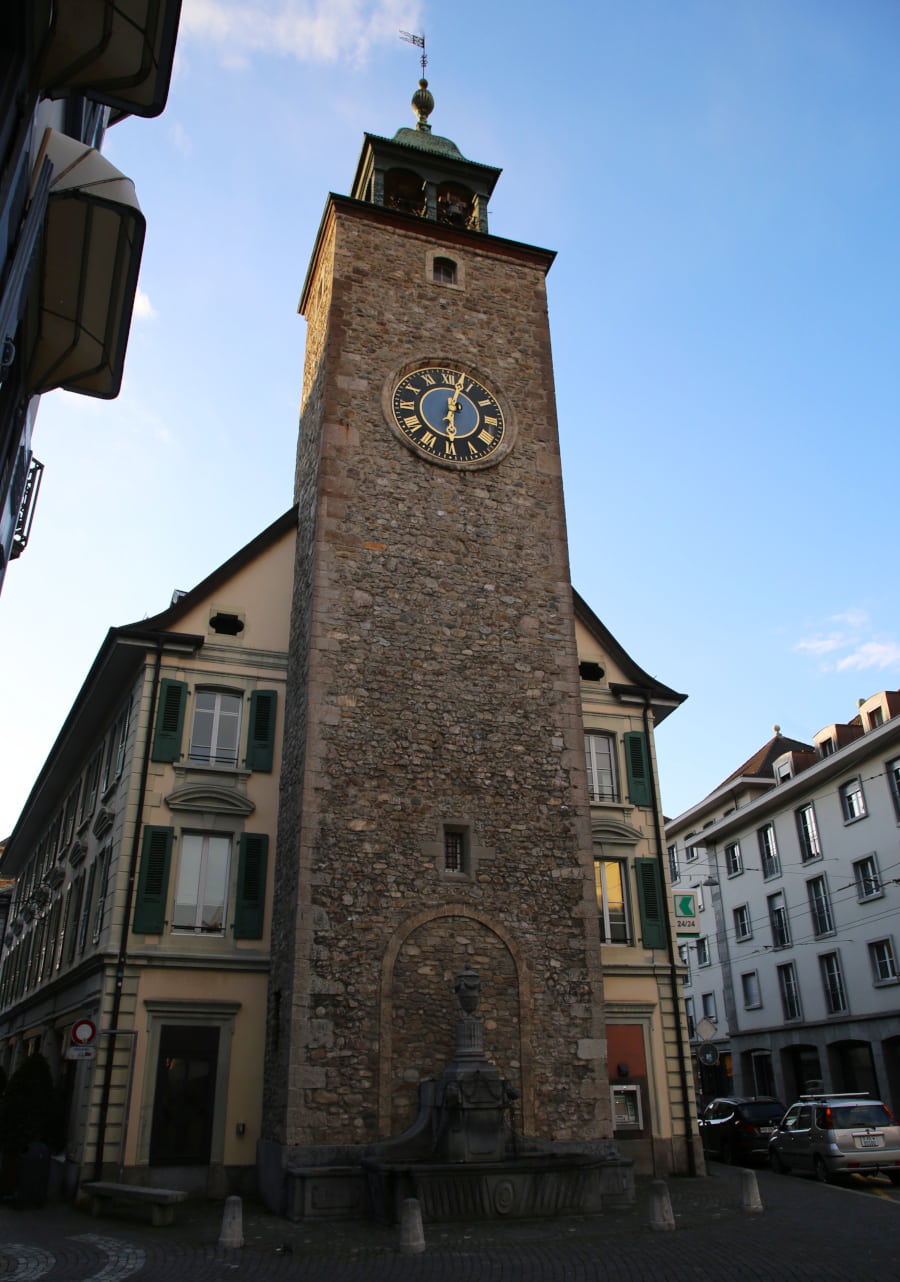
The Saint-Jean Tower is a clock tower. In 2012, whilst the tower’s clock was being repaired, workers discovered a hiding place containing various documents dating from 1755 as well as several objects, including coins from the 18th and 19th centuries. At its base stands the Vieux-Mazel fountain, built in the 18th century by Michel-Vincent Brandoin. Both the tower and the fountain are listed as Swiss cultural properties of national importance.
Transport
Vevey-Montreux-Chillon-Villeneuve Public Transport (VMCV) is a Swiss public transport company based in Montreux. It provides passenger transport services in the Vaud Riviera region. Established in its current form in 2008, the company operates a century-old transport network comprising one trolleybus route and sixteen bus routes.
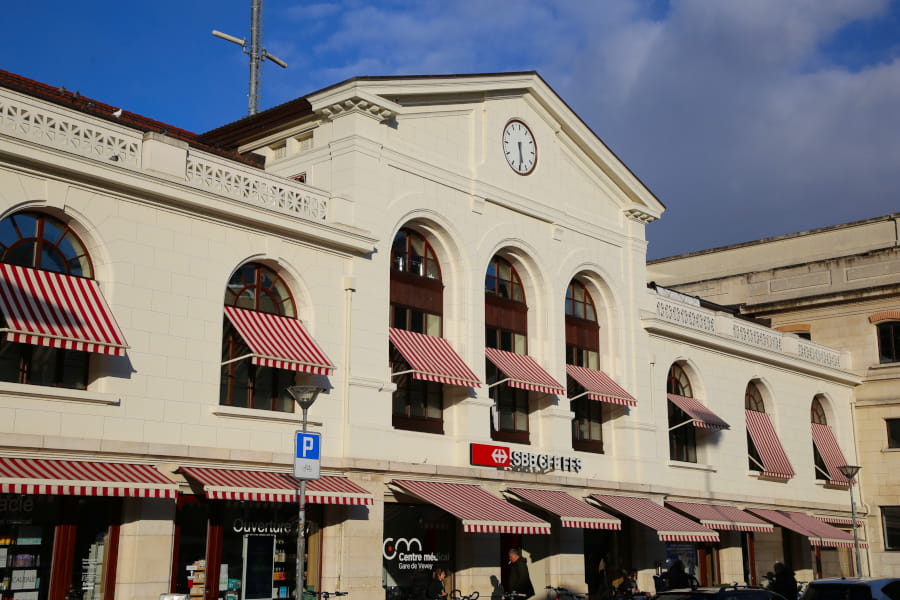
Vevey station is served by the SBB mainline network. The InterRegio IR90 and IR95 services connect Vevey to Geneva Airport via Lausanne and Geneva to Brig via Martigny and Sion. The RegioExpress RE33 service runs from Annemasse to St-Maurice every half hour and on to Martigny every hour. The station is also part of the Vaud regional express network, providing frequent high-speed connections throughout the canton of Vaud. It is served by trains on lines R1, R2, R3, R4 and R7.
The Compagnie générale de navigation sur le Lac Léman (CGN) is a Swiss company providing boat transport services on Lake Geneva in Switzerland and France. The company owns 19 boats. There are three landing stages in the town: Vevey-Plan, Vevey-Marché and Vevey-La Tour.
The town is crossed by the H9 and H12 main roads and the A9 and A12 motorways.
Main information
Canton: Vaud
Area: 2.38 km²
Coordinates: 46° 27′ 56″ N, 6° 50′ 56″ E
Languages: French, English
Population: 20,142
Currency: Swiss Franc (CHF)
Visa: Schengen
Time: Central European Time UTC +2
See here Catalonia travel guide
See here Pyrenees travel guide
See here France travel guide
See here Spain travel guide




