

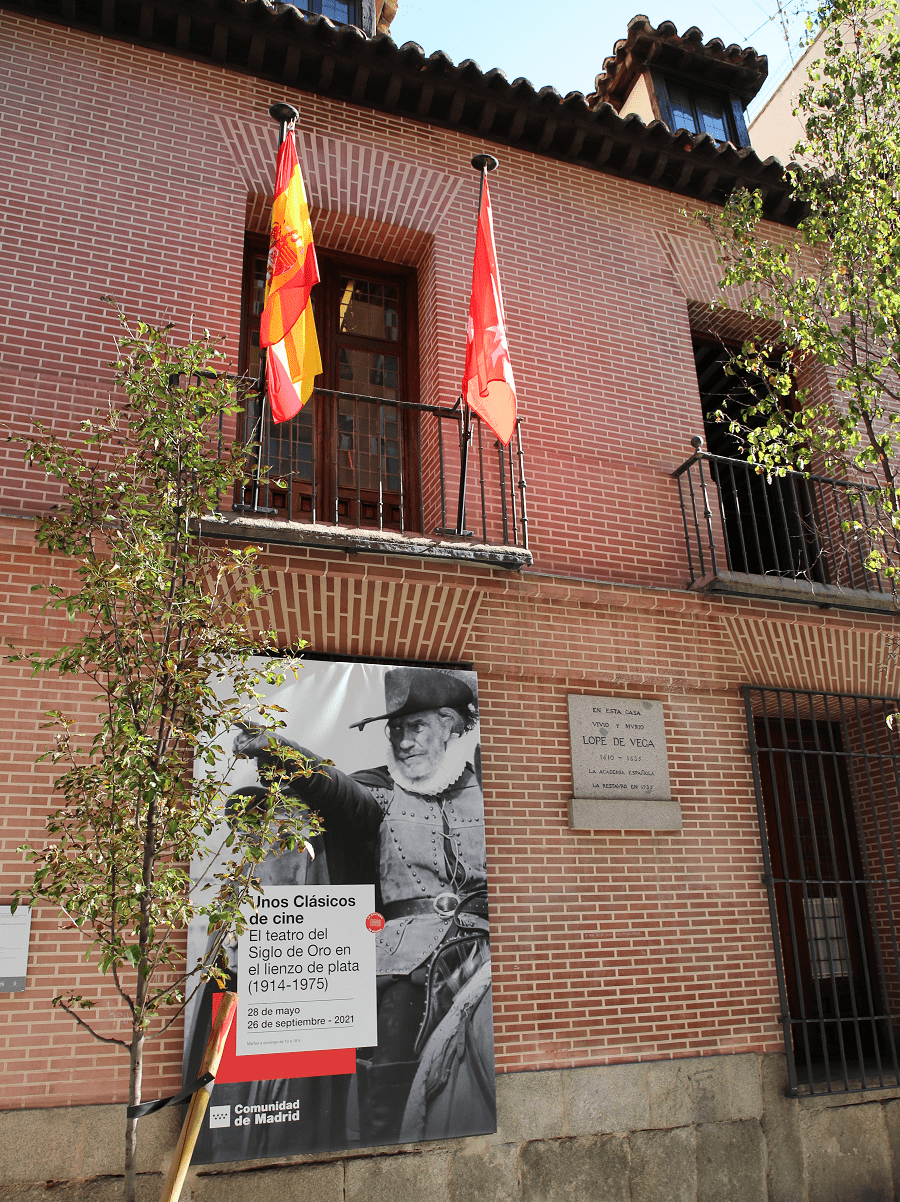
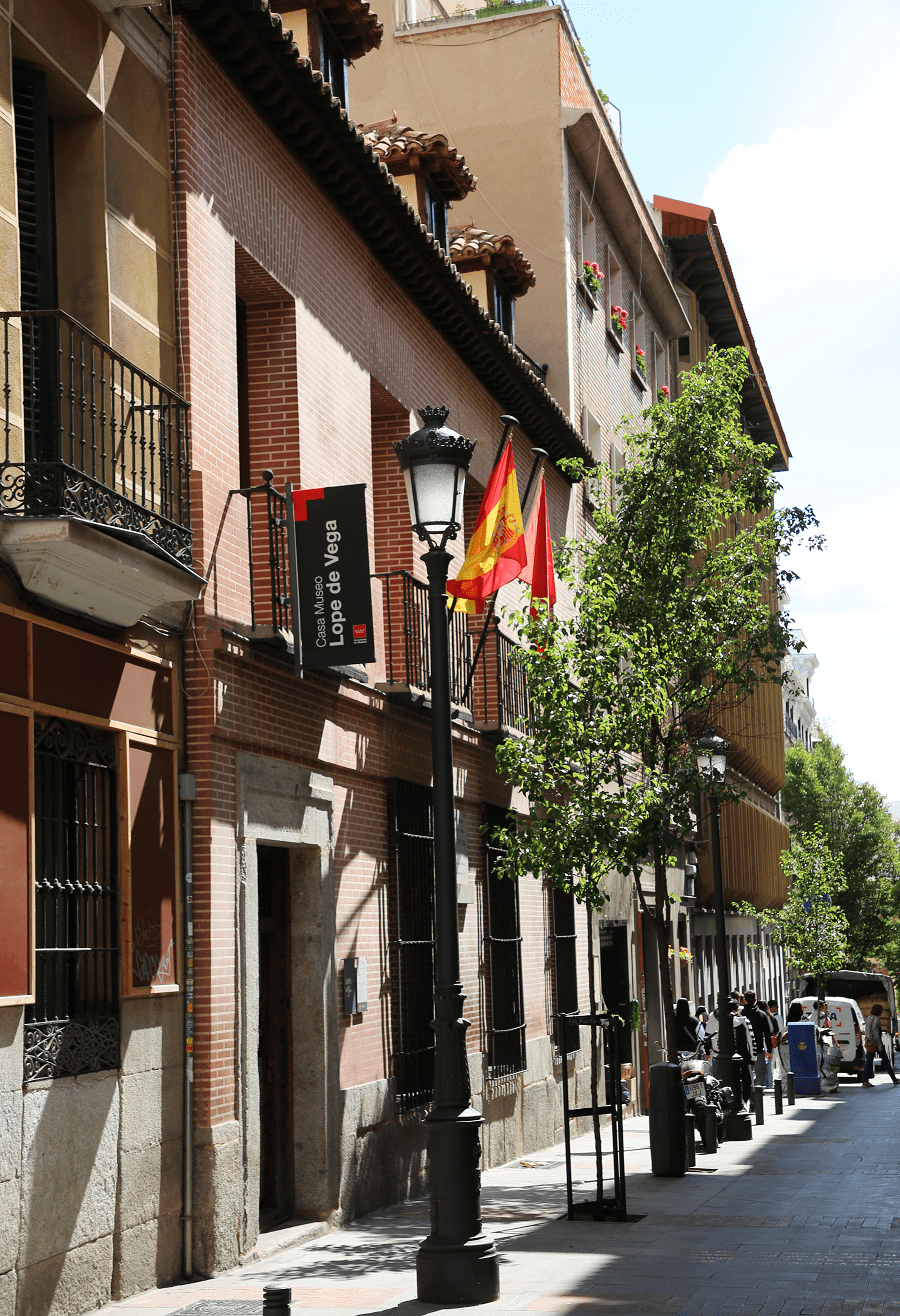
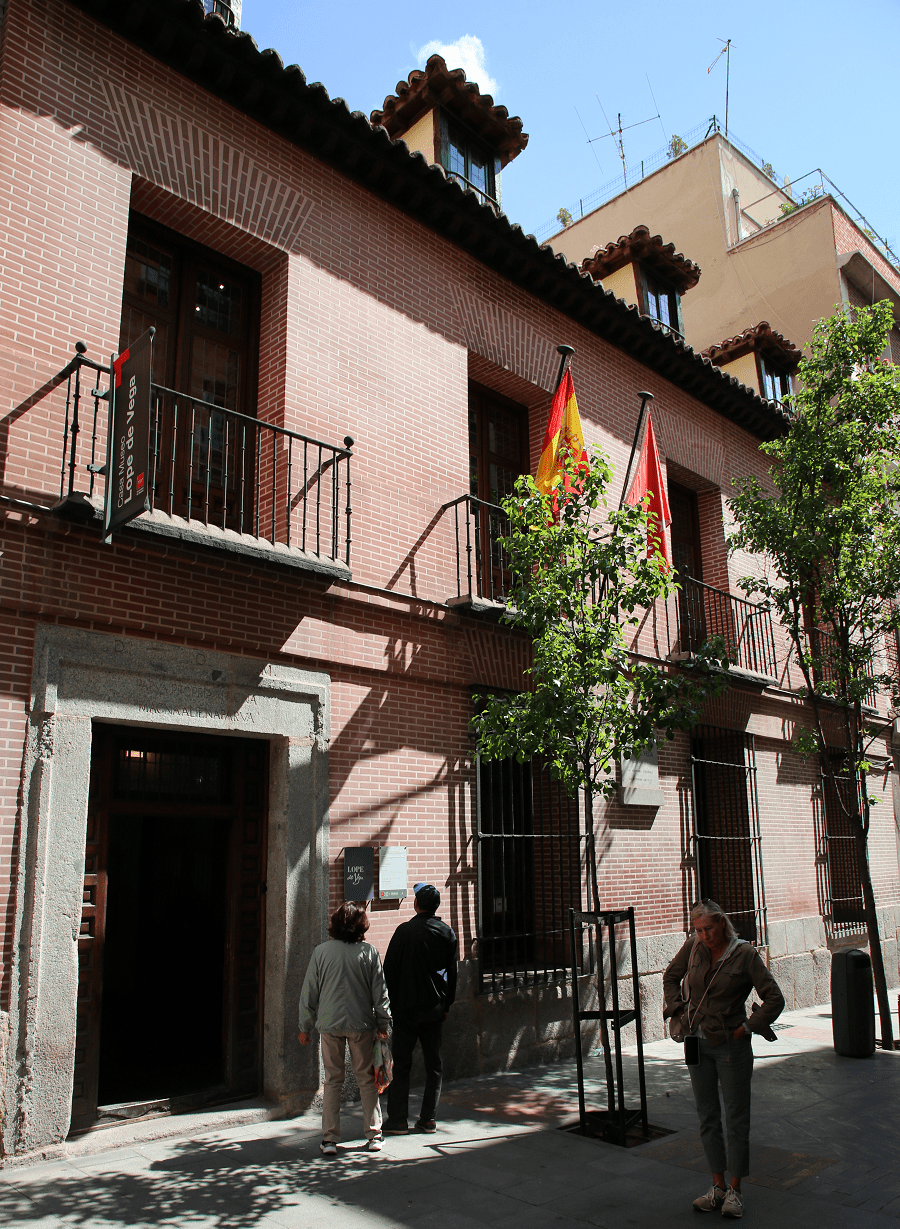
The Lope de Vega House-Museum is located at number 11, Calle de Cervantes, in Madrid, Community of Madrid, Spain.
Visits
The 16th-century house was bought by the writer in 1610. Today it is preserved by the Royal Spanish Academy. The Academy restored the house and opened it as a museum in 1935, the same year that the building was declared a national monument. Today the building is protected as a Site of Cultural Interest. The Academy owns three of Lope de Vega’s manuscripts that are on display in the museum.
Access to the museum is through group visits (maximum ten people). It is essential to book in advance, by phone or email. Visits begin every half hour and last approximately 35 minutes. The last visit takes place at 5:00 p.m. They are also offered in English, Italian and French.
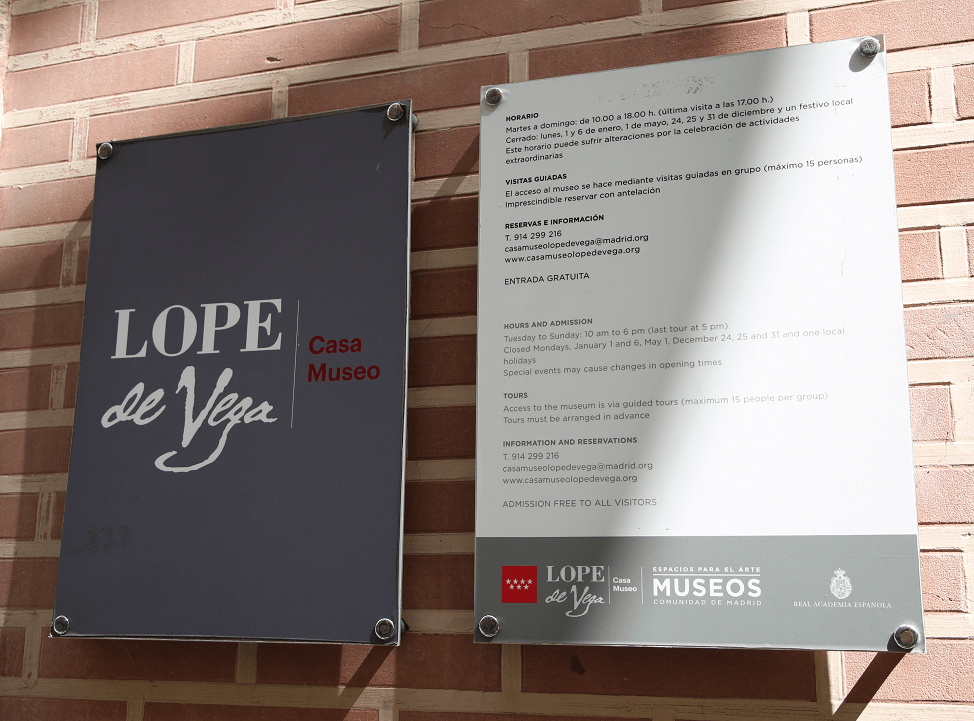
Address: Calle de Cervantes, 11, Centro, 28014 Madrid, Spain.
Working hours:
Thursday 10 AM–6 PM
Friday 10 AM–6 PM
Saturday 10 AM–6 PM
Sunday 10 AM–6 PM
Monday Closed
Tuesday 10 AM–6 PM
Wednesday 10 AM–6 PM
Opened: 1935
Phone: +34 914 29 92 16
Lope de Vega
Félix Lope de Vega y Carpio (25 November 1562 – 27 August 1635) was a Spanish playwright, poet, and novelist who was a key figure in the Spanish Golden Age (1492–1659) of Baroque literature. In the literature of Spain, Lope de Vega is second to Miguel de Cervantes. Cervantes said that Lope de Vega was “The Phoenix of Wits” (Fénix de los ingenios) and “Monster of Nature” (Monstruo de naturaleza).
Lope de Vega renewed the literary life of Spanish theatre when it became mass culture, and with the playwrights Pedro Calderón de la Barca and Tirso de Molina defined the characteristics of Spanish Baroque theatre with great insight into the human condition. The literary production of Lope de Vega includes 3,000 sonnets, three novels, four novellas, nine epic poems, and approximately 500 stageplays.
Madrid: full guide
- Administrative structure
- Architecture
- Churches and Cathedrals
- Entertainment
- Monuments
- Museums
- Parks and gardens
- Restaurants
- Shopping and markets
- Squares
- Streets
- Transport
See here Pyrenees travel guide
See here France travel guide
See here Spain travel guide




