

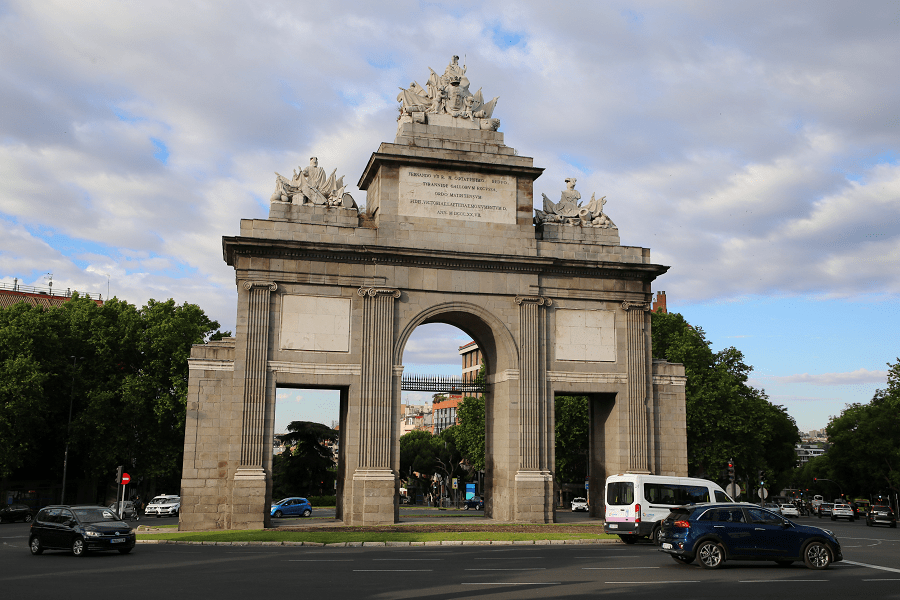
The Toledo Gate was one of the access gates to the city of Madrid, Community of Madrid, Spain. There were previously three other gates called Toledo in the vicinity, the current one dates from the first third of the 19th century and was designed by the Spanish architect Antonio López Aguado, which is located in the middle of the Glorieta de la Puerta de Toledo acting as a roundabout. It was erected as a triumphal arch in honor of King Ferdinand VII as a commemoration of the Spanish war of independence after the French occupation.
It was the last monumental gate erected in the old enclosure of Madrid. It was built in the period between 1813 and 1827, and was restored by the Madrid City Council in 1995. Due to its location in the city, it gave access from the city center through Calle de Toledo Street to the roads south of Madrid (Camino Real de Andalusia), after crossing the Manzanares River via the Toledo Bridge and the Carabanchel.
Architecture
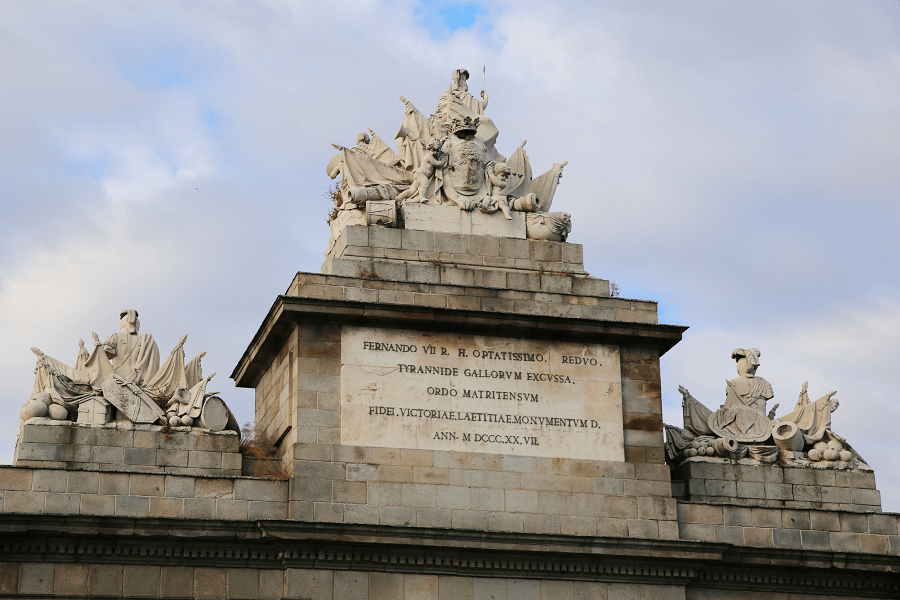
Its structure is made up of granite blocks and the decorative elements are made of Berroqueña limestone. Some authors define it as a ‘heavy’ door compared to the one in Alcalá.
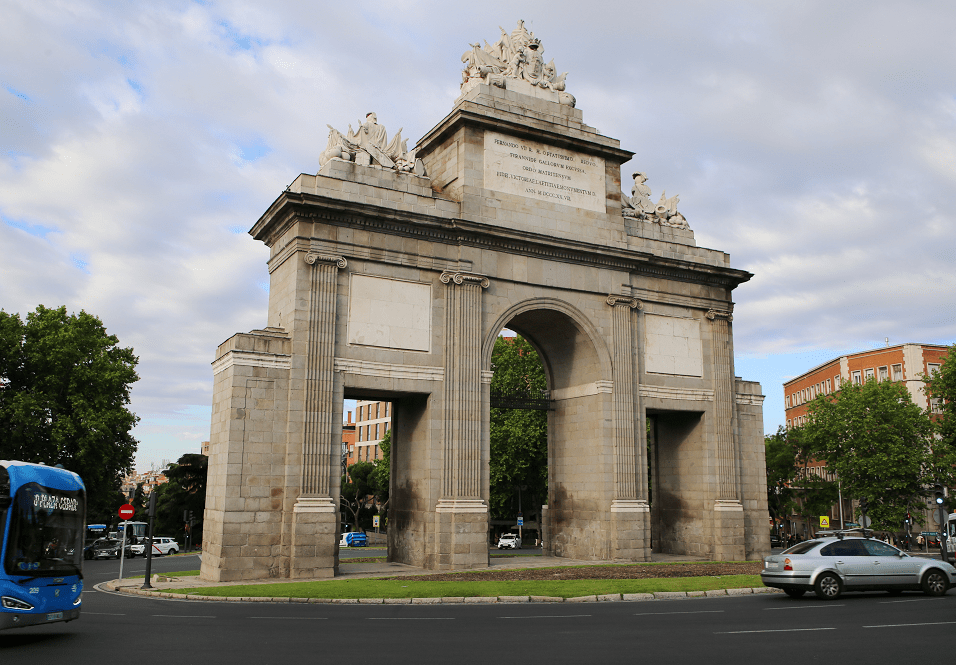
In neoclassical style, it is composed of a central semicircular arch and two lintelled doors on its sides. The decoration consists of fluted half-columns of the Ionic order, on the sides of the central arch, and pilasters of the same style framing the sides.
Puerta de Toledo metro station in on Line 5 of the Madrid Metro.
Madrid: full guide
- Administrative structure
- Architecture
- Churches and Cathedrals
- Entertainment
- Monuments
- Museums
- Parks and gardens
- Restaurants
- Shopping and markets
- Squares
- Streets
- Transport
See here Pyrenees travel guide
See here France travel guide
See here Spain travel guide




