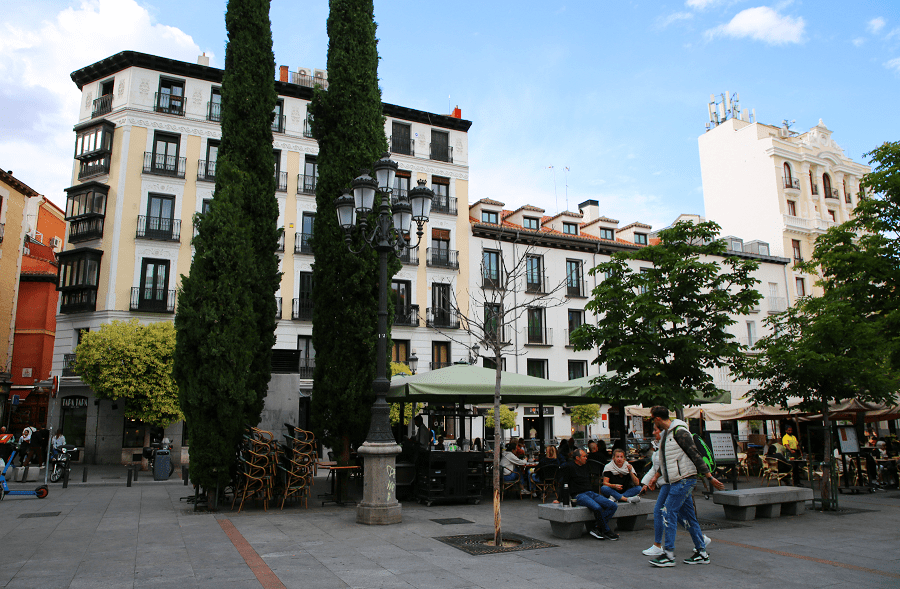
Plaza de Santa Ana (also known as Plaza del Príncipe Alfonso) is an open space in the Cortes neighbourhood, in the Centro district of Madrid, Community of Madrid, Spain.

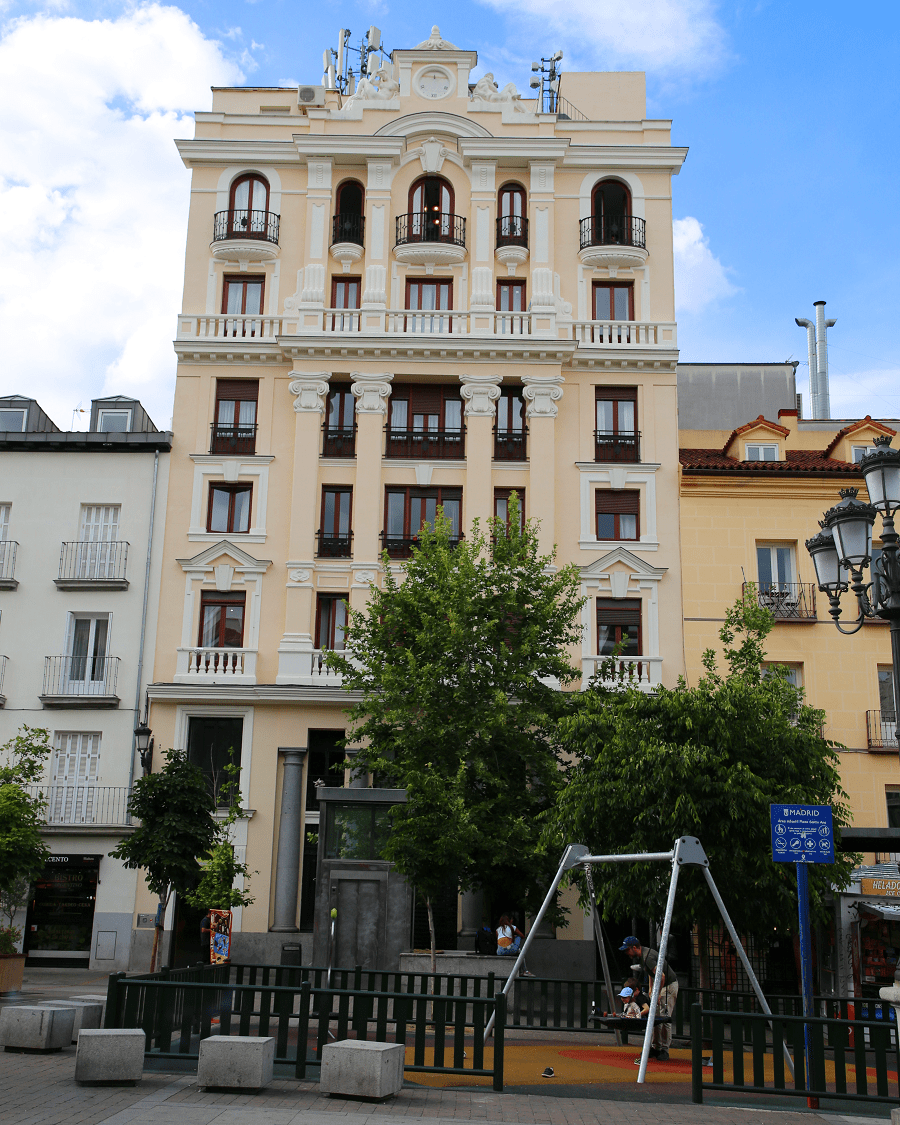
It dates back to 1810 and throughout its history it has undergone numerous urbanisation processes that have modified its appearance with varying success. Within its perimeter there are buildings such as the Teatro Español and the Hotel Reina Victoria, and sculptures by playwrights such as Pedro Calderón de la Barca and Federico García Lorca. Located in the heart of the so-called Barrio de las Letras, its space is delimited by Calle del Príncipe to the east and Calle del Prado to the south, giving numbering only to its western and northern flanks, where Plaza del Ángel and Calle Núñez de Arce meet.
History
The square is located in the space of block 215 that until 1810 was occupied by the church, monastery, gardens and orchards of the convent of the Discalced Carmelite nuns of San José and Santa Ana.

Saint Teresa of Ávila wanted to found a convent of Discalced Carmelites in Madrid. His disciple, Saint John of the Cross, and the nun Ana de Jesús left the Convent of San José de Granada, of Discalced Carmelites, which had been founded by them in 1582, and founded the Convent of Santa Ana in a house in Red de San Luis on September 17, 1586.
During the reign of Joseph Bonaparte, the complex was demolished and its occupants moved to number 26 on Calle del Prado, ending in 1837 with the Comendadoras de Santiago, in the monastery of Santa Teresa. In 1860 it was baptized in the plaza of Prince Alfonso, son of Isabella II, but eight years later, during the Democratic Sexennium, it took the name of Vice-Admiral Topete.
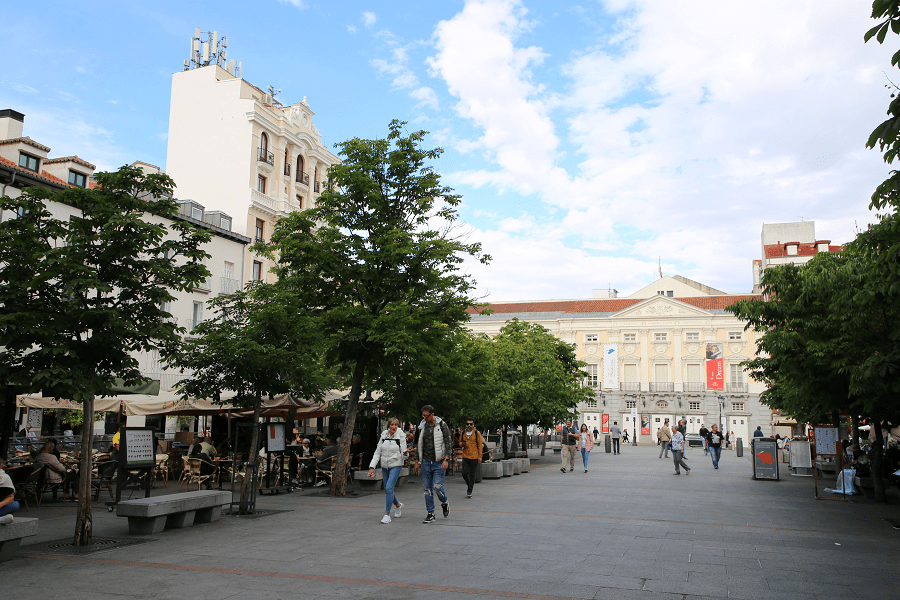
For Mesonero, who named it “Plazuela de Santa Ana”, and for the people of Madrid, however, it kept the name of the patron saint of the disappeared convent, although for mayors such as Mariano de Cavia it was the “Plaza de la Cerveza”. Officially, the Second Spanish Republic gave it in April 1933 the name that it retains in the first quarter of the 21st century.
Madrid: full guide
- Administrative structure
- Architecture
- Churches and Cathedrals
- Entertainment
- Monuments
- Museums
- Parks and gardens
- Restaurants
- Shopping and markets
- Squares
- Streets
- Transport
See here Pyrenees travel guide
See here France travel guide
See here Spain travel guide