Zarzuela theatre is an entertainment space in Madrid, Community of Madrid, Spain, opened in 1856, located at number 4 Jovellanos Street, in the Centro district. Renovated on several occasions, it was declared a National Monument in 1998 and is on the list of Assets of Cultural Interest of the city of Madrid.
The Teatro de la Zarzuela is the centre for artistic creation of the National Institute of Performing Arts and Music (INAEM) whose fundamental mission is to recover, preserve, revise and disseminate the Spanish lyrical genre, and specifically the zarzuela, promoting its national and international projection, within a framework of full artistic and creative autonomy. The theatre is also the regular home of the National Dance Company and the National Ballet of Spain.
History
The theatre was designed by architect Jerónimo de la Gándara and built by José María Sánchez Guallart on the initiative of the Spanish Lyrical Company to provide a space for performances of operettas in the Spanish capital. It was modelled on the La Scala theatre in Milan with its three-level horseshoe form and opened to the public on 10 October 1856, the birthday of Queen Isabella II. The name refers to zarzuela, a theatre form that alternates spoken and sung scenes. Its promoters were established masters of the genre such as Francisco Asenjo Barbieri, Joaquín Gaztambide, Rafael Hernando, José Inzenga, baritono Francisco de Salas, librettist Luis de Olona and composer Cristóbal Oudrid, under Francisco de las Rivas, an important banker.
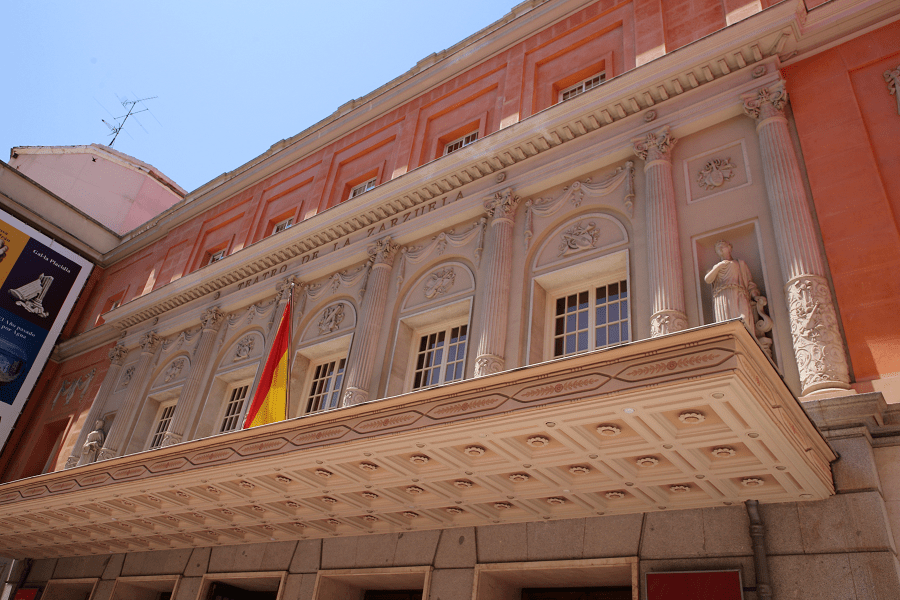
In the second half of the nineteenth century, Teatro de la Zarzuela became Madrid’s leading zarzuela theatre, staging many of the great masterworks. On November 9, 1909 the building was virtually destroyed by fire. The rebuild by Cesareo Iradier reduced the amount of wood and metal, and in 1914 Maestro Luna raised the curtain with his orchestra to reopen the theatre. With the Teatro Real opera house closed from 1925 to 1997, Teatro de la Zarzuela remained Madrid’s leading venue throughout the period and hosted most major opera events. The theatre’s resident ensemble is the Community of Madrid Orchestra.
The building was given heritage status in 1994, and in 1998 was again remodelled, restoring much of the original structure and form.
Zarzuela
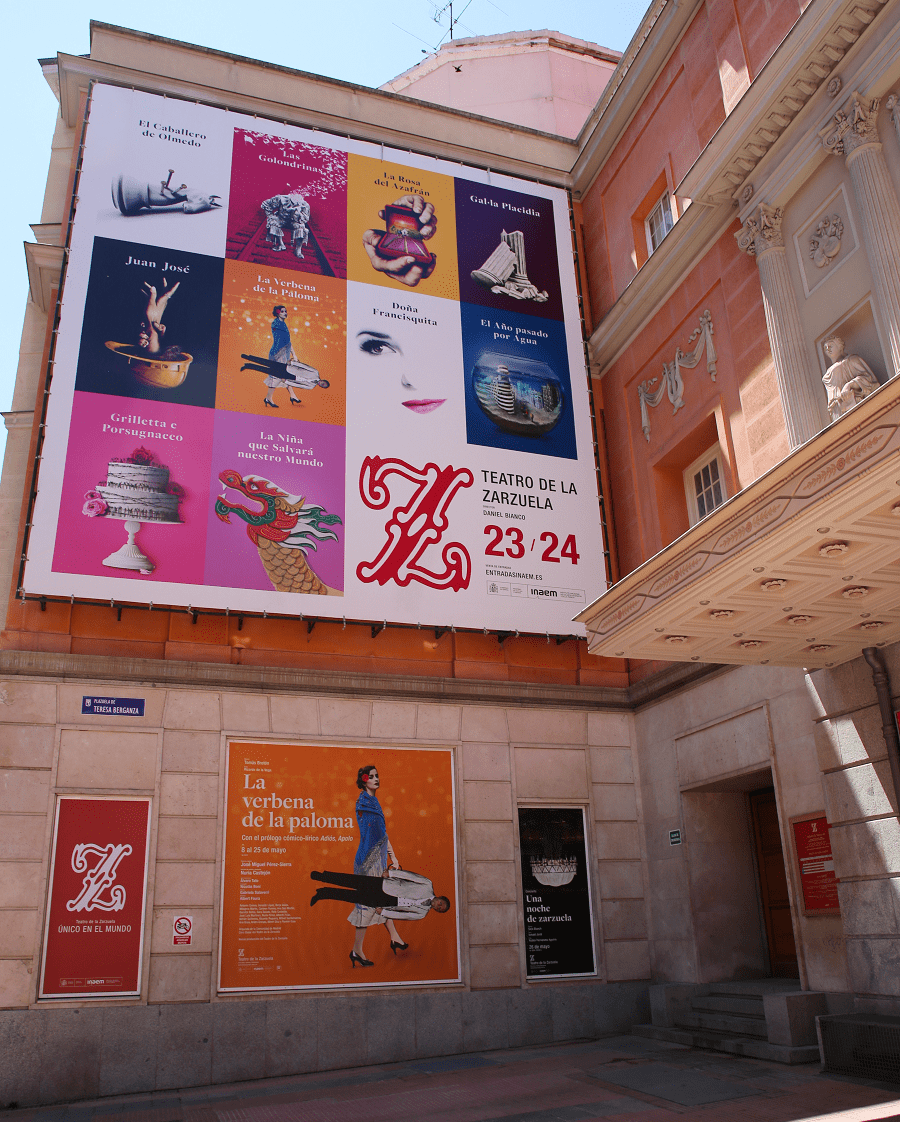
The theatre is today mainly devoted to zarzuela (the Spanish traditional musical theatre genre), as well as operetta and recitals.
Zarzuela is a Spanish lyric-dramatic genre that alternates between spoken and sung scenes, the latter incorporating operatic and popular songs, as well as dance. The etymology of the name is uncertain, but some propose it may derive from the name of a royal hunting lodge, the Palace of Zarzuela, near Madrid, where that type of entertainment was allegedly first presented to the court. The palace in turn was named after the brambles (zarzas) that grew there.
Madrid: full guide
- Administrative structure
- Architecture
- Churches and Cathedrals
- Entertainment
- Monuments
- Museums
- Parks and gardens
- Restaurants
- Shopping and markets
- Squares
- Streets
- Transport
See here Pyrenees travel guide
See here France travel guide
See here Spain travel guide