

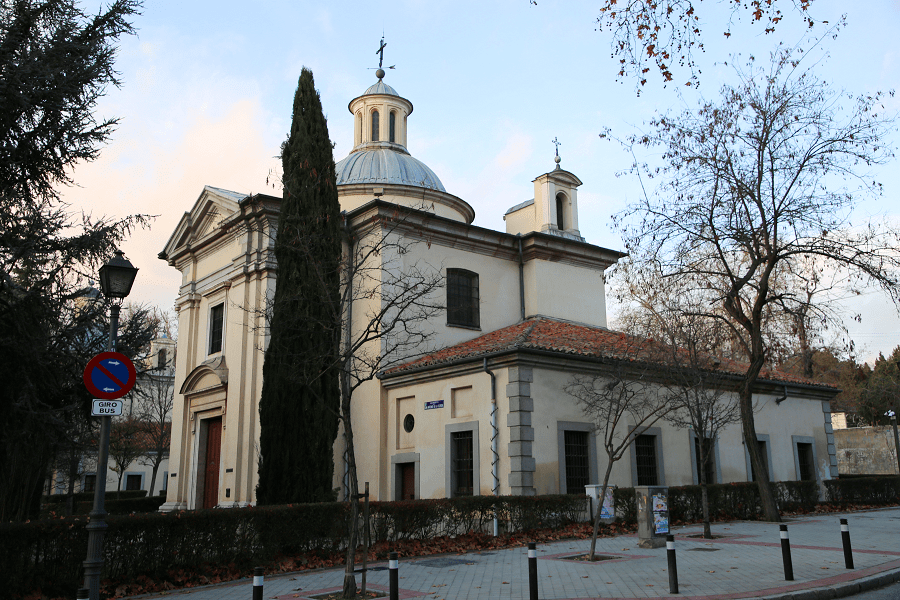
The hermitage of San Antonio de la Florida (Ermita de San Antonio de la Florida), is located in the square of the same name, and is considered the only survivor of the three hermitages dedicated to Saint Anthony of Padua that existed on the outskirts in Madrid (Community of Madrid, Spain).
It is located in the district of Moncloa-Aravaca and is the third hermitage built in the vicinity. It was listed as a historic-artistic monument in 1905. The name of the hermitage should be, since the beginning of the 20th century, in the plural, that is: the hermitages of San Antonio. They are two similar hermitages that since 1929 have specialized in two areas: one of them offers the public mural decorations by Francisco Goya (and is also a museum and pantheon of the painter), while the other is enabled only for religious worship.
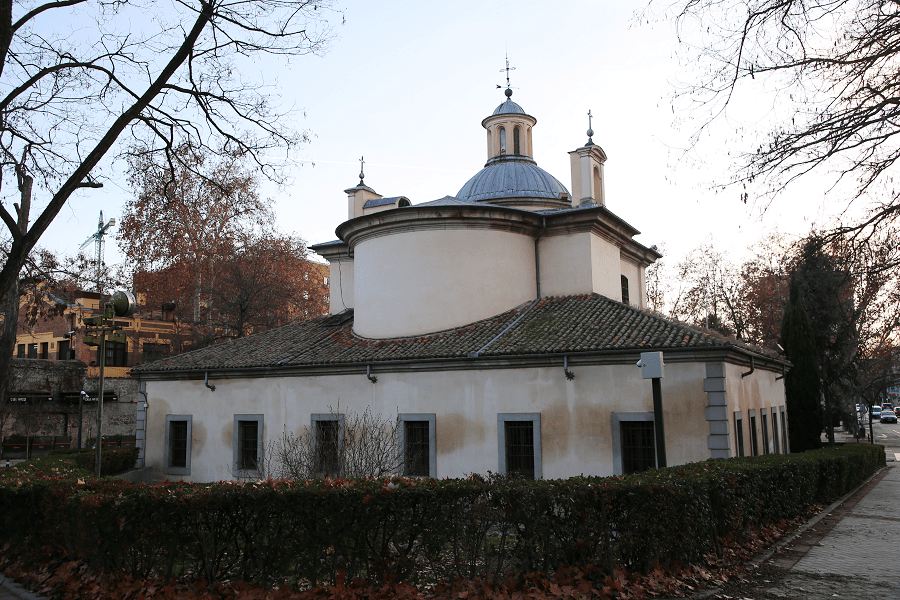
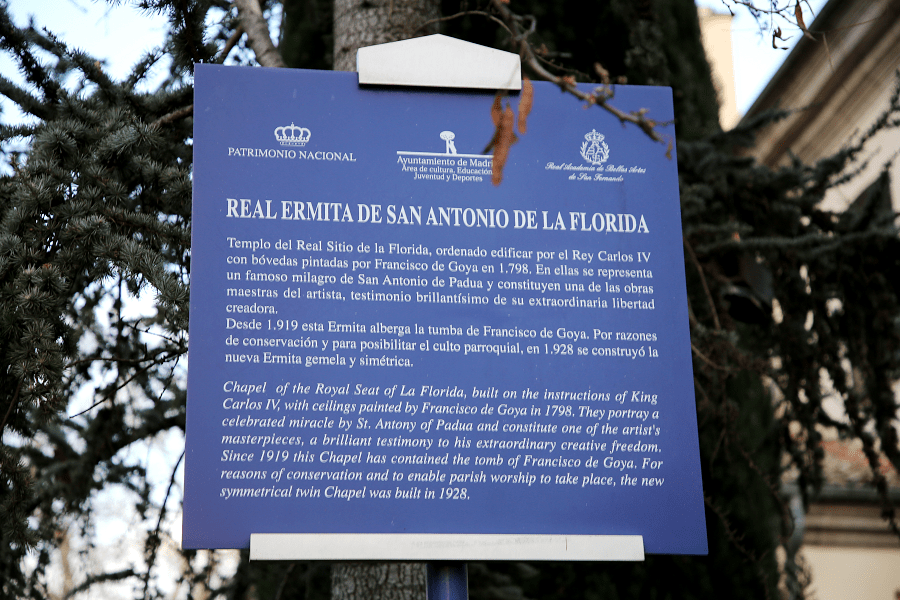
The chapel was built in the general location of two prior chapels built in the 1730s, which were on the land of a farm called La Florida. The present structure was built by Felipe Fontana from 1792 to 1798 on the orders of King Charles IV of Spain, who also commissioned the frescoes by Goya and his assistant Asensio Juliá.
The structure was declared a national monument in 1905. In 1919 Goya’s remains were transferred here from Bordeaux, where he had died in 1828. Famously, the skull was missing, a detail the Spanish consul had immediately advised to his superiors in Madrid, who wired back, “Send Goya, with or without head.” In 1928 an identical chapel was built alongside the original, in order to allow the original to be converted into a museum, and the headless remains were moved again.
On every June 13, the chapel becomes the site of a lively pilgrimage in which young unwed women come to pray to Saint Anthony and to ask for a partner.
Frescoes
The frescoes by Goya were completed over a six-month period in 1798. The frescoes portray miracles by Saint Anthony of Padua. On the main cupola of the chapel Goya depicted Saint Anthony raising a man from the dead and exculpating his father, who had been falsely accused of his murder. Instead of portraying the scene as occurring in thirteenth-century Lisbon, Goya relocated the miracle to contemporary Madrid.
Madrid: full guide




