FIAT RENFE Serie 597 (previously RENFE 9700)
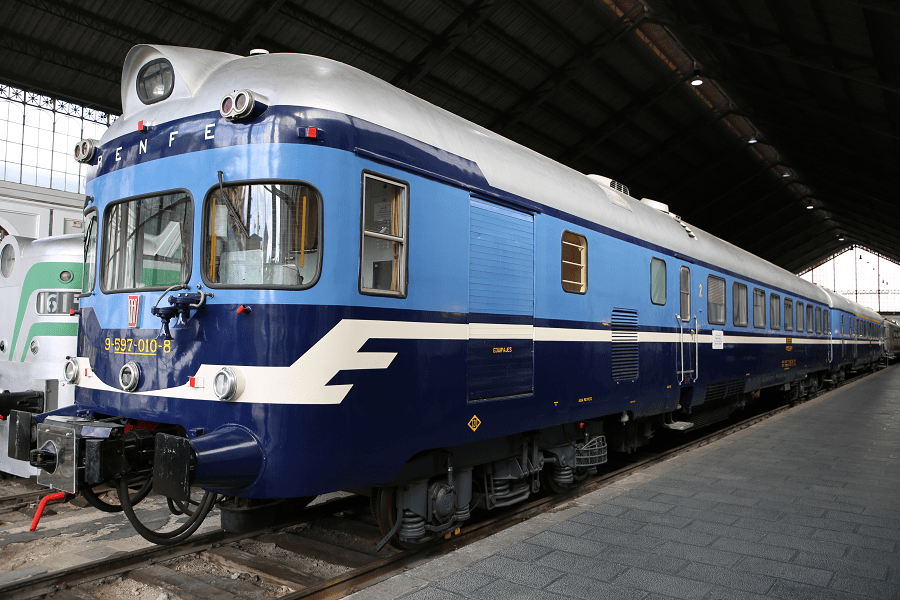
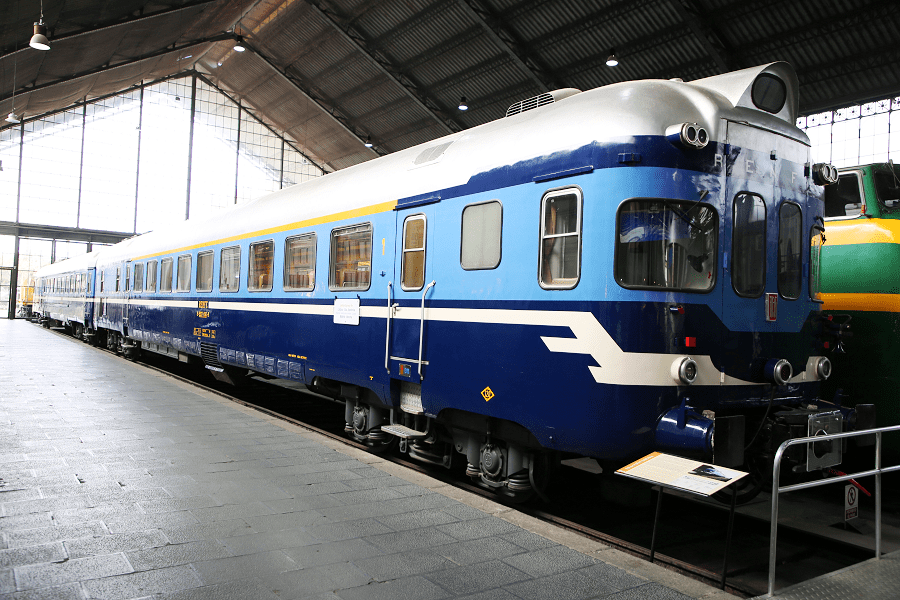
RENFE 9-597-010-8 (9710)
RENFE series 597 (9700 by old numbering), better known as TER (Tren Español Rápido), is a Spanish diesel railcar that entered service in 1965 and ended its service life in the mid-1990s.
The TER series is RENFE’s second order from the Italian manufacturer FIAT. The first series, Tren Automotor Fiat (TAF), was so successful that it inspired RENFE to launch a new tender for railcars.
The trains were originally serialized from 9701 to 9760, but were later reclassified in accordance with international numbering as 597.001–597.060.
Characteristics
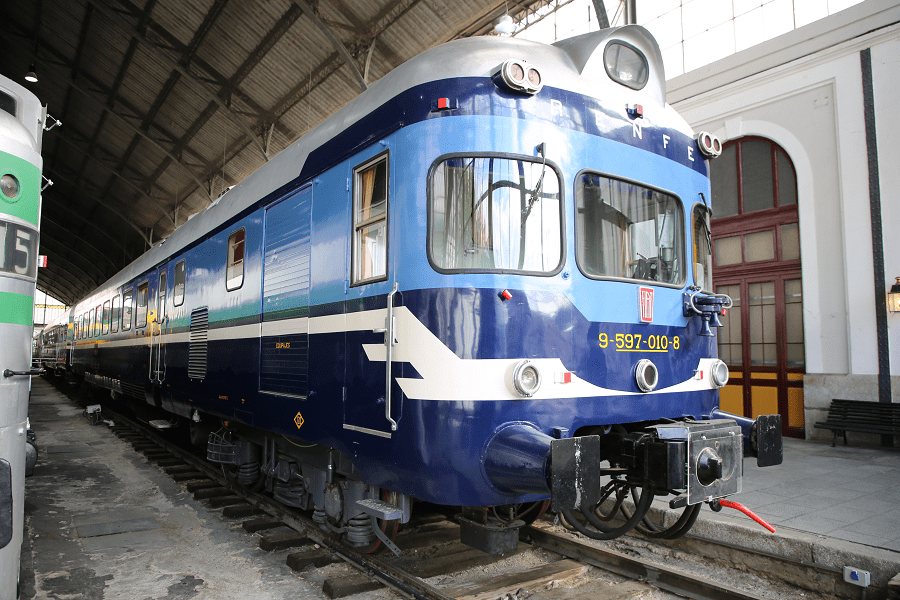
The basic composition of this train includes a motor coach (motorcar) and a driving trailer (with a cabin). However, it is designed to operate in a two-car train, making it a four-car train. There is a connecting door at one end of the train. The train has a 2’B’+2’2′ axle arrangement.
The engine and transmission are under the floor, and traction is provided by the rear bogie, which is located next to the trailer. A generator is installed under the floor, which provides the car with electricity and air conditioning.
From 1985, the 597 received new disc brakes. In the 1980s, the windscreens became smaller. Other changes included painting the first class windows in a yellow stripe, and towards the end of its service, some cars were painted in an orange and white livery. In the early 1990s, RENFE introduced a new registration system: VTBD1 for motor cars and VSAR1 for trailers.
Operational service
On 20 October 1964, the first train service between Madrid-Atocha and Alcalá de Henares was conducted for government officials and the press, followed by various tests in the subsequent weeks.
The first commercial service was on the Madrid—Gijón route via Ávila, on 10 January 1965. Soon after this, railcars began to travel to other destinations: Bilbao, Barcelona, Badajoz, Ciudad Real, Logroño, Pamplona, Seville, Valencia, Granada, Irun, A Coruña, Portbou and Alicante.
The TER also served some international routes, such as the Madrid—Lisbon route from 1967 to 1989, until they were replaced by the faster Talgo III. Since 1972, the TER diesel railcars have been replaced on electrified lines by new 432 series.
On January 16, 1995, the last commercial trip of the TER 597-052 train was made, which ran between Madrid and Cuenca. Soon after, some of the cars were sold to Argentina, three were kept as souvenirs, and the rest were sent to Bilbao for recycling.
In 1997, new Renfe 594 TRD trains appeared, which are very similar to the TER.
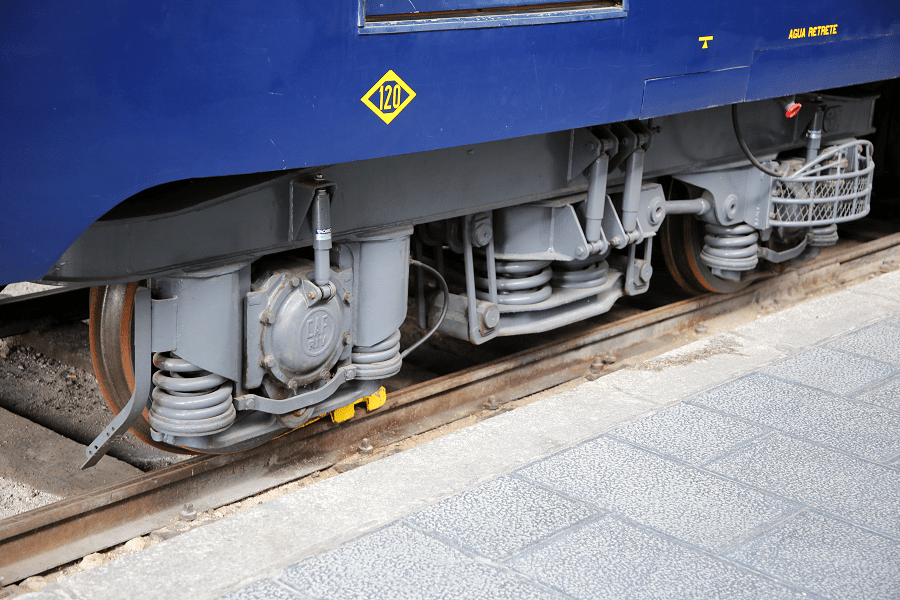
Manufacturer: FIAT / CAF / Material Móvil y Construcciones
Years of production: 1964—1966
Production: 60 units
Length: 53,200 mm
Width: 2950 mm
Height: 4180 mm
Track gauge: 1668 mm
Composition: M+Rc
Passenger capacity: 56 (1st class) + 72 (2nd class)
Powerplant: 1× OM Saurer SEH-L (57,726 cm³)
Power: 850 HP
Max speed: 120 km/h
Weight: 97 t
Tractive effort: 69 kN
Madrid Railway Museum (Madrid, Community of Madrid, Spain)
See also Transport blog
See also Cars blog
See also Motorcycles blog
See also Buses blog
See also Shipbuilding blog
See also Motors and Engines blog
See also Trains and railways blog
See also Trucks and Cargo Vehicles blog
See also Tractors and Special Equipment blog
See also Tanks and Armored Vehicles
See also Airplanes blog
See also Helicopters blog
See also Artillery, Missiles and Rockets blog
See also Bicycles blog