FIAT RENFE Serie 595 (previously RENFE 9500)
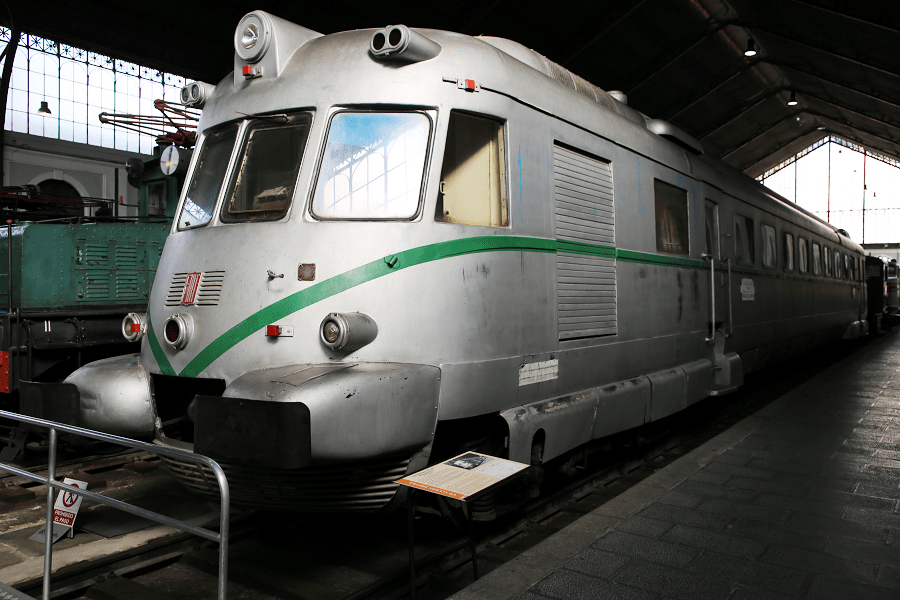
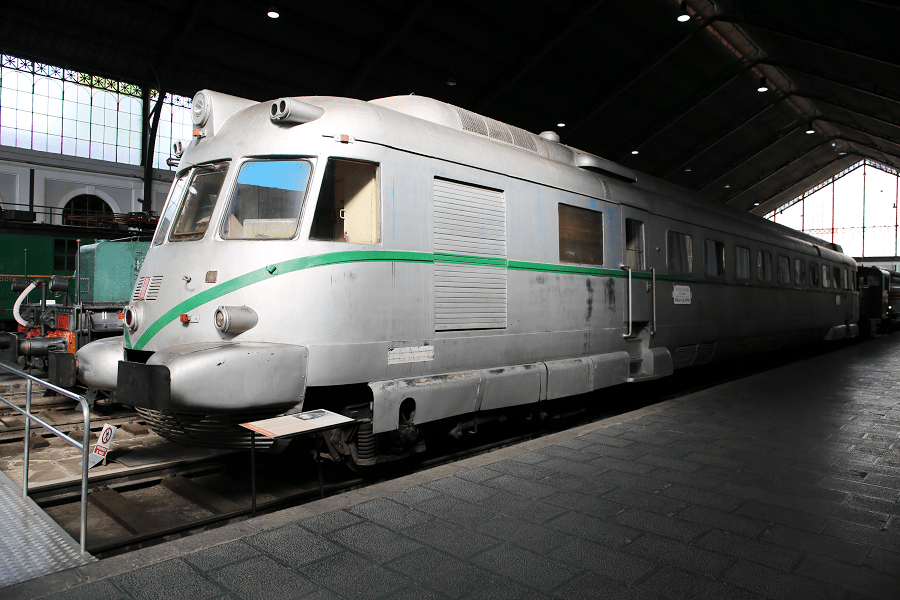
Renfe 595-022 (9522)
RENFE series 595 (9500 by old numbering), better known as TAF (Tren Automotor FIAT), is a Spanish diesel railcar that operated from the 1950s to the 1980s. It was acquired by RENFE to modernize its high-speed long-distance daytime trains. In 1952, 20 trains entered service, consisting of two motorcars (motor coaches), a baggage car and an intermediate trailer with a kitchen-bar.
Together with the Talgo II, the TAF trains revolutionized rail transport. They were very popular due to their aerodynamic front end and high comfort, were equipped with air conditioning and on-board catering. They were second class, but tickets were more expensive due to the speed surcharge, which could reach 120 km/h.
History
The first TAF train arrived in Barcelona via Portbou on 23 April 1952. It was equipped with standard bogies and made several test runs on the Italian network. From 1 June of the same year, the trains began running between Madrid and Barcelona, with two motorcars at each end and a trailer car in between.
Thanks to the unique coupling bellows developed by FIAT, the train could be divided into two parts. This allowed commercial services to be organised in a “Y” shape. For example, trains ran from Madrid to Gijón and Santander, with the cars being uncoupled in Palencia.
In the 1960s, the popularity of TAF trains began to decline, due to the introduction of new models such as the Tren Español Rápido and Talgo III. These new trains were intended to replace the pre-war rolling stock that was still in use on the Andalusian lines.
From 1968 onwards, the trains began to lose their characteristic silver colour, acquiring the two shades of blue that were characteristic of the TER. The last commercial TAF service for Renfe was on 28 September 1980, on the Seville—Huelva line.
Interestingly, the Portuguese Railways fleet included trains similar to the TAF, which were also supplied by FIAT. These trains operated around the same time and were nicknamed “Foguetes” (Rockets) due to their silver metallic colour.
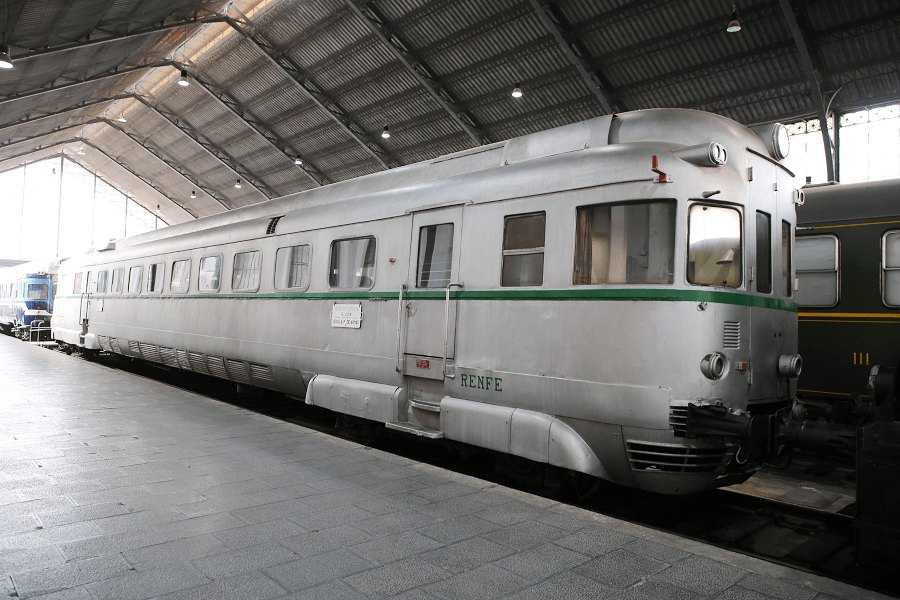
Manufacturer: FIAT
Assembly: Turin (Italy)
Years of production: 1952—1954
Production: 50 units
Length: 27,400 mm
Width: 2950 mm
Track gauge: 1668 mm
Passenger capacity: 64
Composition: M+R+M
Powerplant: 1× Saurer SBD
Power: 525 HP
Max speed: 120 km/h
Weight: 49 t
Tractive effort: 29 kN
Madrid Railway Museum (Madrid, Community of Madrid, Spain)
See also Transport blog
See also Cars blog
See also Motorcycles blog
See also Buses blog
See also Shipbuilding blog
See also Motors and Engines blog
See also Trains and railways blog
See also Trucks and Cargo Vehicles blog
See also Tractors and Special Equipment blog
See also Tanks and Armored Vehicles
See also Airplanes blog
See also Helicopters blog
See also Artillery, Missiles and Rockets blog
See also Bicycles blog