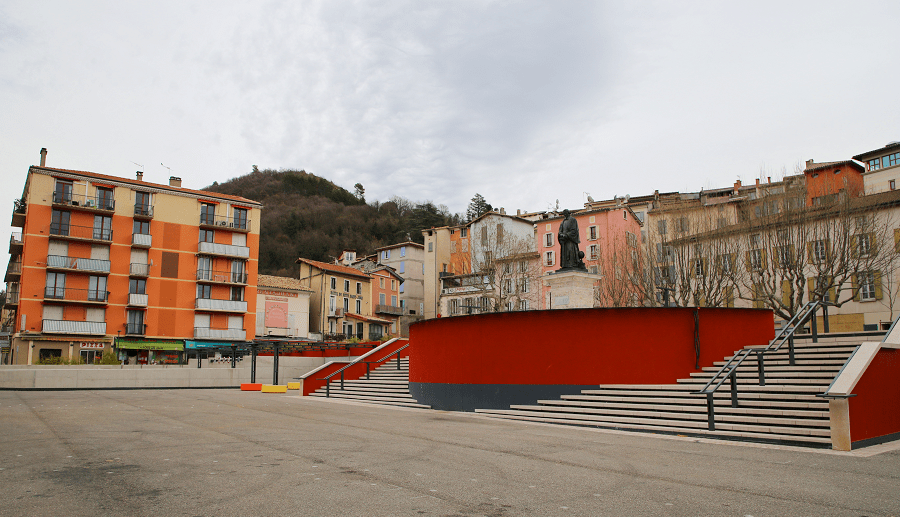
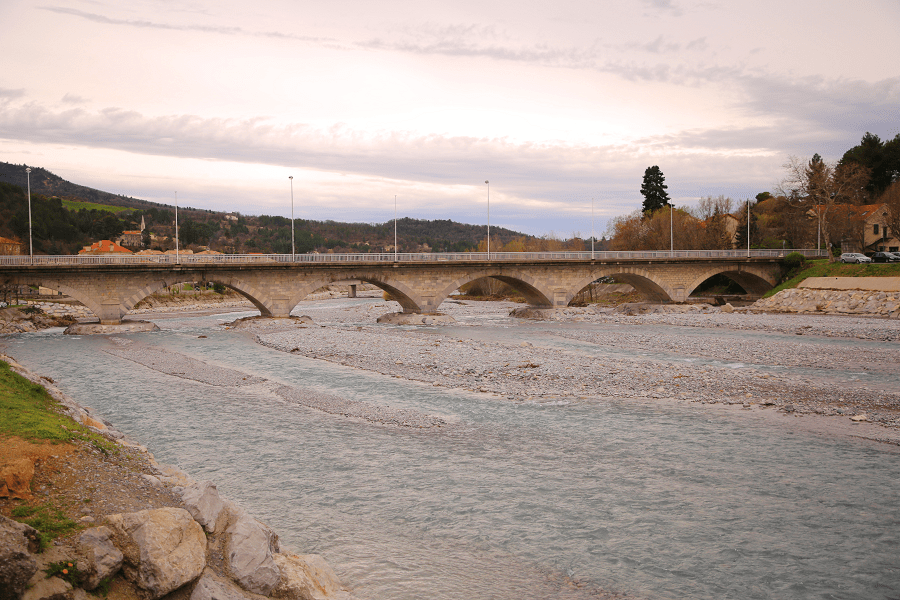
Digne-les-Bains, or simply and historically Digne, is the prefecture of the Alpes-de-Haute-Provence department in the Provence-Alpes-Côte d’Azur region of Southeastern France on the Bléone river.
Tourism and main attractions
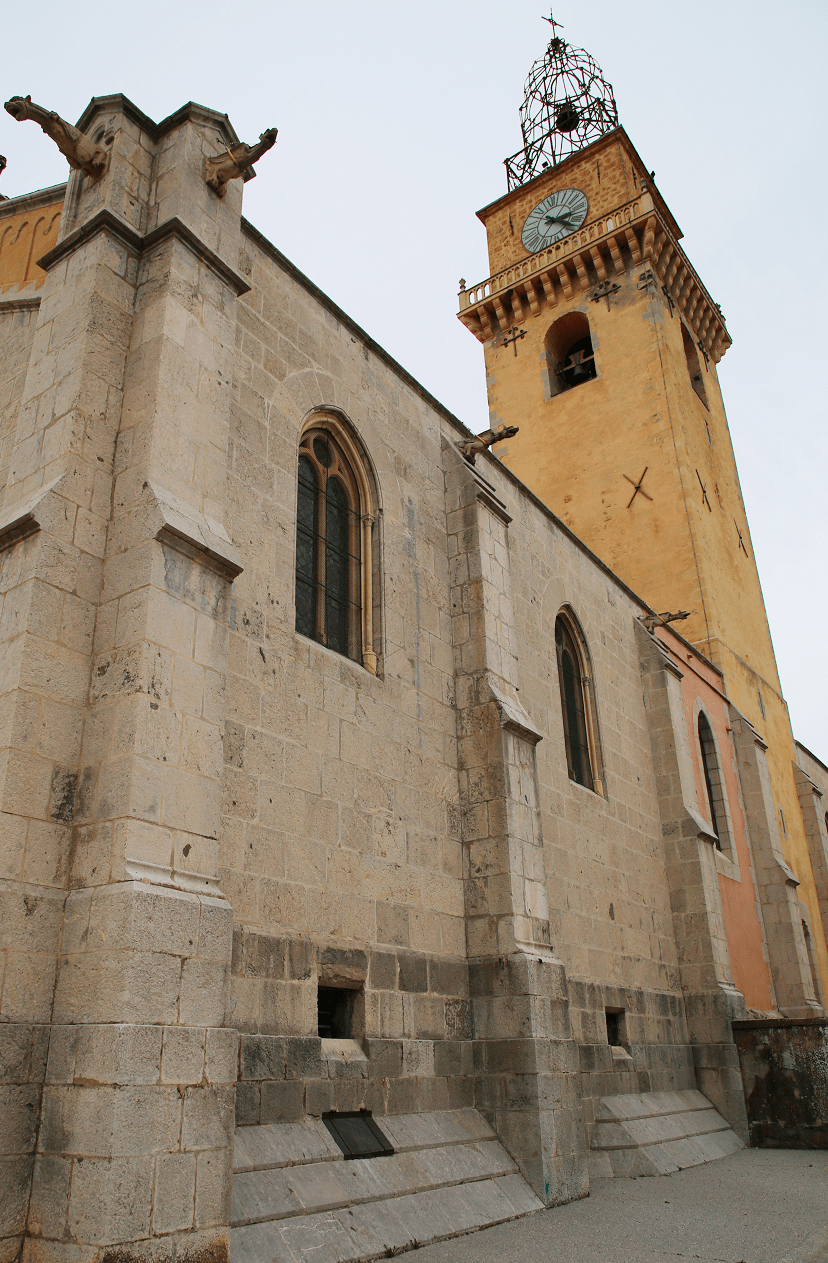
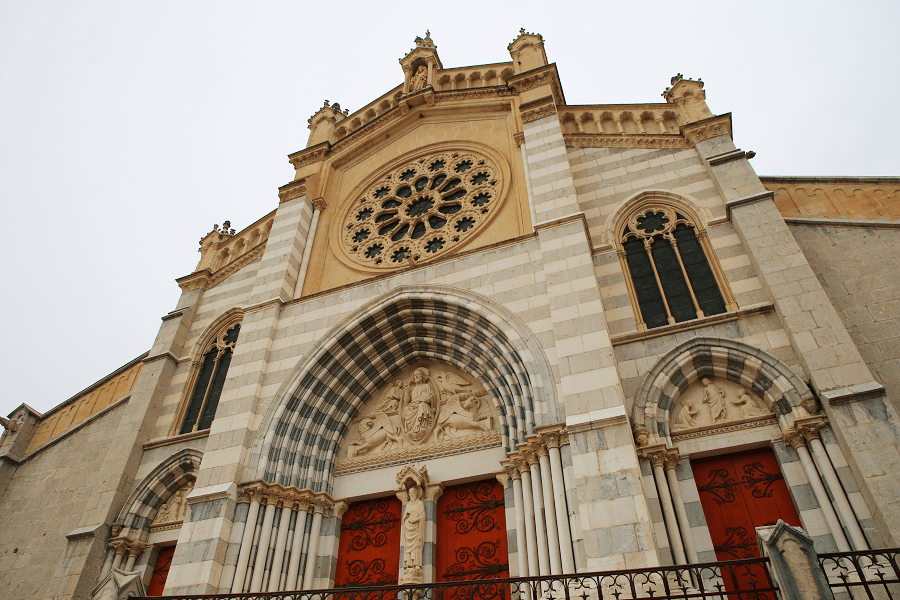
Digne Cathedral is a Roman Catholic church. The cathedral has been a monument historique since 1906. It is the seat of the Bishops of Digne, Riez and Sisteron, formerly Bishops of Digne.
Construction began in 1490 by the order of the then bishop Antoine de Guiramand to cater for the movement of the town’s population to a higher, more secure and defensible location round the local castle. The cathedral was renovated and expanded in the 1860s under the direction of architect Antoine-Nicolas Bailly.
The previous cathedral in the old town, Notre-Dame-du-Bourg (Cathédrale Notre-Dame-du-Bourg de Digne), a late Romanesque building of the 13th century, still stands as a museum.
The Saint-Jérôme de Digne Cathedral is the second cathedral in the city. Located in the heart of the city, on the Rochas hill, from the 16th century it replaced the original episcopal seat located at Notre-Dame-du-Bourg.
Antoine de Guiramand, bishop of Digne, from 1479, was behind the construction of Saint-Jérôme cathedral. The building, erected from 1490 to 1500, is the work of Antoine Brollion, master mason in Barcelonnette. Originally, it had a central nave of four bays flanked by side aisles onto which chapels were added during the 17th century.
The Notre-Dame-de-Lourdes Church was built in 1870 on the Mountain of the Cross, north of Digne, though at the bottom of the slope. The brick walls are its main feature, with its large size.
The chapel of Saint-Vincent belonged to an abbey or priory. It is still in good condition. The Chapel of the Cross, located nearby, is gradually becoming a ruin.
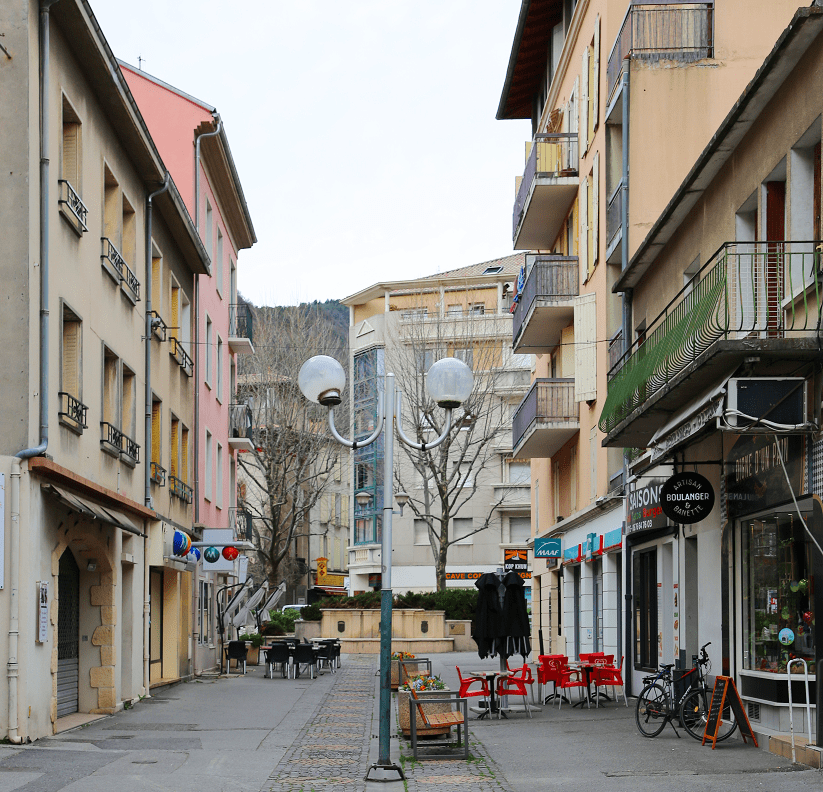
The remains of fortifications can be recognised if one pays attention to the plan of the old town around the central district, built on the heights. Some of the walls and some towers which surrounded the city from the 14th century can still be seen. These remains of ramparts are currently based in the landscape of the dwellings.
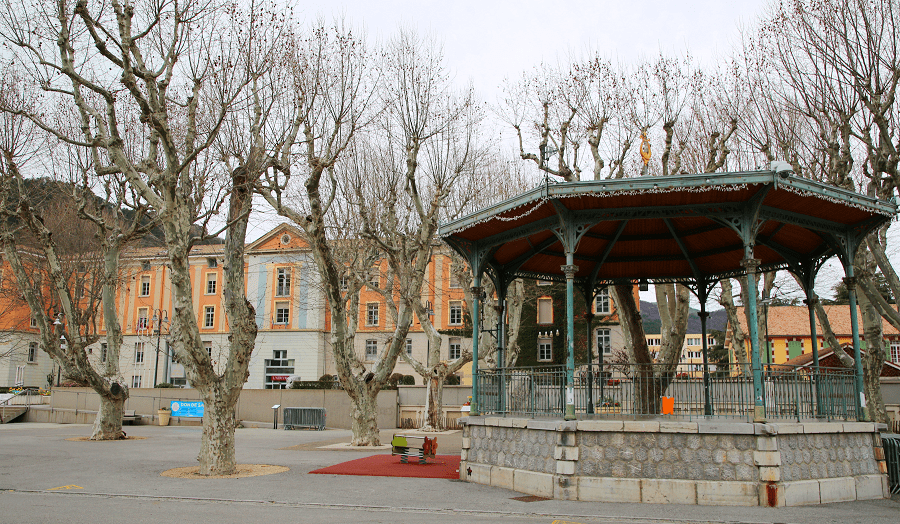
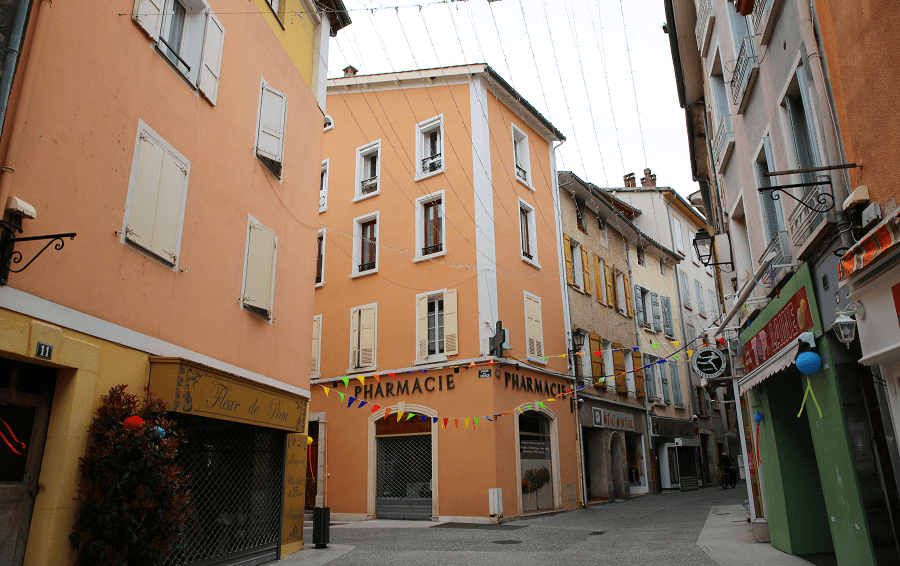
The town of Digne was immortalized by Victor Hugo who placed the beginning of his famous novel Les Misérables there.
Museum of the Haute-Provence geological reserve and its butterfly garden.
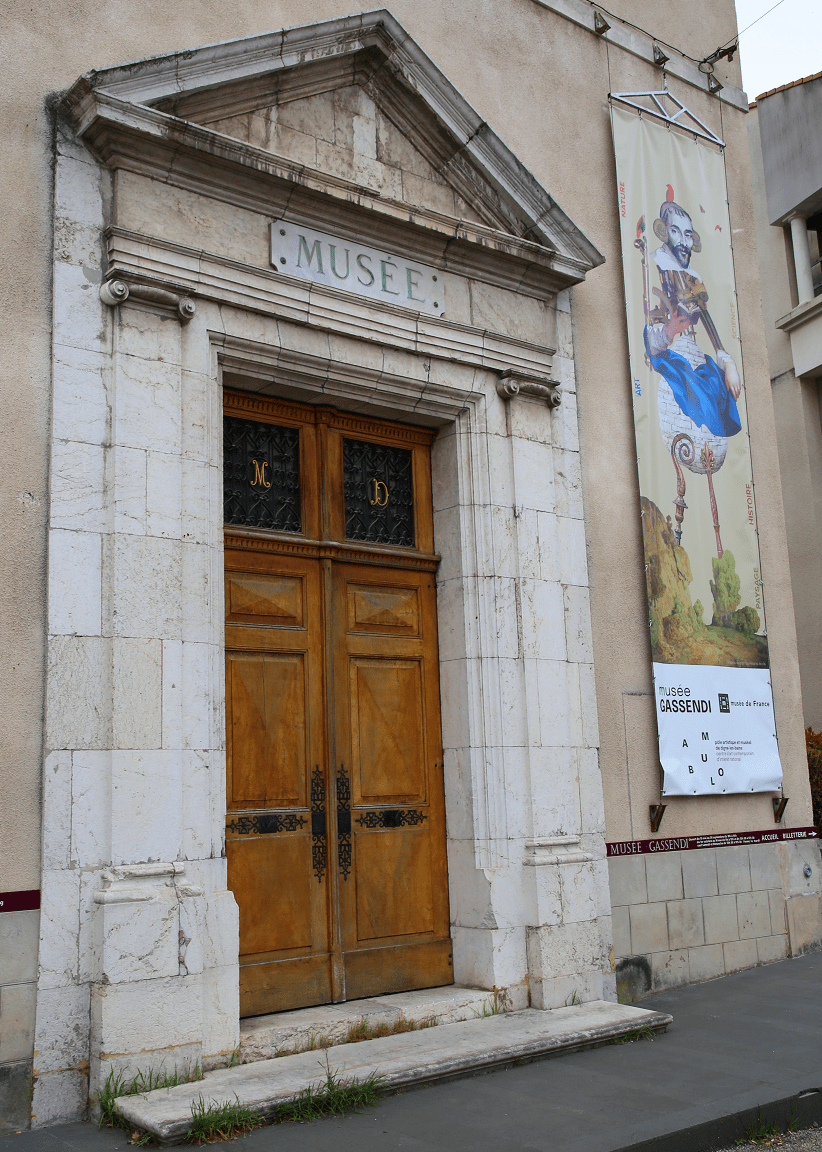
Gassendi Museum with modern museography allowing the public to move from art to science, from ancient to contemporary through a journey through time. Its archeology section was founded in 1889.
World War II Museum. Documents and period objects evoke the strategic role of Digne-les-Bains in Alpine defense.
Alexandra David-Néel Museum, located in her house.
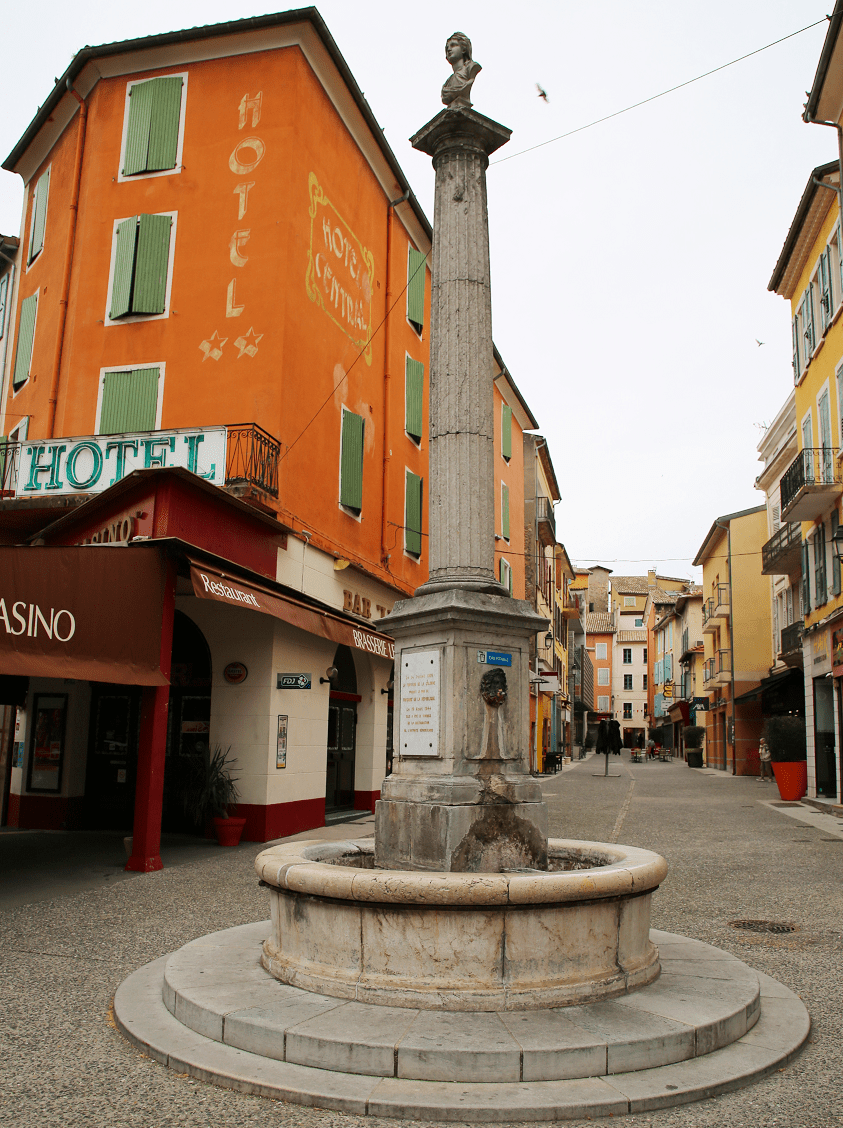
Shortest distances by car
From Paris: 7 hr 55 min (754 km) via A6
From Marseille: 1 hr 36 min (138 km) via A51
From Nice: 2 hr 35 min (153 km) via Rte de Grenoble/N202
From Toulouse: 4 hr 55 min (495 km) via A61 and A9
From Monaco: 2 hr 48 min (169 km) via Rte de Grenoble/N202
From Andorra: 6 hr 41 min (622 km) via A9
From Madrid: 12 hr 3 min (1,185 km) via A-2
From Moscow: 35 hr (3,180 km) via E30/M1
From Belgrade: 15 hr 17 min (1,401 km) via E70 and A4
From Istanbul: 26 hr (2,350 km) via A4
From Bern: 5 hr 44 min (483 km) via A1
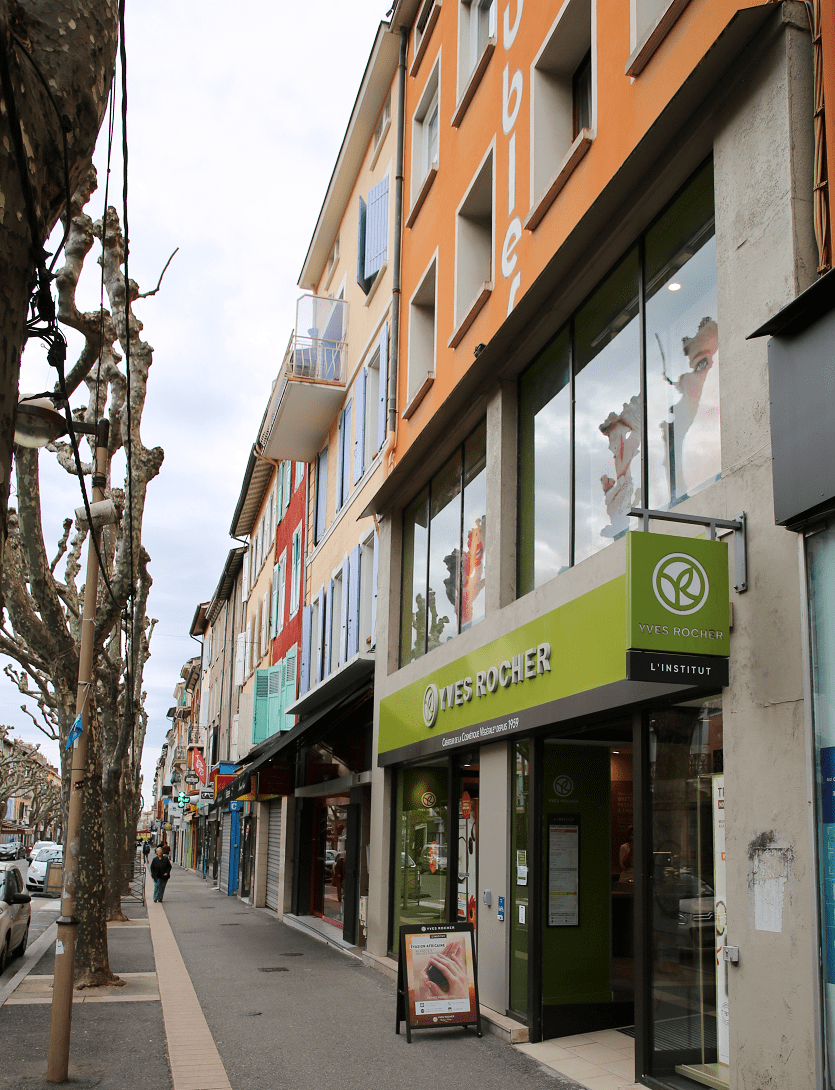
Main information
Area: 117,07 km2
Population: 17 192
Coordinates: 44°05′36″N 6°14′11″E
Language: French
Currency: Euro
Visa: Schengen
Time: Central European UTC +1
See here France travel guide
See here Spain travel guide
See here Pyrenees travel guide
See here Andorra travel guide