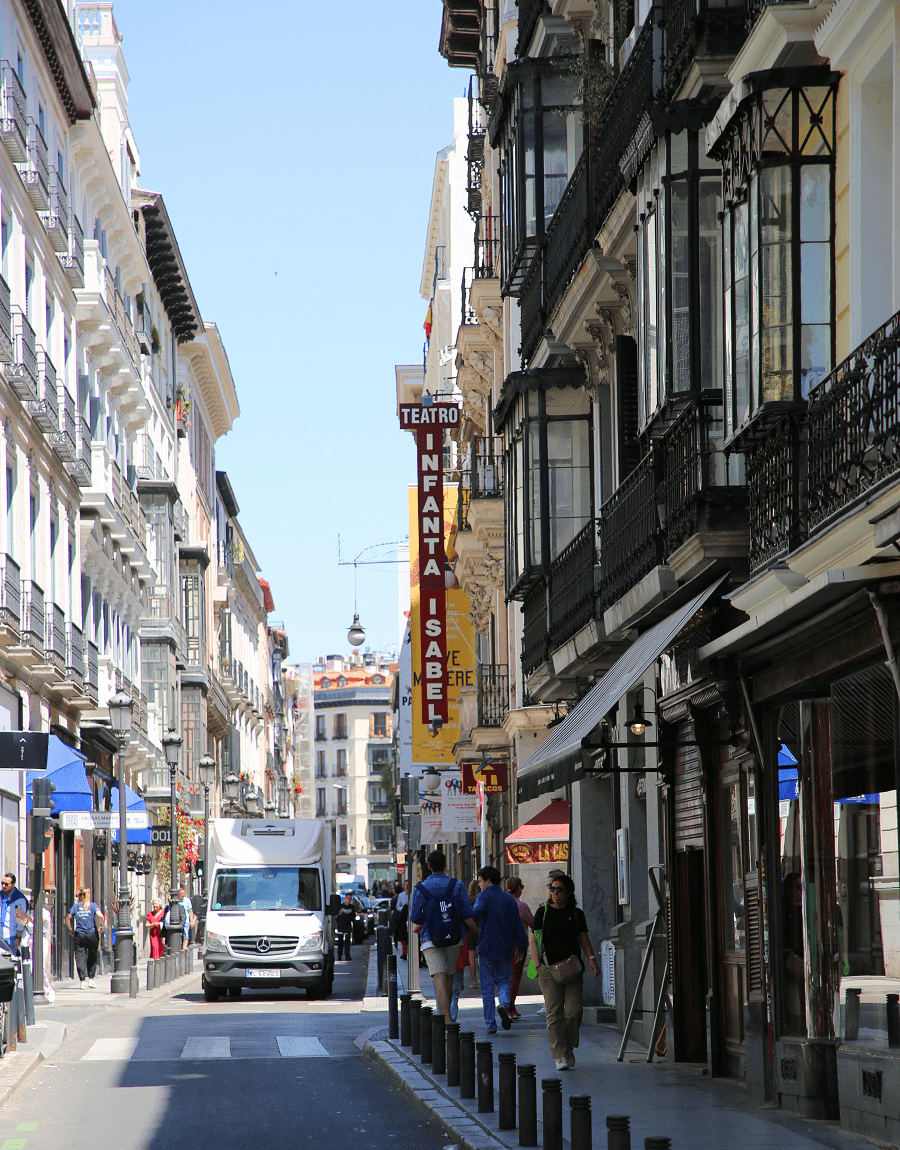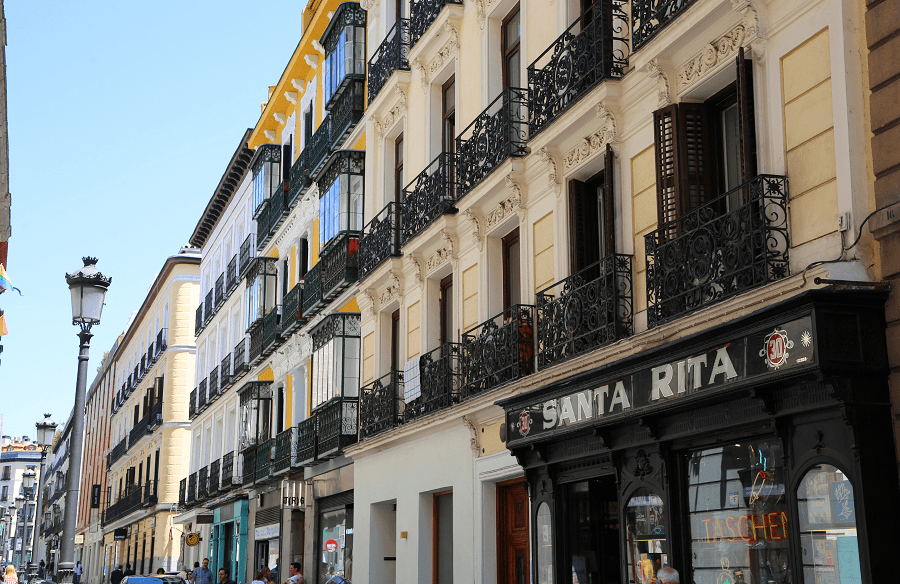
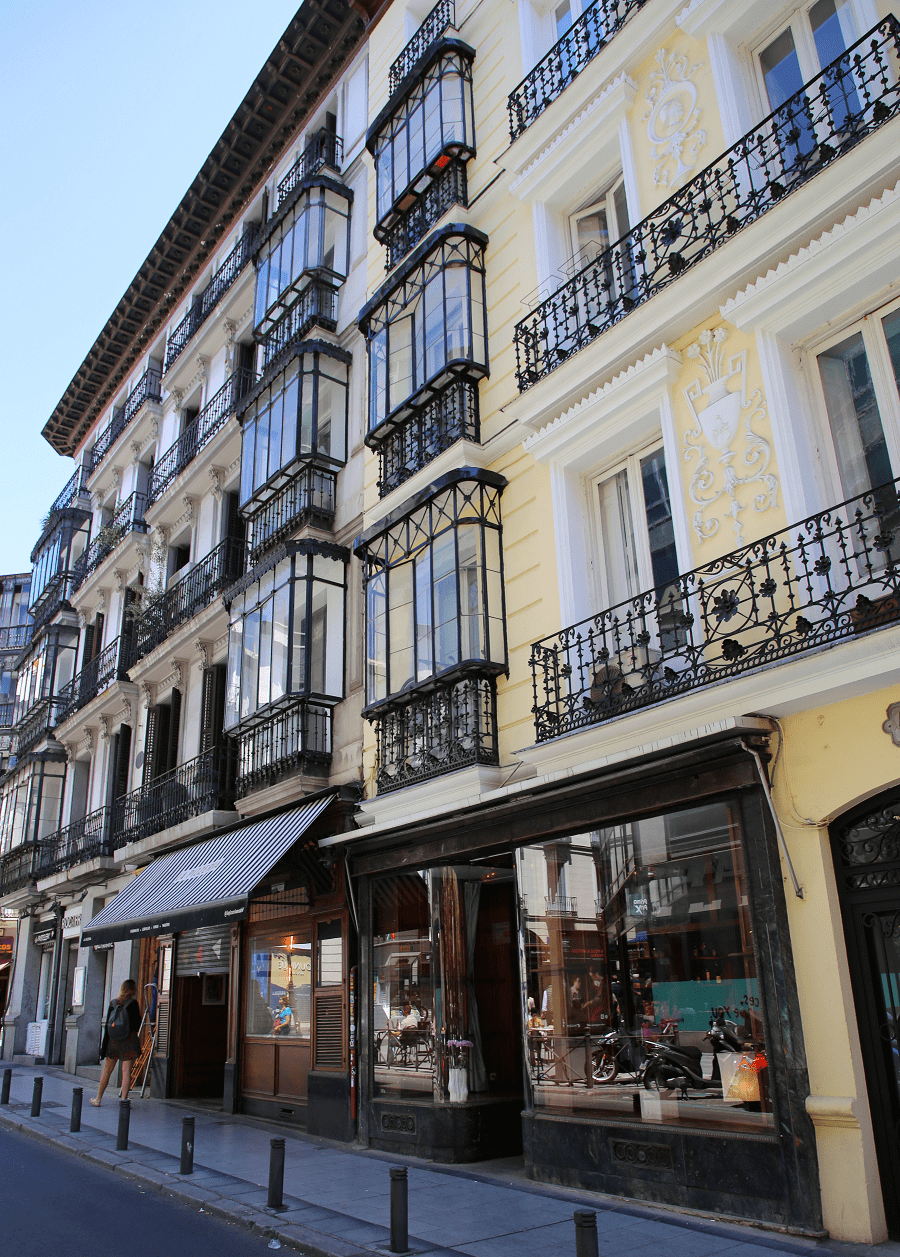
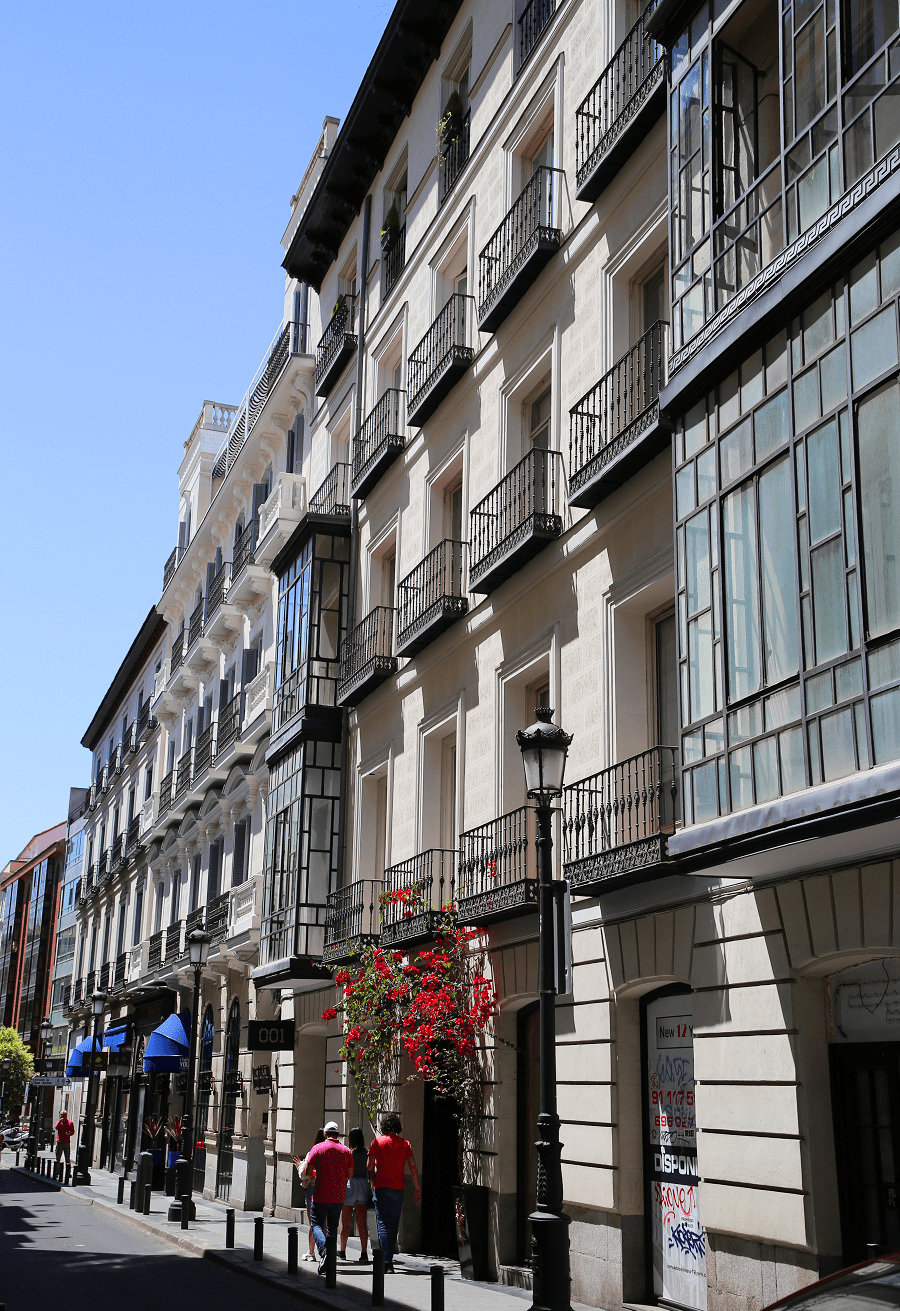
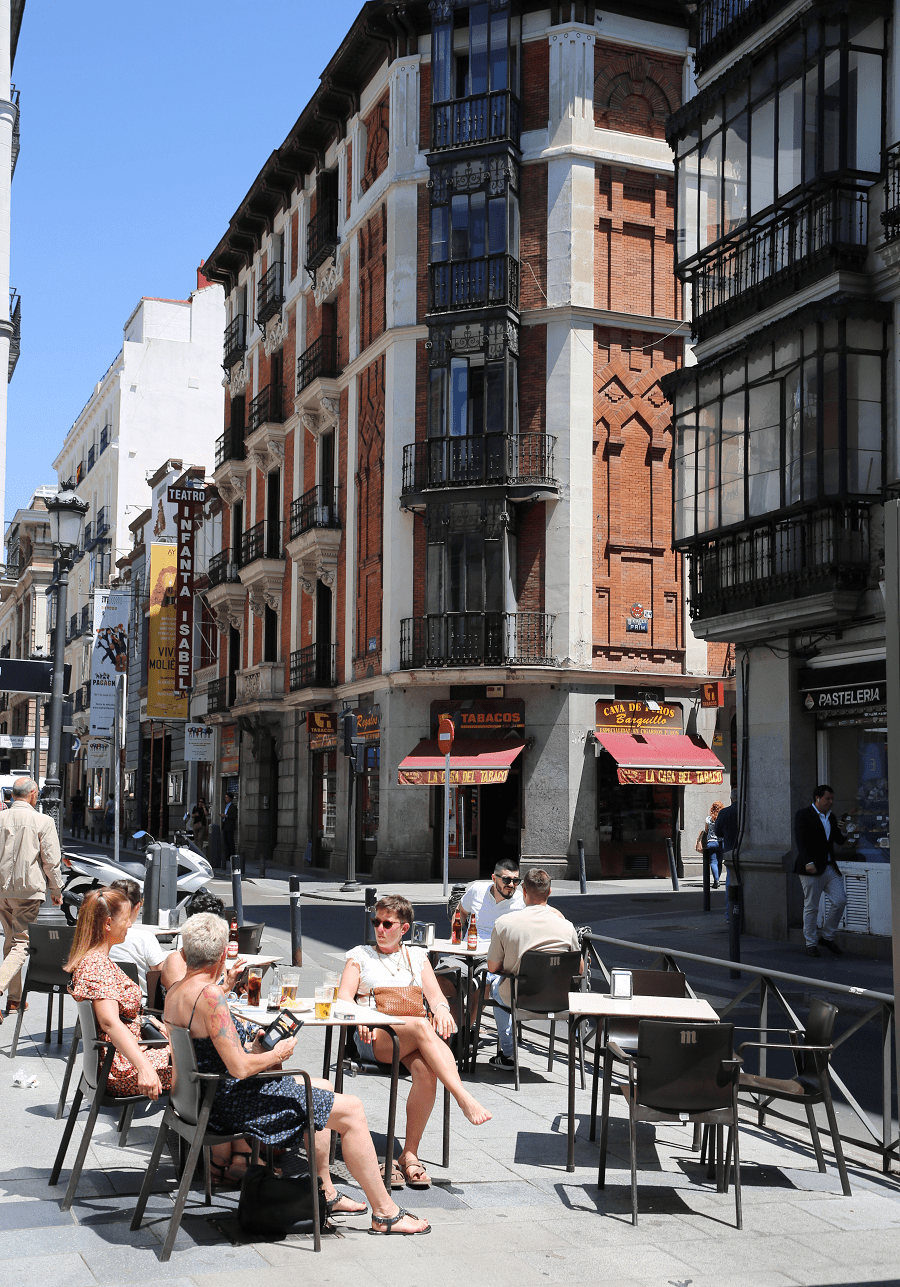
Barquillo Street is a street in Madrid, Community of Madrid, Spain, (in the Justicia neighbourhood of the Centro district) that runs between Alcalá Street and Fernando VI Street. Popular tradition says that it took its name from the small boat that the Marchioness of Nieves had to entertain herself in the pond of her estate, in the upper part of the street, where the Salesas convent would later be built.
History
The chronicler Pedro de Répide relates that the street could have been formed as a daily access passage to the so-called “Vicálvaro threshing floors”, as these places were located in the jurisdiction of that town in Madrid. Its importance as a road perhaps dates back to the 17th century when it became the natural path of the Convent of San Hermenegildo (1586-1870), whose orchards occupied the space of the current Plaza del Rey and of which only the church of San José remains (with entrance on Alcalá Street).
On the corner with Almirante Street, where the convent of San Vicente de Paúl once stood, a “Model Prison” was opened in April 1845 with capacity for approximately five hundred prisoners from other prisons. For productive and educational purposes, workshops were set up for weaving and tailoring, shoemaking and espadrille-making, carpentry, cabinetmaking and lathe-making, blacksmithing, foundry, boilermaking and armoury, engraving, calico printing, comb-making, saddlery… workshops that from February 1948, with 350 prisoners confined, were reduced to the production of clothing and utensils to supply other Spanish prisons.
Theatres, circuses and summer gardens
Among the entertainments that Madrid residents had on this street, the Infanta Isabel Theatre, inaugurated on February 9, 1907 as the National Cinema, is preserved at number 27. At numbers 5 and 7, there was the Circo Paul theatre, destroyed by fire in 1888. This “Paul” occupied the third of the addresses in which Paul Laribeau presented his equestrian shows (after his experiences in the primitive Caballero de Gracia barracks and in the Circo Olímpico (later Teatro del Circo, which disappeared in 1876).
And on the site that was the garden of the old convent of Santa Teresa, on the corner of Fernando VI Street and at the end of Barquillo Street, the Jardines Orientales theatre was built in 1874, one of the popular summer theatres in the Spanish capital. The Teatro Apolo also had an entrance to the stage (or actors’ entrance), at the beginning of the street, on the corner of Alcalá Street, until its demolition in 1929.
Madrid: full guide
- Administrative structure
- Architecture
- Churches and Cathedrals
- Entertainment
- Museums
- Parks and gardens
- Restaurants
- Shopping and markets
- Squares
- Streets
- Transport
See here Pyrenees travel guide
See here France travel guide
See here Spain travel guide