


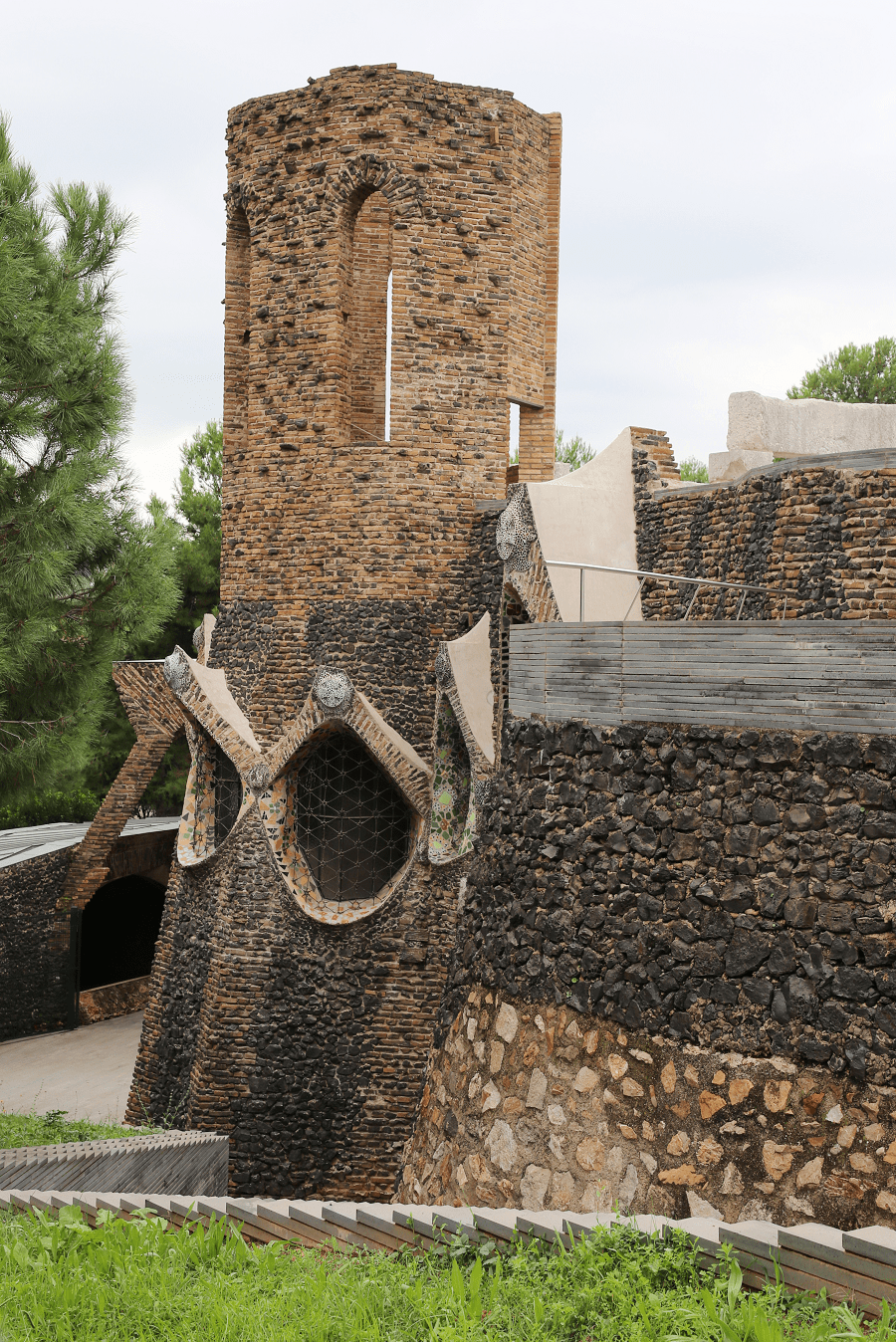
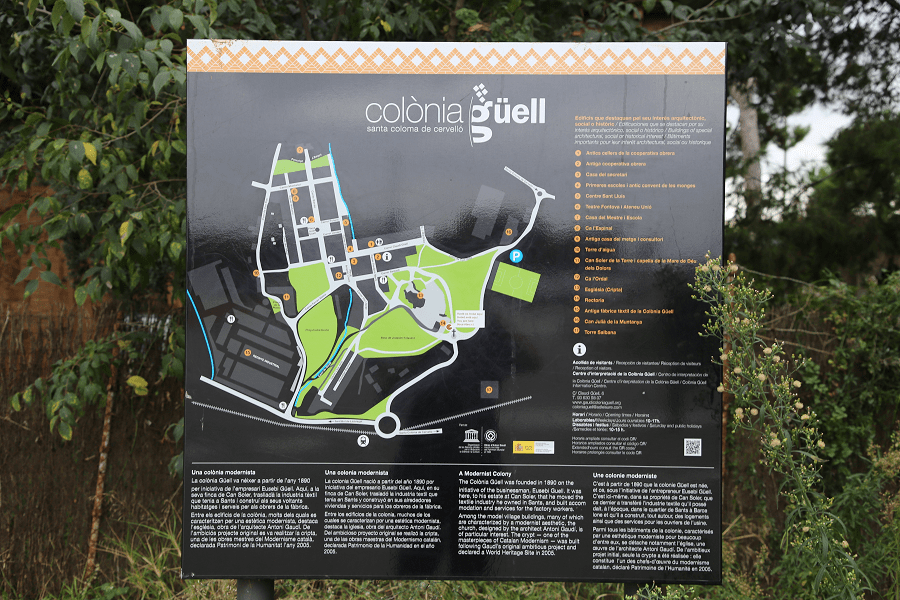
The Industrial Colony of Güell (Colonia Güell) is a small village in the municipality of Santa Coloma de Cervelló, near Barcelona (Spain). It is a key site for studying Antoni Gaudí’s architecture and one of the most important Modernist complexes and tourist attractions in Catalonia.
The colony’s founder, Eusebio Güell, stood out among Catalan industrialists. He not only improved the workers’ living conditions but also actively supported the arts. Güell built cultural and religious sites in the colony, incorporating the Modernist style into the new buildings. Particularly notable is the church, designed by Gaudí himself. Although unfinished, it became the foundation for the future Sagrada Familia in Barcelona.
Colonia Güell has a rich historical heritage, and in 1991 it was declared a World Heritage Site. This designation protected its important buildings and architectural features.
History
Construction began in 1890 at the initiative of businessman Eusebio Güell. He moved his textile factory from Sants to the Can Soler de la Torre estate. Güell wanted to escape the urban unrest, so he designed the new factory as an industrial colony. Residential buildings for the workers were to be built nearby.
Güell envisioned a colony with hospitals, hotels, schools, shops, theaters, a cooperative, and a chapel. Gaudí was responsible for the site planning, assisted by Francisco Berenguer, Juan Rubio, and José Canaleta. Gaudí personally oversaw the design of the church, but only the crypt was built. His children abandoned the project after Güell’s death in 1918.
In 1973, the factory closed due to a crisis in the textile industry. The property was sold off: part of the factory to various companies, the houses to their residents, and the surrounding buildings and land to government agencies.
In 2000, restoration of the industrial complex began. It was planned to be converted into a business park with 6,000 jobs. Oscar Tusquets, an architect known for his projects expanding the Faculty of Medicine in Barcelona and renovating the Palau de la Música Catalana, was involved in this project.
Architecture of the Colonia Güell
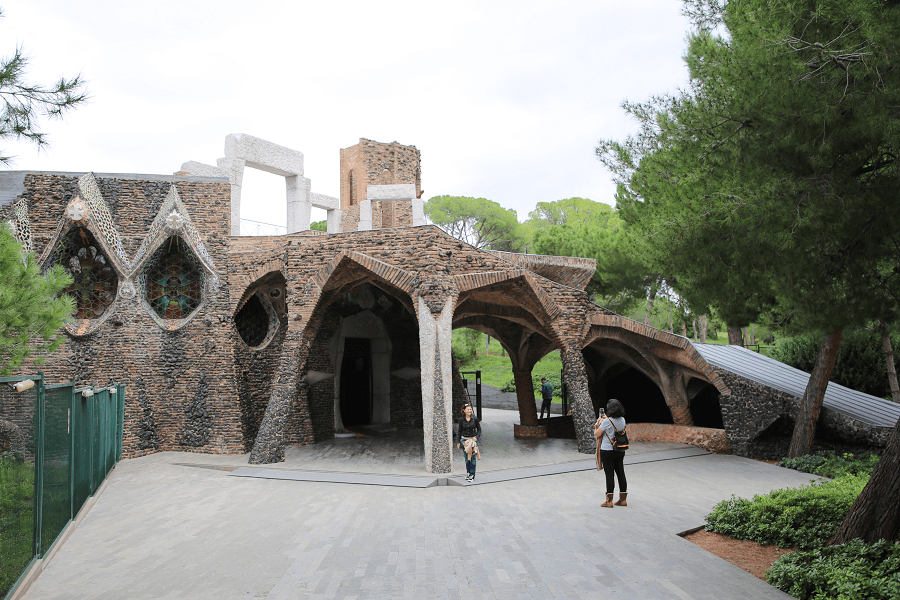
The Colonia Güell is one of the most famous industrial colonies. It is renowned for being a striking example of the Catalan modernism (art nouveau) style in civil and industrial architecture.
This project embodies key ideas of Modernism. On the one hand, it uses exposed brickwork, paying homage to traditional Catalan architecture. On the other, it incorporates modern technologies and materials such as iron and ceramics.
Buildings by Antoni Gaudí
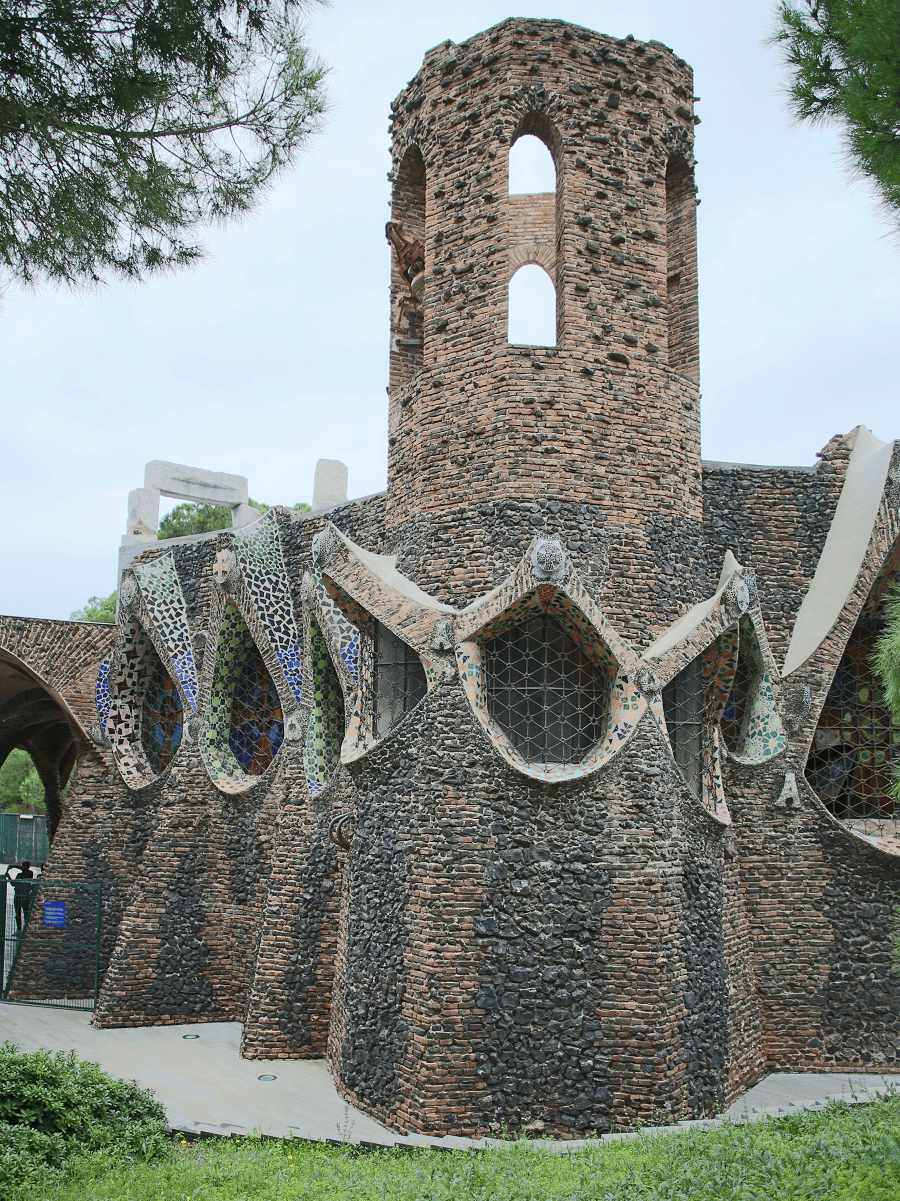
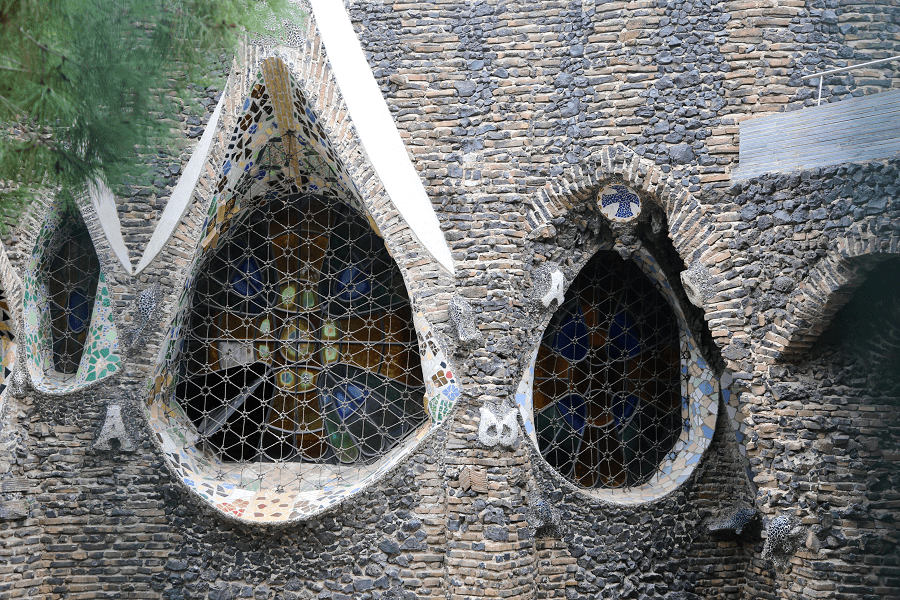
Gaudi devoted all his energy to the Crypt. This building became the pinnacle of his work. Almost all of his architectural innovations were first implemented here: parabolic arches, hyperbolic walls, dynamic interiors, and harmony with nature. A variety of materials were used in the construction: basalt, limestone, ceramics, brick, slag, glass, etc. The church is listed as a UNESCO World Heritage Site.
Buildings by Francesc Berenguer
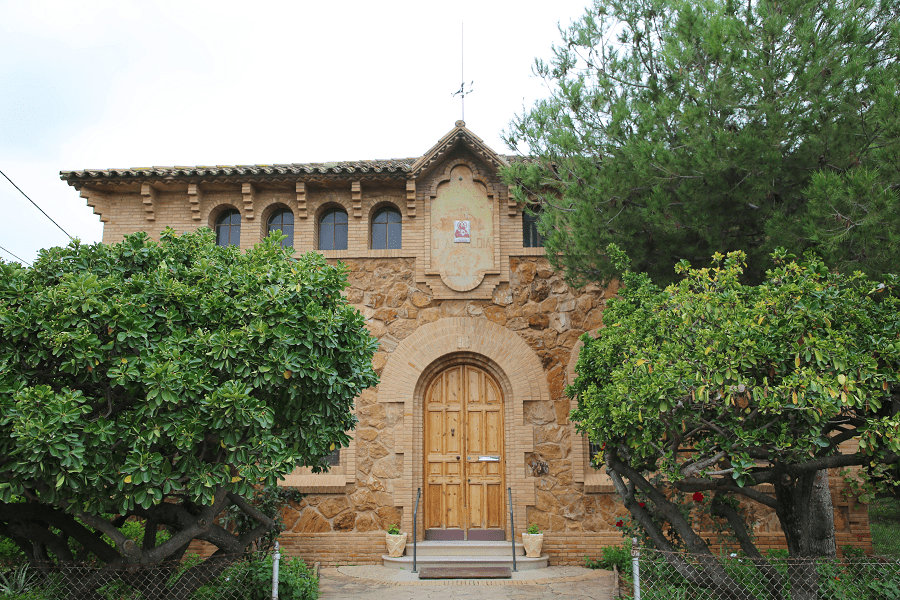
Buildings attributed to Francesc Berenguer are distinguished by their individual approach to decoration. They feature a restrained use of ceramics, exposed brickwork, and wrought iron elements. They are characterized by flat and balanced terrazzo facades and a clear, volumetric approach to architecture.
Buildings by Joan Rubio
In Joan Rubio’s buildings, exposed brickwork occupies a central place. It serves as a modular element, allowing for a variety of facade and structural solutions. The layout of his works is more complex than that of Berenguer. The corners of the buildings are accentuated by canopies and balconies—another characteristic feature.
Hours of working
Working days: from 10.00 a.m. to 5.00 p.m.
Weekend and days off: from 10.00 a.m. to 3.00 p.m.
Prices
Adults
- Entry + audio guide: €10
- Guided tour of the Crypt and Colonia Güell (2 hrs): €13
- Combinat Güell (entry + audio guide + round-trip train from Barcelona): €15.30
Pensioners (+65 years old) / Juniors / Kids
- Entry + audio guide: €8
- Entry + guided tour (2 hrs): €10.20
- Combinat Güell (price applicable only to those over 65): €10.70
How to get to?
Train
Ferrocarrils de la Generalitat de Catalunya (FGC) from Plaça Espanya to Colònia Güell station. Lines S3, S4, S8, and S9.
Bus
Nearest bus stop (Pl. Anselm Clavé – Colònia Güell) is located in the center of the town. Line L76.
Car
From Hospitalet de Llobregat: 20 min (13 km) via A-2
From Barcelona: 28 min (17 km) via C-31
From Madrid: 5 hr 49 min (614 km) via A-2 and AP-2
See here Catalonia travel guide
See here Pyrenees travel guide
See here France travel guide
See here Spain travel guide




