
Baku (Azerbaijani: Bakı) is the capital and largest city of the Republic of Azerbaijan. It is an important industrial, economic, and scientific-technical center of the Transcaucasus, the largest port on the Caspian Sea, and the most populous city in the Caucasus. Until July 2021, Baku was part of the Absheron Economic Region, sometimes separately. By a decree of the President of Azerbaijan dated July 7, 2021, the Baku Economic Region was established, which includes Baku.
The area administratively controlled by Baku is 2,140 km². The population of this area is approximately 2,496,500 (2025 est.).
In 2010, the United Nations Environment Programme (UNEP) named Baku one of the main cities to host World Environment Day, along with Genoa (Italy) and Geneva (Switzerland).
Baku is a city with a rich history, having been the capital of the Shirvanshahs, the Baku Khanate, the Baku Governorate, the Azerbaijan Democratic Republic, and the Azerbaijan Soviet Socialist Republic. As the capital of the independent Azerbaijani state, the city continues to develop, becoming increasingly attractive.
The area around Baku and the Absheron Peninsula has been inhabited since ancient times. This has been facilitated by its favorable geographical location: the city is located on the shores of the Caspian Sea, at the intersection of northern and southern, western and eastern trade routes, and is also home to rich oil and gas reserves.

Etymology
The earliest name for Baku appears in sources from the 5th–8th centuries: Bagavan/Baguan. Some researchers believe this is Baku. The toponym Bagavan is derived from the root “baga,” which in many Indo-European languages means “god” or “sun.”
The city’s modern name first appears in the writings of Western European travelers of the 13th century.
In Russian sources, the name Baku is rendered as “Baka.” Azerbaijanis call their city Bakı. The modern spelling of Baku corresponds to the ancient form, having undergone a process of modification influenced by folk etymology: from Bagavan, Atshi-Bagavan, Atshi-Baguan, Baku, Bakuya, Badkube, Badku, Baku to Baki.
The word “baki” in Arabic means “endless,” “eternal,” “preserved,” “incorruptible,” and in Turkish it means “inviolable” or “sacred.” In the Avesta and ancient Iranian languages, “baga” means “god.” This word entered Russian as “bog.”
The modern toponym Baku retains its ancient meaning—”city of God, place of God”—associated with the burning fountains of oil and gas.
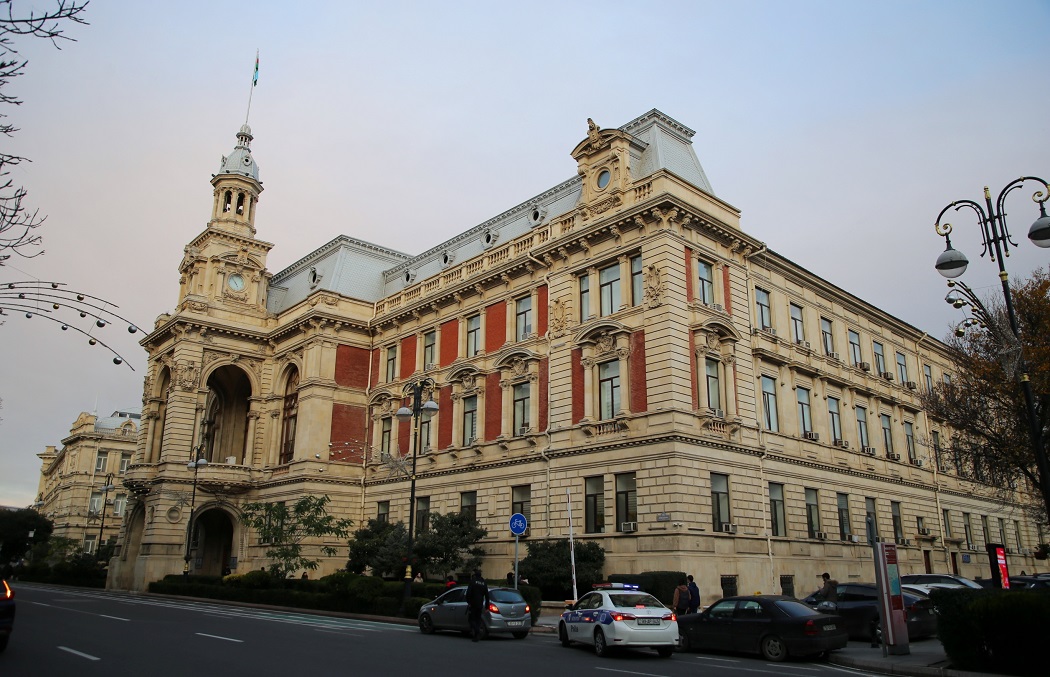
City hall
Architecture
Baku’s architecture is a blend of historical and contemporary styles, reflecting the city’s multilayered culture and development over the centuries. The Old City, İçərişəhər, preserves medieval architectural monuments, including the Palace of the Shirvanshahs and fortress walls dating back to the 11th and 12th centuries. The influence of Persian, Arabic, and Caucasian architectural traditions can be seen in the ornamentation, window shapes, and courtyard layout.
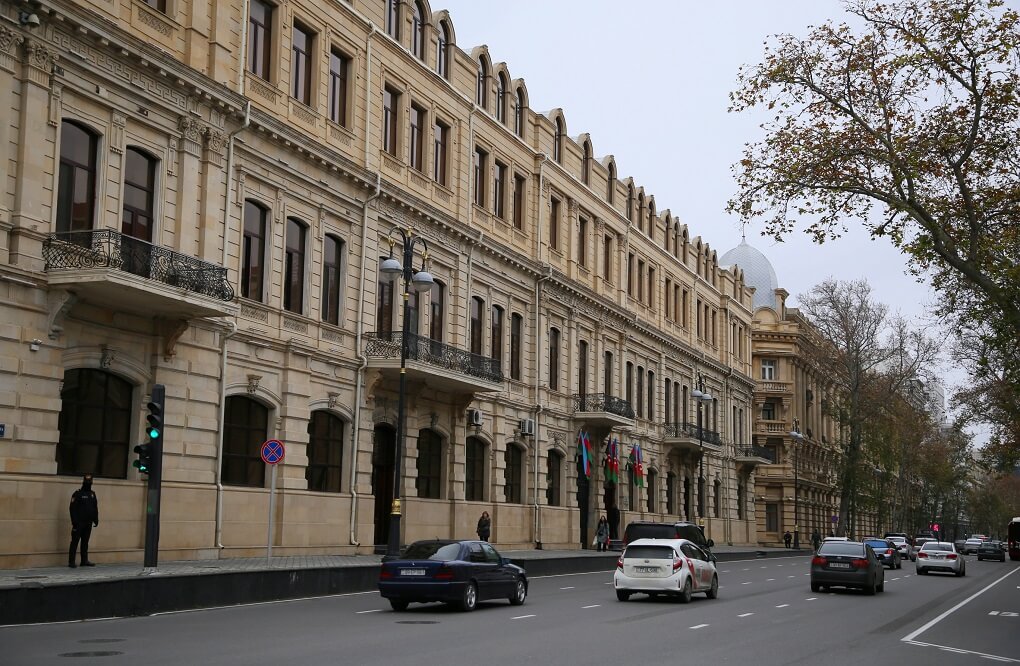
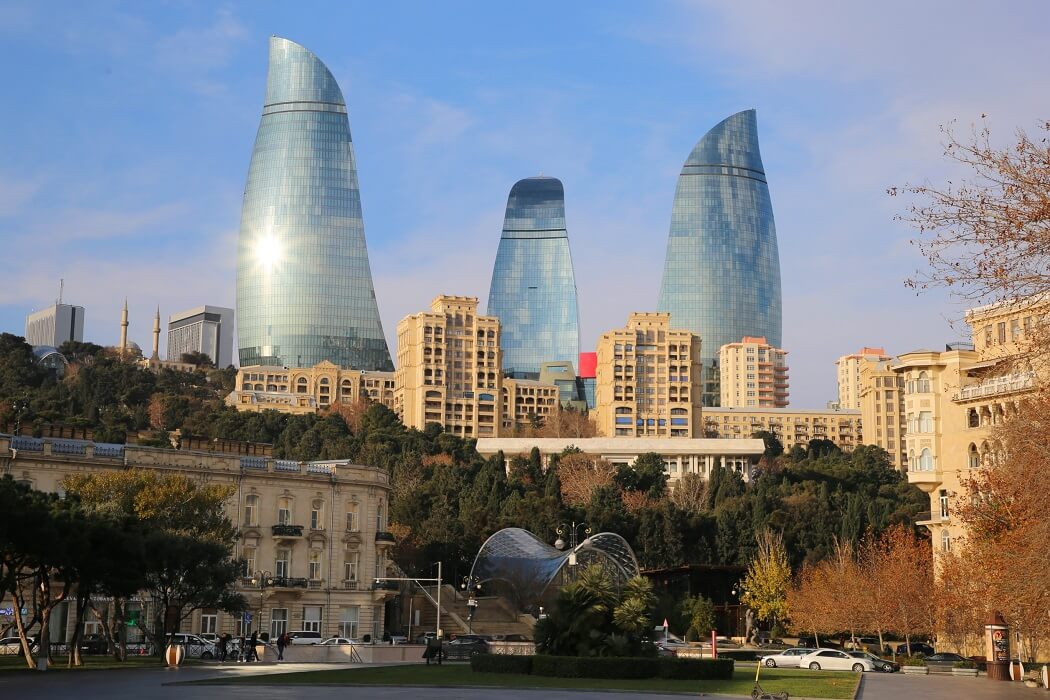
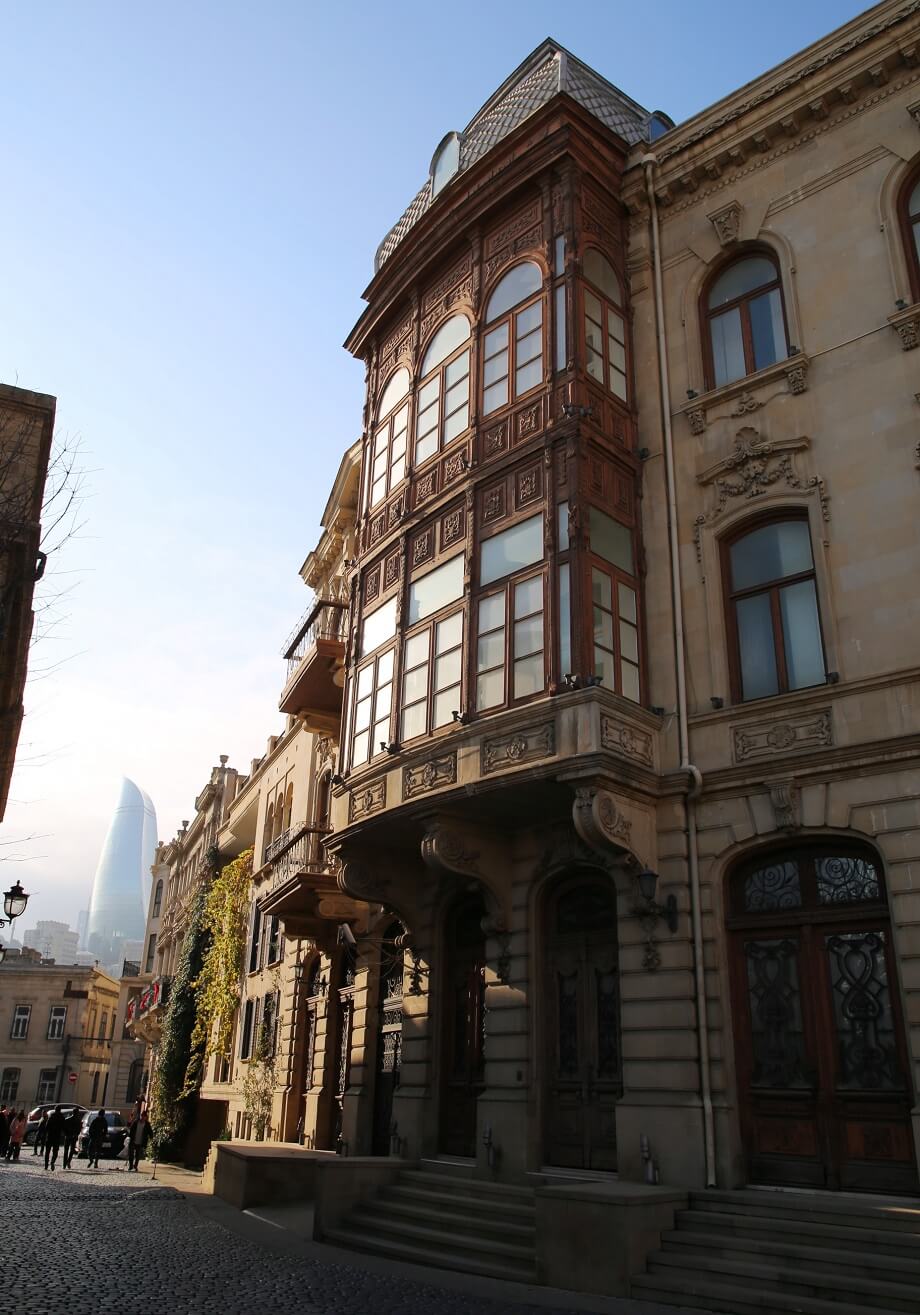
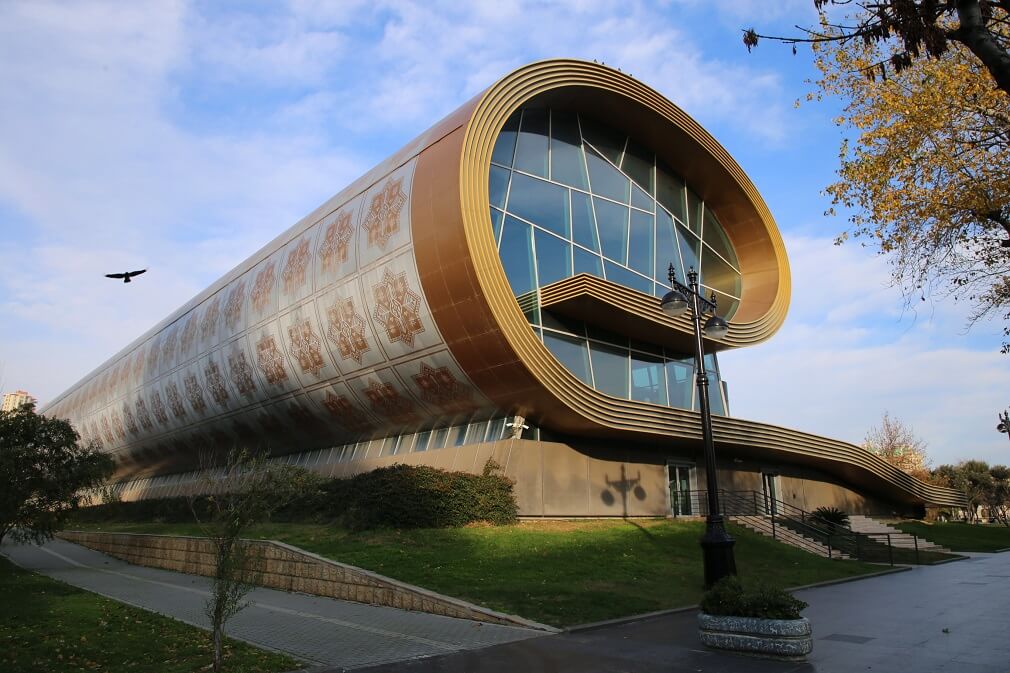
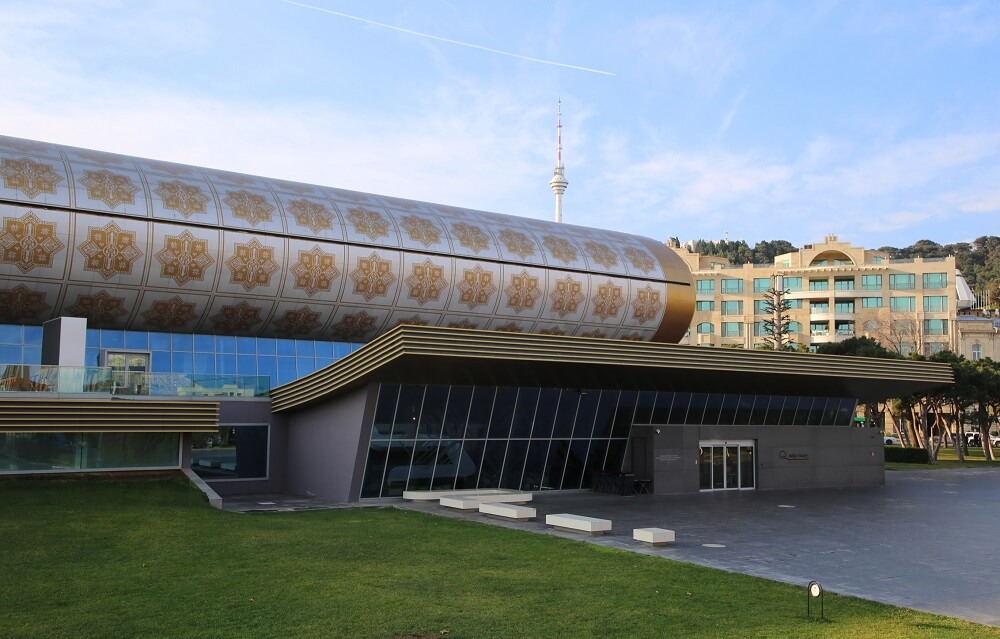
In the 19th and early 20th centuries, thanks to the oil industry, European architecture flourished in Baku, represented by buildings in the neo-Gothic, neo-Baroque, and Art Nouveau styles. In the late 20th and early 21st centuries, Baku became the site of large-scale contemporary projects, such as the Flame Towers complex and the National Carpet Museum, shaped like a rolled-up carpet.
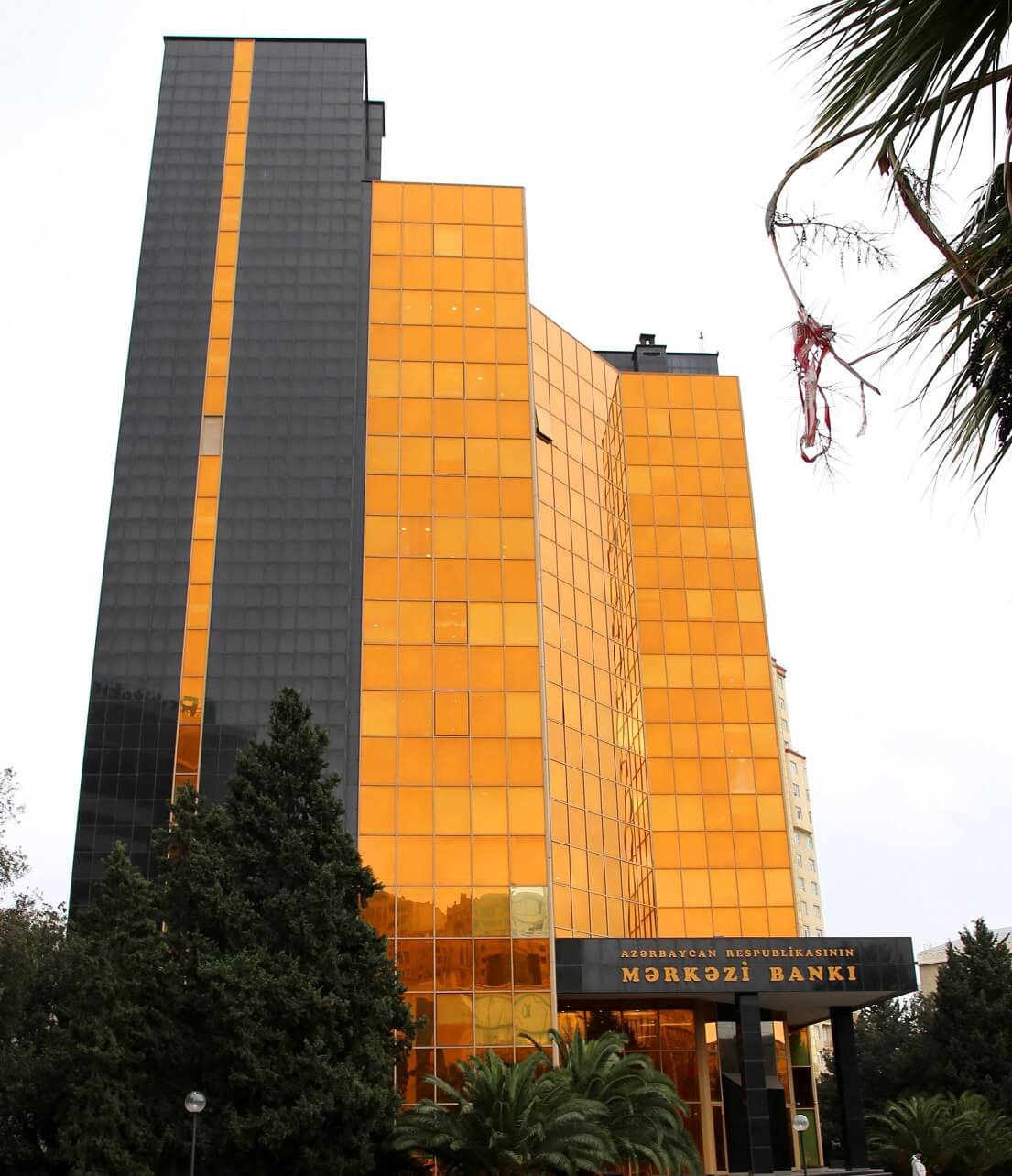
Central Bank of the Republic of Azerbaijan
Economy
Baku is one of the world’s leading capital cities.
By the end of the 10th century, it became an important center of Shirvan, where crafts, trade, horticulture, viticulture, sericulture, agriculture, and fishing flourished. Situated at the crossroads of international trade routes, Baku played a key role in the economic ties between East and West.
Azerbaijan’s oil industry began in 1847 with mechanical oil production in the Bibi-Heybat and Balakhani fields. In 1871, commercial development began on the Absheron Peninsula. In 1879, the Nobel brothers commissioned the world’s first oil tanker, the Zoroaster, in Baku.
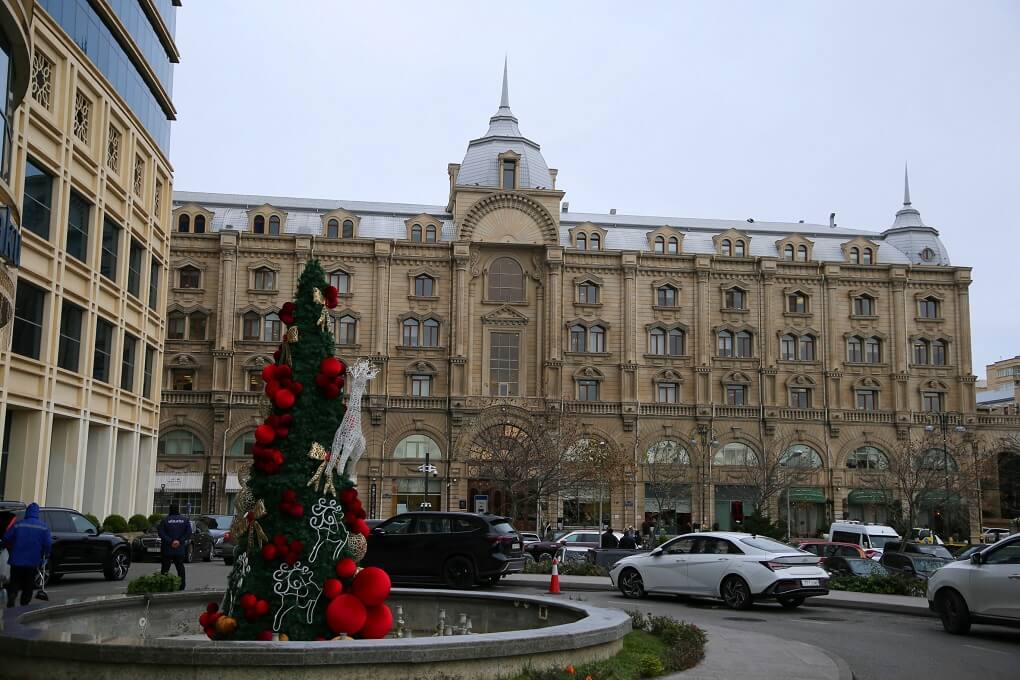
Azerbaijan’s industry developed rapidly in the 1920s–1940s. Before World War II, Baku was the Soviet Union’s main oil base. This development was fueled by oil and related industries.
In the 1950s and 1960s, dozens of large enterprises in the light and food industries were built and reconstructed. Revenues from Azerbaijani oil exports were used to purchase new equipment and technologies for the industrialization of the USSR.
From 1970 to 1985, Baku experienced a significant period of economic development. At the initiative of Azerbaijan, the Soviet government adopted five resolutions aimed at developing the republic’s national economy. These documents were of historic significance for the socioeconomic development of the Azerbaijan SSR.
On September 20, 1994, the “Contract of the Century” was signed between the State Oil Company of Azerbaijan and an international operating company comprising 12 companies from 8 countries. The strategy came into effect in October 1995. In 1996, the Azerbaijani section of the Baku-Novorossiysk oil pipeline was restored. From 1996–1997, the economy began to develop steadily, and growth accelerated from 2001.
In 2005, the Baku-Tbilisi-Ceyhan oil pipeline was opened, followed by the Baku-Tbilisi-Erzurum gas pipeline in 2007. In 2017, a contract was signed for the development of the Azeri-Chirag-Guneshli fields until 2050.
The Baku-Tbilisi-Kars railway, commissioned on October 30, 2017, connects the Trans-European and Trans-Asian railway networks, restoring the ancient Silk Road on steel highways.
Currency
The Azerbaijani manat (Azərbaycan manatı) is the national currency of the Republic of Azerbaijan, divided into 100 qepiks (qəpik). In the ISO 4217 standard, it is abbreviated as AZN, the numeric code is 944, and the official symbol is ₼. The manat is issued by the Central Bank of Azerbaijan.
There are many currency exchange offices and banks in the city.
Exchange rates as of February 14, 2026
- 100 RUB: 2,2 AZN
- 1 USD: 1,72 AZN
- 1 EUR: 2,02 AZN
- 1 GBP: 2,32 AZN
Culture
Azerbaijan is one of the ancient cradles of civilization. Its cultural heritage dates back to ancient times, as evidenced by the rock carvings and petroglyphs in Gobustan.
Theater and Music
Theatrical art began with M.F. Akhundov’s productions of Adventures of the Lankaran Khanate Vizier and Haji Gara (1873). In 1896, G.B. Zardabi founded the first professional troupe, the “First Muslim Drama Troupe.”
On January 12 1908, the premiere of the first national opera, Layla and Majnun by U. Hajibeyov, took place. It was the first opera in the Muslim East.
In 1923, the Baku Theatre Technical School was opened. In 1928, the first children’s theater opened. In 1931, the Puppet Theater was founded. The Azerbaijan Theater Institute (now the University of Culture and Arts) was established in 1945.
U. Hajibeyli laid the foundations of modern professional musical culture, combining national traditions with compositional creativity. In 1922, the first conservatory in the Middle East opened in Baku.
Cinema
The history of Azerbaijani cinema began on August 2, 1898, with the newsreels of A. M. Mishon. In 1916, the first film comedy was made, based on U. Hajibeyov’s operetta Arshin Mal Alan.
In 1923, the Azerbaijan Photo and Cinema Department (APCD) was established. The J. Jabbarly Azerbaijan Film Studio has been operating since 1961.
Since 1935, sound film has been developing. Since 1965, Azerbaijan Television has been producing cartoons. In 1993, the State Film Fund of Azerbaijan was founded.
Museums
The first state museum in Azerbaijan was the Independence Museum, founded in December 1919 in Baku during the Azerbaijan Democratic Republic (1918–1920). It was housed in the ADR parliament building, now known as the Institute of Manuscripts, and was revived in 1991 as its spiritual successor.
During the Soviet era, the Museum of Natural History of Azerbaijan (1930), the Azerbaijan State Theatre Museum (1934), and the National Museum of Arts of Azerbaijan (1936) were established in Baku. Since 1936, the State Museum has been known as the History Museum of Azerbaijan. In 1939, the Nizami Ganjavi Museum of Azerbaijani Literature was founded. The city has 36 museums.
Tourism
Baku is Azerbaijan’s main tourist destination. Its climate, unique natural environment, and rich culture create excellent conditions for the development of various types of tourism. Historical, cultural, ecological, sporting, and exotic routes offer great potential.
Attractions (35)
Walled City of Baku
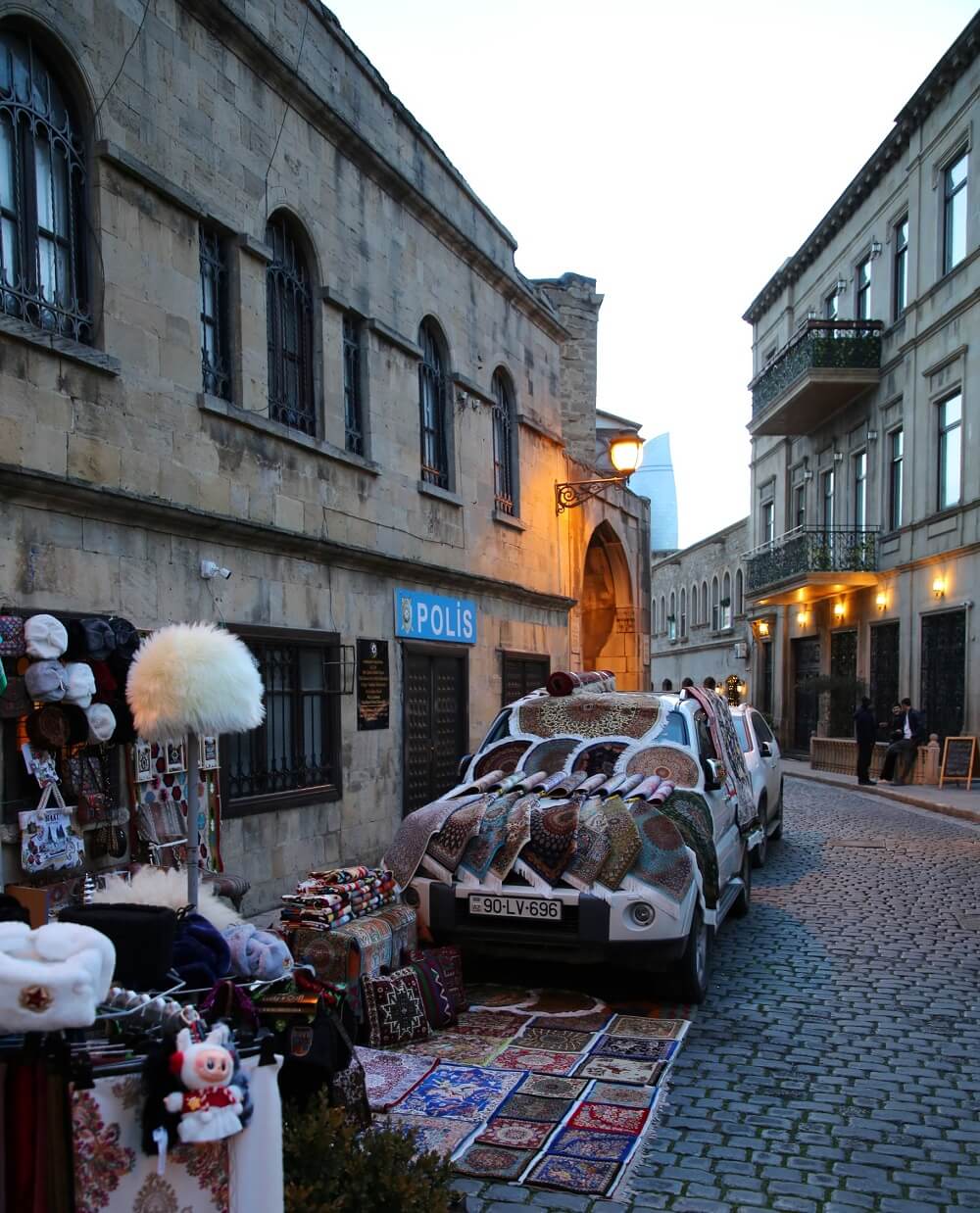
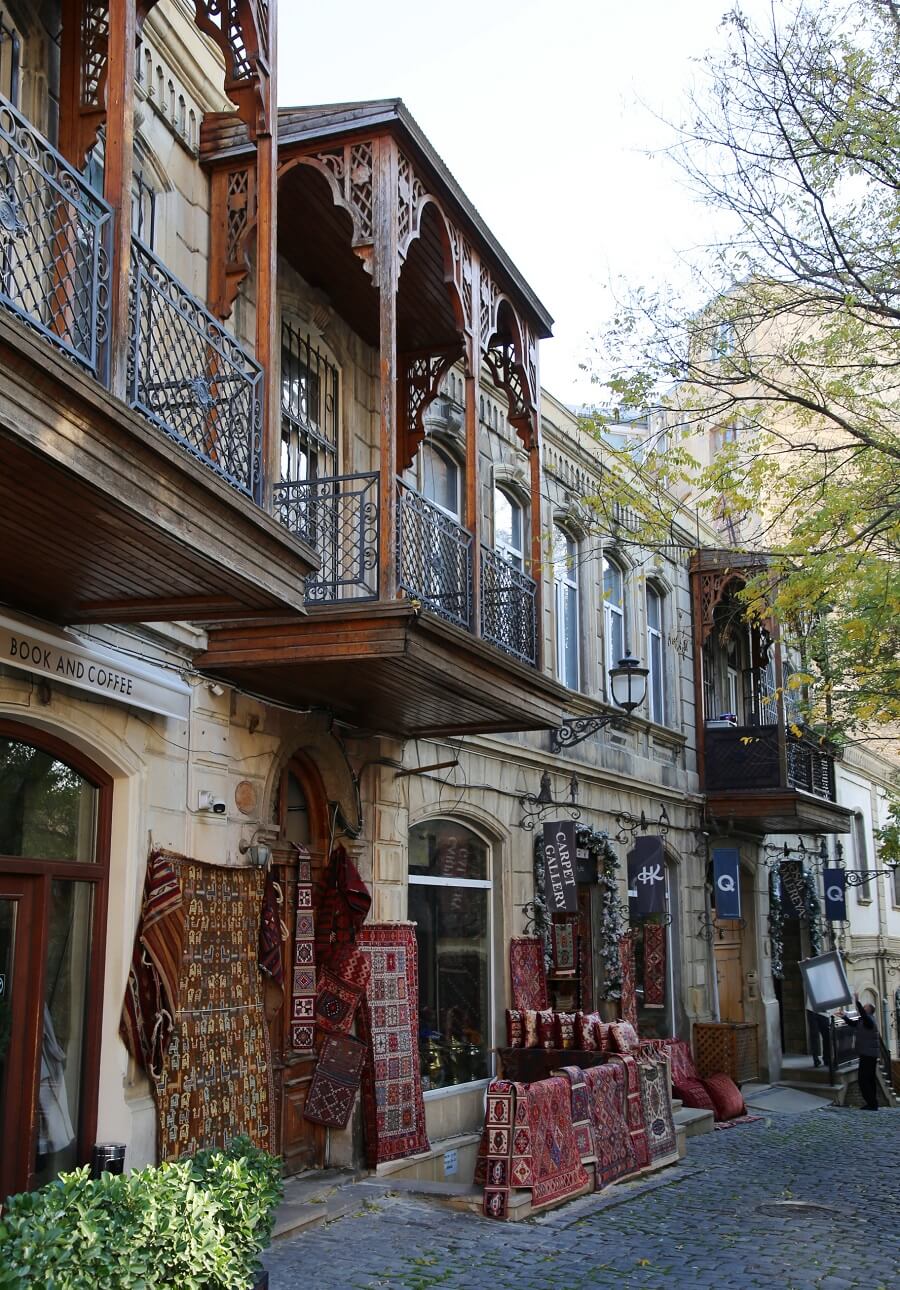
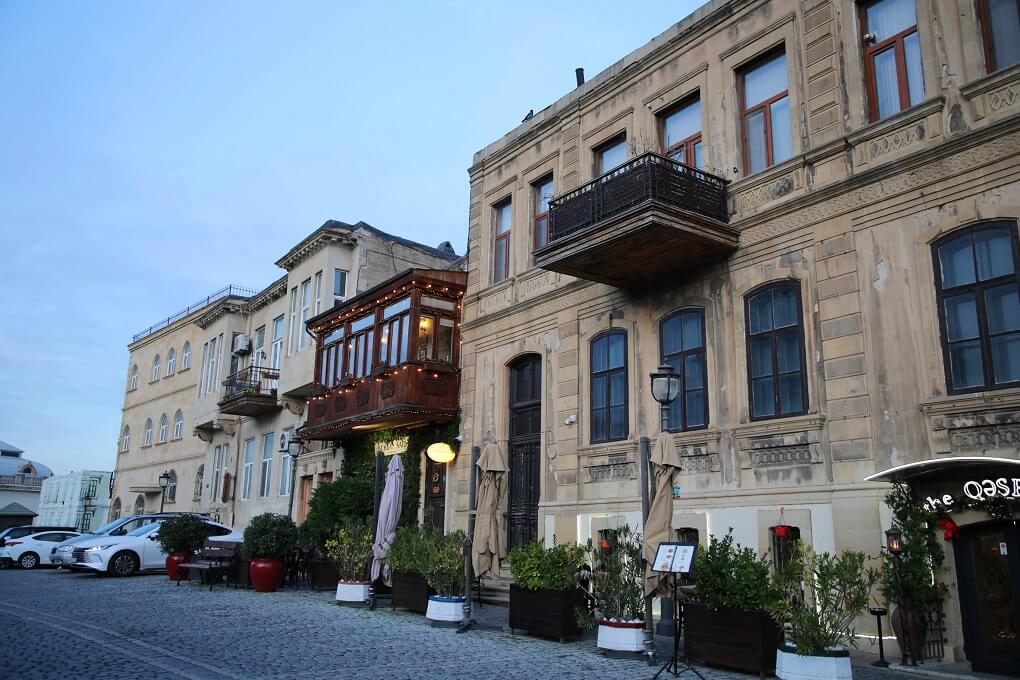
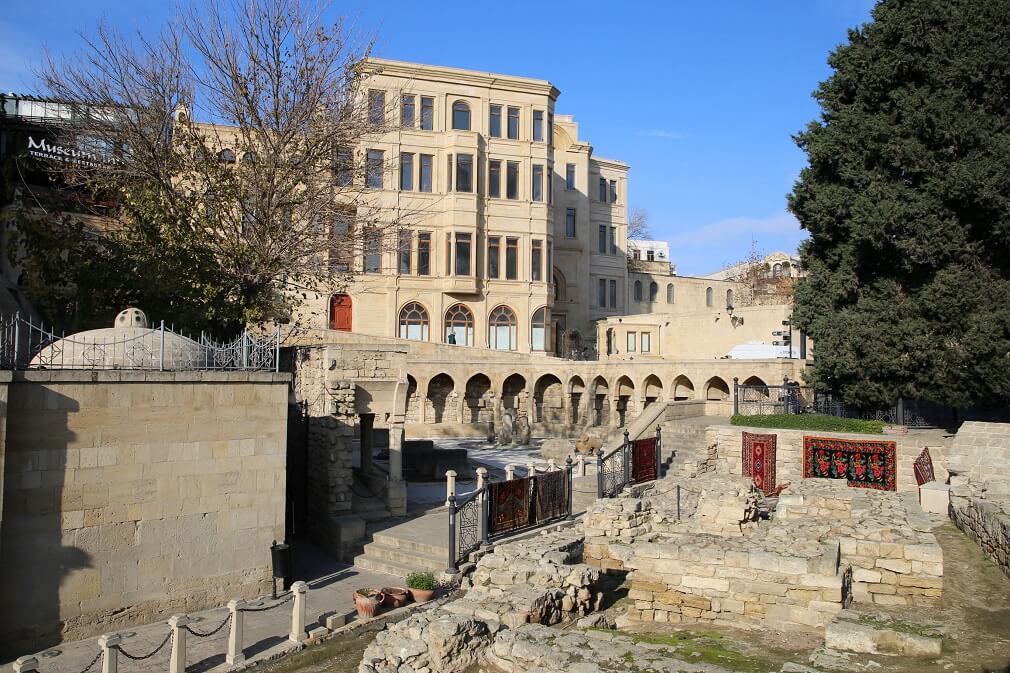
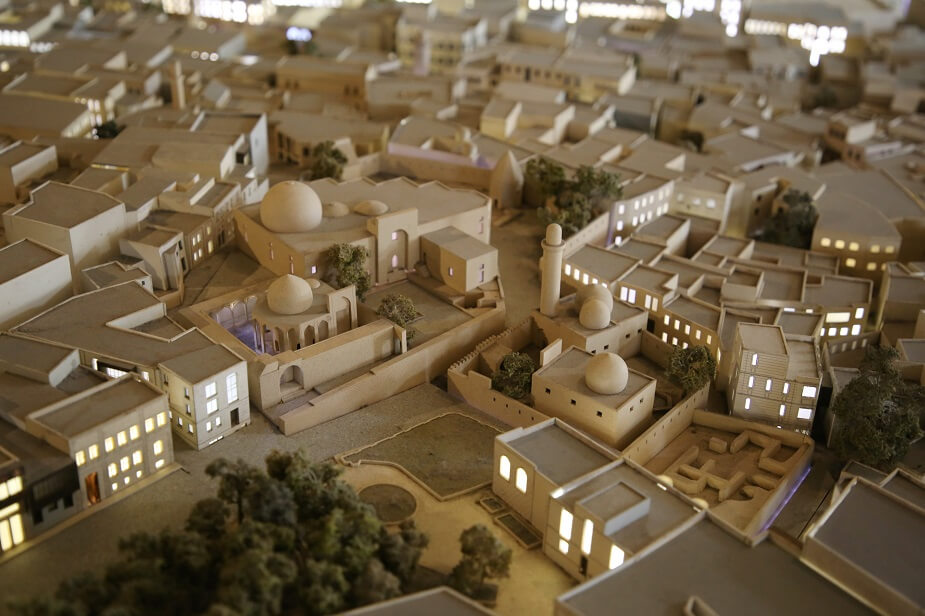
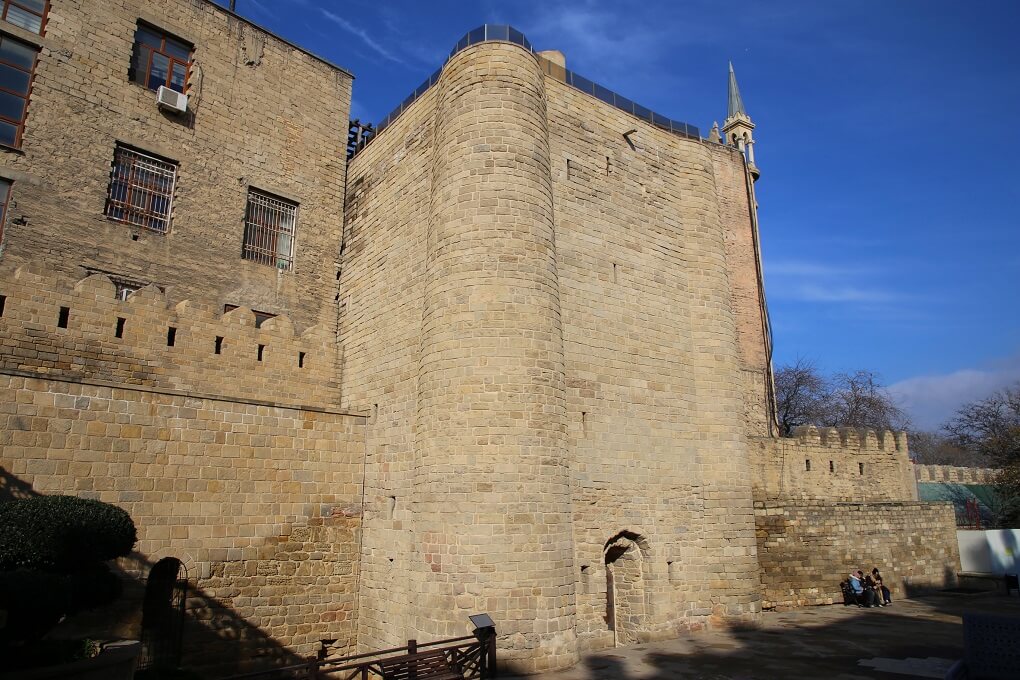
İçərişəhər, meaning “inner city” or “old city,” is an ancient residential quarter and historical and architectural reserve in Baku. Surrounded by well-preserved fortress walls, it is the oldest part of the city.
The reserve’s territory was inhabited as early as the Bronze Age. Archaeological excavations have revealed that people lived here in the 8th to 11th centuries. During this time, crafts and trade flourished. In the 15th century, the Shirvanshah moved his residence from Shamakhi to Baku, strengthening the importance of Old City. From 1747 to 1806, Baku, primarily concentrated here, was the capital of the Baku Khanate. However, after the Russian occupation of the city in 1806, and especially after the oil boom of the late 19th and early 20th centuries, Baku began to grow rapidly and expanded beyond the fortress walls of Old City.
The main architectural monuments of Old City are the Maiden Tower and the Palace of the Shirvanshahs. The reserve also contains dozens of historical sites, including mosques, caravanserais, baths, and residential buildings. Several museums, embassies, hotels, shopping centers, cafes, and restaurants operate here.
In 1977, Old City was declared a historical and architectural reserve, and in 2000, along with the Palace of the Shirvanshahs and the Maiden Tower, it was inscribed on the UNESCO World Heritage List. Old City became the first site from Azerbaijan to be included on this list.
Maiden Tower
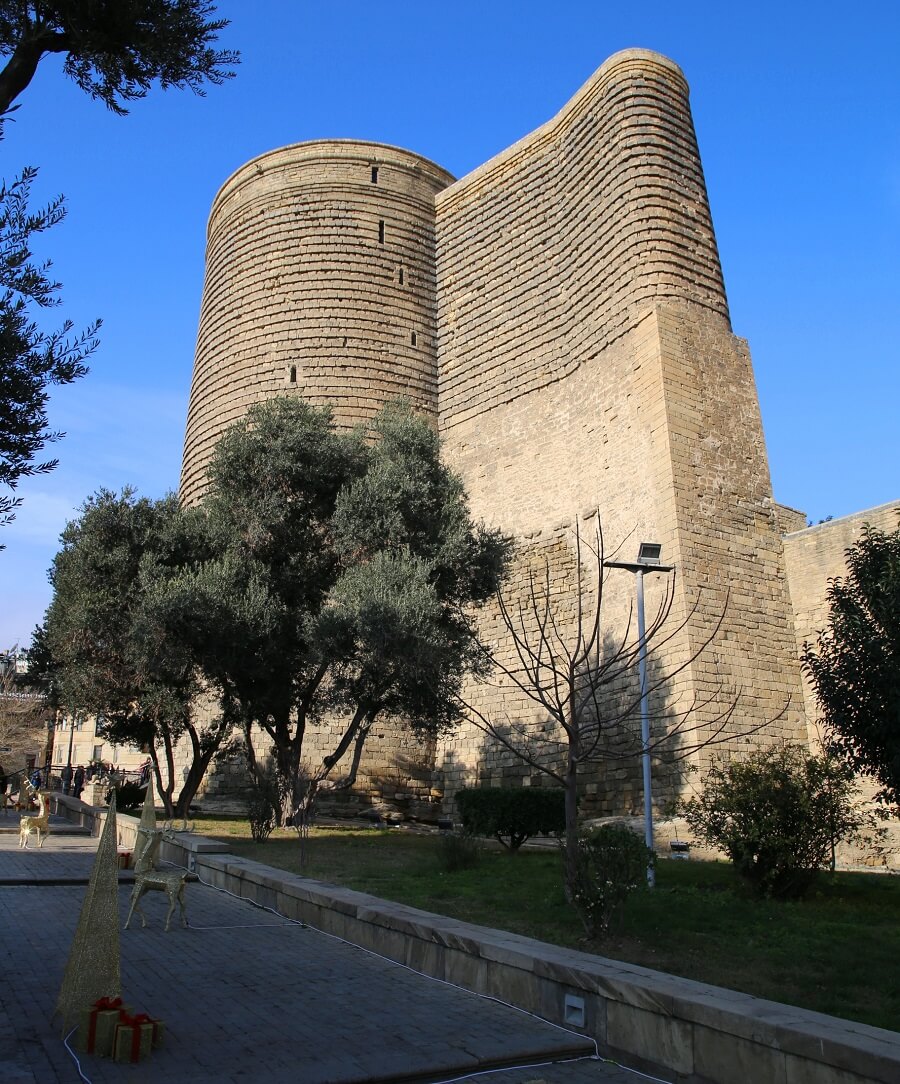
The Maiden Tower (Azerbaijani: Qız Qalası) is an ancient fortified structure on the coastal part of Old City. It is a key component of Baku’s seafront facade, rising above the feudal city’s coastal section, the Fortress. The tower stands on a cliff, partially clad in finely cut stone and protected by a fortified wall with a system of large semicircular ledges rising from its base almost to its summit. Its height is 28 meters above sea level. The tower is listed as a UNESCO World Heritage Site.
Palace of the Shirvanshahs
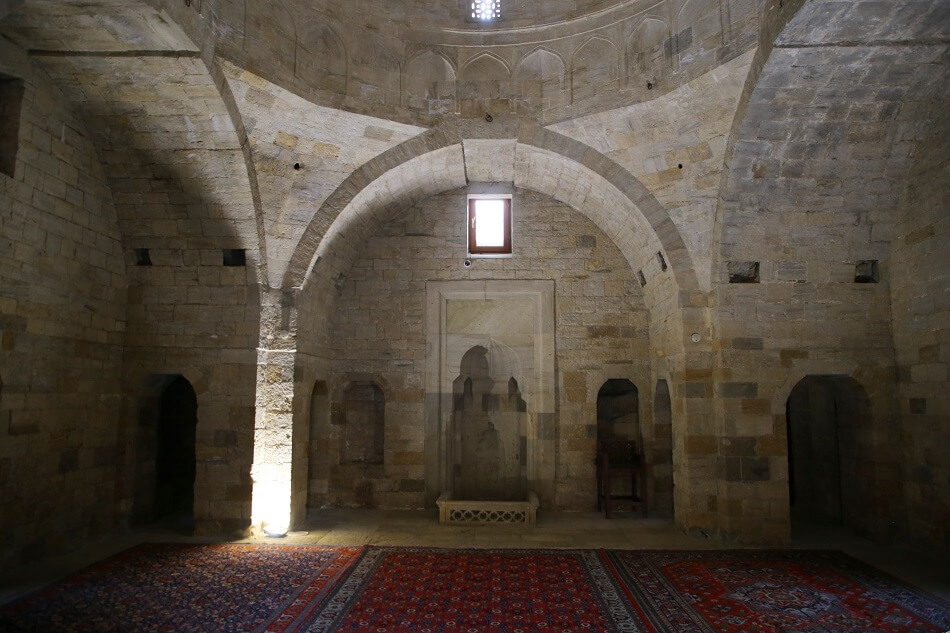
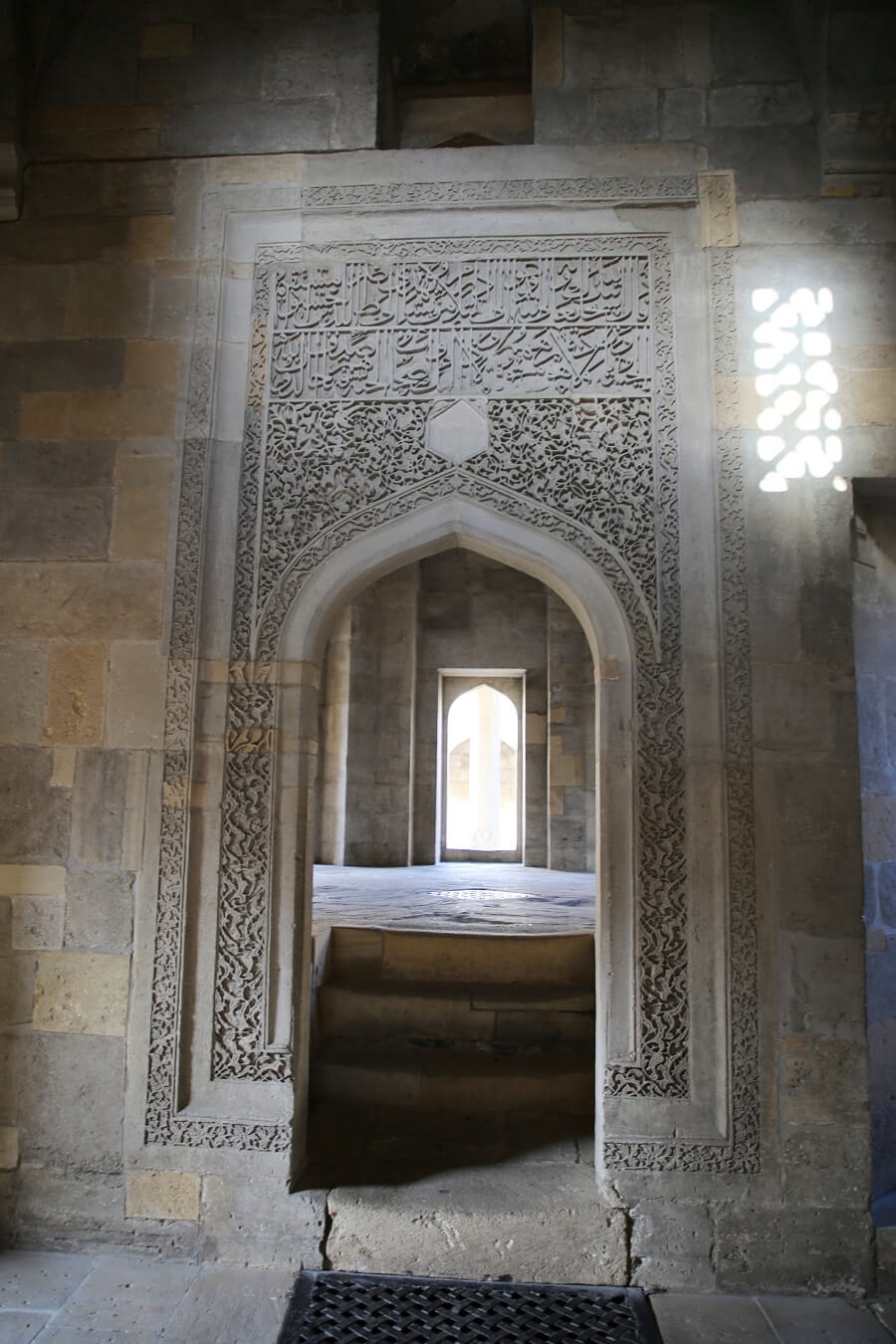
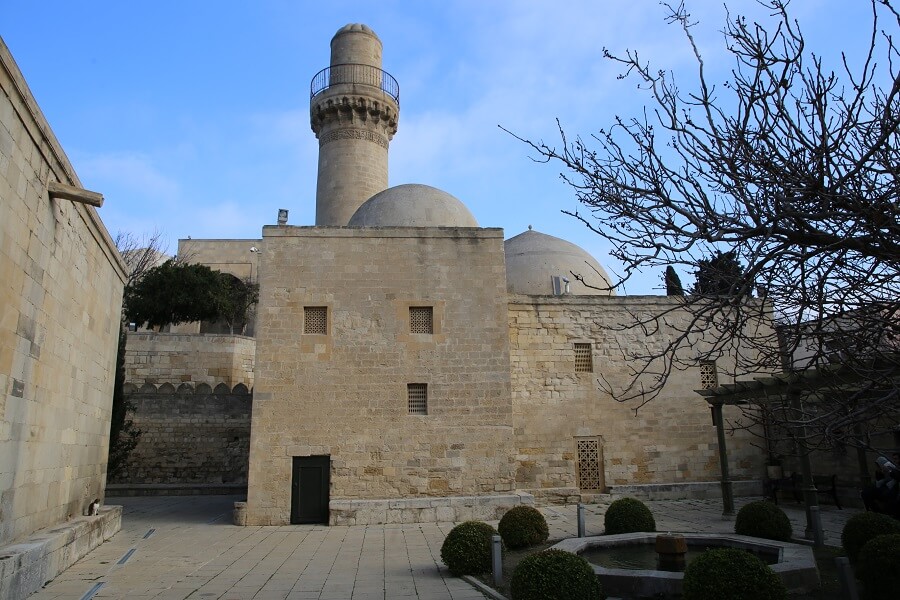
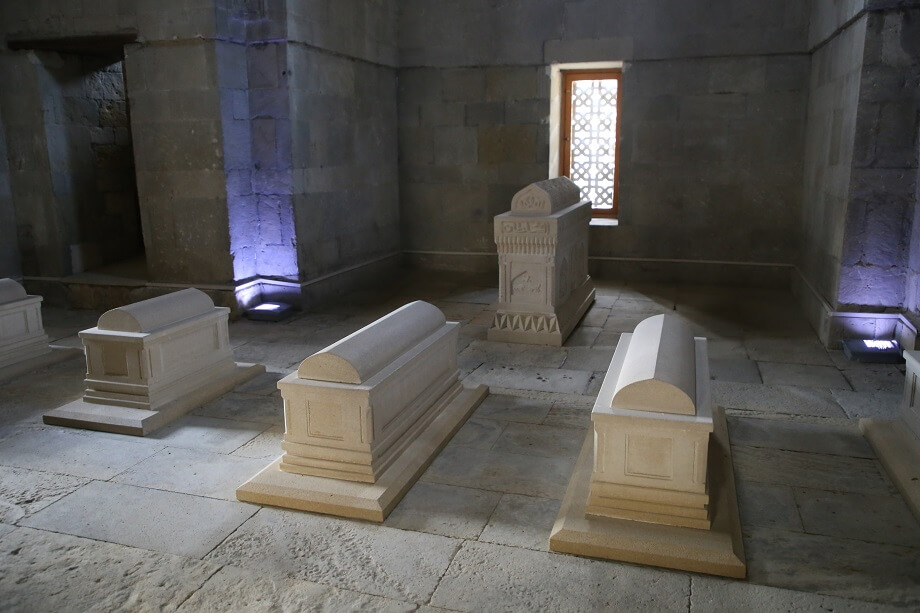
The Palace of the Shirvanshahs (Azerbaijani: Şirvanşahlar Sarayı, Persian: کاخ شروانشاهان) is a 15th-century palace built by the Shirvanshahs and described by UNESCO as “one of the pearls of Azerbaijan’s architecture”. It is located in the Inner City of Baku, and forms an ensemble of historic monuments inscribed under the UNESCO World Heritage List of Historical Monuments.
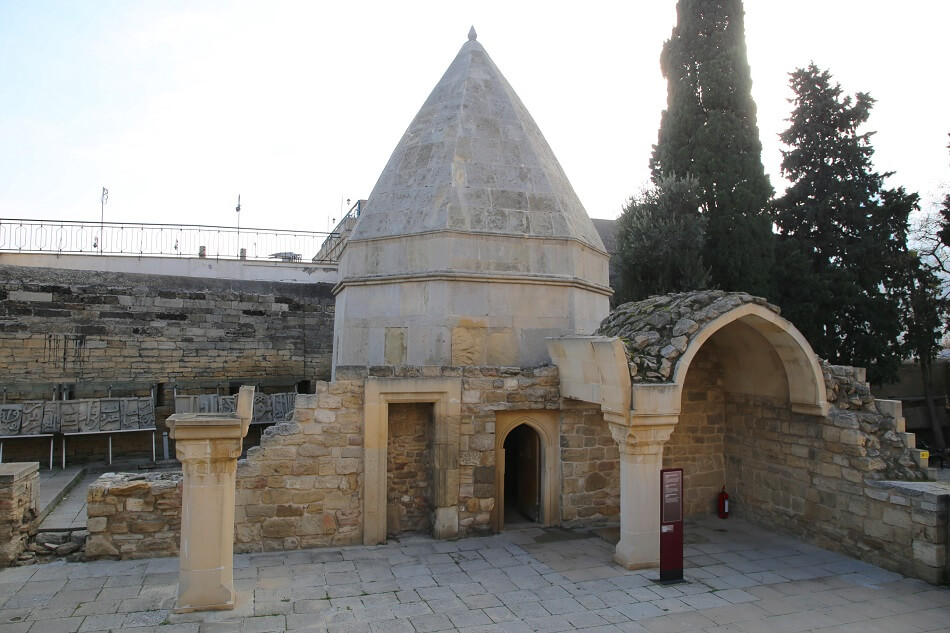
The complex contains the main building of the palace, Divanhane, the burial-vaults, the shah’s mosque with a minaret, Seyid Yahya Bakuvi’s mausoleum (the so-called “mausoleum of the dervish”), south of the palace, a portal in the east, Murad’s gate, a reservoir and the remnants of a bath house. Earlier, there was an ancient mosque, next to the mausoleum. There is still ruins of the bath to the west of the tomb.
Heydar Aliyev Center
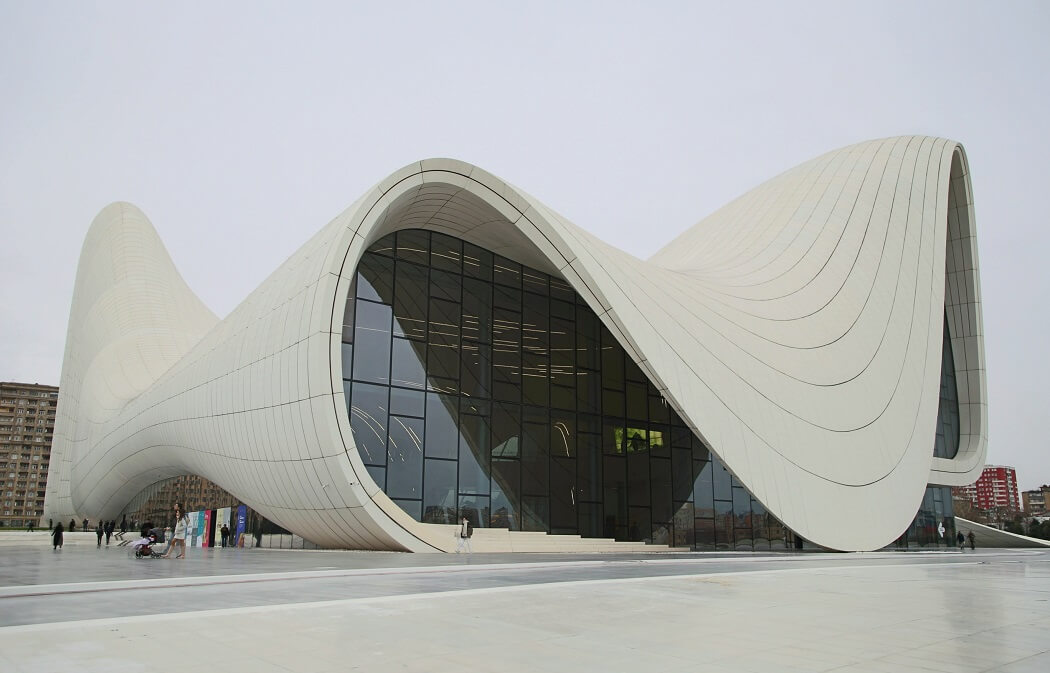
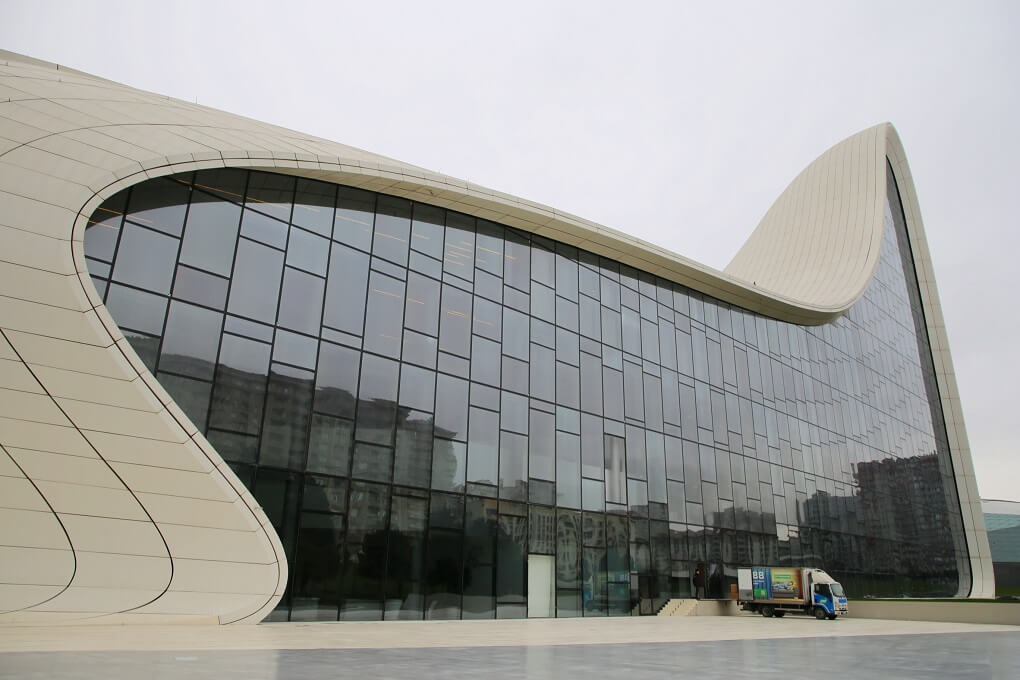
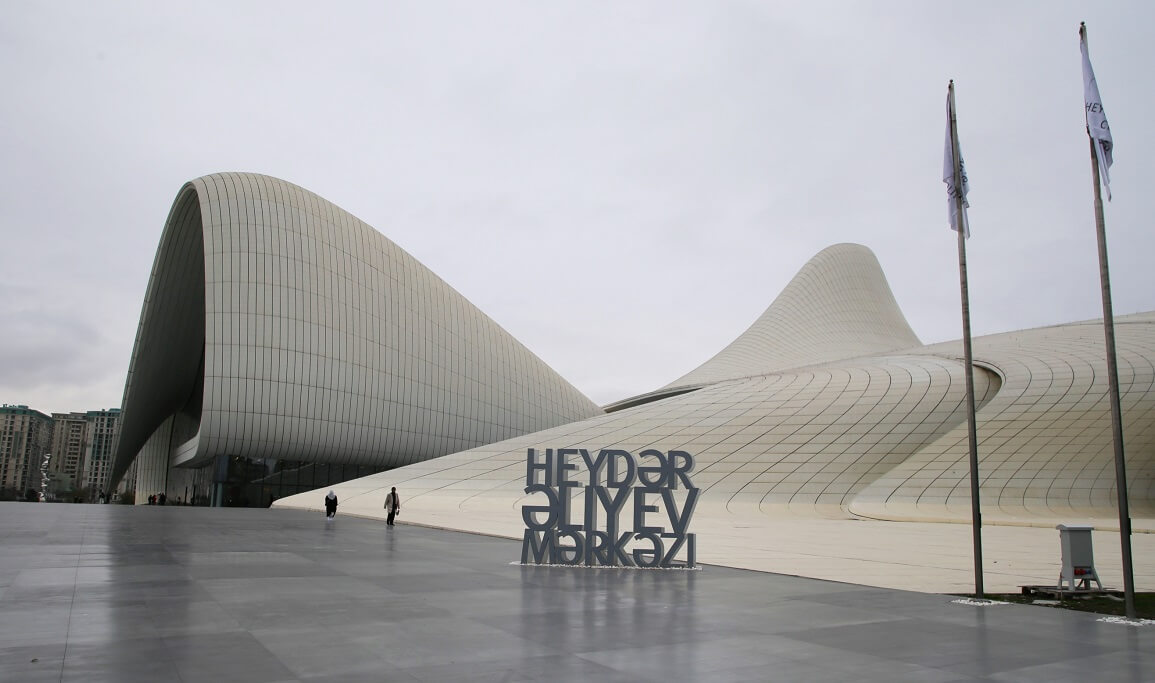
The Heydar Aliyev Center (Azerbaijani: Heydər Əliyev Mərkəzi) is a 57,500 m² (619,000 sq ft) building complex in Baku, designed by Zaha Hadid and noted for its distinctive architecture and flowing, curved style that eschews sharp angles. The main contractor, Dia Holdings, is owned by actors that are linked to Azerbaijan’s ruling Aliyev family’s network of offshore companies.
In 2014, the Center won the Design Museum’s Design of the Year Award 2014 despite concerns about the site’s human rights record.
The center is named after Heydar Aliyev (1923–2003), the first secretary of Soviet Azerbaijan from 1969 to 1982, and president of Azerbaijan Republic from October 1993 to October 2003.
Mosque of Muhammad
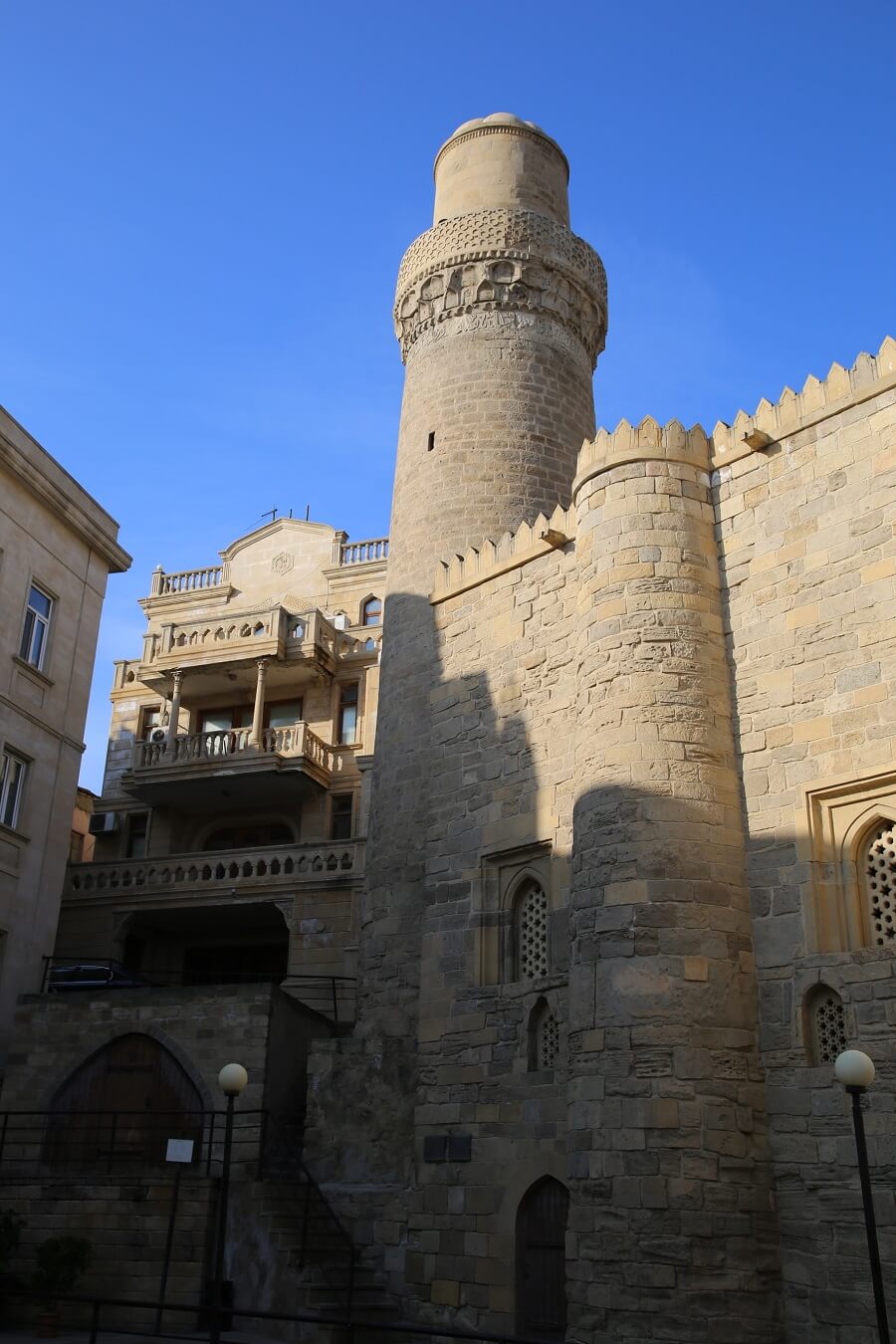
The Muhammad Mosque, built in 1079, was the first mosque not only in Baku but in all of Azerbaijan. Azerbaijanis call it “Synyk-Kala,” which translates as “damaged tower.” The mosque received this unusual name after the events of 1723, when a Russian squadron besieging Baku refused to surrender the city and began shelling it. One of the shells struck the minaret, causing a strong wind to blow the ships far out to sea. Locals considered this divine intervention and for a long time did not restore the minaret, preserving it as a symbol of resistance. Years later, the top of the tower was finally repaired, and a lighter brick marks the location of the shell’s impact 300 years ago.
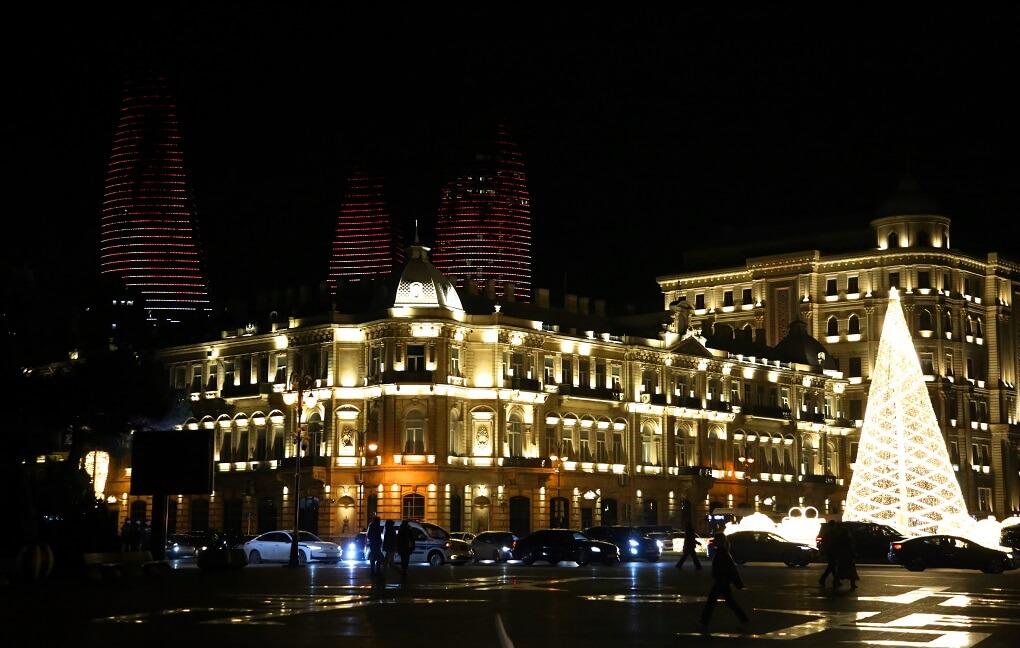
Flame Towers
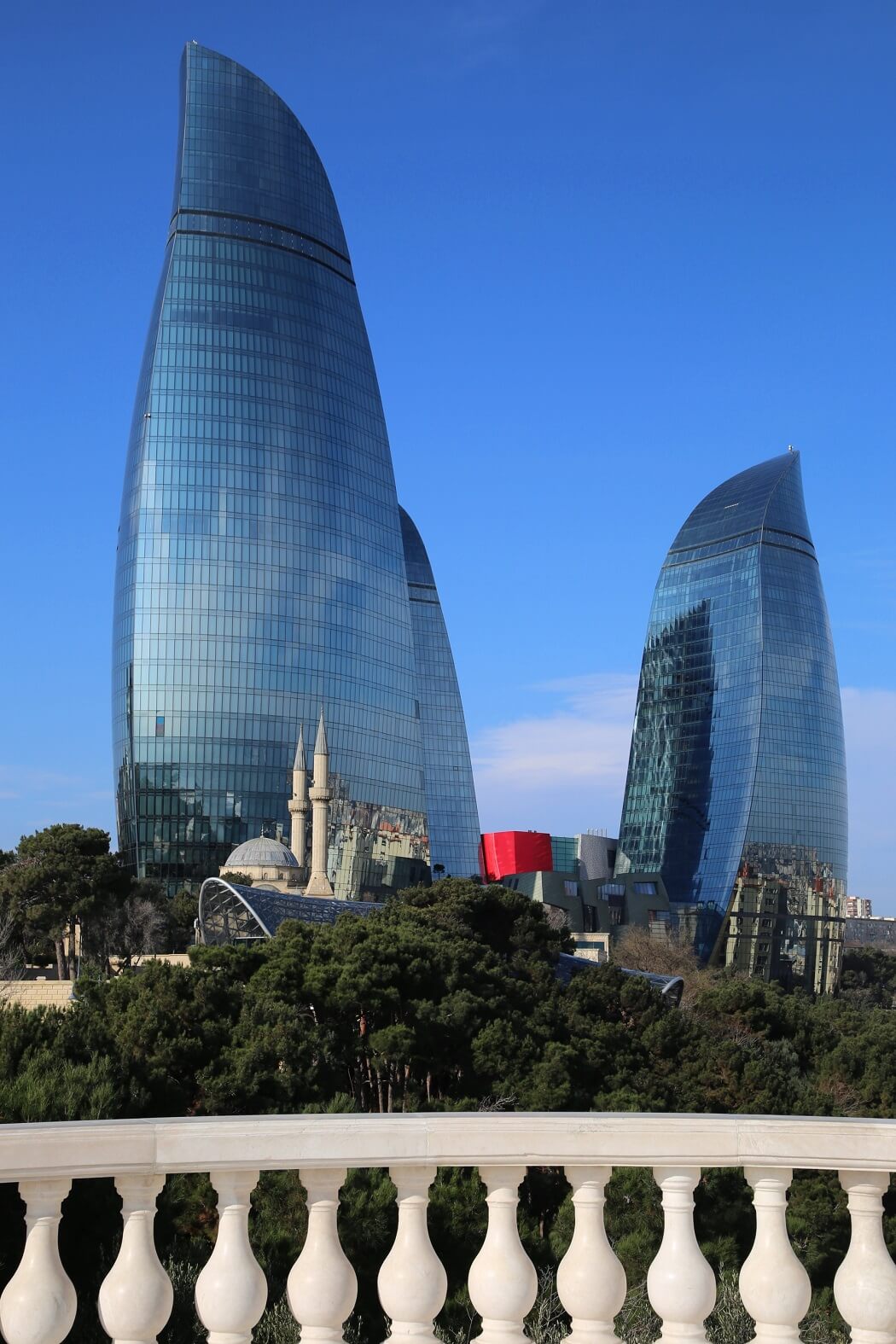
The Flame Towers (Azerbaijani: Alov qüllələri) are a group of three skyscrapers in Baku. The main contractor, Dia Holdings, is owned by two brothers who are linked to Azerbaijan’s ruling Aliyev family’s network of offshore companies.
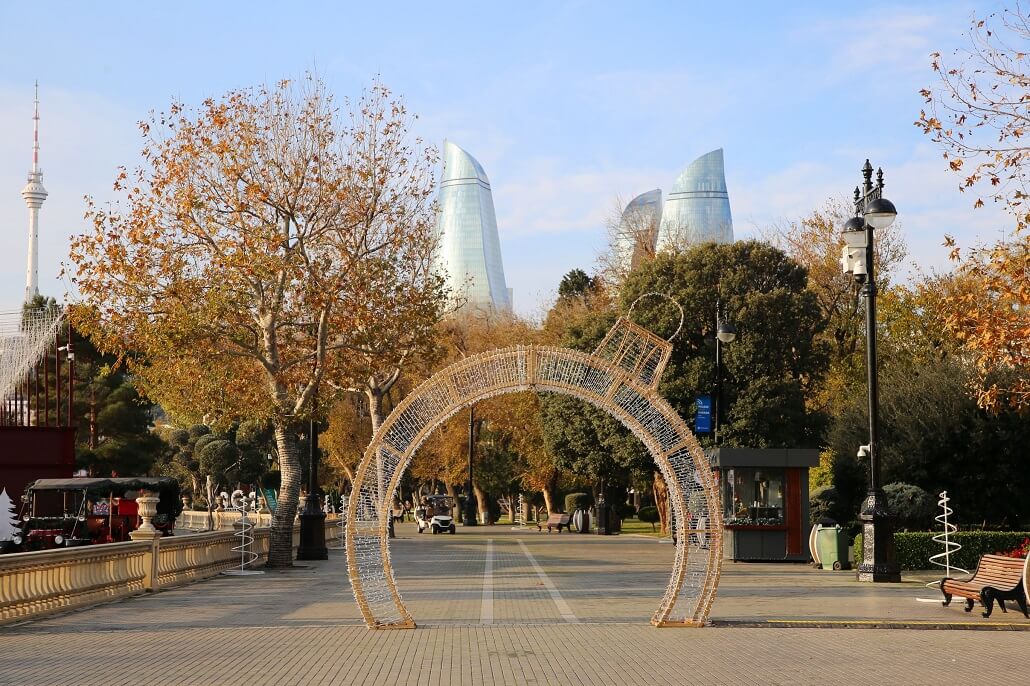
The height of the tallest tower is 182 m (597 ft). The three flame-shaped towers are intended to symbolize the elements of fire, and are a reference to Azerbaijan’s nickname “The Land of Fire”, historically rooted in a region where natural gas flares emit from the ground and Zoroastrian worshipers considered flames to be a symbol of the divine.
The three buildings (South, East and West) consist of 130 residential apartments over 33 floors, a hotel tower that includes 250 rooms and 61 serviced apartments, and office blocks which provides a net 33,114 square meters of office space.
Crystal Hall
Baku Crystal Hall (Azerbaijani: Bakı Kristal Zalı) is an indoor arena located on the coast of Baku near National Flag Square. Construction of the arena began in August 2011 and finished in April 2012—in time for it to host its first major event, the Eurovision Song Contest 2012.
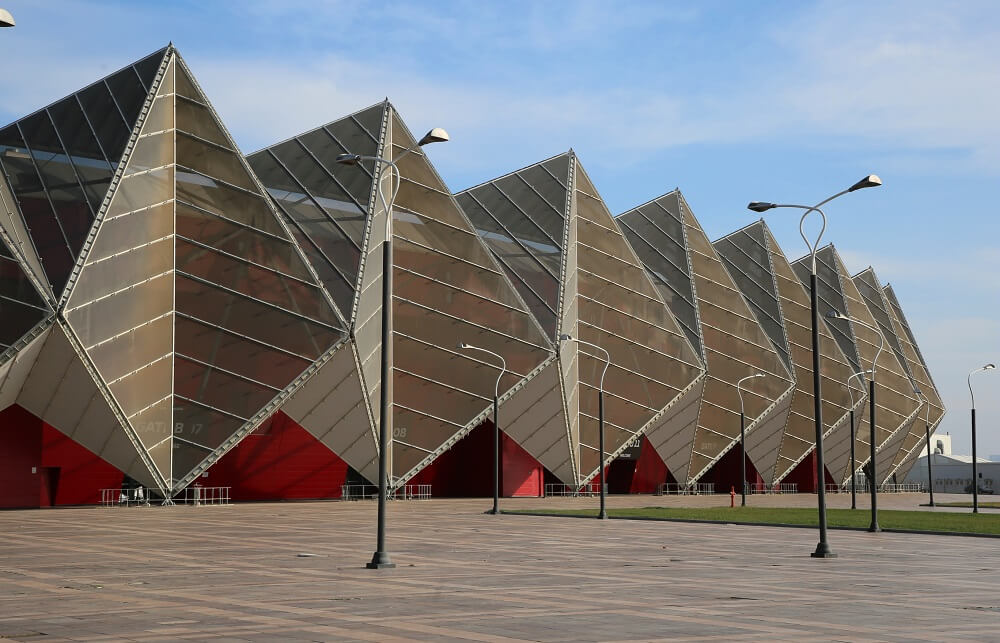
Boulevard
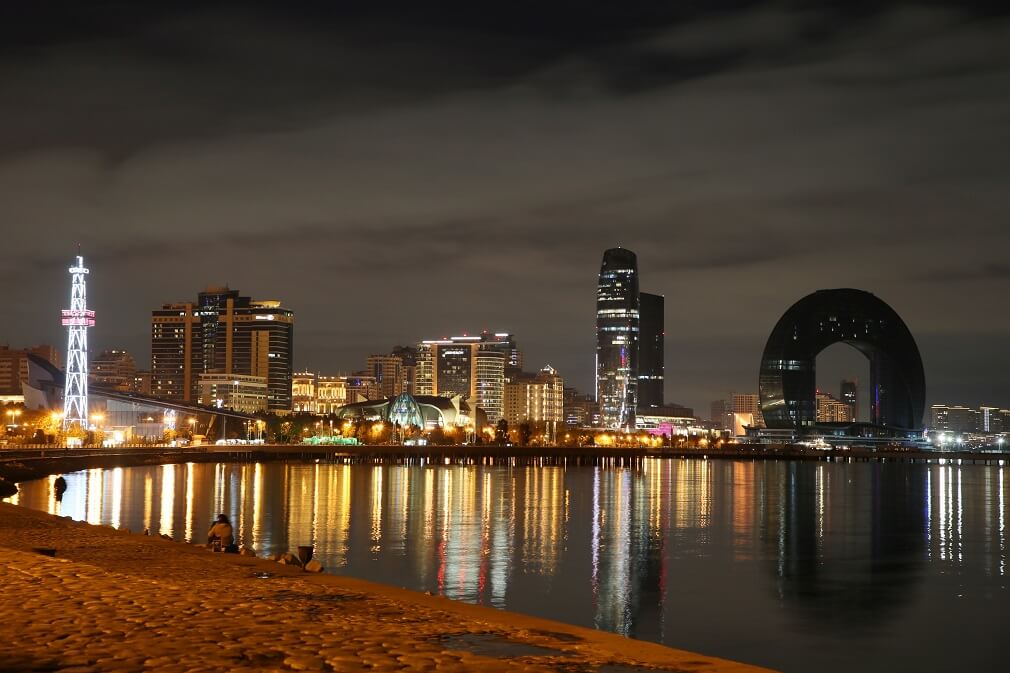
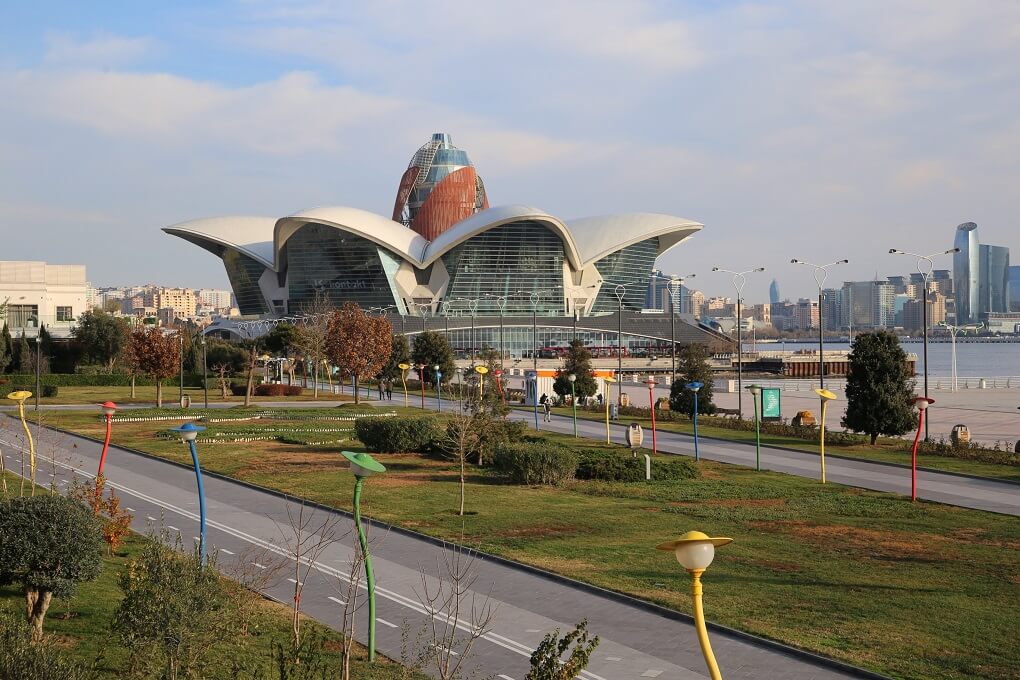
Baku Boulevard (Azerbaijani: Dənizkənarı Milli Park) is a promenade established in 1909 which runs parallel to Baku’s seafront. Its history goes back more than 100 years, to a time when Baku oil barons built their mansions along the Caspian shore and when the seafront was artificially built up inch by inch.
State Flag Square
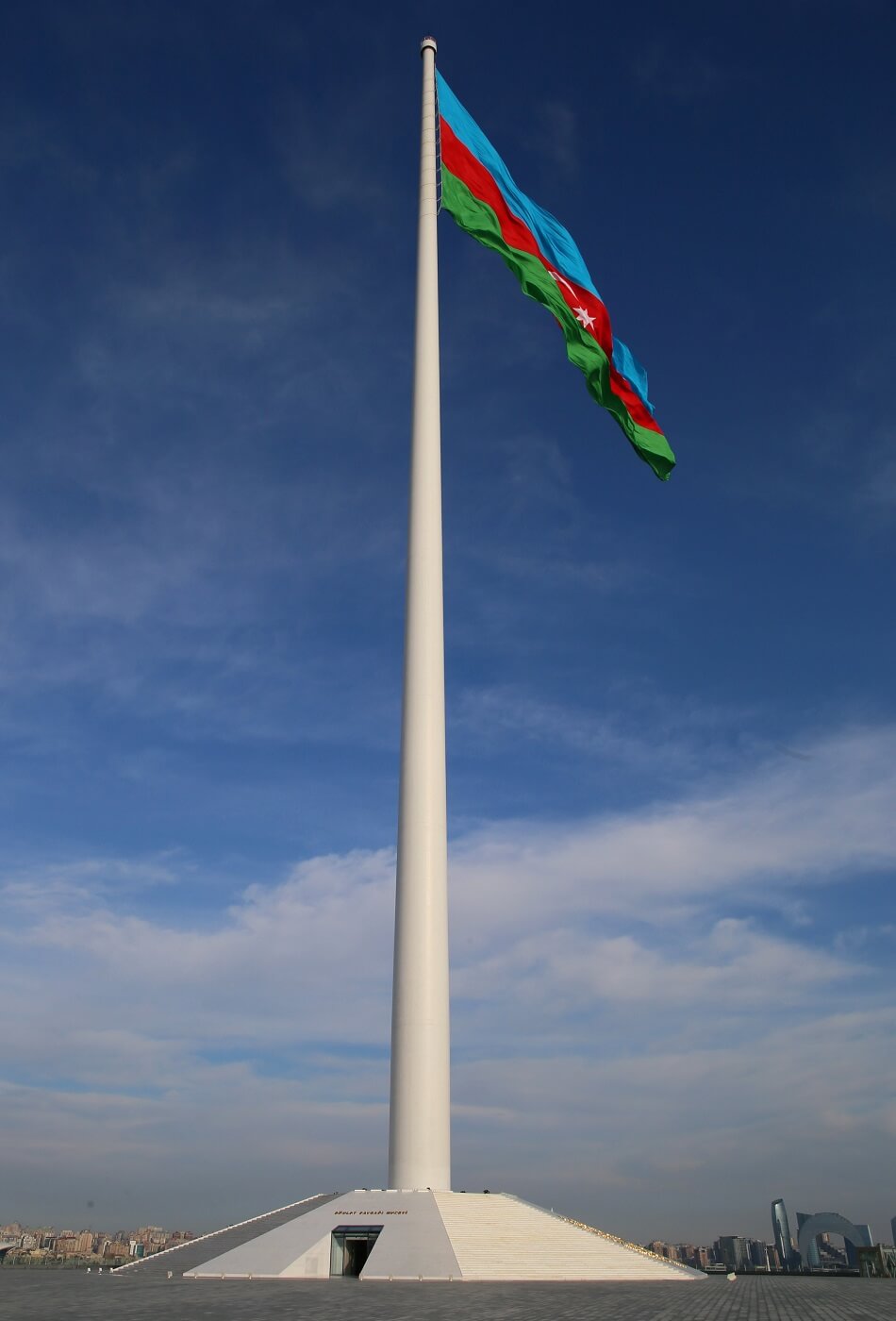
State Flag Square (Azerbaijani: Dövlət Bayrağı Meydanı) is a public square situated along Neftchiler Avenue in Bayil. Spanning 60 hectares (150 acres), with its upper section covering 3 hectares (7.4 acres), the square prominently displays national symbols of Azerbaijan, including the state coat of arms, anthem, and a bronze map of the country. Since 2024, it has flown the world’s largest flag.
Taza Pir Mosque
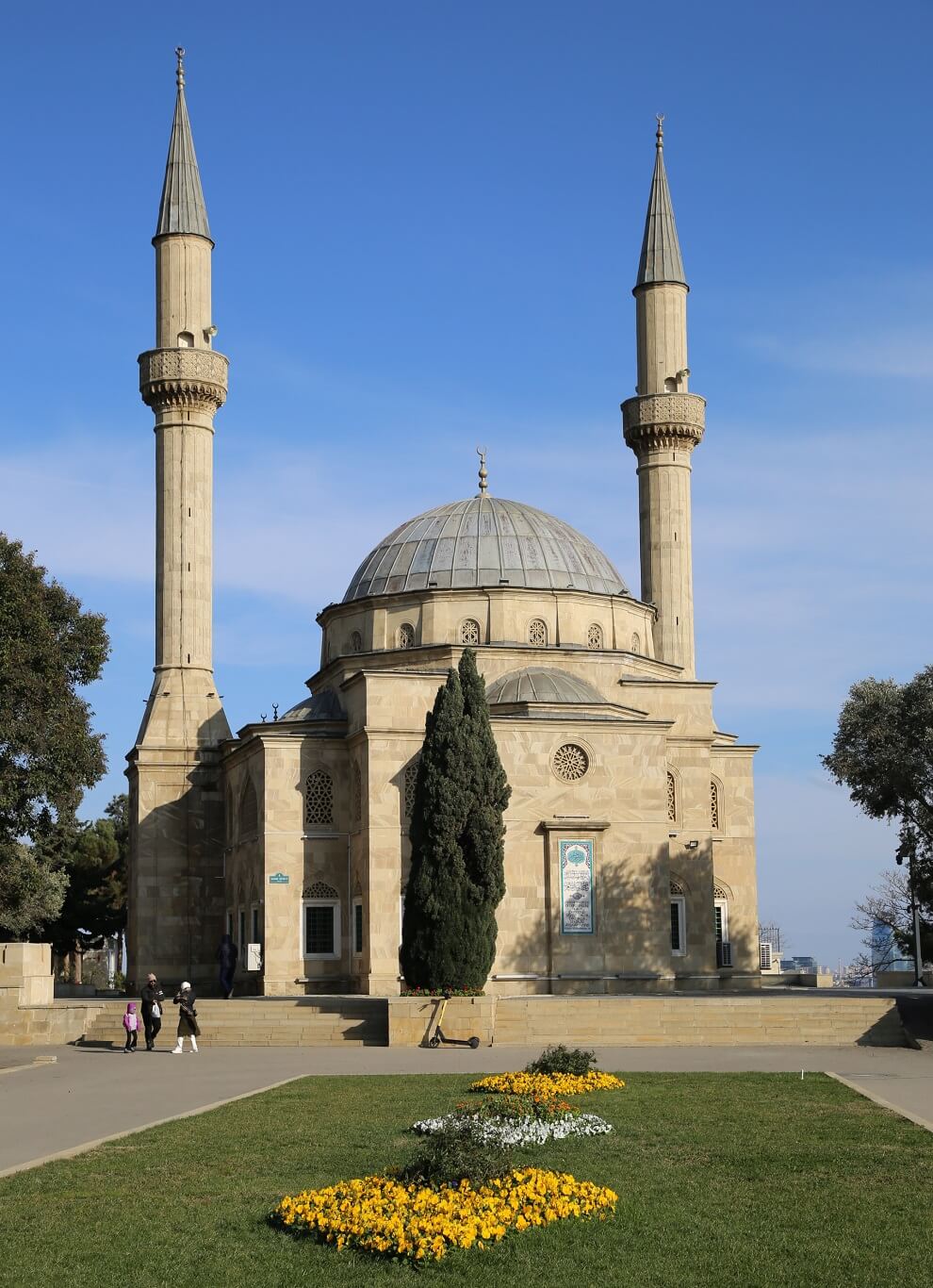
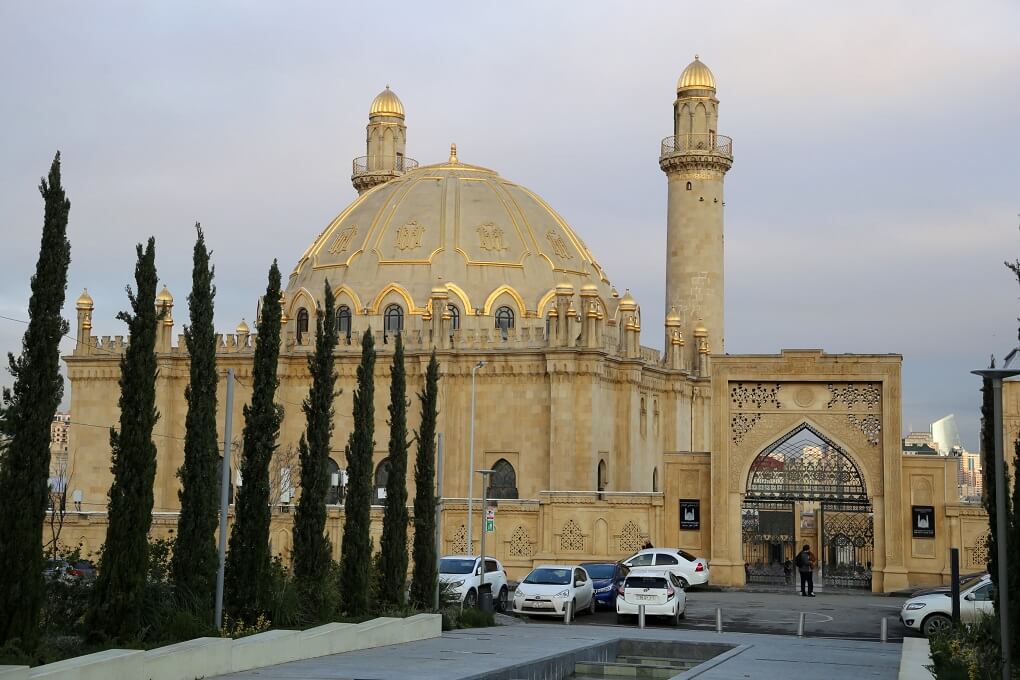
The Taza Pir Mosque (Azerbaijani: Təzəpir Məscidi) is a Shia Islam mosque, located in the center of Baku. Its construction began in 1905 and was finished by 1914. The concept for the mosque as well as its financing was provided by an Azeri female philanthropist, Nabat Khanum Ashurbeyova (Ashurbeyli).
Carpet Museum
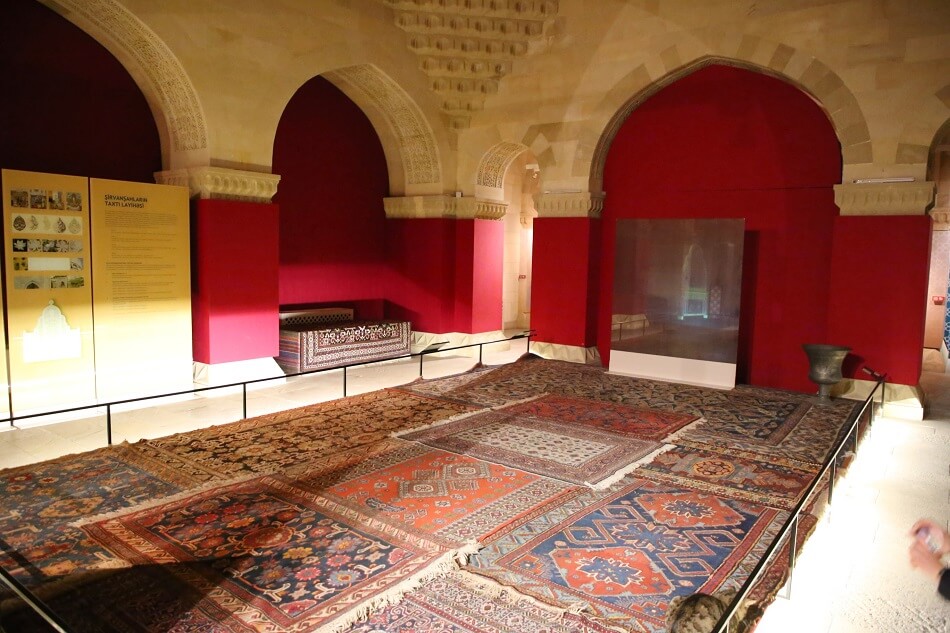
Azerbaijan National Carpet Museum (Azerbaijani: Azərbaycan Milli Xalça Muzeyi) is a museum located in Baku that displays Azerbaijani carpets and rugs with historical and modern weaving techniques and materials. It has the largest collection of Azerbaijani carpets in the world. First opened on Neftchiler Avenue in 1967, it moved to a new building in the Baku seafront park in 2014.
Upland park
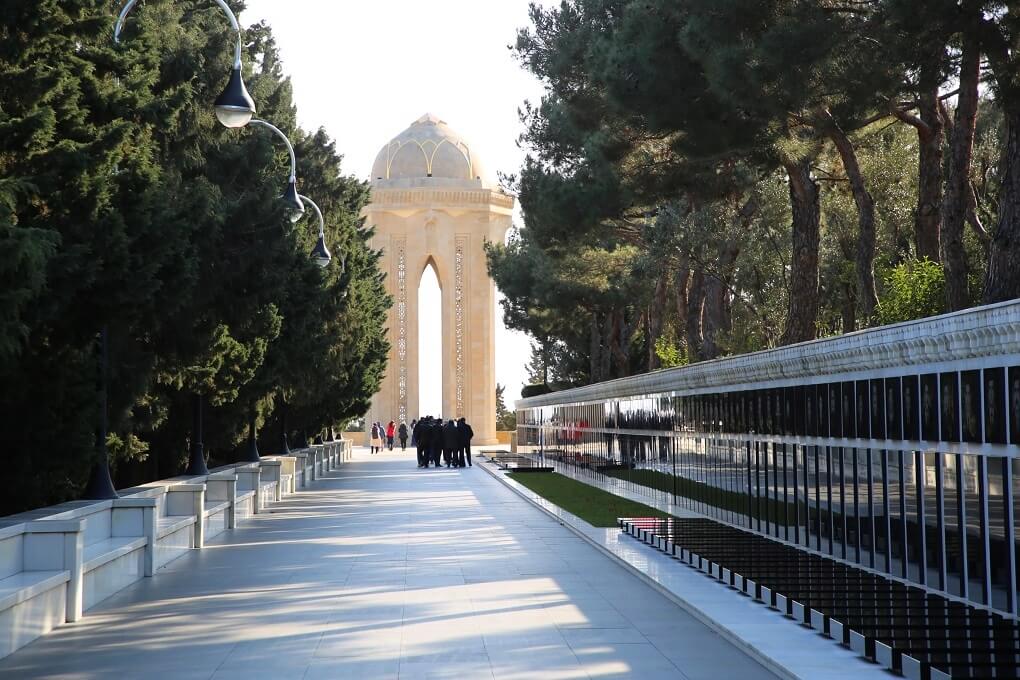
Martyrs’ Alley, known as Kirov Park or Upland Park until 1990, is a cemetery in Baku housing the remains of martyrs, primarily victims of the “Black January” massacre, which killed 126 people, as well as Azerbaijanis who died in the First Karabakh War. The alley also contains an unmarked mass grave containing the remains of unidentified bodies.
Upland Park is a parkland area in central Baku, located above Baku Bay. Its name derives from its elevated location, offering views of nearby landmarks from its observation decks: Seaside Boulevard, Baku Bay, the Palace of the Shirvanshahs, and the Old City.
Ferris Wheel
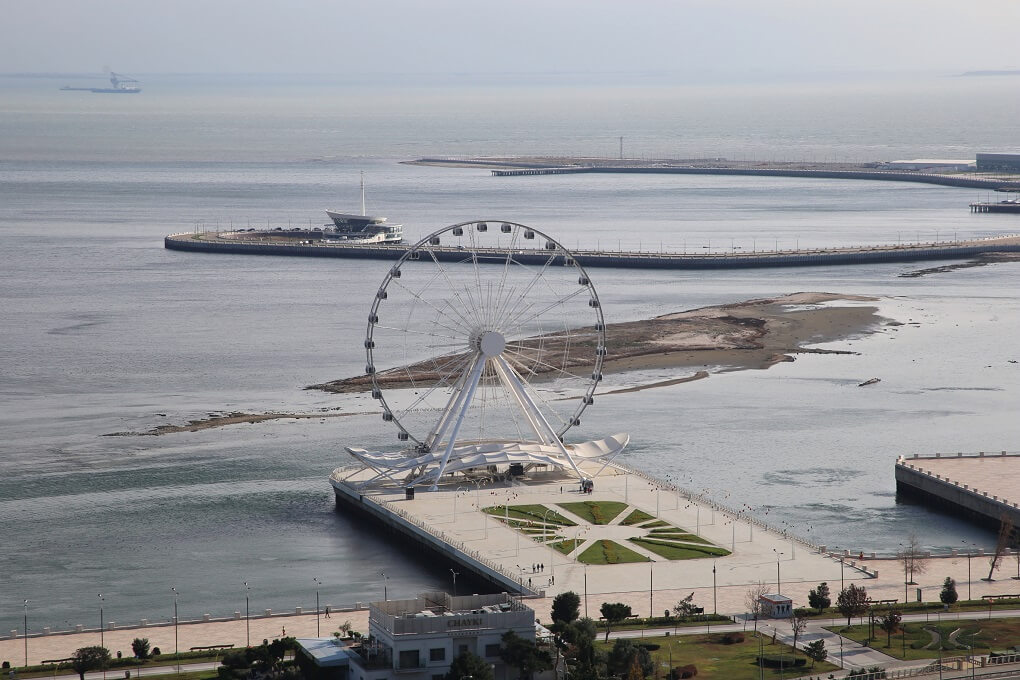
The Baku Ferris Wheel (Azerbaijani: “Şeytan çarxı” attraksionu) is a 60-meter-high Ferris wheel located in the new boulevard section of the Seaside National Park, stretching to the State Flag Square.
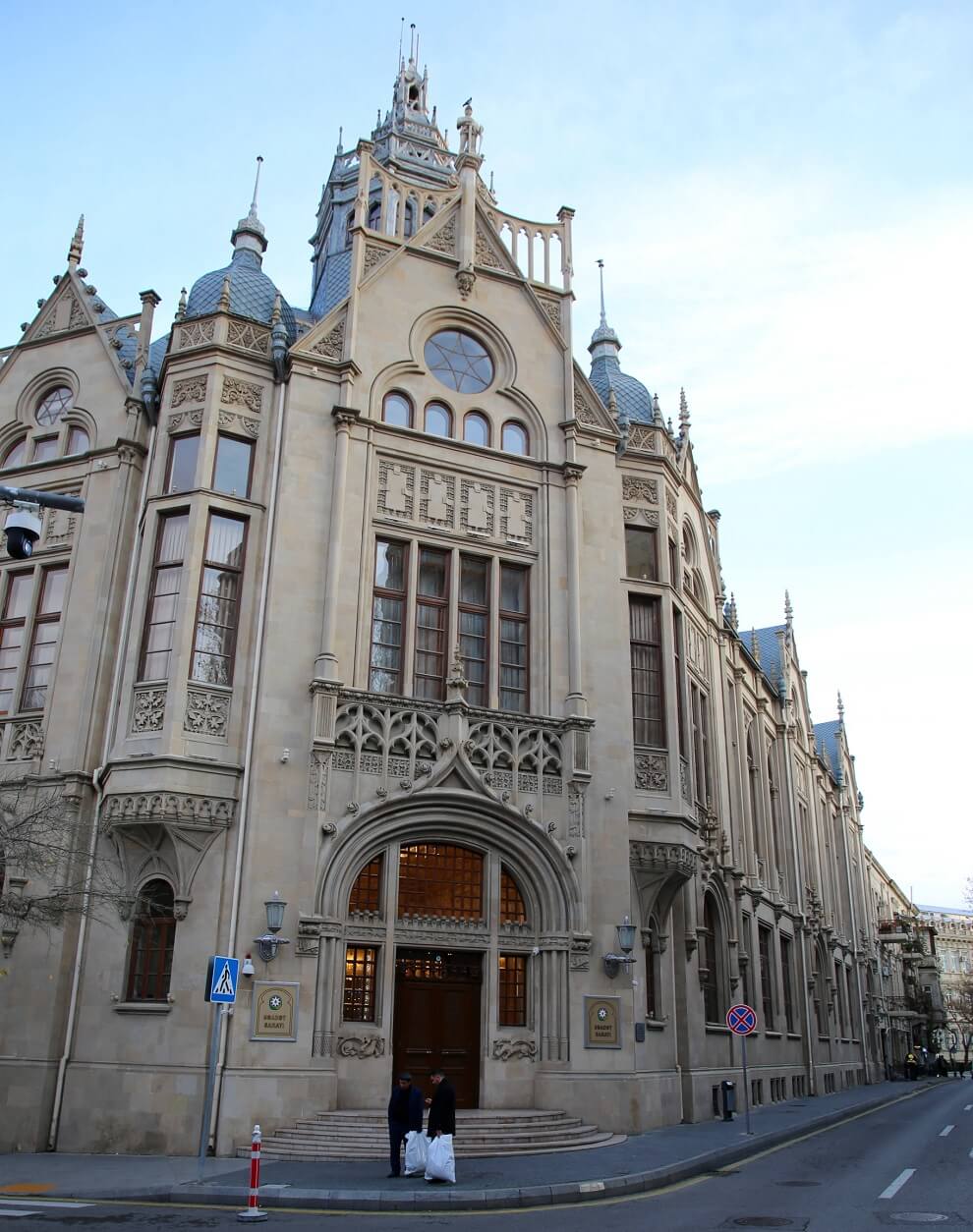
Palace of Happiness Registry Office
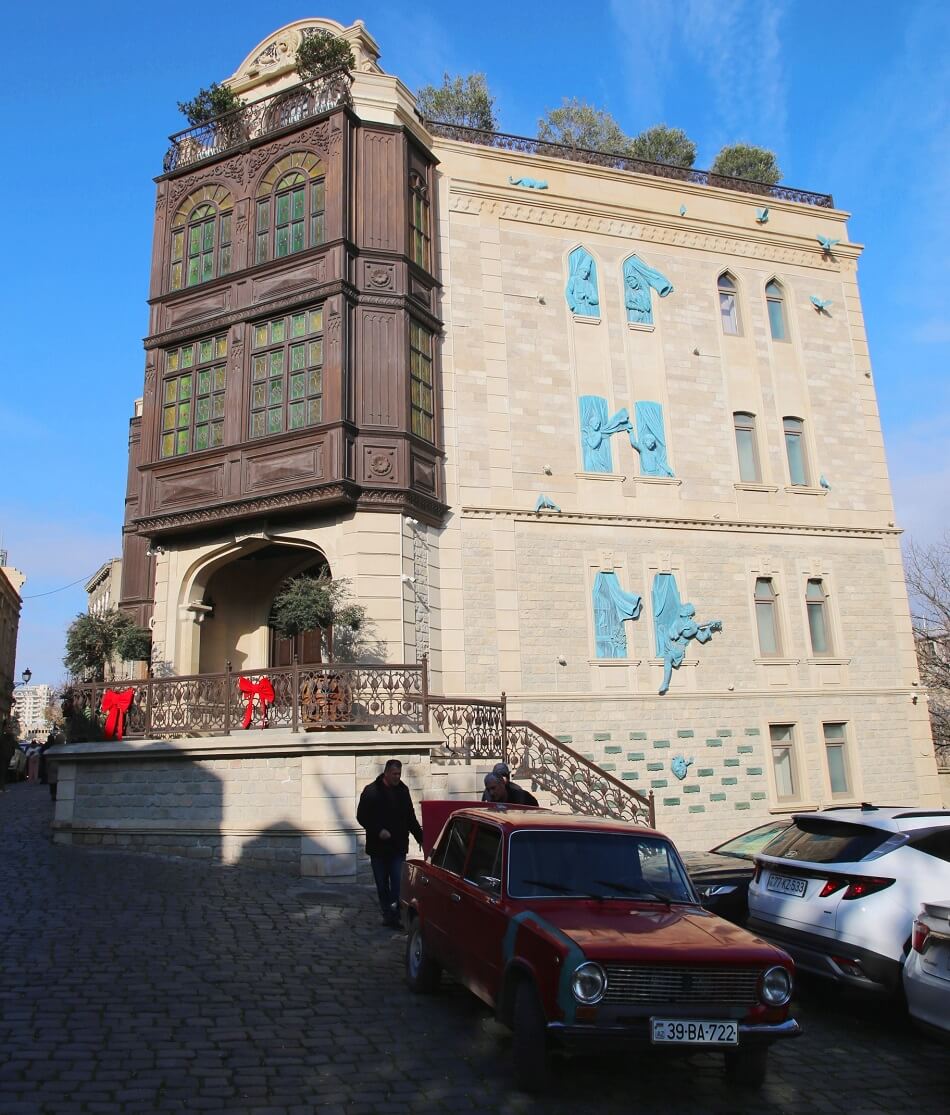
The Mukhtarov Palace (Azerbaijani: Mukhtarovun evi) is a building on Murtuza Mukhtarov Street. Built in 1911–1912 with funds from the oil industrialist, millionaire, and philanthropist Murtuza Mukhtarov, the palace was designed by Iosif Ploshko. During the early years of Soviet rule, the palace housed the Liberated Turkish Women’s Club, and later the Wedding Palace. Today, the palace is one of Baku’s most remarkable architectural structures.
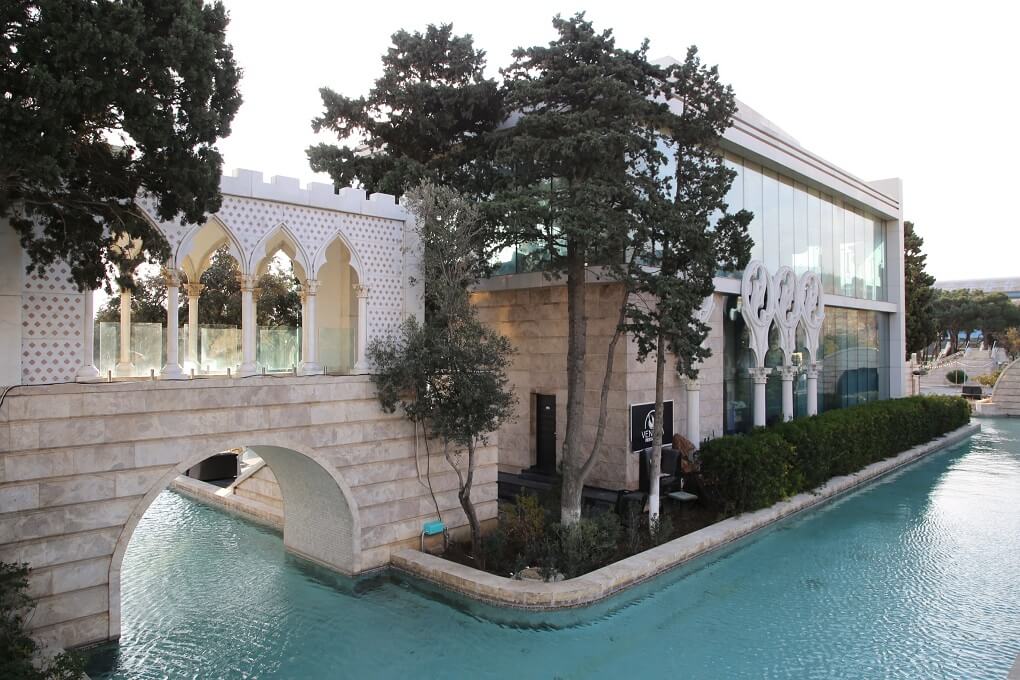
Little Venice
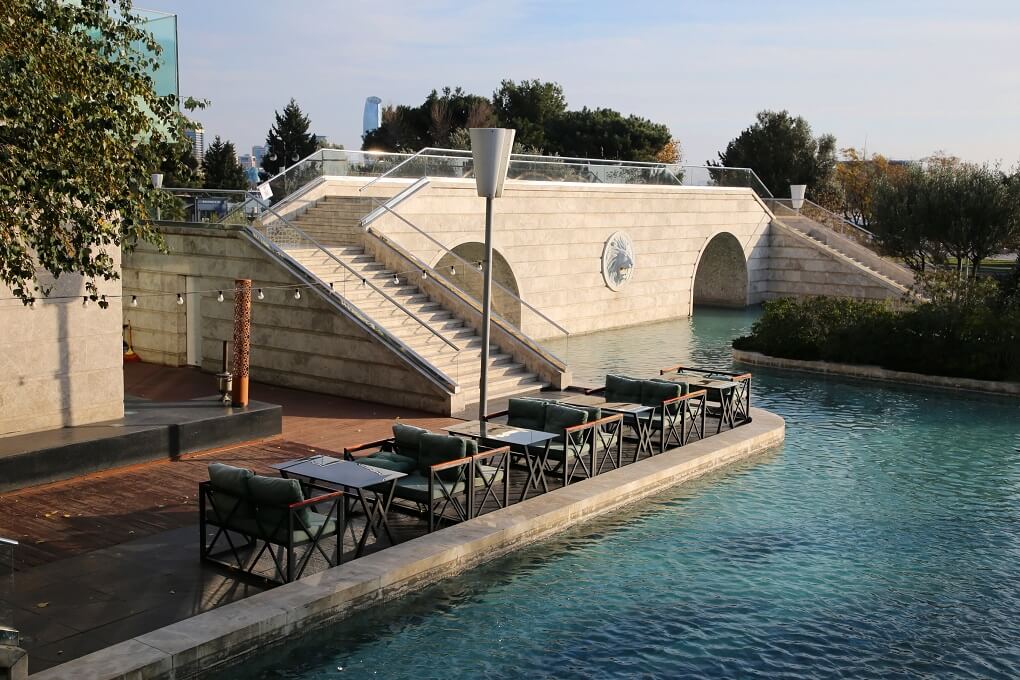
Little Venice (Azerbaijani: Kiçik Venesiya) is a system of recreational waterways located within the seaside boulevard. Little Venice has existed since 1960 and is a landmark of the seaside park, considered a favorite recreation spot for park visitors. The total length of the Little Venice canals is 1,350 meters, their depth is 1.3 meters, and 7,000 cubic meters of water are used to fill the canals. It’s area is 9,740 square meters.
State Opera and Ballet Theater
The Azerbaijan State Academic Opera and Ballet Theatre (Azerbaijani: Axundov adına Azərbaycan Dövlət Akademik Opera və Balet Teatrı) is an opera house in Baku. Formerly known as the Mailov Theatre, the theatre was built in 1911 according to the designs of the Armenian architect Nikolay Bayev.
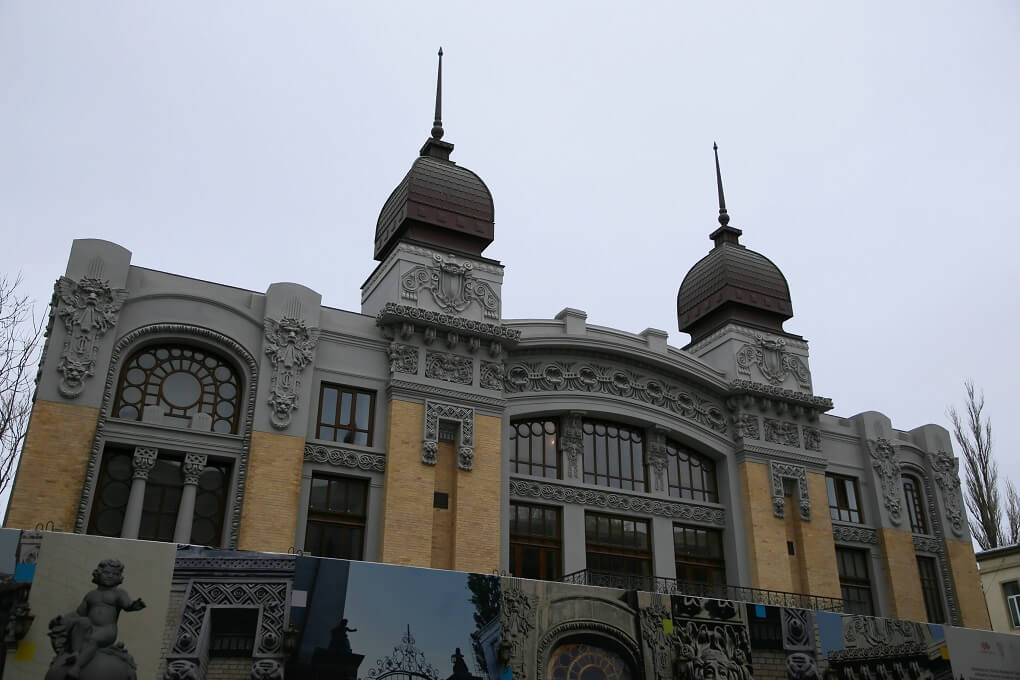
Russian Drama Theater
The Azerbaijan State Russian Drama Theater named after Samad Vurgun is a theatrical institution. It specializes in staging plays in Russian. The repertoire is based on works of Russian literature and art, as well as Azerbaijani and European classics.

Government House
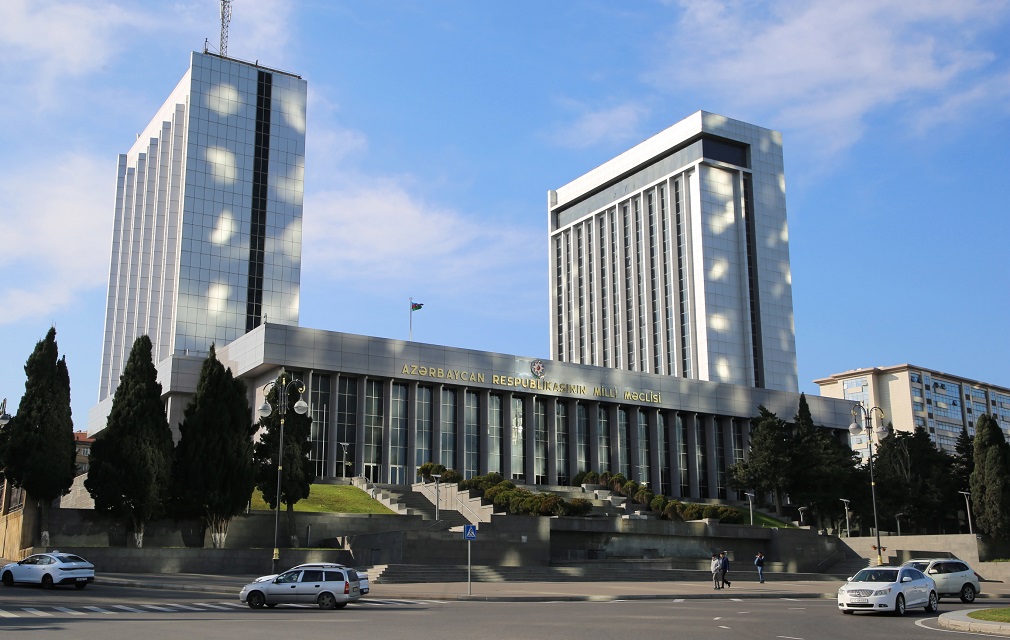
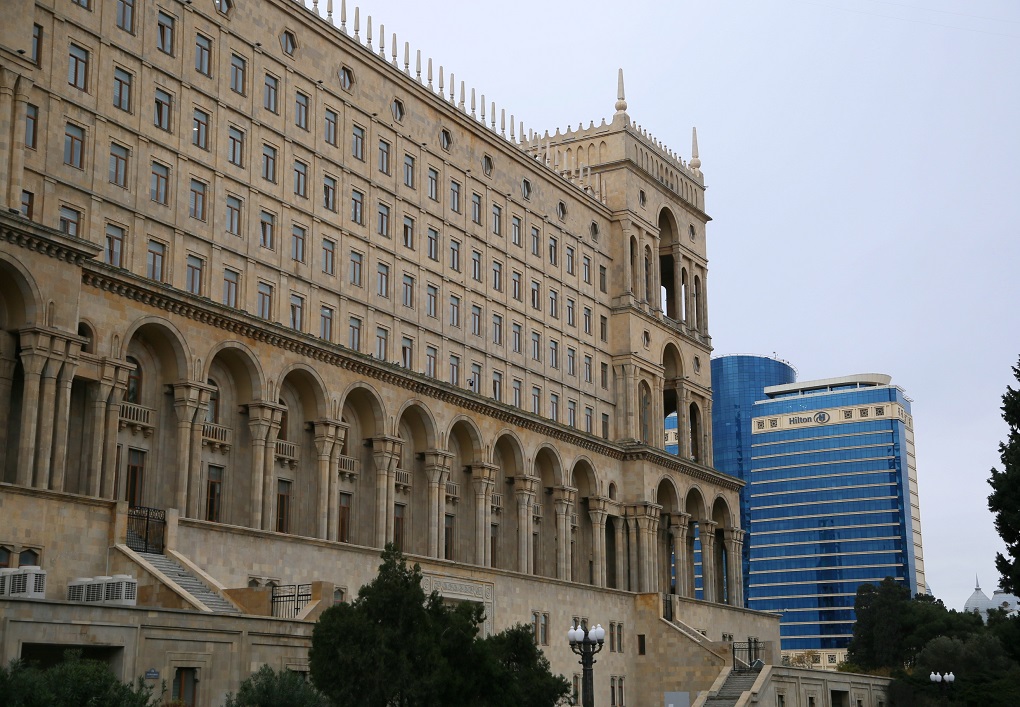
The Government House of Baku, also known as the House of Government, is a government building housing various state ministries of Azerbaijan. It is located on Neftchiler Avenue and faces the Baku Boulevard. The rear side of the building faces the busy Uzeyir Hajibeyov Street in central Baku. Government House was designed for 5,500 people.
National Art Museum
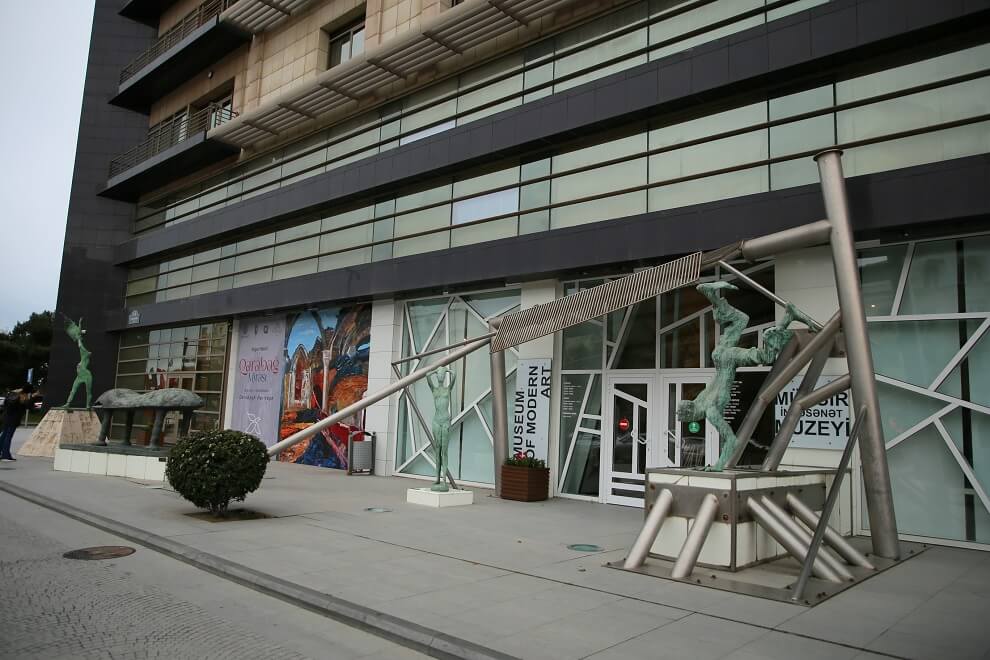
The National Museum of Art of Azerbaijan is the largest fine arts museum in the country, housing over 17,000 works. Founded in 1936, it was named after the outstanding theater designer Rustam Mustafayev in 1943.
The museum occupies two historic buildings in Baku, built in the late 19th century. Its halls display works by Azerbaijani masters, as well as works of art from Western Europe, Russia, and the East. The museum’s exhibitions have been exhibited abroad numerous times, including in Canada (1966), Cuba (1967), Syria (1968), France (1969), Czechoslovakia (1970), Algeria (1970), and Iraq (1971).
Museum of Modern Art
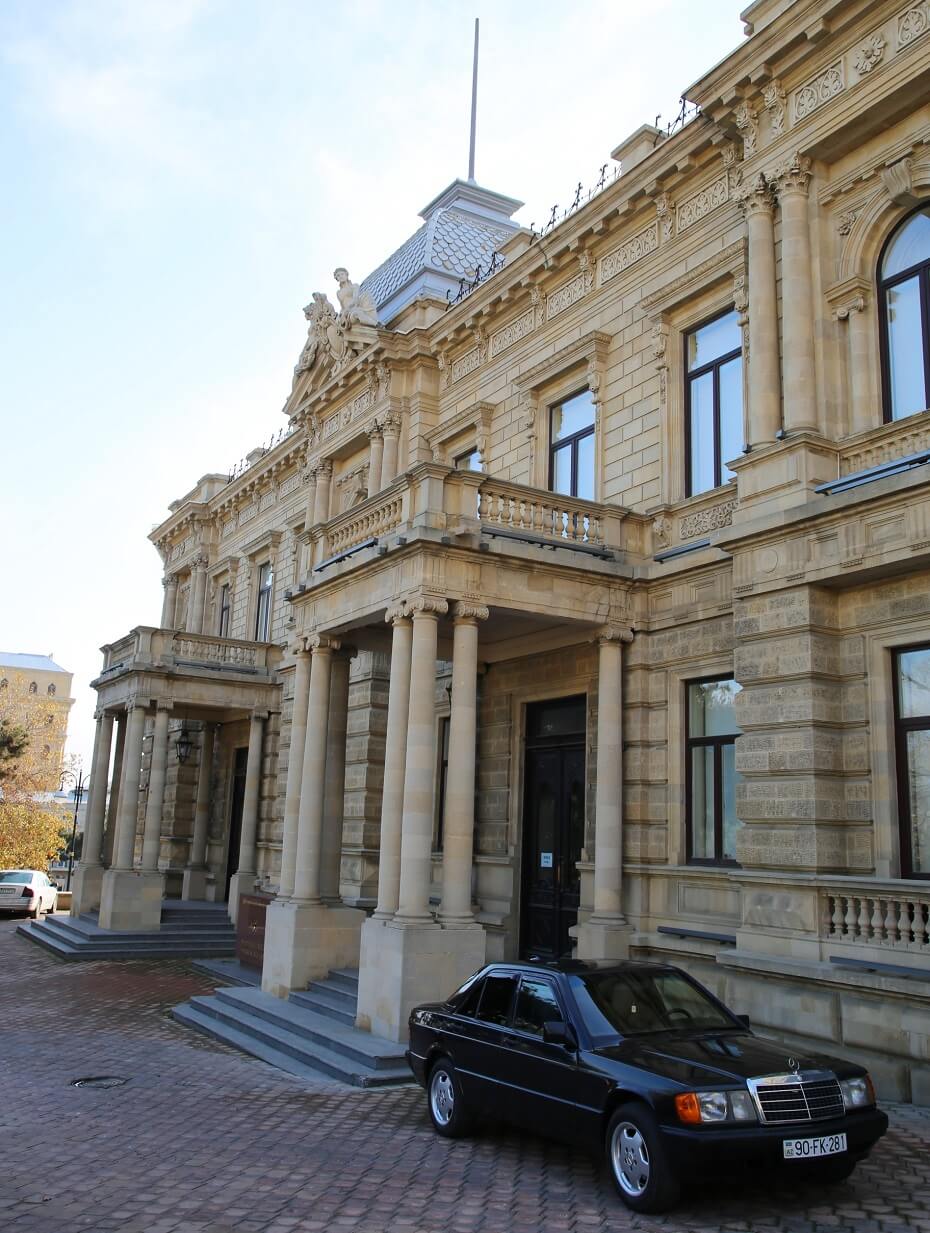
The Baku Museum of Modern Art opened in 2009. Its collection currently includes over 800 works by Azerbaijani artists and sculptors. The core of the exhibition is comprised of works by 20th-century avant-garde artists such as Tahir Salahov, Sattar Bahlulzade, and Nadir Abdurakhmanov.
The museum regularly hosts temporary exhibitions, lectures, and conferences.
Heydar Aliyev Palace
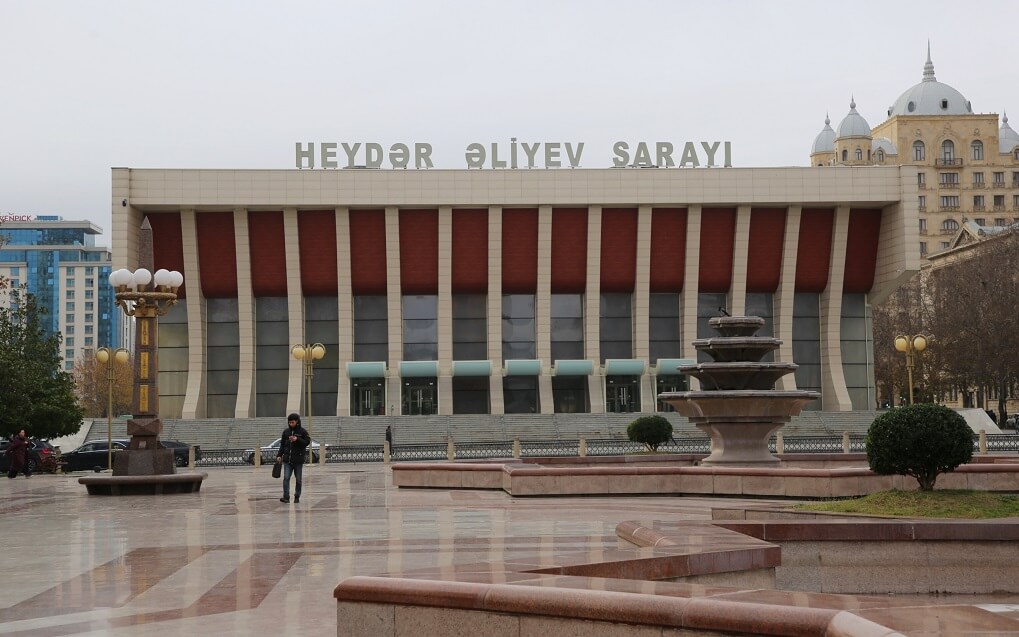
Heydar Aliyev Palace (Heydər Əliyev Adına Saray), also known as Baku Palace, Republic Palace and during the Soviet era known as Lenin Palace, is the main music venue of Baku, seating 2,500 people. The palace was renamed after the death of Azerbaijani President Heydar Aliyev in 2003. Alish Lemberanskiy was the designer and main visioner of the palace.
It is a concert complex where state events are held alongside cultural programs. The concert hall of the palace is considered to be the biggest scene in the republic.
Miniature Books Museum
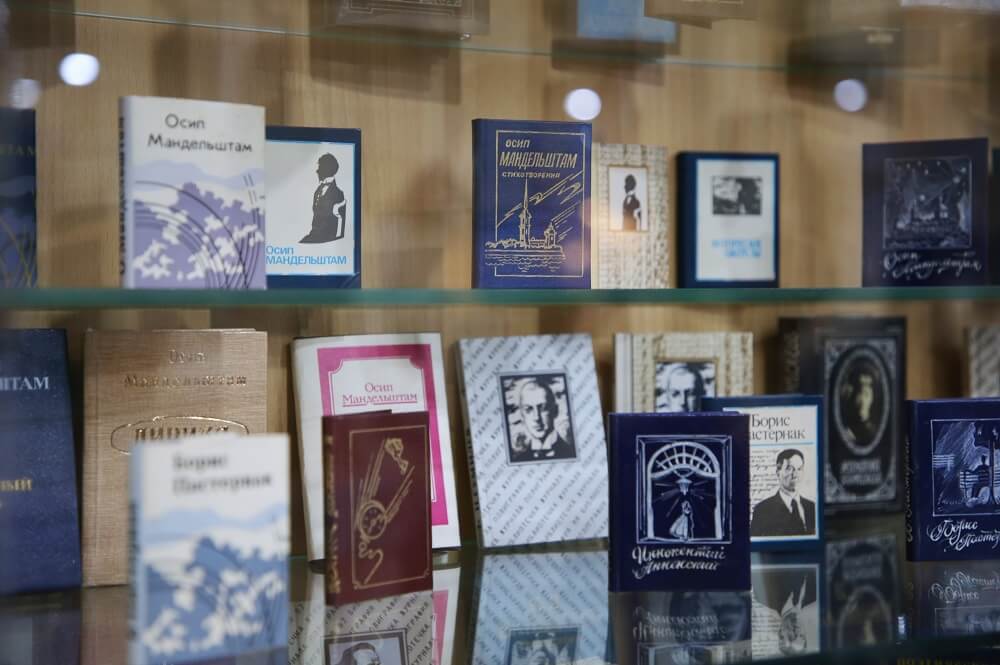
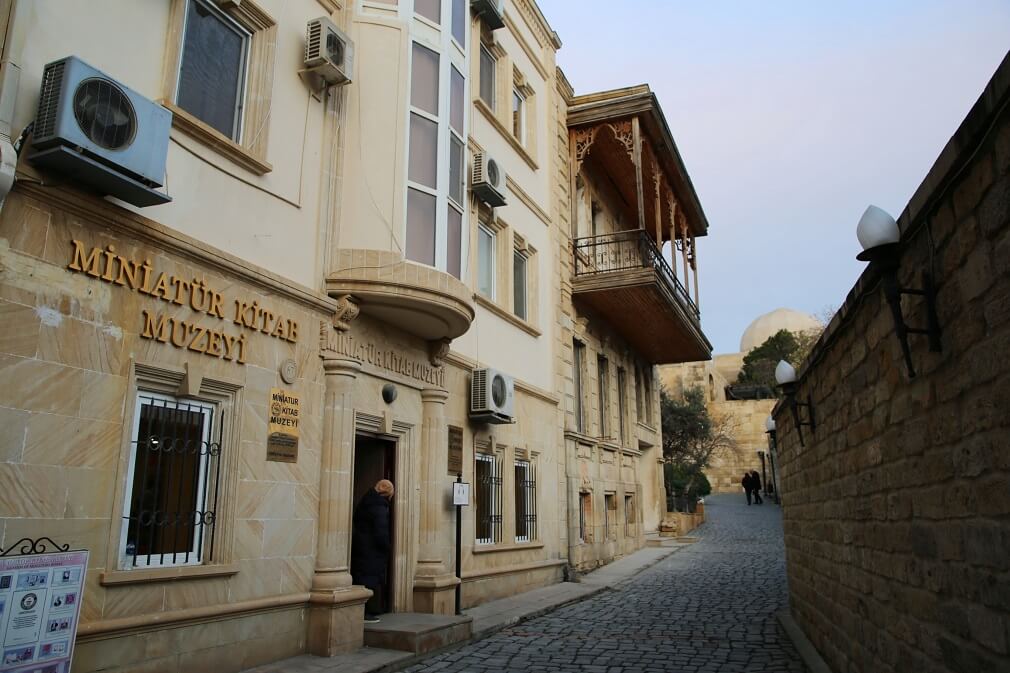
An unusual museum of miniature books has been operating in Baku for two decades. From 2014 to 2016, it was even listed in the Guinness Book of Records for housing the world’s largest collection of such books. Today, the collection comprises approximately 10,000 items from more than 80 countries. By Soviet standards, a miniature book was defined as one no larger than 100×100 mm. The museum displays both scientific works and works of fiction, including famous classic novels in miniature format. Particularly impressive are the microbooks, less than a centimeter in size, which are impossible to read without a magnifying glass.
State Philharmonic
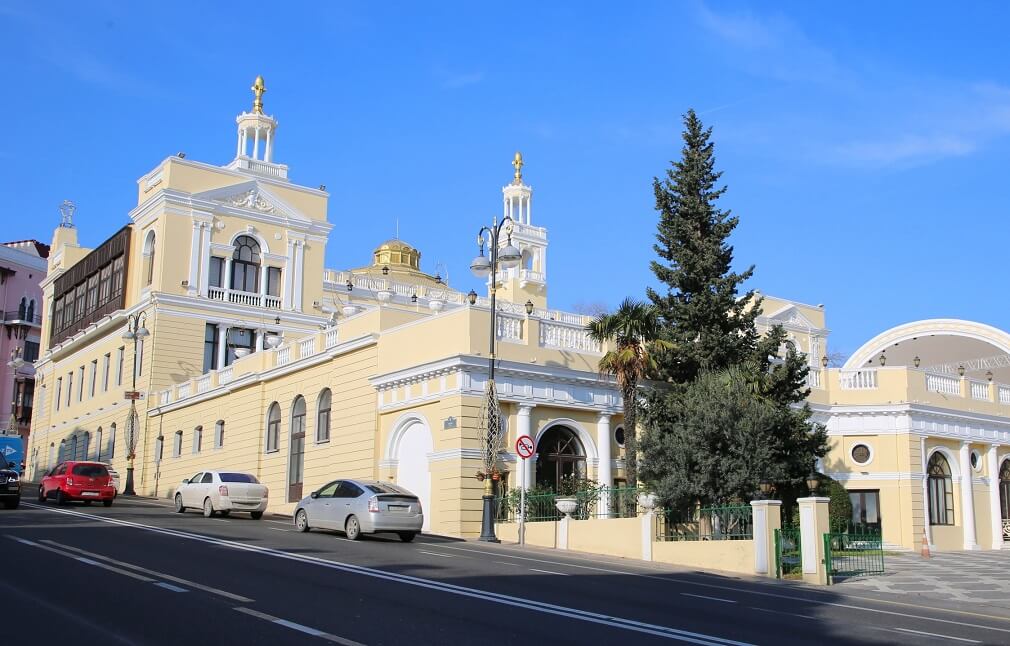
The Muslim Magomayev Azerbaijan State Philharmonic (Azerbaijani: Müslüm Maqomayev adına Azərbaycan Dövlət filarmoniyası) is a cultural institution. From 1912 to 1920, the Philharmonic building served as the summer club of the Baku Public Assembly. This architectural monument is one of Baku’s most important landmarks.
In 1830, when the Baku Fortress remained an important defensive structure, its commandant, Roman von der Hoven, proposed creating a garden near its walls. For a long time, this garden was accessible only to nobles and other members of high society, while ordinary people could visit it only once a week. Over its long history, the garden has changed names several times, and its current name comes from the Philharmonic Hall, which opened next to it in 1936.
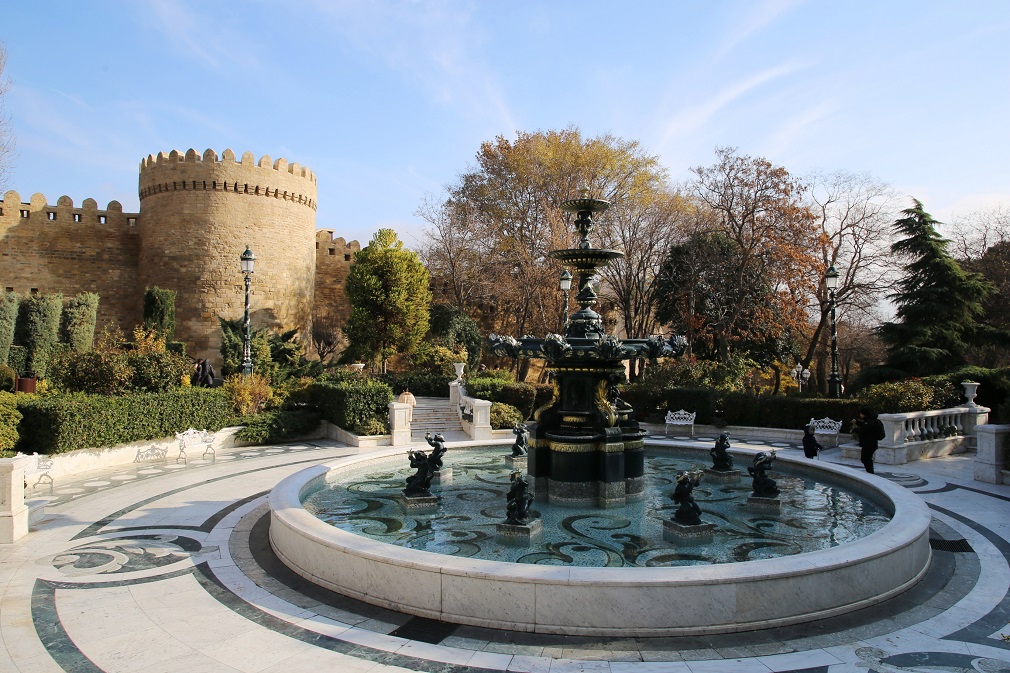
National Museum of History of Azerbaijan
The National Museum of History of Azerbaijan (Azerbaijani: Milli Azərbaycan Tarixi Muzeyi) is the largest museum in Azerbaijan. The museum is housed in a historic building that belonged to the Azerbaijani oil magnate and philanthropist Zeynalabdin Taghiyev. It was founded in 1920 after the Russian capture of the city and opened to visitors in 1921.
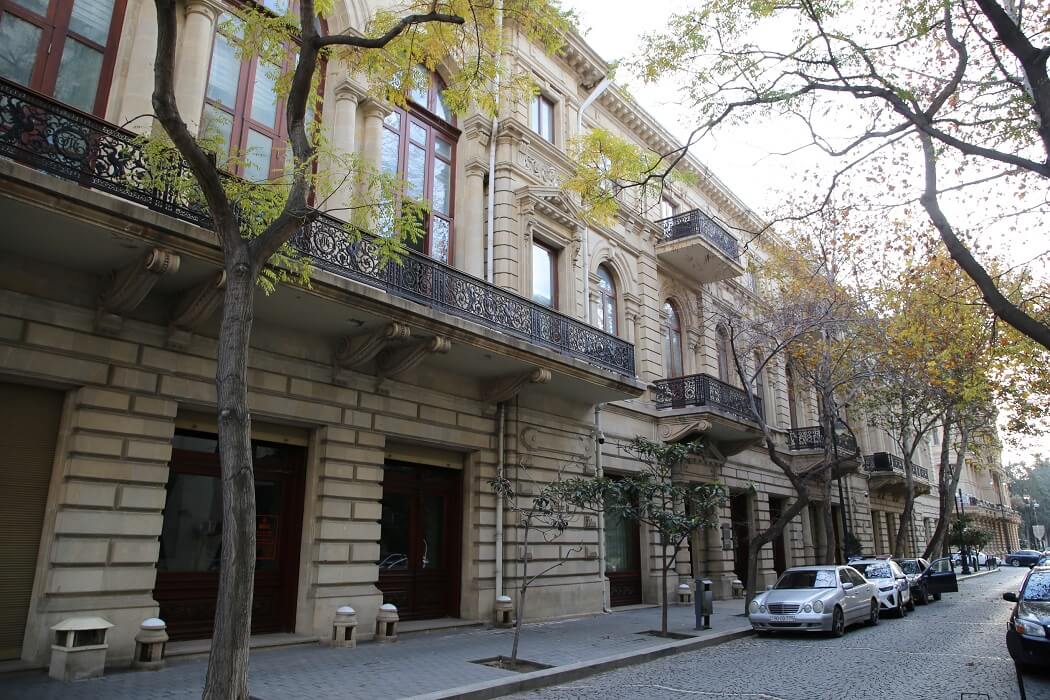
TV Tower
The Baku TV Tower (Azerbaijani: Bakı Televiziya Qülləsi) is a 310-meter-tall structure in Baku. It is the tallest structure in Azerbaijan and the 41st tallest television tower in the world.
The complex was designed by the State Design Institute of the USSR Ministry of Communications based on a decree of the Council of Ministers of the USSR and commissioned by the Ministry of Communications of the Azerbaijan SSR.
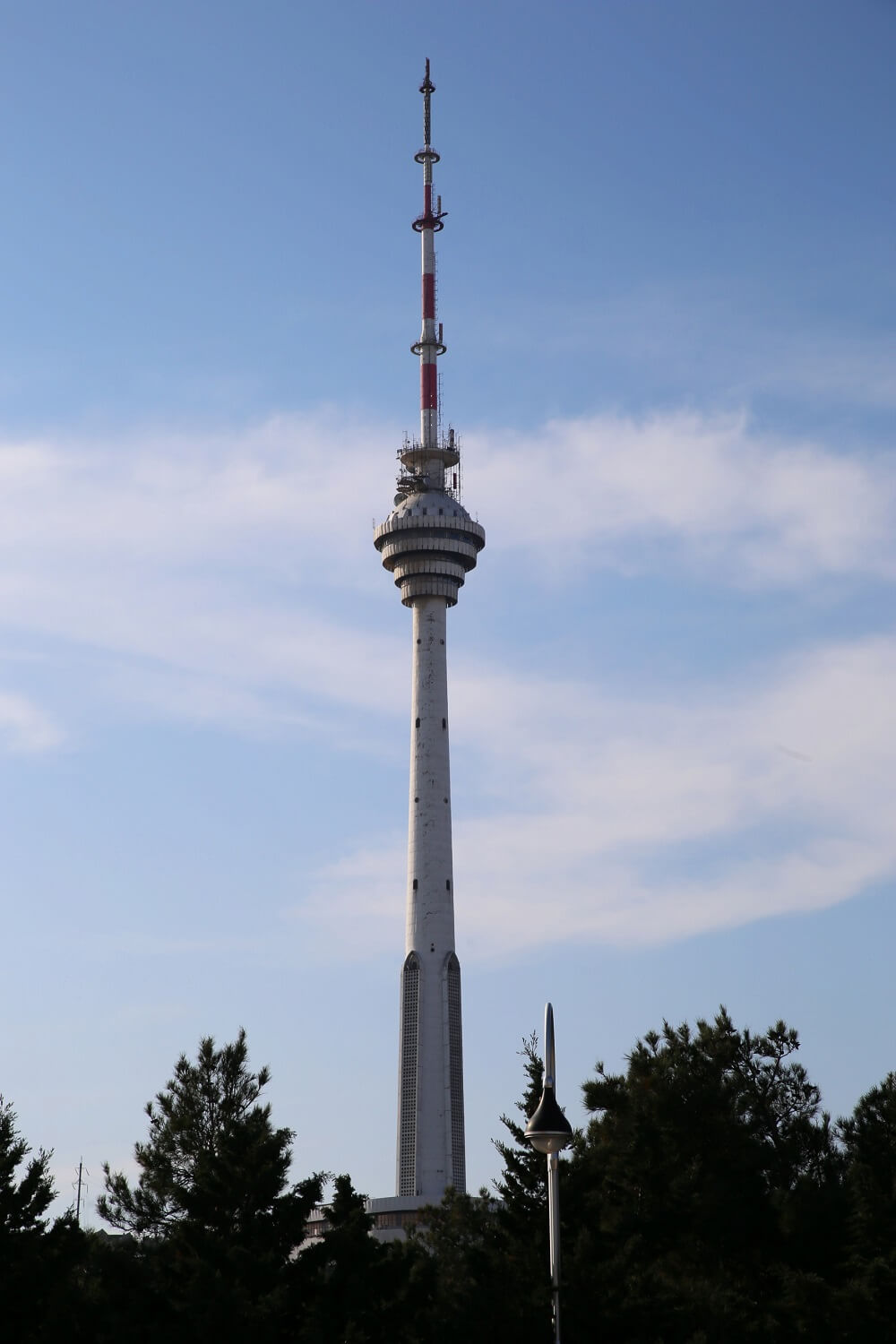
State Academic Musical Theatre
The Azerbaijan State Academic Musical Theatre (Azerbaijani: Azərbaycan Dövlət Akademik Musiqili Teatrı) is a theater located in Baku and founded in 1934.
The current building of the Azerbaijan State Academic Musical Theatre was constructed and opened in 1998. Prior to this, from 1960 to 1988, the theater was located in the building of the former Academic National Drama Theatre.
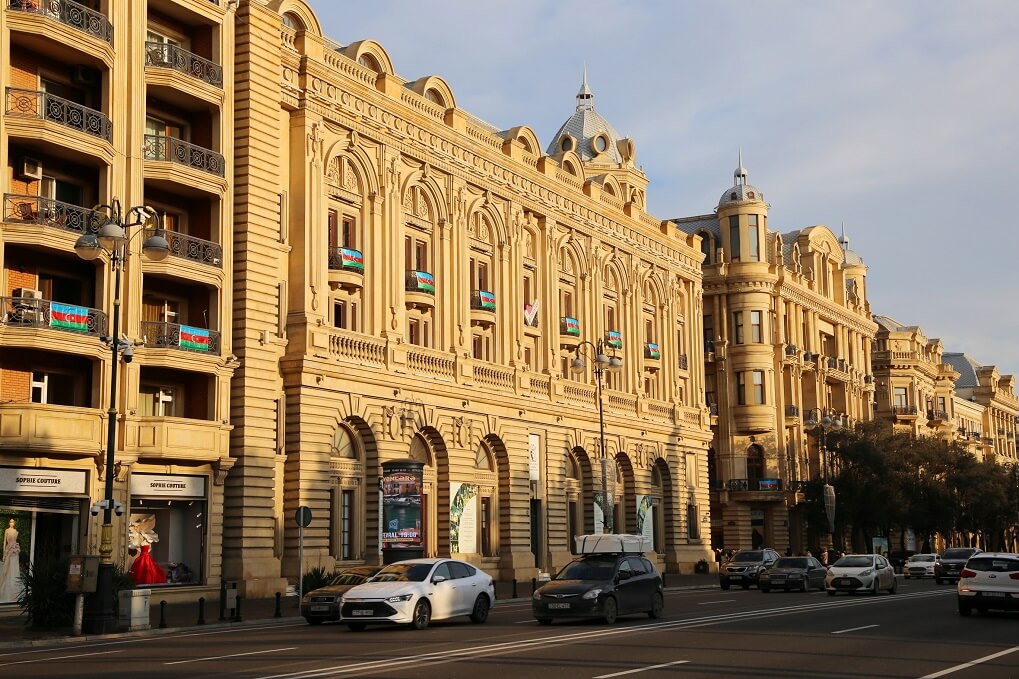
Victory Park
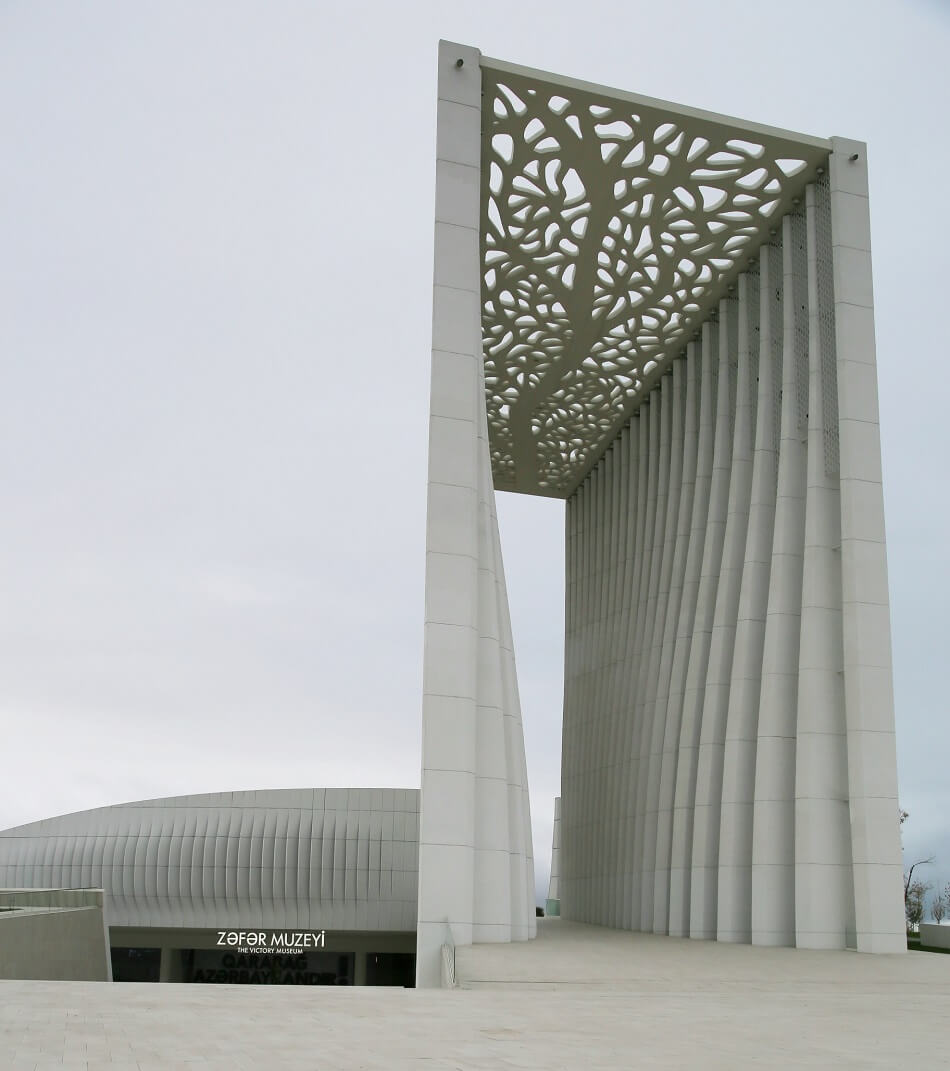
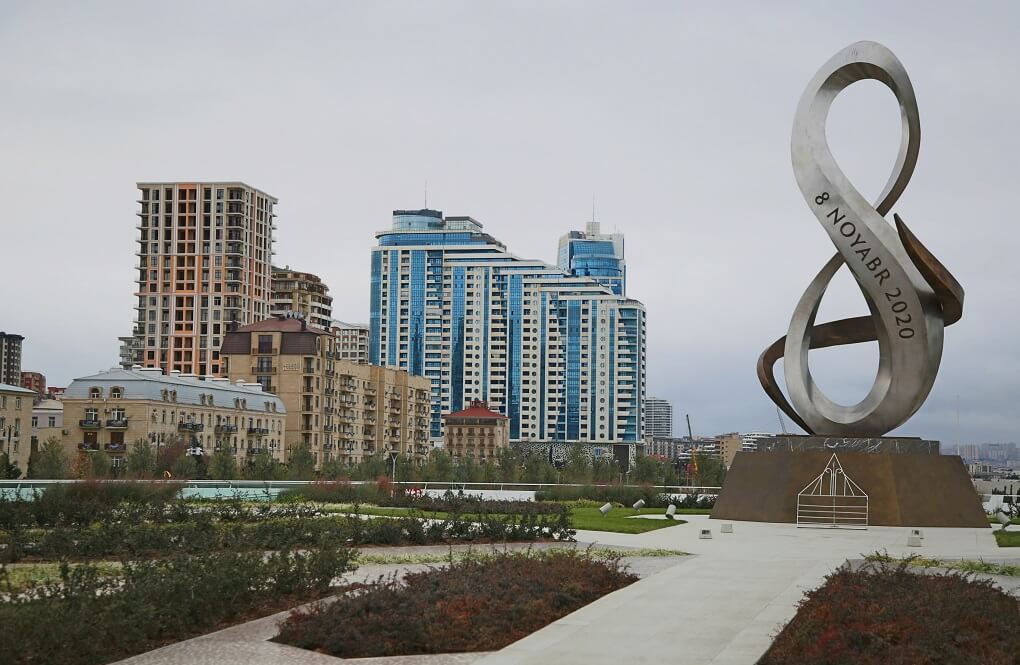
Victory Park (Azerbaijani: Zəfər Parkı) is a park in Baku. It is located in the Khatai district, on 8 November Avenue, next to the Baku Seaside Boulevard. The park is dedicated to Azerbaijan’s victory in the Second Karabakh War.
On November 8, 2024, Victory Day, the grand opening of Victory Park took place with the participation of the head of state.
On November 8, 2025, the fifth anniversary of Victory Day, the Victory Museum was opened in the park. President Ilham Aliyev participated in the ceremony. Nearby, next to the park, is a war trophy park displaying destroyed Armenian military equipment.
Museum of Azerbaijani Literature
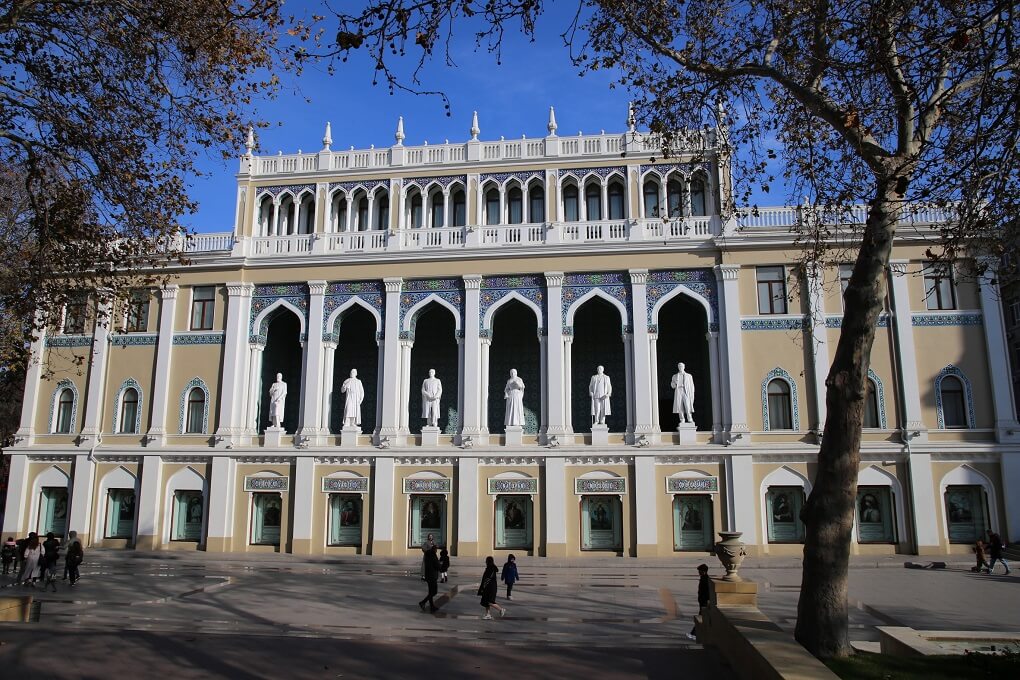
Azerbaijan has given the world many talented writers. The names of Mirza Fatali Akhundov, Nizami Ganjavi, and Huseyn Javid are known far beyond the country’s borders. The Museum of Azerbaijani Literature is a treasure trove of Azerbaijan’s spiritual culture. It preserves and promotes national literature. The museum is housed in a former caravanserai built in the mid-19th century.
Rashid Behbudov Azerbaijan State Song Theater
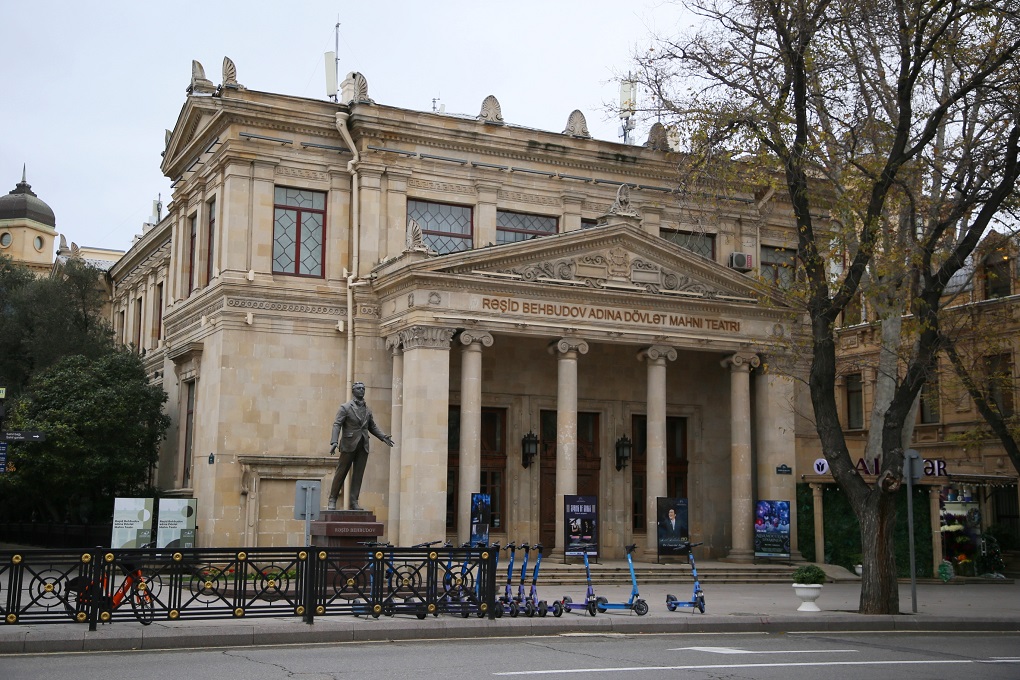
The Rashid Behbudov Azerbaijan State Song Theater was founded in 1968 by People’s Artist of the USSR Rashid Behbudov.
The theater is located in Baku, at 12 R. Behbudov Street.
The building, designed by architect I. V. Goslavsky in the Greek Revival style, was originally a synagogue and was built in 1901. A lyre graces the pediment, the side doors have been replaced with windows, and a cast-iron fence runs along Nizami Street.
Railway station
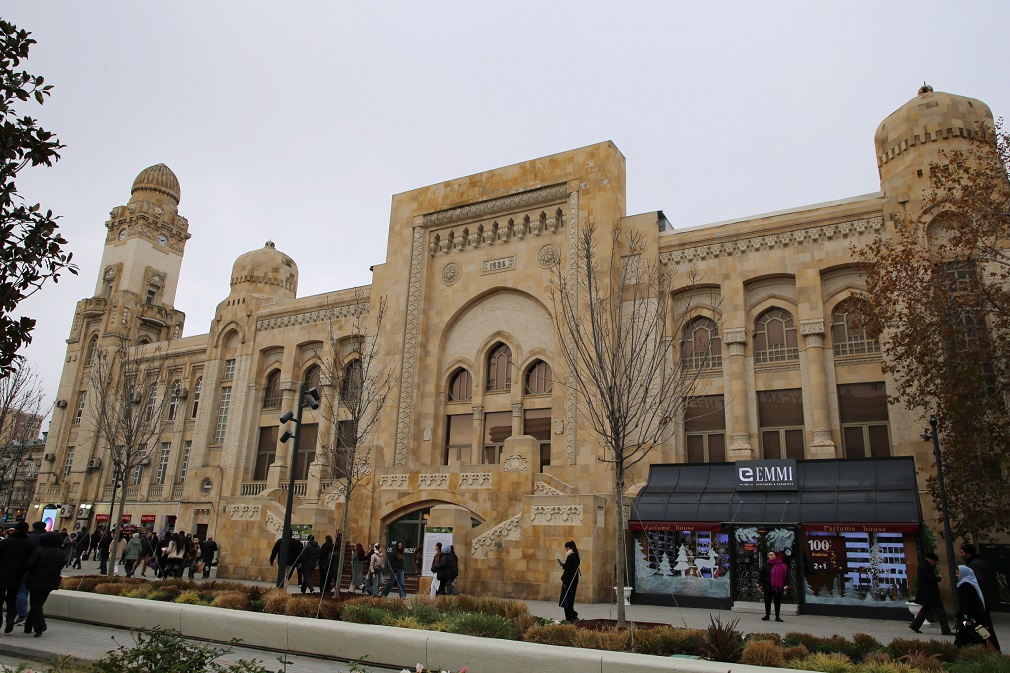
Baku Passenger Station (Azerbaijani: Bakı Dəmiryol Stansiyası) opened in 1880 along with the Baku-Sabunchu-Surakhani railway. The station was originally called Tiflis Station and is today an architectural monument.
Until 1977, the station consisted of two complexes:
- Old Tiflis Station (1883) — built during the construction of the Baku-Tiflis Railway
- Sabunchu Station (1926) — served commuter trains on the Baku-Sabunchu electrified line.
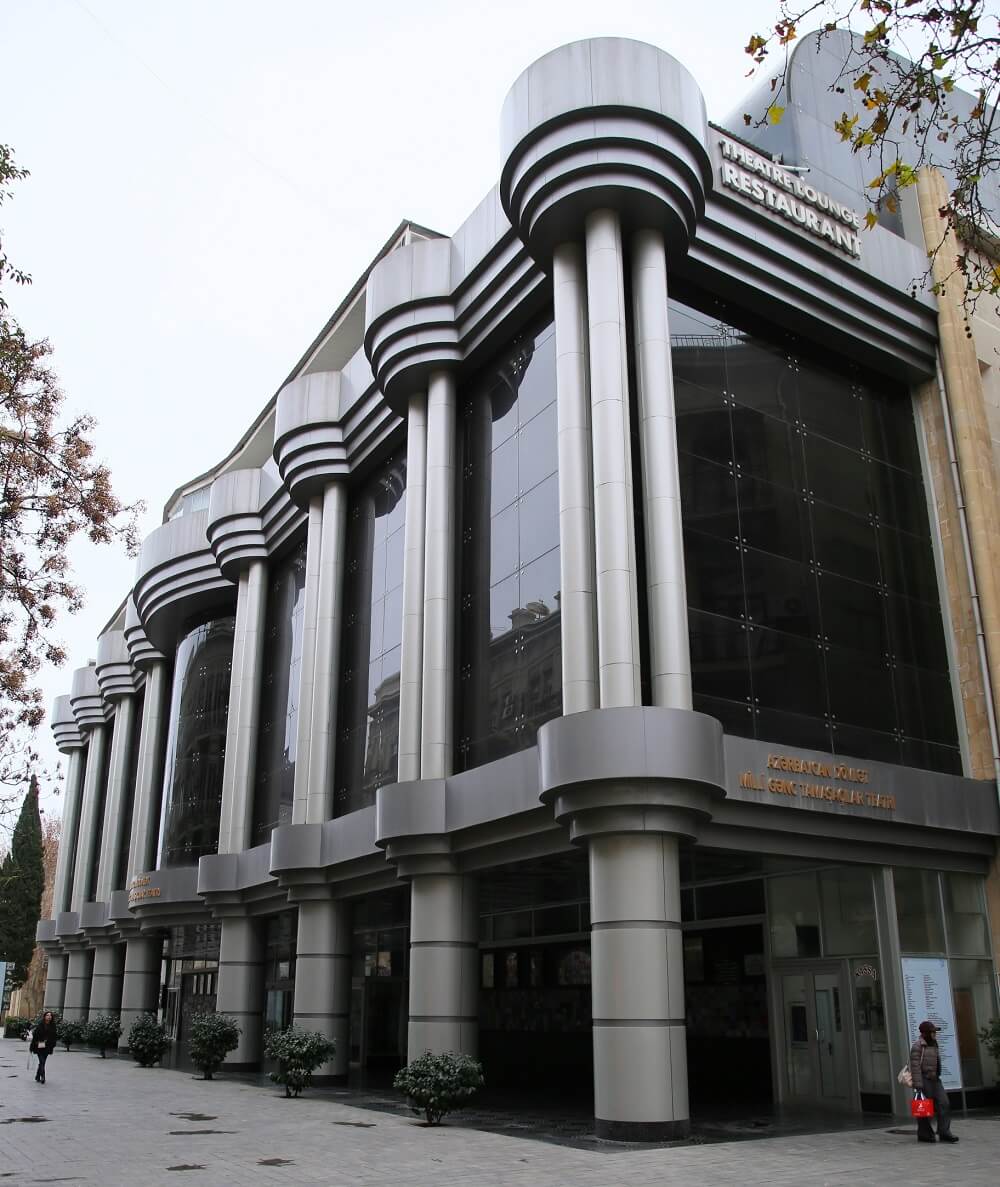
Theater for Young Spectators
The Azerbaijan State Theater for Young Spectators, located in Baku, was founded in 1928. A Russian troupe opened its doors to audiences, and in 1930, an Azerbaijani troupe joined, formed from members of the Pioneer Drama Club at the Baku Sailors’ Club.
The theater devoted its first years to staging plays by Russian classics, which were already part of the repertoire of other youth theaters in the USSR. In 1936, the theater was named after Maxim Gorky.
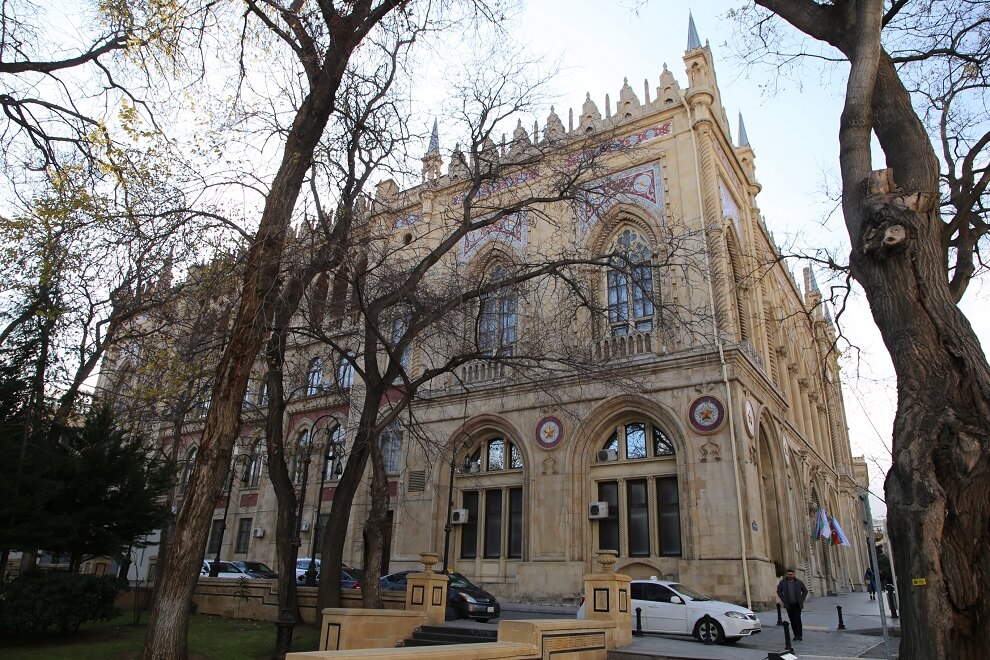
Former Ismailiya
The Ismailiya Building (Azerbaijani: İsmailiyyə binası) is the building housing the Presidium of the Azerbaijan Academy of Sciences. It is located on Istiglaliyyat Street in Baku.
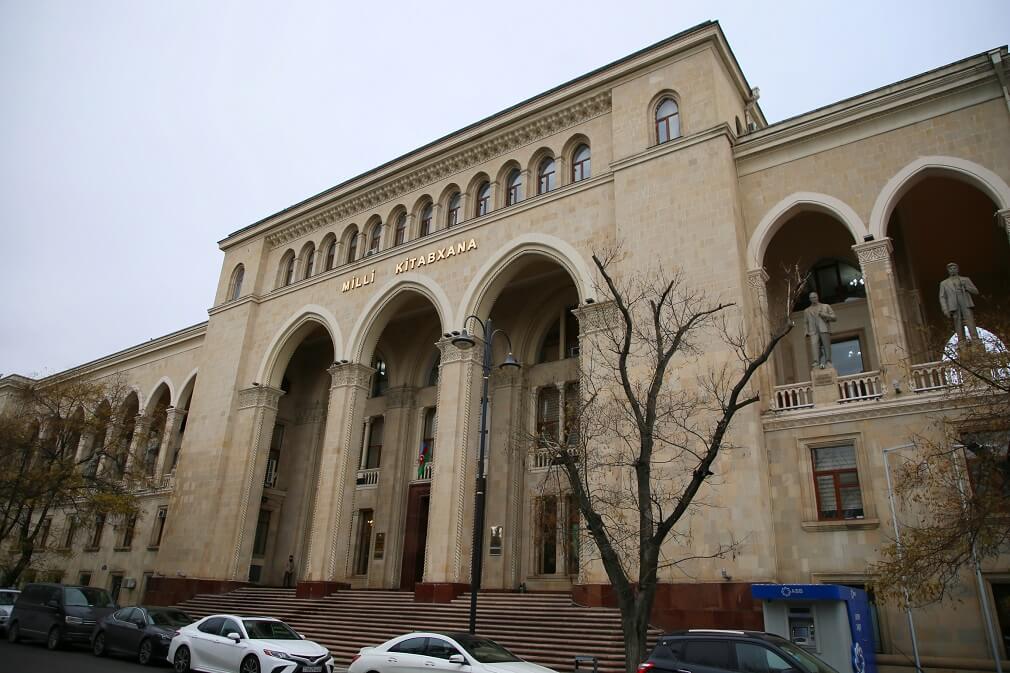
National Library
The National Library of Azerbaijan named after M. F. Akhundov is the largest library in the country. It was founded on May 23, 1923, and in 1939 was named after the Azerbaijani thinker, playwright, and publisher Mirza Fatali Akhundov. In 2005, the library was granted the status of “National Library.”
Today, the library has 25 departments and 26 sectors, and its collection contains 4,513,000 publications. It houses national books, works by Azerbaijani and foreign authors, as well as literature about Azerbaijan in foreign languages.
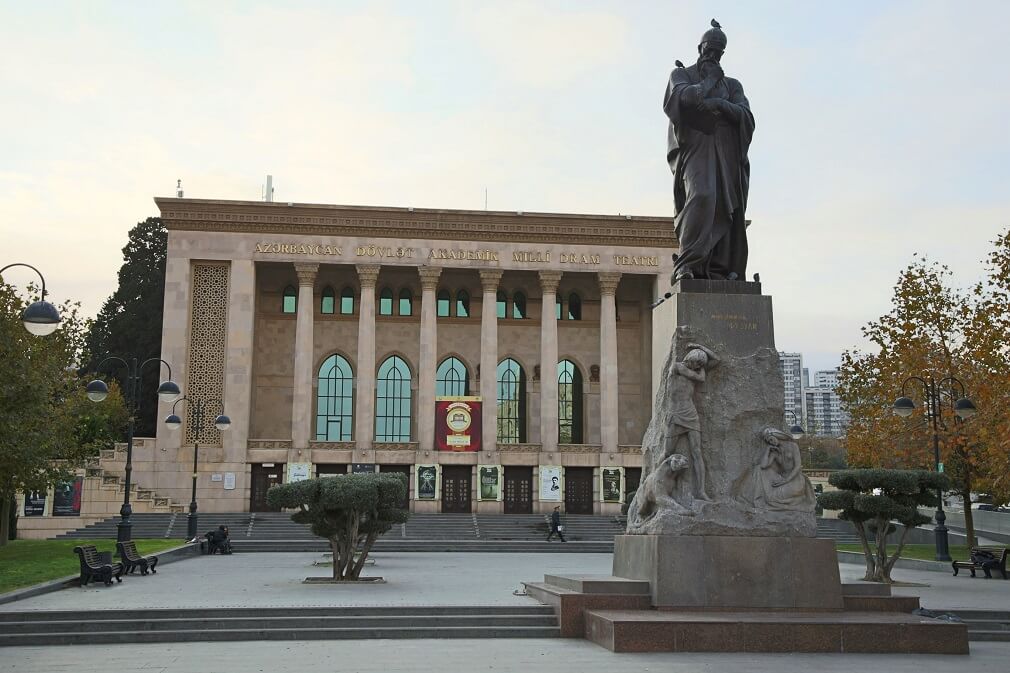
Azerbaijan State Academic Drama Theatre
The Azerbaijan State Academic Drama Theatre (Azerbaijani: Azərbaycan Akademik Milli Dram Teatrı) is an academic theatre of drama in Baku.
The theatre has its origins in national holidays and dances. Elements of theatricality were contained in many kinds of national creativity accompanying national festivities, traditional holidays and other occasions.
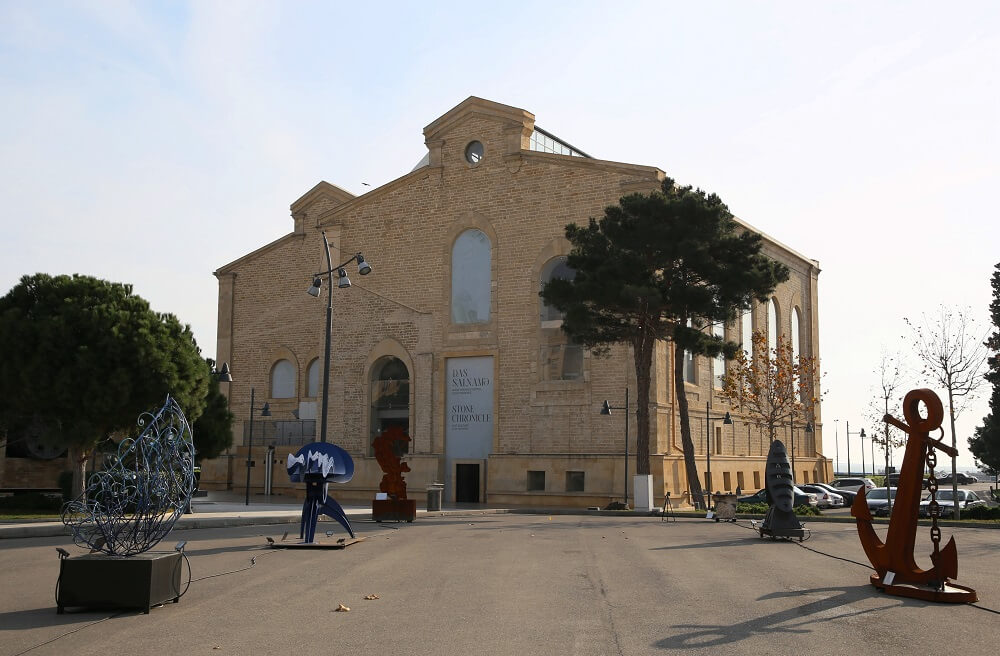
Stone Chronicle Museum
Stone Chronicle Museum is a museum dedicated to the history of stone plastics in Azerbaijan. Many types of stone plastic are exhibited in the museum. The Stone Chronicle Museum, located on the National Flag Square, was created by the Heydar Aliyev Foundation. The most archaic features of moral life in Azerbaijan were found in plastic stone traditions.
Tips for tourists
Baku is a city with a high level of security. Police patrol the city center, squares, and strategically important sites. Some buildings, including military and government buildings, as well as some museums, are closed to photography. This is due to national security requirements. The main thing is to follow the rules, pay attention to signs, and respect security guards’ requests. The city remains open and friendly.
Best Time to Visit Baku
The optimal time to visit Baku depends on personal preference and climate conditions. In summer, temperatures can exceed 30°C. Spring and fall are more favorable seasons for visiting the city. The flowering season begins in late March, reaching its peak in mid-April. In September, temperatures drop to a comfortable 24°C, ideal for walks and outdoor recreation.
Winter in Baku is characterized by mild weather, with temperatures ranging from 9°C to 13°C. Rainfall during the winter period is limited to 4–5 days per month.
Airport transfer
The international airport is located approximately 20 kilometers from Baku city center. Taxis are available, with fares starting from 15 manat (as of January 2026).
The most cost-effective option is to take the 24-hour shuttle bus that runs between the airport and the city center. The fare is 1.5 manat (as of January 2026). However, please note that cash is not accepted. To pay, you must purchase a credit card from the payment machines located at the terminal exit. Buses depart every 30 minutes during the day and every 60 minutes at night.
Administrative-territorial division
During Soviet times, Baku was divided into 47 urban-type settlements and 10 administrative districts: Nasimi, Oktyabrsky, 26 Baku Commissars, Narimanov, Shaumyan, Leninsky, Ordzhonikidzevsky, Azizbekov, and Karabakh.
Before independence and in the following years, changes occurred in Baku’s administrative division: some districts and settlements were renamed.
Today, Baku is divided into 12 rayonlar (sub-rayons) and 5 settlements of city type.
- Binagadi (Binəqədi) raion
- Garadagh (Qaradağ) raion
- Khatai (Xətai) raion
- Khazar (Xəzər) raion
- Narimanov (Nərimanov) raion
- Nasimi (Nəsimi) raion
- Nizami raion
- Pirallahi (Pirallahı) raion
- Sabail (Səbail) raion
- Sabunchu (Sabunçu) raion
- Surakhani (Suraxanı) raion
- Yasamal raion
Transport
Heydar Aliyev Airport (ICAO: UBBB, IATA: GYD) is one of seven international airports serving Azerbaijan.
Currently, long-distance trains arrive at the Baku Railway Station. Following the opening of the Baku-Tbilisi-Kars corridor, routes to Kars and Istanbul are planned.
The Baku Metro (Azerbaijani: Bakı metropoliteni) is a form of underground public transportation in Baku. Currently, the metro has 26 stations, with a total length of 38.8 km.
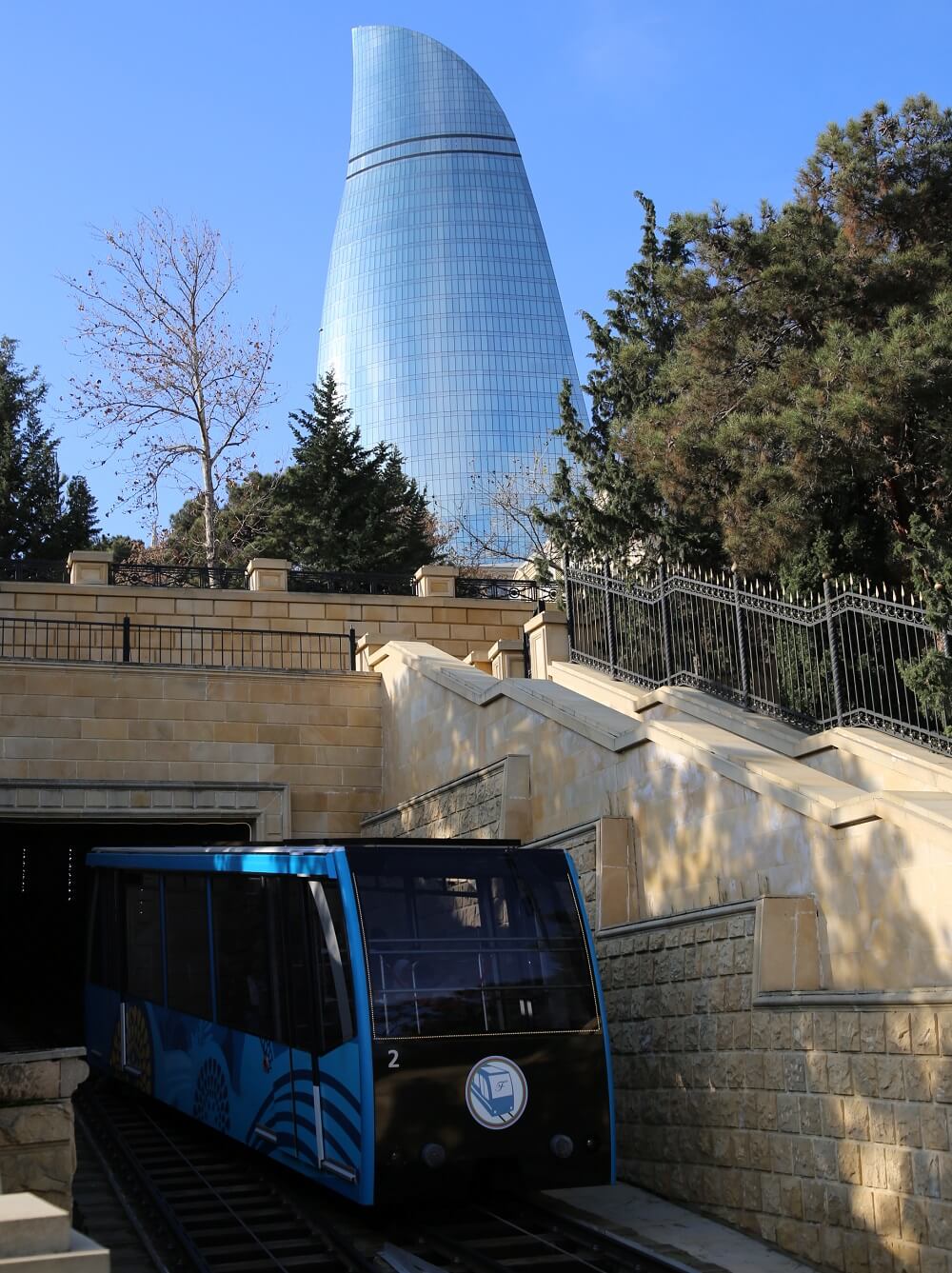
In 1960, a funicular system opened in Baku, connecting the square on Neftchilar Avenue and the Upland Park. In 2012, the funicular was reconstructed and the cars were replaced.
Main information
Area: 2140 km²
Coordinates: 40°21’60.0″N 49°50’07.7″E
Population: 2 496 500 (2025)
Languages: Azerbaijani, Russian
Currency: Azerbaijani Manat (₼)
Time: UTC+4:00