


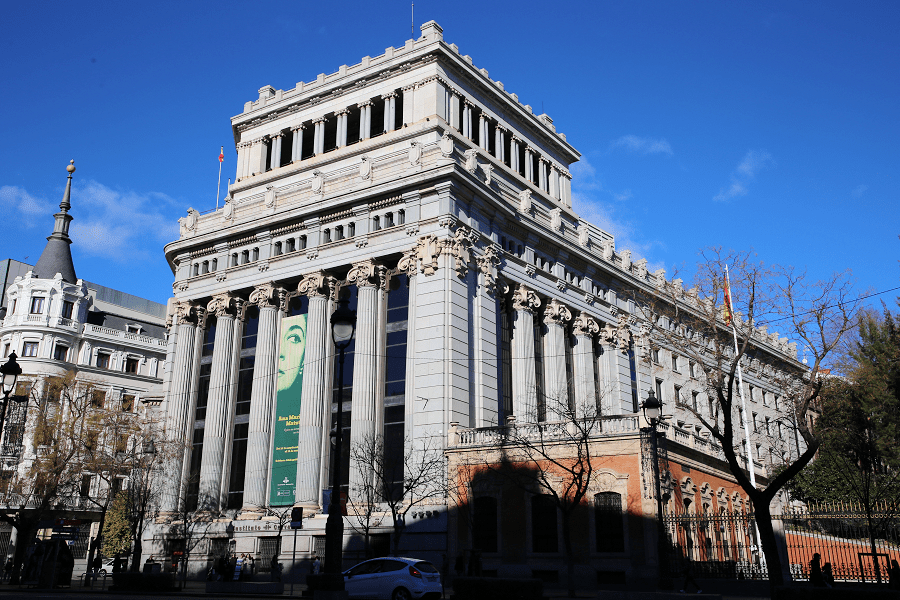
The Caryatids building (or former Banco Español del Río de la Plata) is a chamfered building located in Madrid, Community of Madrid, Spain, at number 49 on Calle de Alcalá, on the corner of Calle del Barquillo, on the site of what was previously the palace of the Marquis of Casa-Irujo (neighboring the Buenavista palace).
The name of the building is of popular origin due to the presence of its four imposing classical caryatids (columns in the shape of a woman) located on both sides of the main entrance of the building. The branch of the Banco Español del Río de la Plata (Bank of Spain) acquired this land to build its headquarters on the corner of Calle del Barquillo and Alcalá.
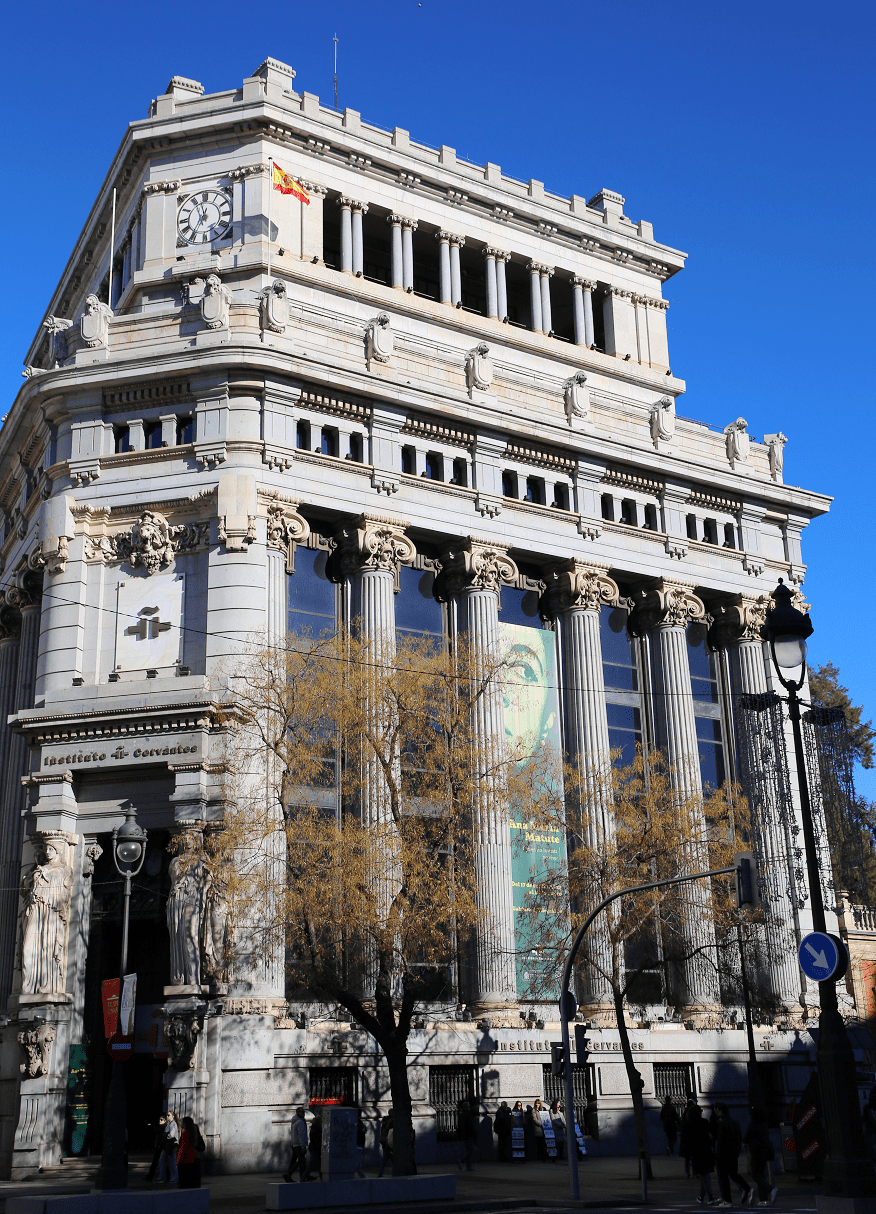
The designers and construction directors in charge of building the building in 1918 were the architects Antonio Palacios Ramilo and Joaquín Otamendi Machimbarrena. The building underwent subsequent extensions and modifications, which make it slightly different from the current one. Similarly, the building has changed its name as it has changed owners: headquarters of the Banco Español del Río de la Plata, then of the Banco Central, later of the Banco Central Hispano and the Instituto de Crédito Oficial. Eclectic style building of monumental character: Greek neoclassicism (Neogreego). Since October 2006 it has been the headquarters of the Instituto Cervantes.

Instituto Cervantes
Instituto Cervantes is a worldwide nonprofit organization created by the Spanish government in 1991. It is named after Miguel de Cervantes (1547–1616), the author of Don Quixote and perhaps the most important figure in the history of Spanish literature. The Cervantes Institute is the largest organization in the world responsible for promoting the study and the teaching of Spanish language and culture.
This organization has branched out to 45 countries with 88 centres devoted to the Spanish and Hispanic American culture and Spanish language. Article 3 of Law 7/1991, of March 21, created the Instituto Cervantes as a government agency. The law explains that the ultimate goals of the Institute are to promote the education, the study and the use of Spanish universally as a second language; to support the methods and activities that would help the process of Spanish language education, and to contribute to the advancement of the Spanish and Hispanic American cultures throughout non-Spanish-speaking countries.

Madrid: full guide
- Administrative structure
- Architecture
- Churches and Cathedrals
- Entertainment
- Monuments
- Museums
- Parks and gardens
- Restaurants
- Shopping and markets
- Squares
- Streets
- Transport
See here Pyrenees travel guide
See here France travel guide
See here Spain travel guide




