

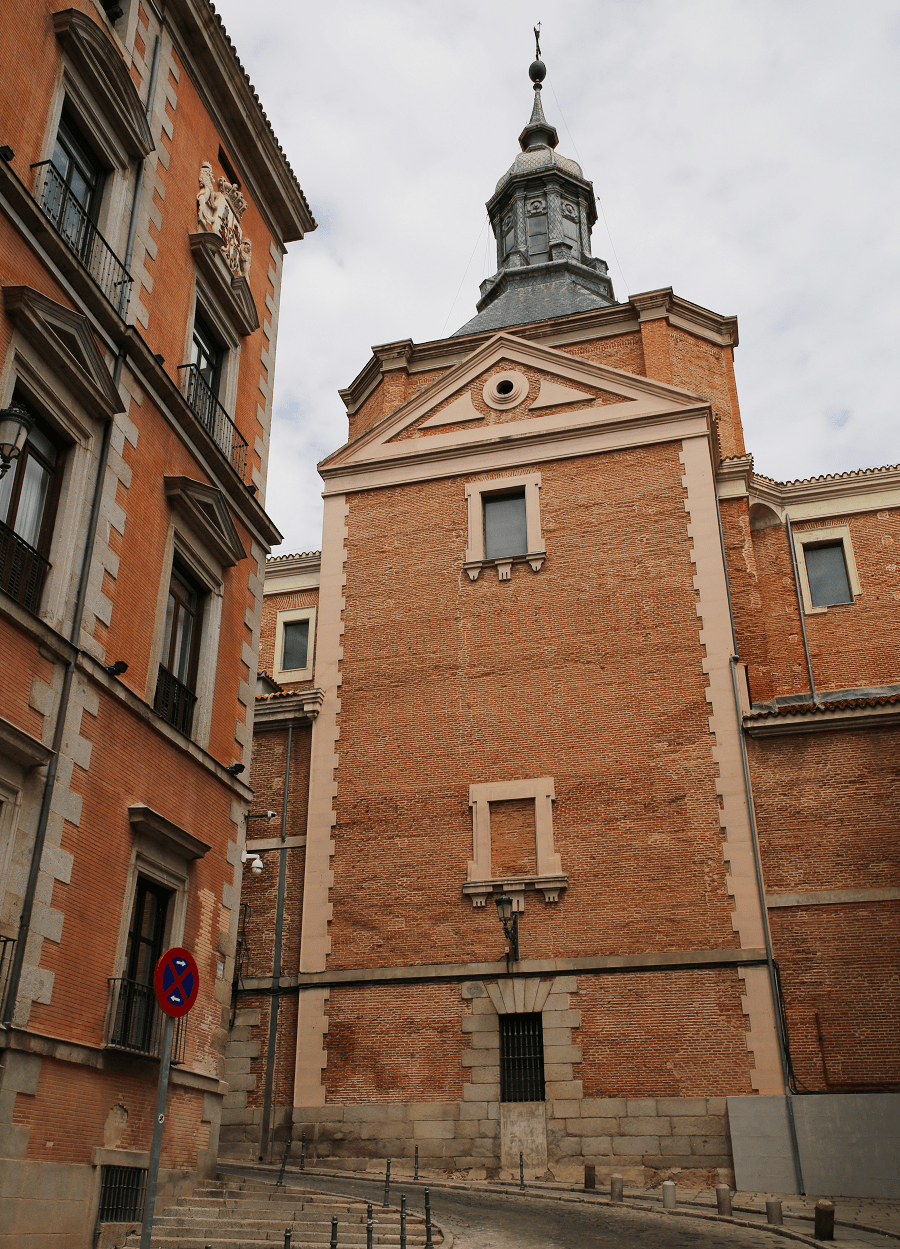
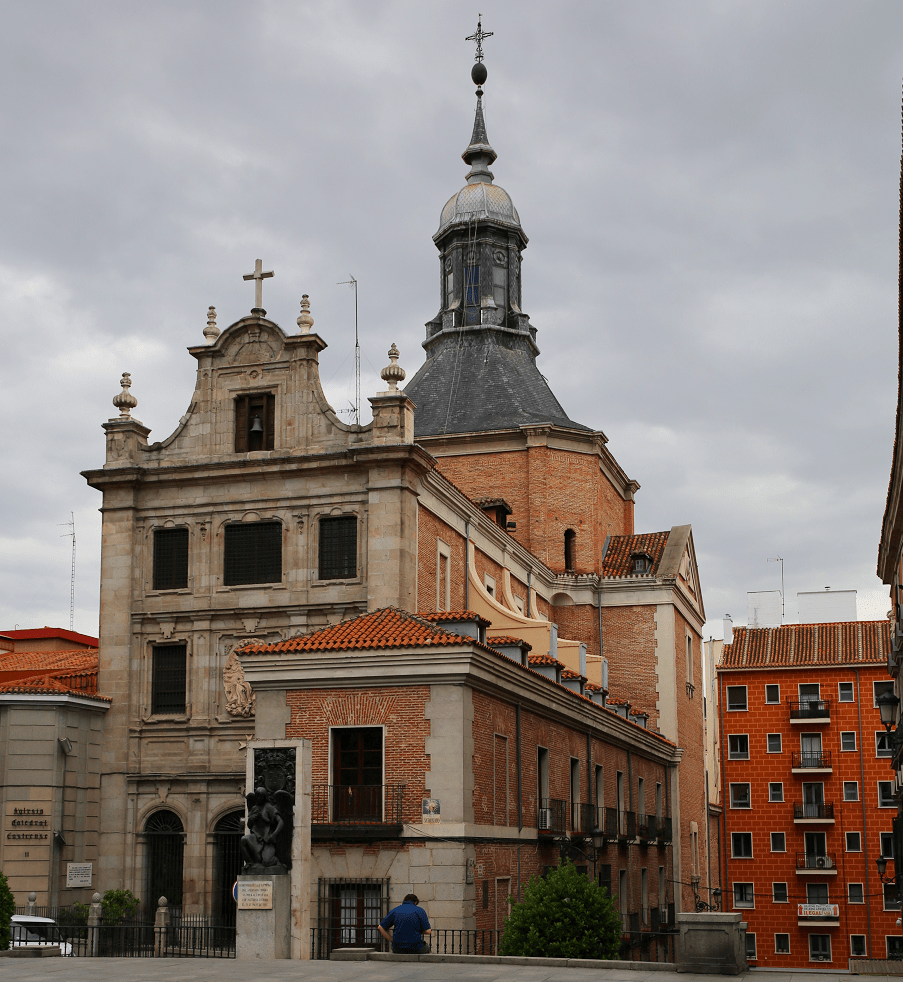
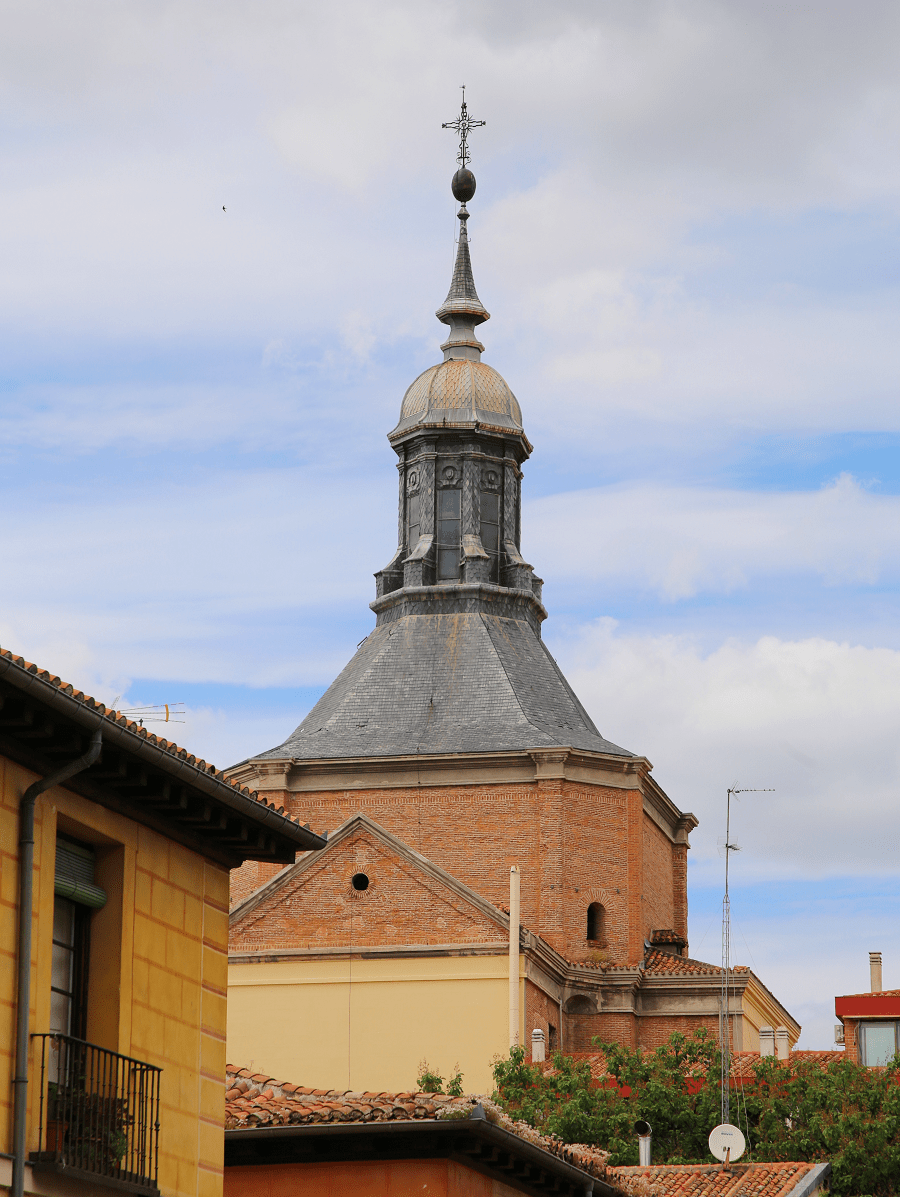
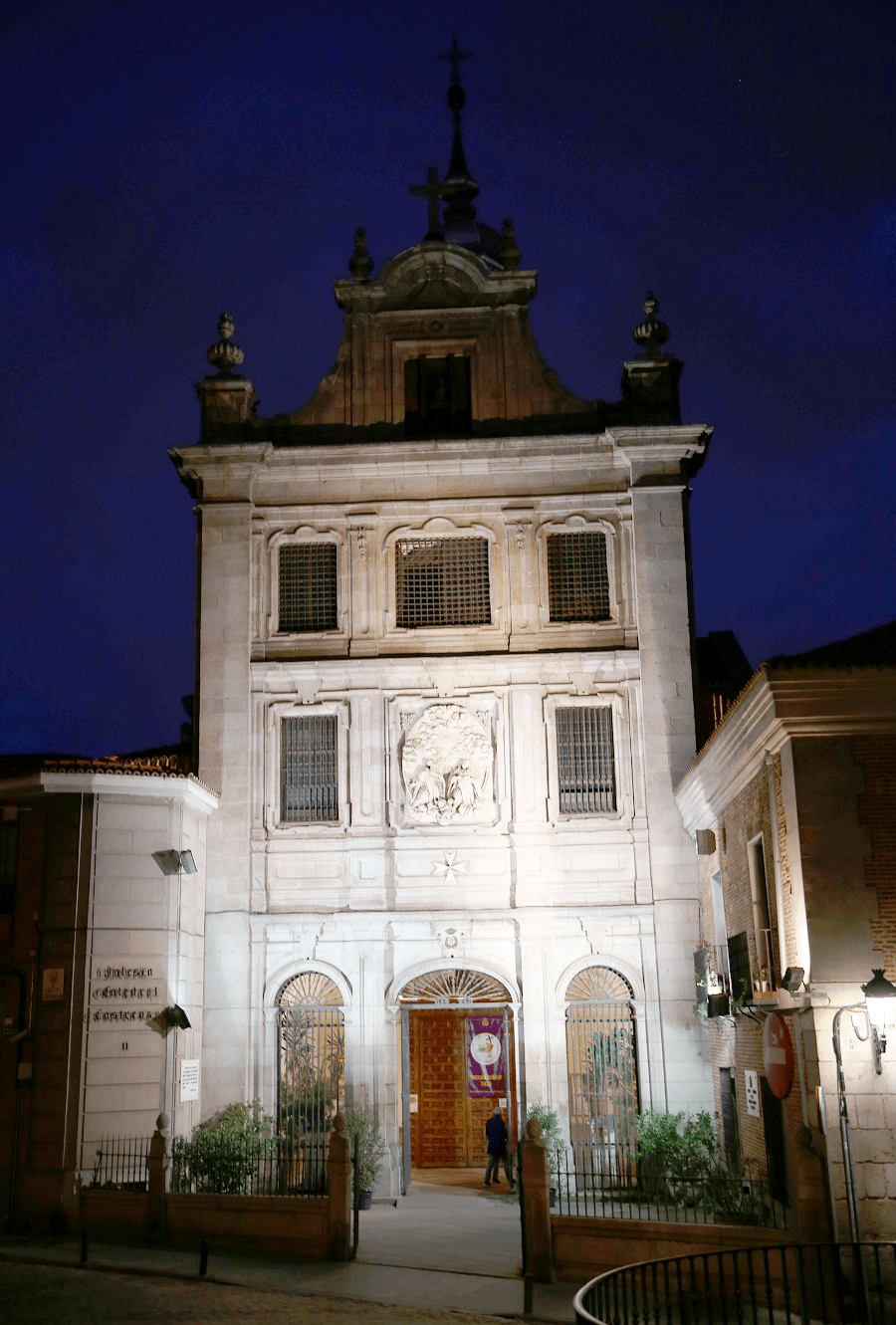
The Cathedral of the Armed Forces, also known as the Castrense Cathedral, the church of the Bernardines of the Sacrament or the church of the Sacrament, is a Catholic temple in Madrid, Community of Madrid, Spain.
It is located on Calle del Sacramento, opposite the Palace of the Councils. Since 1986 it has been the Cathedral of the Armed Forces of Spain and houses the cathedral itself, the sacristy, halls, the offices belonging to the Military Archbishopric of Spain, as well as various relics of great value, among which the noble lance stands out, attributed to the flamen Martialis Marco Emilio Régilo, d. 204 BC.
The cathedral is managed and administered by a rector, a military chaplain with the consideration of Colonel (motto Colonel Chaplain), and assisted by a Christian auxiliary soldier. It is property of the Ministry of Defense of Spain.
It was the temple of the former monastery of the Bernardine nuns of Madrid, founded in 1615 by Cristóbal de Sandoval y Rojas, Duke of Uceda, son of the first Duke of Lerma and favourite of King Philip III.
It was designed in the form of a Latin cross by the architect Juan Gómez de Mora in 1615, but the works began in 1671, half a century after the convent was founded, due to the fall from grace of the favourite, and were finished in the late date of 1744.
The naves of the church are decorated with abundant frescoes in the Italian style; they are the work of the González Velázquez brothers, Luis, Antonio and Alejandro, members of a family of artists. The frescoes in the pendentives and the naves represent the sisters of the founders and various saints of the Benedictine order. The ceiling of the portico shows groups of angels playing with long phylecteries alluding to the Eucharist.
There are two paintings by Luca Giordano that top the altarpieces of the founders; they represent the parents of Mary, Joachim and Anne, and the Holy Family.
The main altarpiece, in neoclassical style, composed of two stucco Corinthian columns, frames the painting that represents Saint Benedict and Saint Bernard adoring the Sacrament of the Eucharist; it is the work of Gregorio Ferro Requeijo, chamber painter of Charles III and contemporary of Goya.
In addition to Gómez de Mora, the architects Francisco Bautista, Manuel del Olmo and Bartolomé Hurtado García, who was the main director of the work, were also involved. The interior decoration was done by Andrés Esteban in 1744. The granite façade is the work of Pedro de Ribera Pérez, around 1744.
In 1982 it was declared a National Artistic Monument (Royal Decree 3247/1982). Inside it houses the cathedral itself with the atrium, the Chapel of the Blessed Sacrament, the sacristy, the halls and the offices belonging to the Military Archbishopric of Spain. The cathedral is commanded by a military chaplain rector of the Religious Assistance Service of the Armed Forces, assisted by a military officer.
Currently, numerous events related to the Armed Forces and the State Security Forces and Corps are held there. The Royal House organizes and participates in various events, as well as the Military Orders and military associations.
On the High Altar there are flags of Spain and of the Vatican City. It has an organ.
Madrid: full guide
- Administrative structure
- Architecture
- Churches and Cathedrals
- Entertainment
- Monuments
- Museums
- Parks and gardens
- Restaurants
- Shopping and markets
- Squares
- Streets
- Transport
See here Pyrenees travel guide
See here France travel guide
See here Spain travel guide




