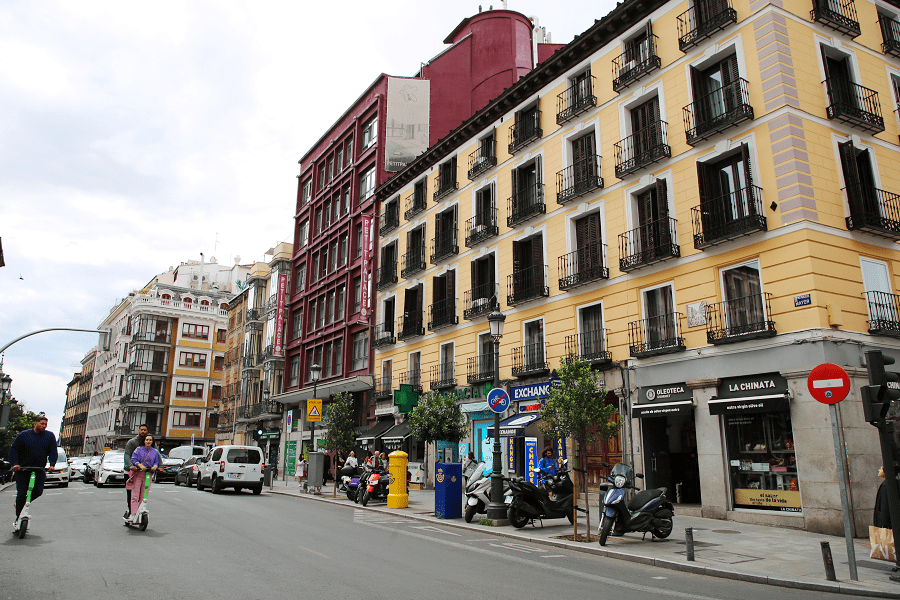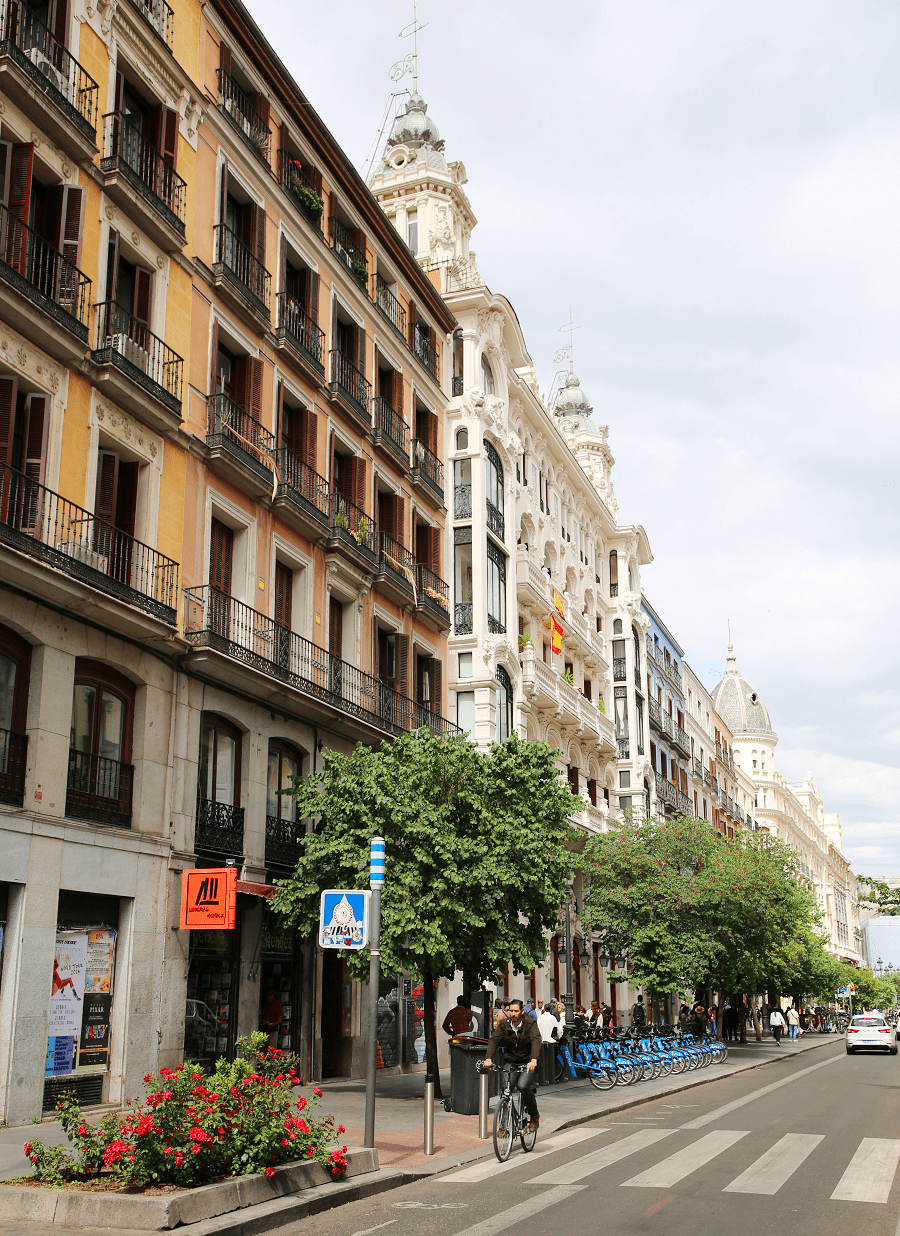
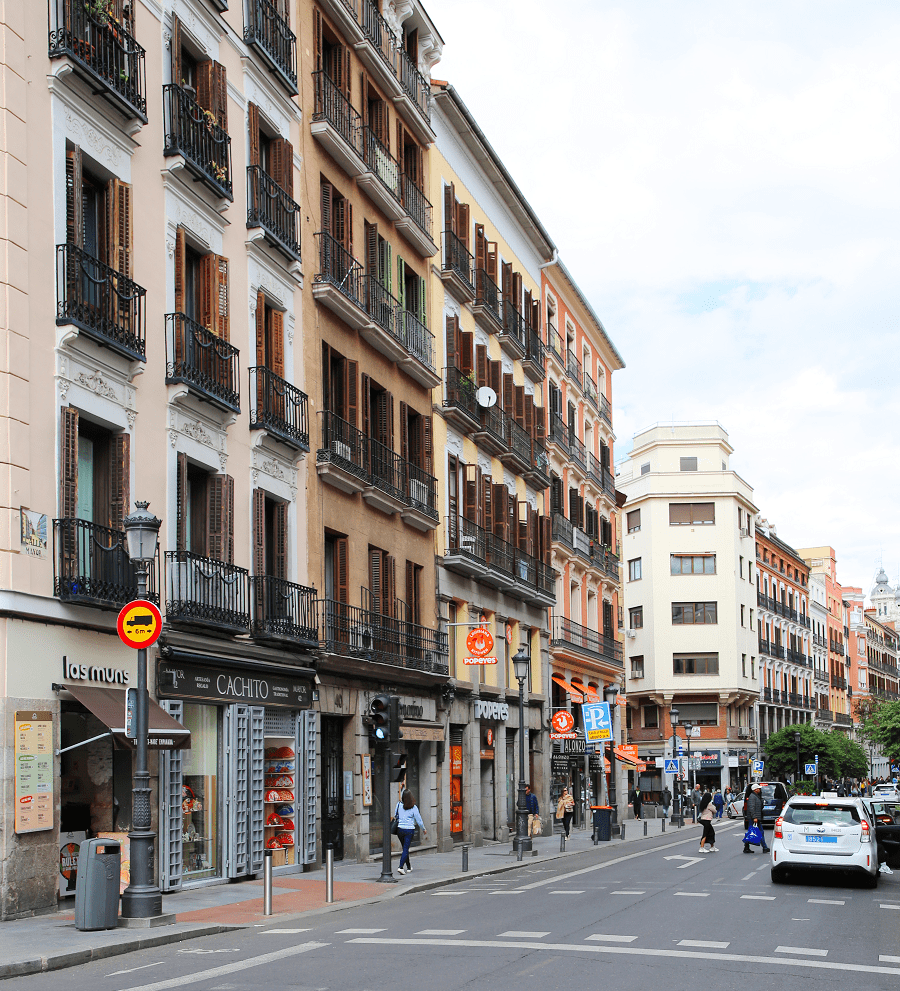
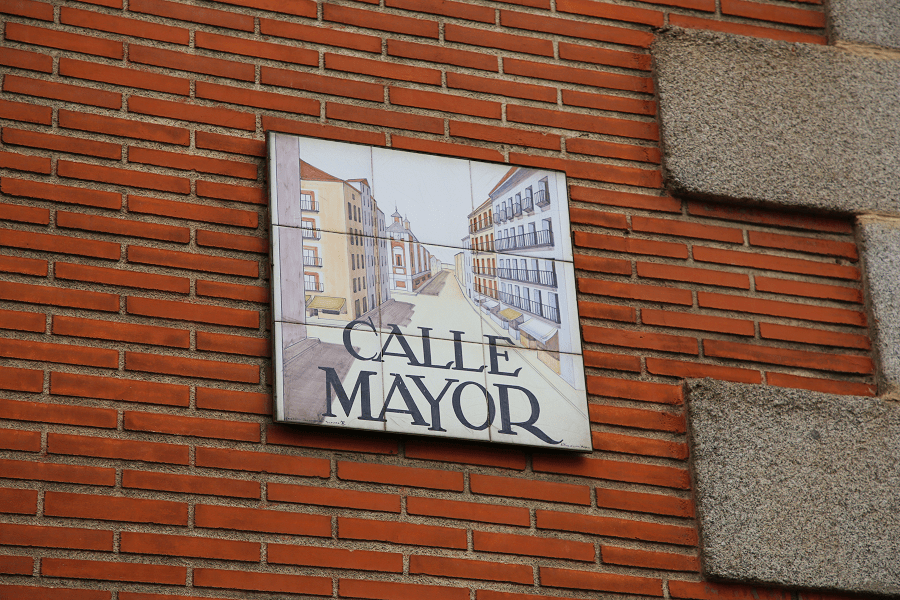
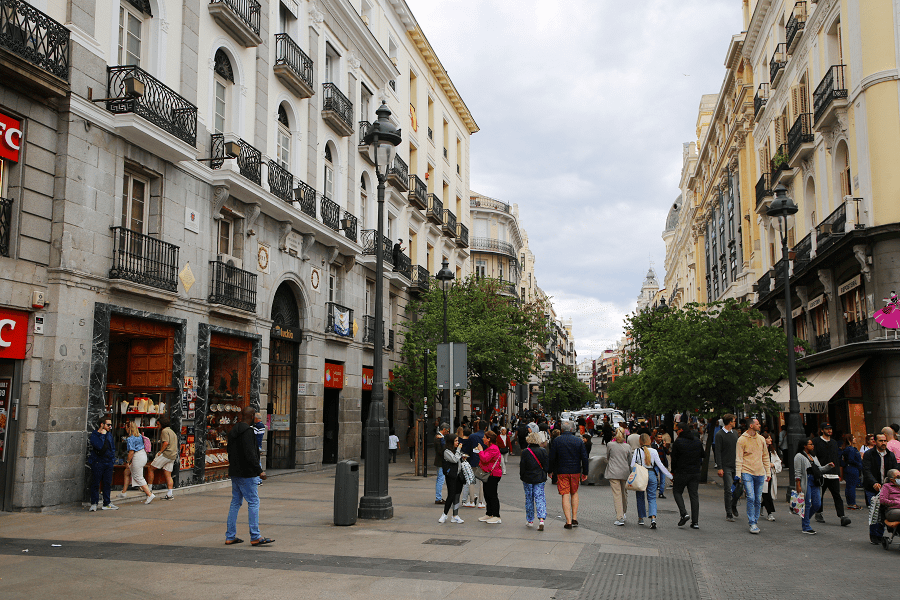
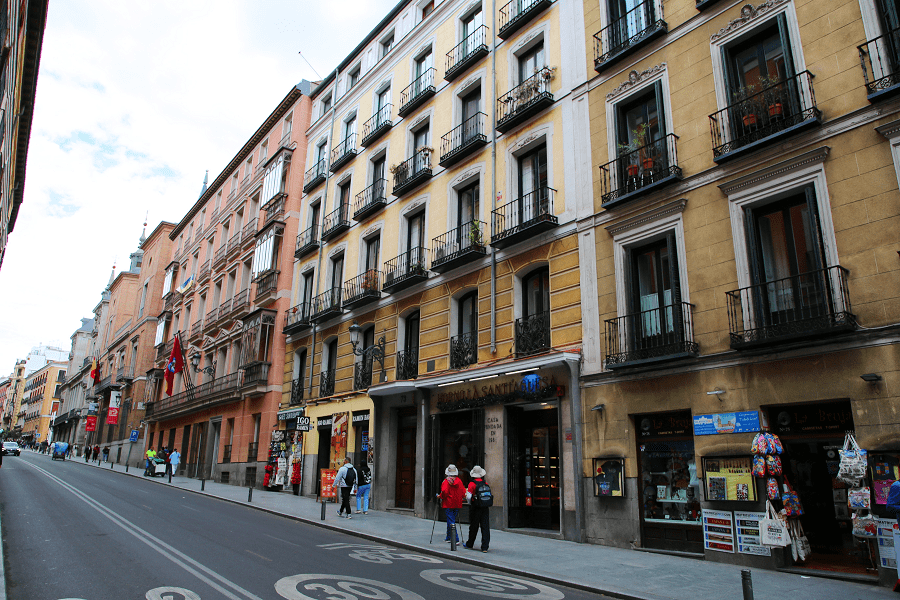
Calle Mayor is a historic street in Madrid, Community of Madrid, Spain, that connects Puerta del Sol with Calle de Bailén, Centro district.
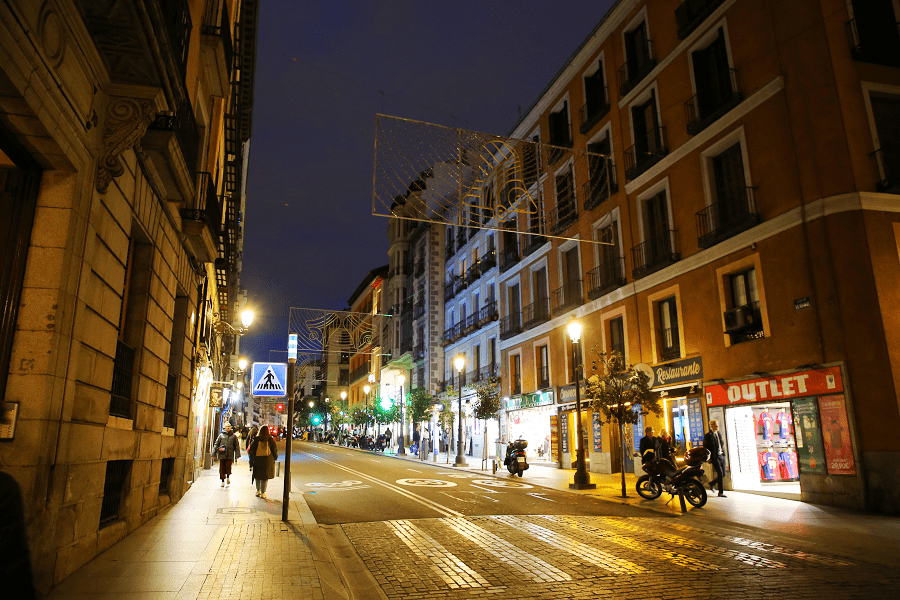
Along its east-west route, “almost straight and almost flat”, is Plaza de la Villa, and at its mouth are the rear façade of the Almudena Cathedral and several sections of the city’s Muslim wall. Although it is barely a kilometre long, throughout its more than six centuries of history it has had different names to designate its different sections.
History
In its origins, and even before being a street, it was a triumphal road for the Catholic Monarchs on their visits to the town at the end of the 15th century and then a “courtly parade in the 17th century”.
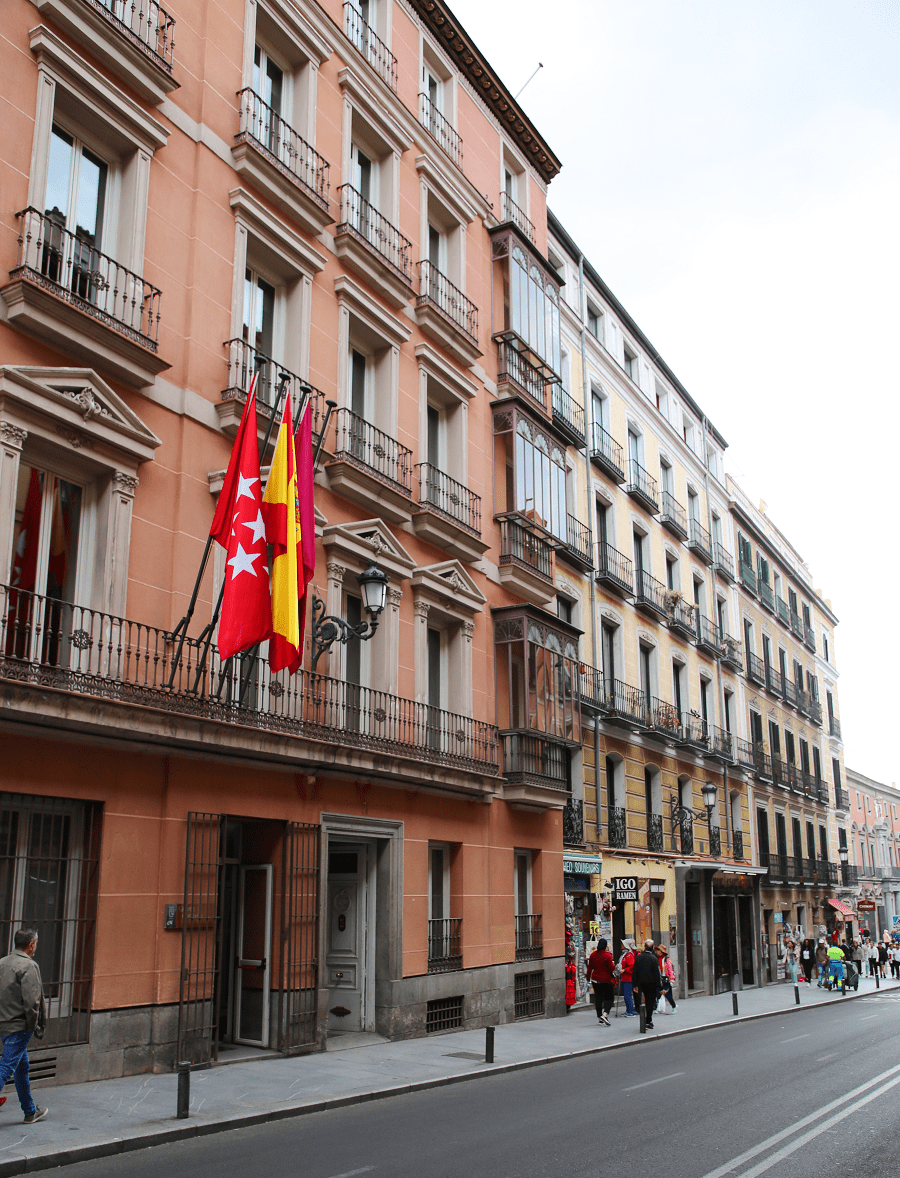
In the Teixeira map of 1656, the road appears labelled in three sections as Mayor (from the Puerta del Sol to the Plazuela de la Caza and the old Calle del Bonetillo, a section also known as Calle Grande de la Puerta del Sol), Puerta de Guadalajara (from Bonetillo to the Milaneses) and Platerías between the Plazas de Herradores and de la Villa.
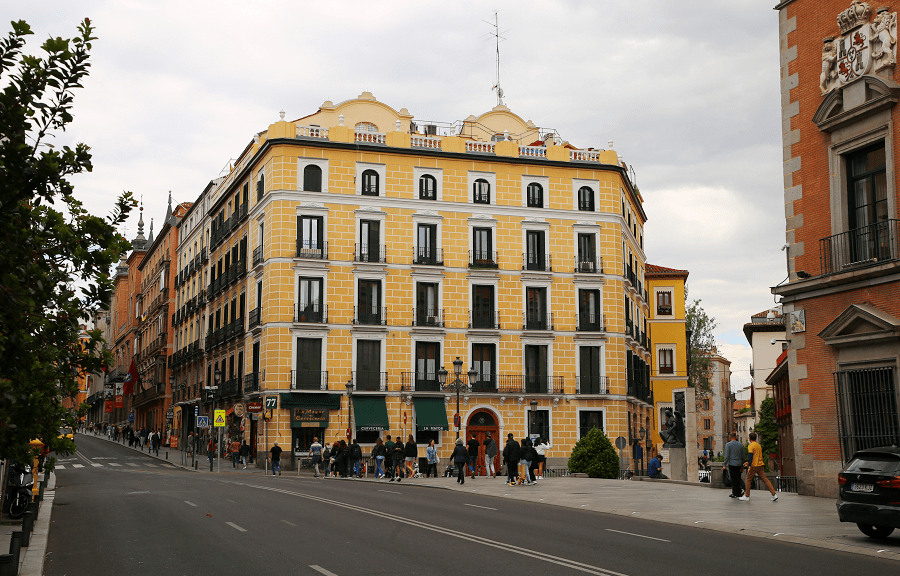
Later, the Antonio Espinosa map of 1769, labels the final section as Calle de la Almudena (from the Plazuela de la Villa to the Arco or Puerta de Santa María, in the current Calle Bailén).
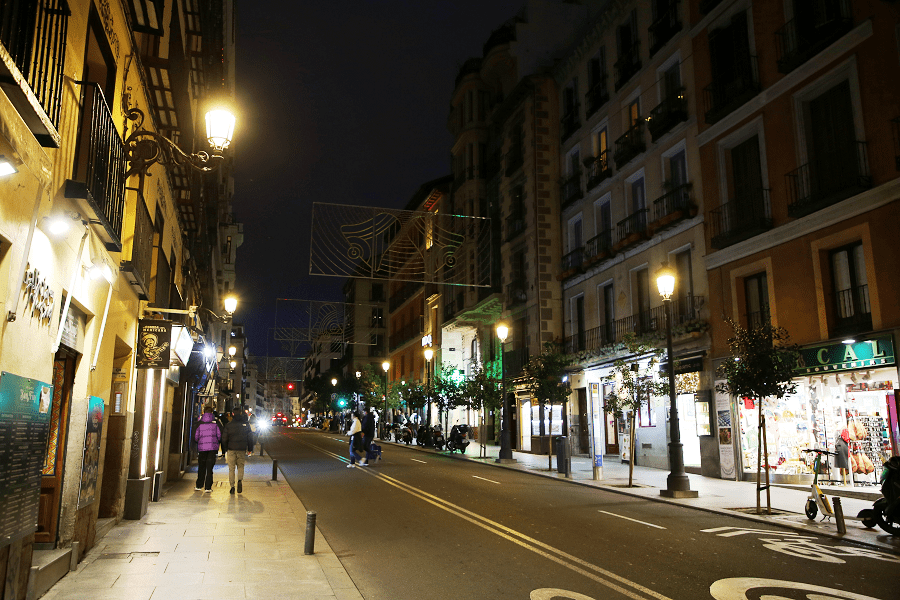
In the plan published by Coello and Madoz in 1848, the sign for the section of the Guadalajara Gate disappears, but the Plaza de los Consejos is added to the layout of the final section.
Main attractions
Along its route, some unique buildings have been preserved, such as the house of Ruiz de Velasco (modernist building at no. 5); the building of the Colonial Company (at no. 16); the Cañete palace (at no. 69); the Uceda or Consejos palace (at no. 79); the Abrantes palace (which houses the Italian Cultural Institute at no. 86); as well as the Renaissance complex in the Plaza de la Villa and the Church of the Sacrament.
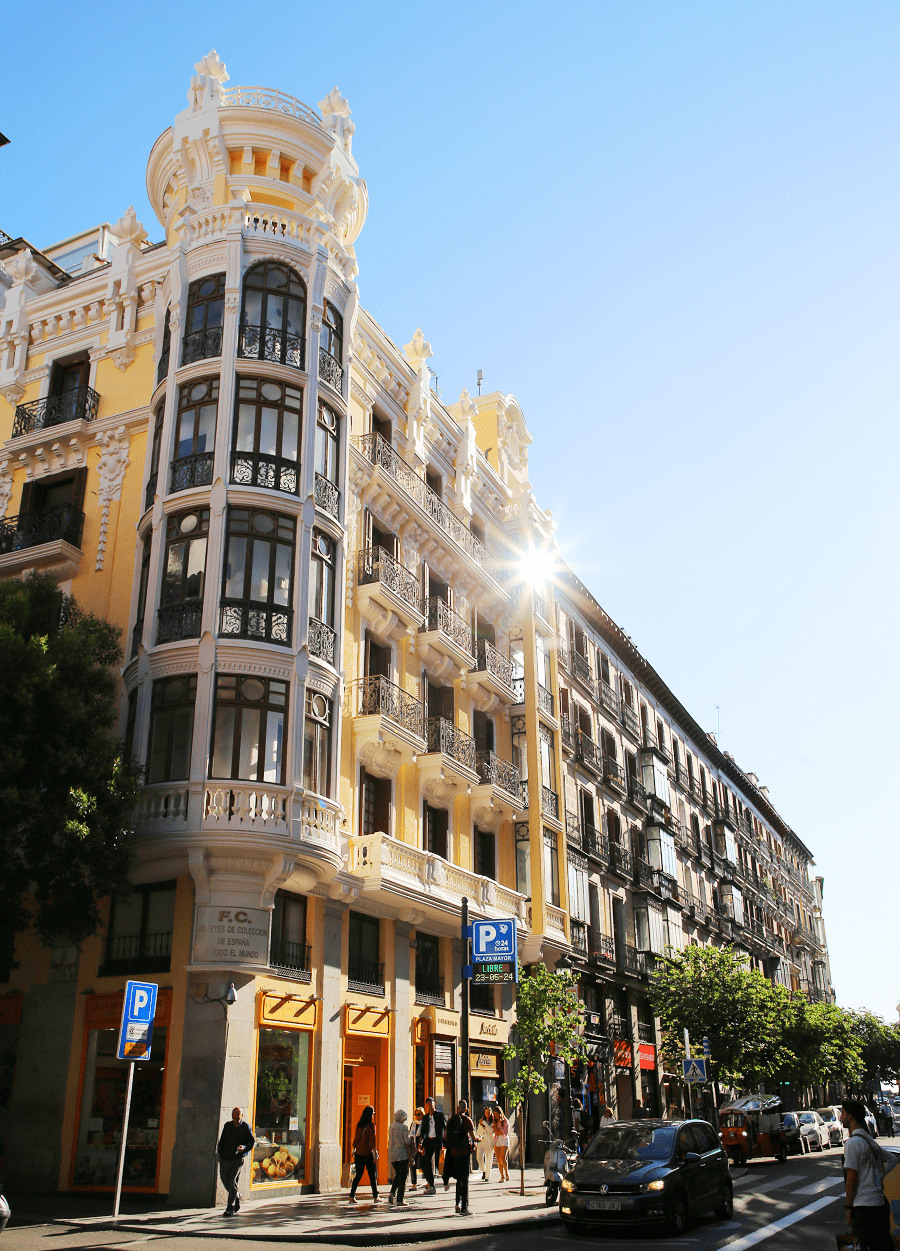
Among the buildings that have disappeared, it is worth mentioning the Oñate palace, the convent of San Felipe Neri, the church of Santa María (demolished in 1868), that of San Salvador (demolished in 1842), the monastery of the Salutation of Our Lady, or “of Constantinople“, and the Puerta de Guadalajara (destroyed by a fire in 1582).
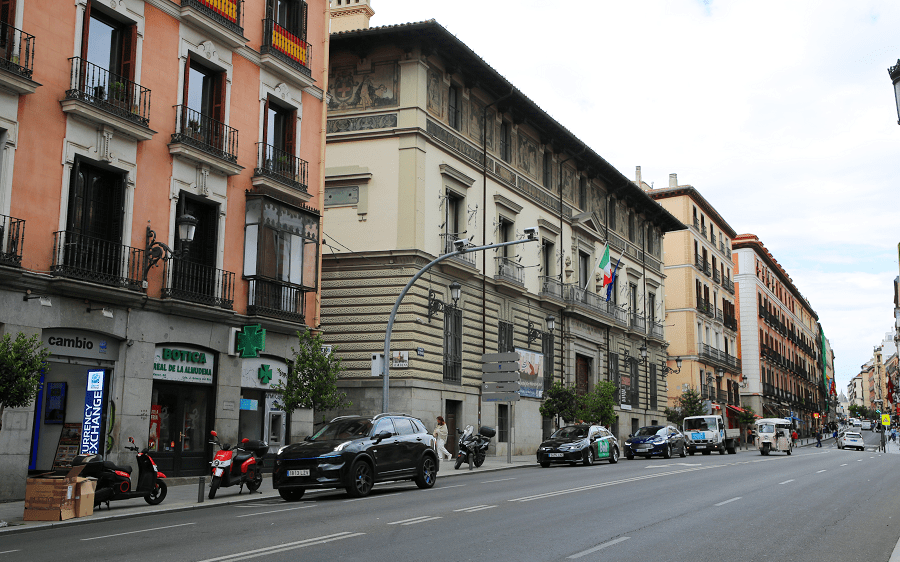
The presence of illustrious playwrights who were residents of this street is preserved in the so-called house of Calderón de la Barca (at no. 61), and a municipal plaque recalls that in the building that was at no. 46 Félix Lope de Vega y Carpio was born, who was baptized on December 6, 1562 in the neighboring and also disappeared church of San Miguel de los Octoes.
Madrid: full guide
- Administrative structure
- Architecture
- Churches and Cathedrals
- Entertainment
- Museums
- Parks and gardens
- Restaurants
- Shopping and markets
- Squares
- Streets
- Transport
See here Pyrenees travel guide
See here France travel guide
See here Spain travel guide