
Nativity scene
Nativity play in Escaldes-Engordany (Andorra)
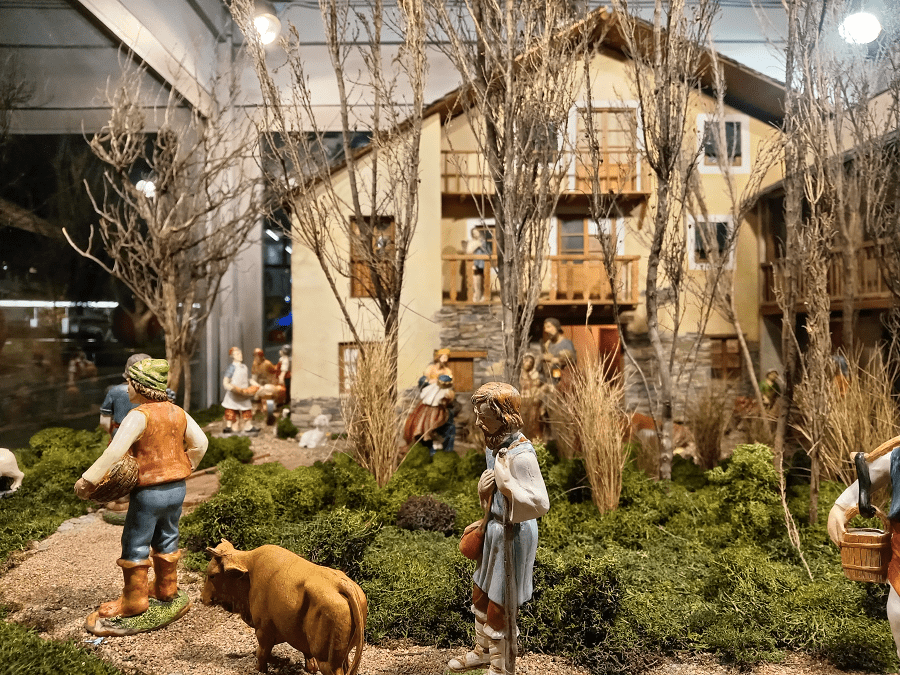
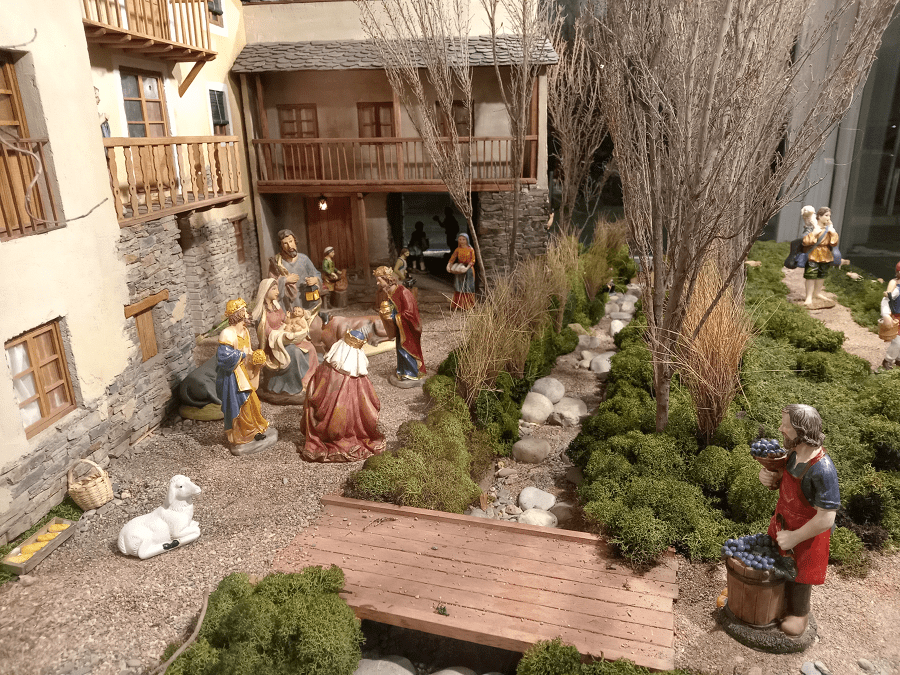
In the Christian tradition, a nativity scene (crib, crèche, presepio, Bethlehem or pessebre) is the special exhibition, particularly during the Christmas season, of art objects representing the birth of Jesus. While the term “nativity scene” may be used of any representation of the very common subject of the Nativity of Jesus in art, it has a more specialized sense referring to seasonal displays, in particular sets of individual sculptural figures and props that are arranged for display.
This tradition of Catalan society that represents the birth of Jesus is called a nativity scene because, according to the Bible, when the child was born in the stable, he was placed in a manger or animal feeder called a nativity scene. In the Valencian Country it is also called a nativity scene or betlem, as in Mallorca.
Etymology
The word pessebre, like its ancient equivalents presepe and presepi and the Occitan presèp or presèpi and the Italian presepe and presepio are derived from the Latin term of the Vulgate, praesepe or praesepium (from ‘prae’, “in front” and ‘saepire’, “to gird”). The word pessebre originally refers to the stable manger, and is a Valencian word (in the rest of the linguistic domain menjora or grípia is used). The correct Catalan form is pesebre, as required by etymology and as pronounced among non-apicxed Valencians. The form with the deaf essa (pessebre) was introduced to the Principality, with the meaning of birth of Jesus or bethlehem, from Spanish.
Tradition
The custom of representing the birth of Jesus during Christmas time, of reproducing it on stage using living characters or plastic figures, is a deeply rooted tradition in Catalonia. In addition, the Catalan nativity scene has its own figure, the caganer, with an origin that dates back to the 18th century.
History
The origin of the nativity scene can also be found in the sculptures and paintings that dotted cathedrals and served to explain Christian beliefs to less educated believers. Thus, the first representation dates back to the 2nd century AD, when in the catacombs of Priscilla the Virgin Mary was already represented holding the baby Jesus in her arms. The oldest known nativity scene dates back to the 3rd century AD, in the German monastery of Füsen. In the 4th century, a relief from a Roman sarcophagus already represents the scene of shepherds adoring the Messiah.
As for the living nativity scene, it was in 1223 that Saint Francis of Assisi made a representation of the birth around an animal manger —a stable similar to the one in which the baby Jesus was born—, considered by many to be the origin of the nativity scene. In the 16th century, the more traditional Catholic authorities wanted to confront the Protestant Reformation with the Council of Trent by promoting new cults, such as a commemoration of the birth in a part of the house. The oldest known nativity scene was made in Prague in 1562.
In Catalonia, there is news of a nativity scene in the year 1300, most likely due to Franciscan influence. We know that at the end of the 16th century there were already family nativity scenes, and we assume that the activity spread quickly; so much so that in 1786 Barcelona already had the Fira de Santa Llúcia where everything needed to carry it out could be purchased.