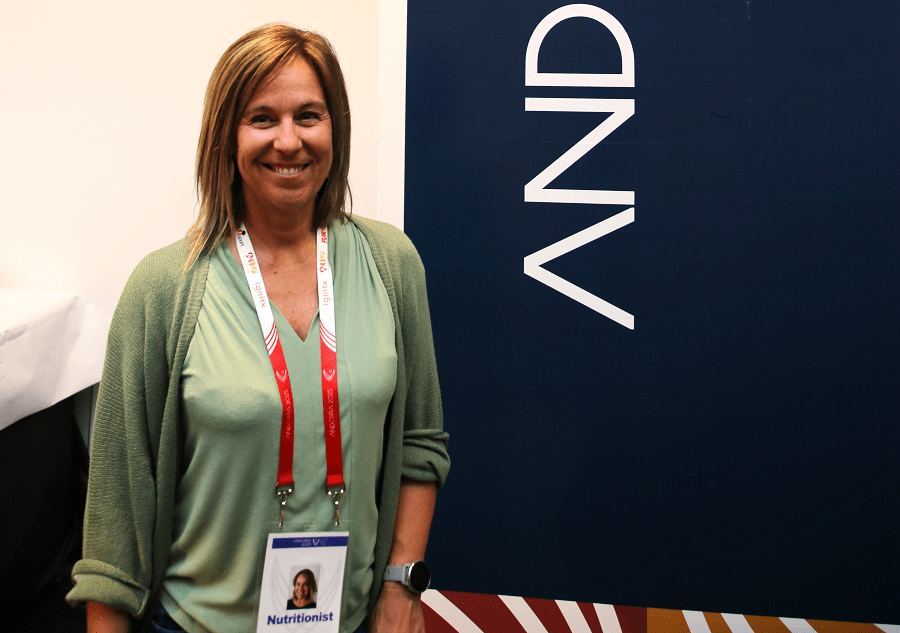
Marta Pons is an Andorran expert in nutrition, holding a degree in Human Nutrition and Dietetics from the University of Navarra, as well as a Master’s in Nutrition and Food Science from the University of Barcelona. She is the co-author of the cookbook Fogons de salut. At 2025 Games of the Small States of Europe, she is responsible for overseeing the athletes’ buffet.
Interview by Irina Rybalchenko
Could you please explain what an athlete’s diet consists of?
An athlete’s diet should always include three essential components. Firstly, energy-rich foods such as pasta, rice, potatoes, legumes, cereals, or bread.
Secondly, it must contain protein-rich foods, which can be of animal origin (like meat or fish), or plant-based (such as legumes or other sources of plant protein).
And finally, the third essential element is vegetables, which can be raw—such as colourful salads—or cooked, such as various types of vegetables: broccoli, courgette, green beans, escalivada (roasted vegetables), peppers, mushrooms, etc.
Our goal is for the athlete to be able to choose from these three major food groups according to their needs, and to adjust the quantities based on their energy requirements.
Due to recent trends in nutrition, more and more people are becoming vegetarian. Is this trend also common among athletes? Are there many who do not eat meat?
Yes, there are quite a few athletes who don’t eat meat, but that doesn’t mean they don’t consume protein. It’s very important for athletes to include protein in their diet, and if they don’t get it from animal sources, they can obtain it from plant-based sources.
Some options include legumes, textured soy, plant-based meatballs, seitan… There’s a wide variety of protein-rich foods of plant origin. In fact, we’ve encountered several athletes here who follow this type of diet, and it works perfectly well – provided it’s properly planned.
How long before a competition should an athlete eat – both for professionals and amateurs?
Ideally, an athlete should eat at least two hours before competing. This ensures that by the time they have to perform, they’ve completed digestion, their stomach is empty, and they feel comfortable.
That way, the nutrients are already available to the muscles and ready to support physical performance. This two-hour window is a good reference point to ensure they’re in optimal condition at the time of competition.
And when it comes to drinks, what’s your recommendation? Smoothies, juices, or water?
Water is essential for maintaining proper hydration. However, when an athlete sweats heavily, water alone is not enough. In those cases, it’s important to include drinks that also contain mineral salts.
For example, gazpacho can be an excellent option. Even though it’s technically a “blended salad,” it functions as a recovery drink because it’s liquid, refreshing, and rich in mineral salts.
We also offer plant-based drinks, such as oat milk, which can contribute to hydration – especially when included as part of a balanced diet. Finally, many athletes bring their own isotonic drinks, already prepared with a specific composition of mineral salts and sugar tailored to their personal needs.
Do international teams bring their own nutrition specialists, or are you in charge here?
Most teams have a nutritionist who guides them based on each athlete’s needs – taking into account their discipline, physical profile, and performance goals—and advises them on what and how to eat.
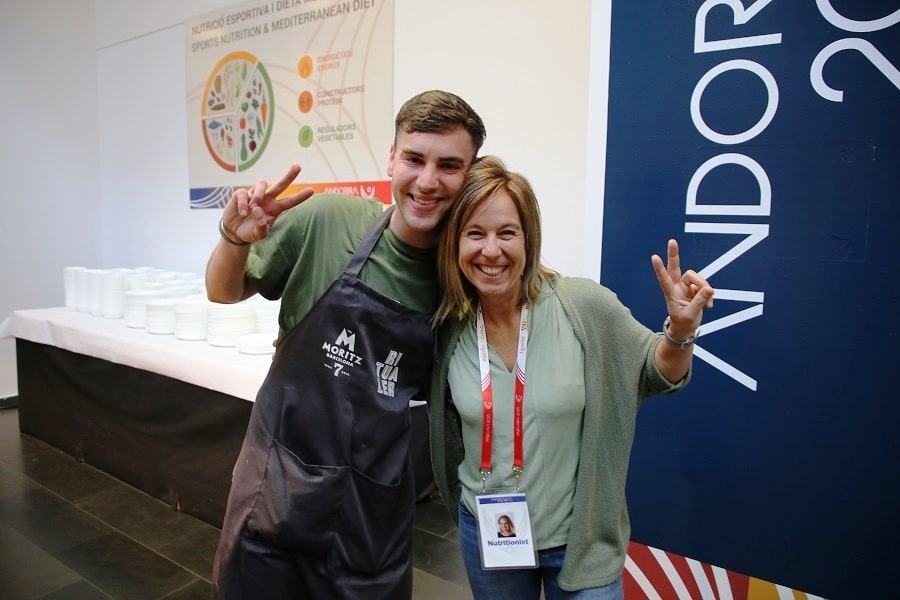
Here, we’ve prepared a buffet where athletes can find all the necessary components to eat properly and meet their nutritional needs.
Why is nutrition so important for athletes, from your professional perspective?
Athletic performance often depends on how well one has eaten. In other words, even if you train hard, if you’re not properly nourished, you could experience cramping, run out of energy reserves, or suffer from muscle weakness.
An athlete who requires between 4,000 and 5,000 calories a day should be drinking between 4 and 5 litres of water daily. By contrast, someone with lower energy needs who does less sport might be fine with 1.5 to 2 litres per day.
Additionally, many people consume a lot of salad and fruit, which helps meet part of their hydration needs through food.
How many litres of water should people drink per day? I’ve heard the minimum is two litres – is that true?
Of course, this depends somewhat on the outside temperature, physical activity, and how much the person sweats. In the case of athletes, hydration needs are closely tied to their energy expenditure.
For instance, an athlete who requires between 4,000 and 5,000 calories daily should drink between 4 and 5 litres of water. In contrast, someone who is less active and has lower energy requirements may only need 1.5 to 2 litres a day.
It’s also worth noting that some people consume a lot of salad and fruit, which contain a high water content. In these cases, a significant portion of hydration actually comes from food.
From your point of view, is everything well organised here? Are the athletes satisfied?
When we designed this buffet, we did so with the three main pillars of sports nutrition in mind.
There’s a dedicated vegetable section, with both raw options like salads and cooked vegetables, which we vary daily. It’s very important to rotate the colours of the vegetables, as each colour provides different vitamins. That’s why we aim for variety in both type and presentation.
Then there’s always a carbohydrate option, such as pasta or rice. Pasta, for example, is highly requested without sauce, so we provide the sauces separately so each athlete can dress it as they wish—with oil or other condiments.
As for protein, there’s great acceptance: we offer meat, fish, and also a plant-based option, which is increasingly popular among athletes.
One important note: no fruit contains protein – they are sources of vitamins. For instance, melons and watermelons are fruits that hydrate, as we discussed earlier. Then you have bananas, which are rich in potassium, and kiwis, which are high in vitamin C. We rotate the fruit selection regularly.
You are the co-author of the cookbook Fogons de salut. Do you have plans to write another book?
Yes, I would love to! I really enjoy sharing because I think it’s not easy to find information that combines gastronomy, nutrition, and health. There are plenty of recipes and a lot of information about healthy eating, but sometimes it’s hard to find resources that integrate both well.
For me, the pleasure of eating is very important. Obviously, it’s essential to be well-nourished, but it’s also fundamental to enjoy the food – eating locally sourced products, good-quality ingredients, well-prepared…
That’s why I always try to build partnerships with people who work in the culinary world.