

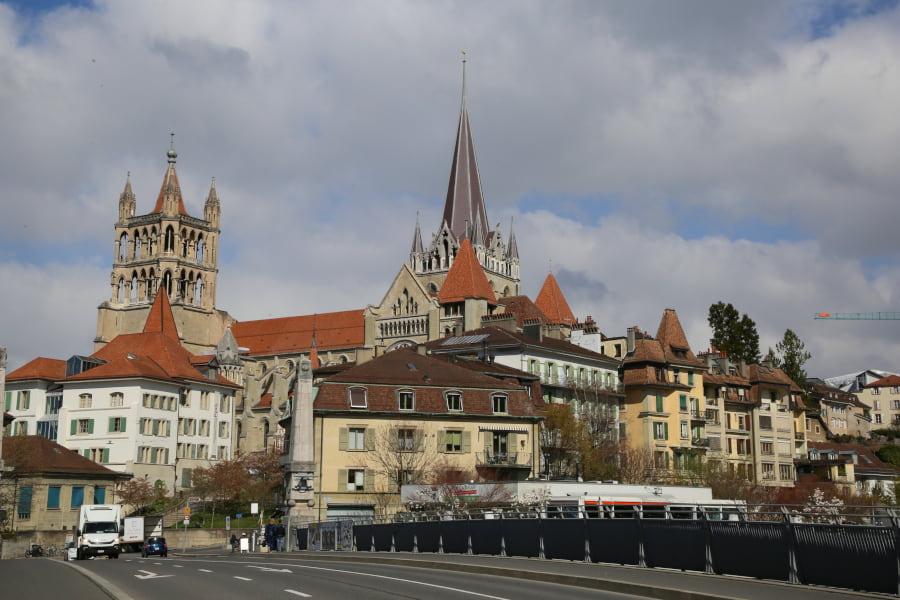
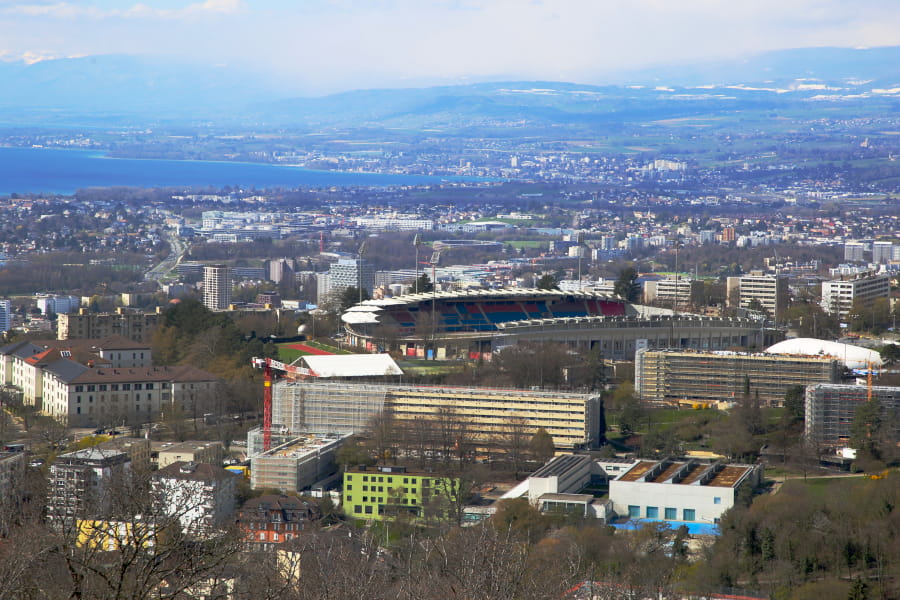
Lausanne is a Swiss city situated on the northern shore of Lake Geneva. As the capital of the canton of Vaud, it is also an Olympic city. It is the country’s fourth-largest city by population, after Zurich, Geneva and Basel.
The municipality of Lausanne had a population of 144,873 as of 31 December 2024.
The city of Lausanne has a campus in the western district of Lausanne that is home to the University of Lausanne (UNIL) and the Swiss Federal Institute of Technology in Lausanne (EPFL), which has some 26,000 students. The metropolitan area is also home to prestigious higher education institutions such as the École hôtelière de Lausanne (EHL), the École cantonale d’art de Lausanne (ECAL) and the International Institute for Management Development (IMD).
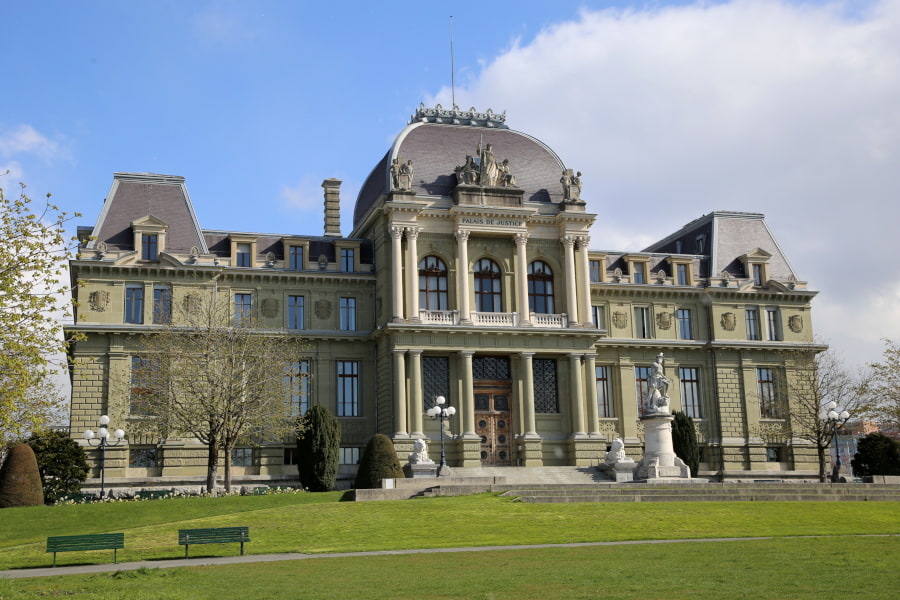
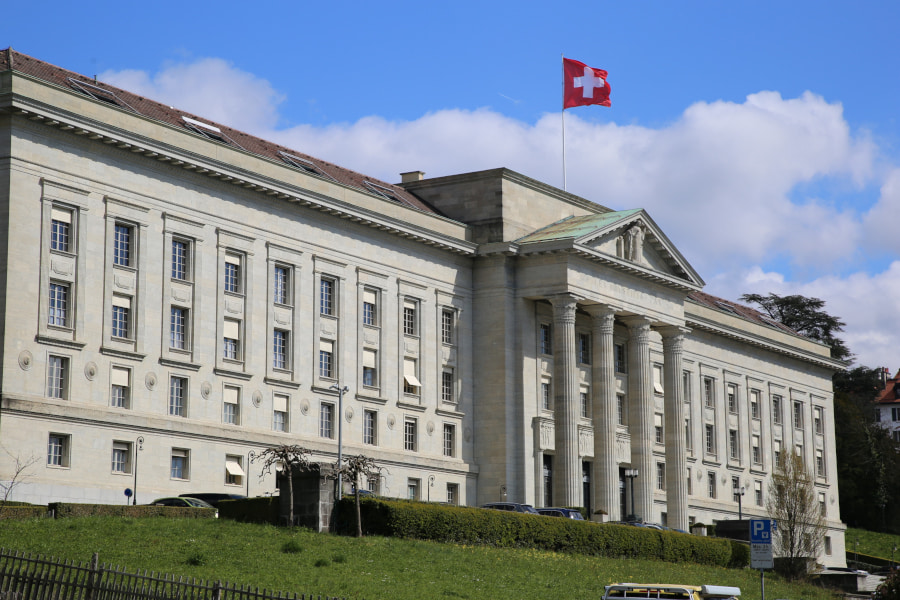
The Federal Supreme Court (TF), the supreme judicial authority of the Swiss Confederation, is based in Lausanne.
The city has held the official title of ‘Olympic Capital’ since 1993 and hosted the Winter Youth Olympic Games in 2020.
- See also The Olympic Museum.
Geography
Lausanne is situated in the heart of French-speaking Switzerland. The city is built on a slope that descends from the hills of the Swiss Plateau to the northern shore of Lake Geneva. The city spans a vertical range of over 500 metres, from the port of Ouchy (374 m) to Chalet-à-Gobet (873 m), passing through the city centre (495 m), Lausanne-Blécherette Airport (600 m) and the Sauvabelin woods (640 m).
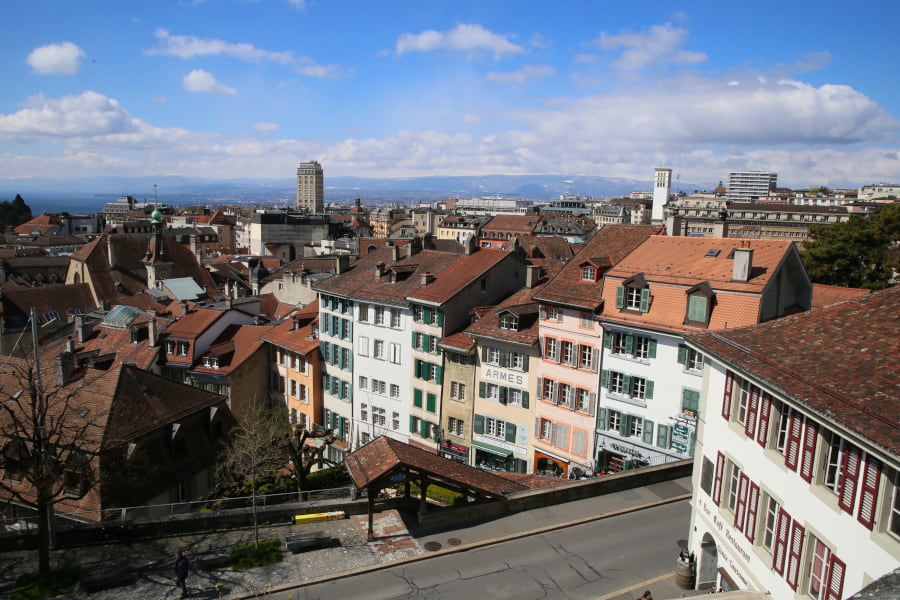
The city centre is built on three hills: La Cité, Le Bourg and Saint-Laurent, linked mainly by the Grand-Pont and the Bessières Bridge. This topography is due to the presence of several watercourses that have shaped the valleys and hills of the city centre. Indeed, 16 rivers flow through the territory of Lausanne.
History
According to the Historical Dictionary of Switzerland, the area now known as the municipality of Lausanne has been inhabited since 6000 BC.
A Gallo-Roman vicus named Lousonna was founded from 15 BC onwards on the lakeside, in what is now the Vidy district. Situated at the crossroads of numerous trade routes, the settlement flourished until the mid-3rd century, after which it began to decline during the Germanic invasions; it was finally abandoned in the mid-4th century in favour of the Cité hill, which could be defended thanks to its steep slopes.

In 1525, the city of Lausanne signed a treaty of mutual assistance with the cities of Bern and Fribourg. This treaty proved particularly useful when conflicts broke out between the people of Lausanne and their bishop, and the Bernese were able to put a stop to them. The treaty guaranteeing mutual political, economic and military assistance was signed in Bern on 7 December 1525. It was renewable every five years.
In 1536, a period of Bernese rule began for Lausanne. The city’s population fell from 8,000 to 5,000 inhabitants. The Age of Enlightenment marked a turning point in the history of Bernese Lausanne. The academy welcomed increasing numbers of students from across the continent. However, despite Major Davel’s attempted uprising in 1723, Bernese rule faced little criticism and remained unshaken.
In 1789, the Revolution broke out in France and its ideals spread throughout Europe, particularly in Switzerland. Bern banned the press and public gatherings and introduced the death penalty, but the Vaud rebellion continued. In 1798, thanks to the support of Napoleon Bonaparte’s French troops, the Vaud Revolution took place and Lausanne became the capital of the Canton of Léman, later the Canton of Vaud. In 1803, following the proclamation of the Helvetic Republic, Lausanne remained the capital of the Canton of Vaud.
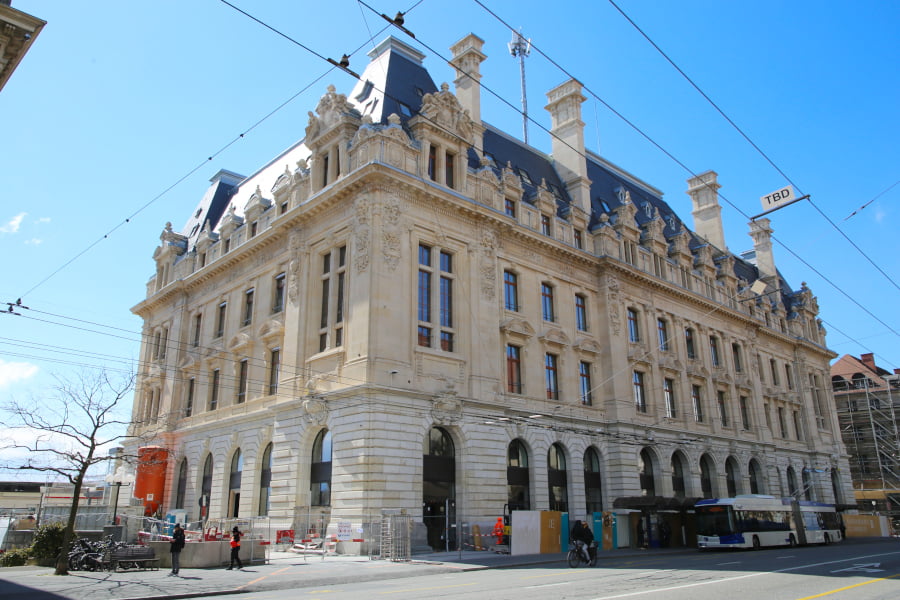
In 1906, the opening of the Simplon Tunnel, linking Switzerland to Italy, gave a tremendous boost to the development of the Lake Geneva region and transformed Lausanne into a major international railway hub. The direct Paris–Rome train and the famous Orient Express, which linked Paris to Istanbul and Athens with stops in Venice and Belgrade, now passed through the city.
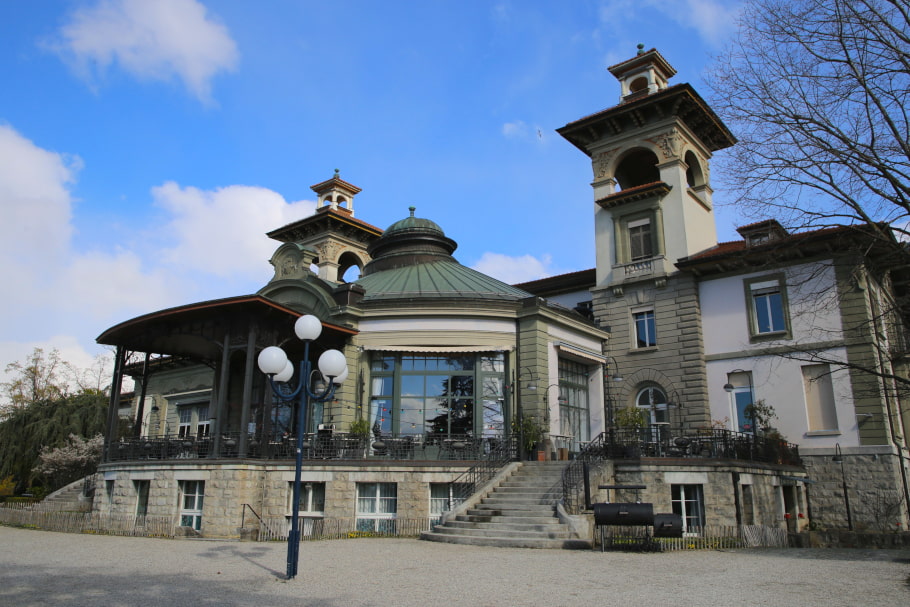
In 1915, seeking a country that symbolised peace and harmony among peoples, Pierre de Coubertin decided to move the headquarters of the International Olympic Committee to Lausanne.
On 24 July 1923, the Treaty of Lausanne was signed, defining Turkey’s borders and recognising the legitimacy of Mustafa Kemal Atatürk’s regime.
From the 1930s onwards, Lausanne underwent a profound transformation. Many slum areas in the historic city centre, where the most disadvantaged classes lived, were demolished.
In 1964, the Swiss National Exhibition of 1964 was held. The Lausanne–Geneva motorway was opened on this occasion, along with part of the ring road.
From 9 to 22 January 2020, the City of Lausanne hosted the III Winter Youth Olympic Games.
Tourism
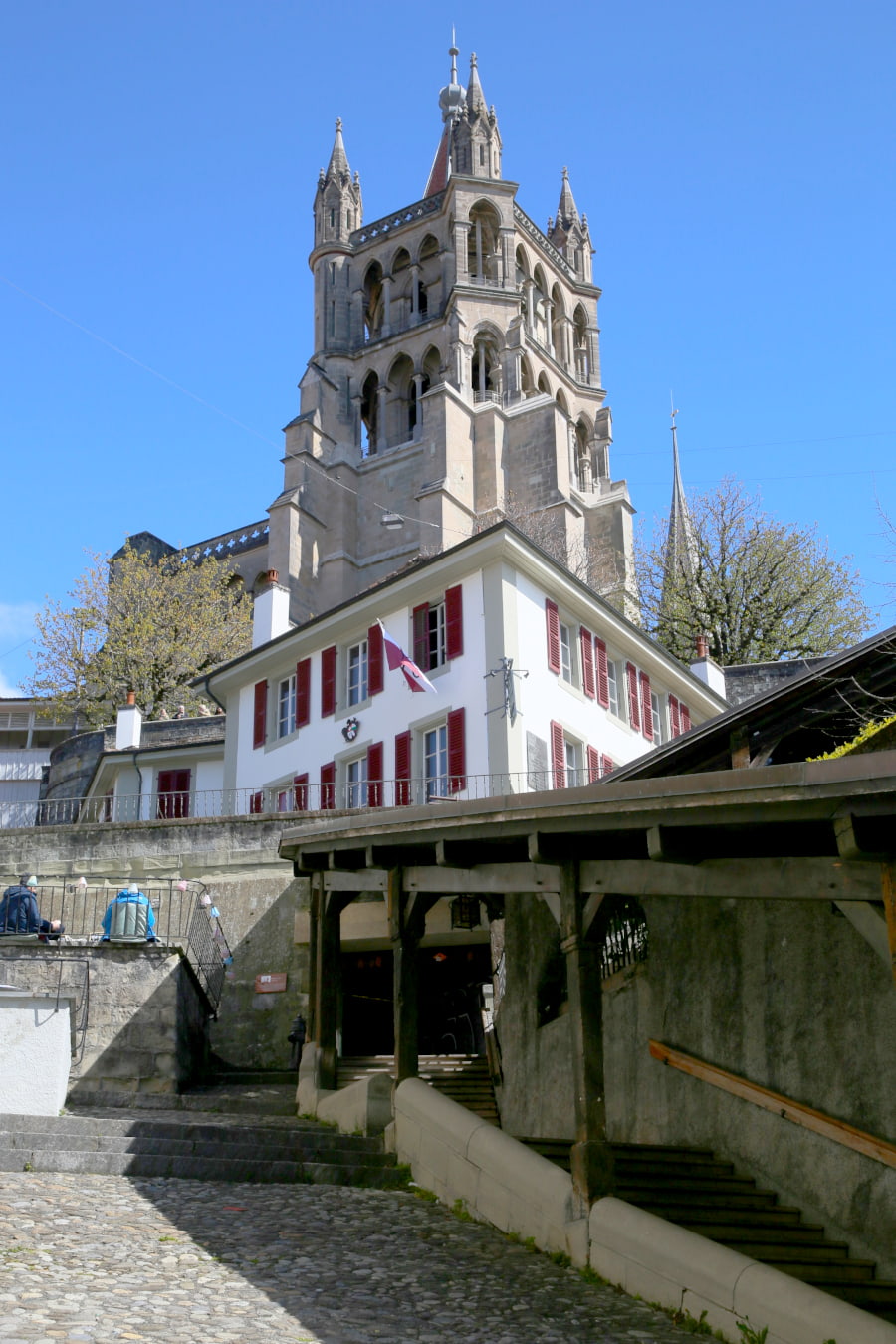
Lausanne Cathedral, formerly known as Notre-Dame Cathedral, is one of Switzerland’s most significant Gothic monuments. Dedicated to Protestant worship since 1536, the parish is part of the Evangelical Reformed Church of the Canton of Vaud.
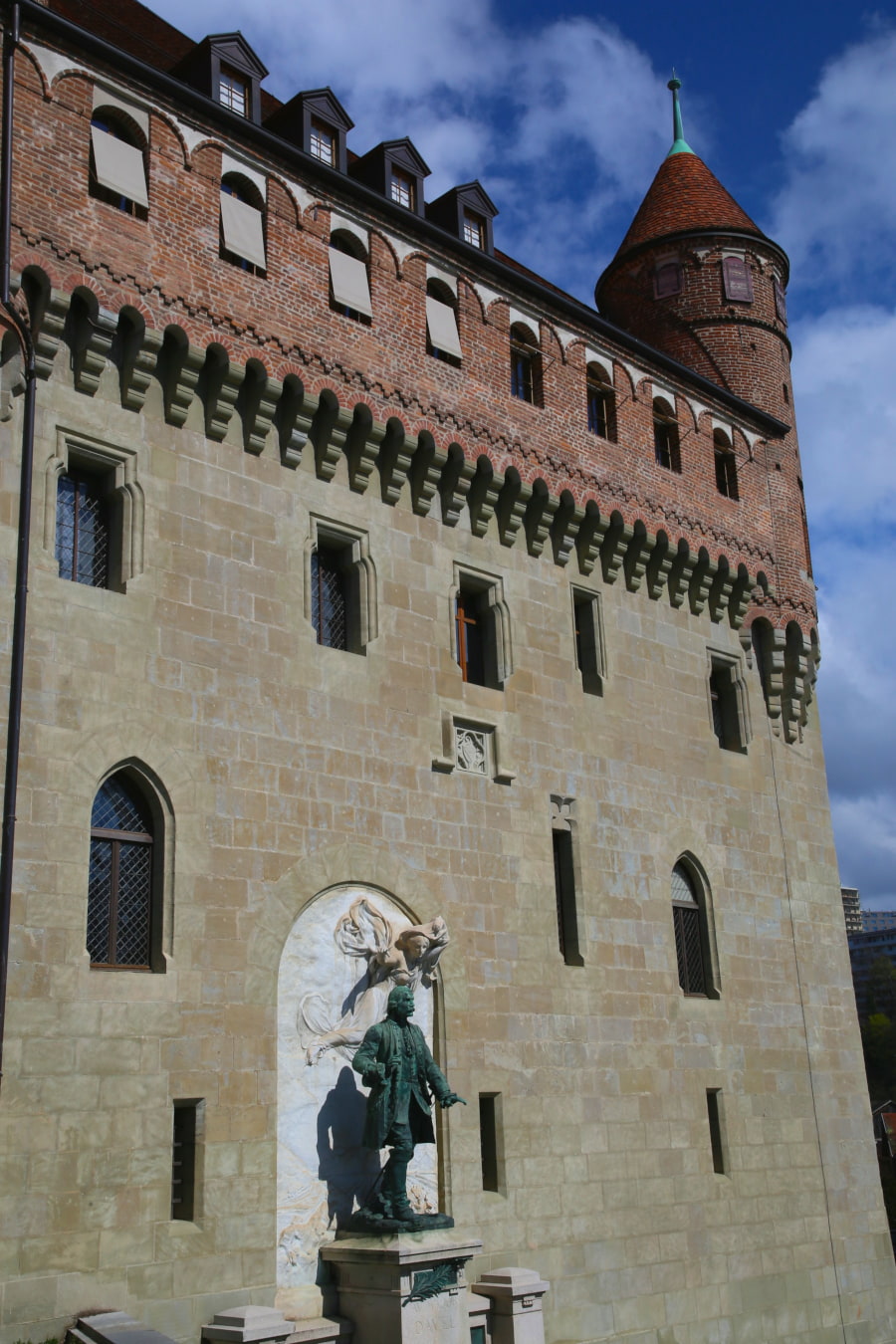
Château Saint-Maire is a castle built between 1397 and 1430. It currently houses the headquarters of the State Council of the Canton of Vaud.
The castle owes its name to Marius of Avenches, a bishop from the late 6th century, also known as Saint Maire. Marius is regarded as the bishop who transferred the bishopric from Avenches to Lausanne. The Annals of Falvigny and Lausanne, a 10th-century document, date this transfer to the year 581, when pressure from Germanic peoples coming from the north was becoming increasingly intense. Feeling no longer safe, Marius moved the seat of his diocese to the Cité hill in Lausanne.
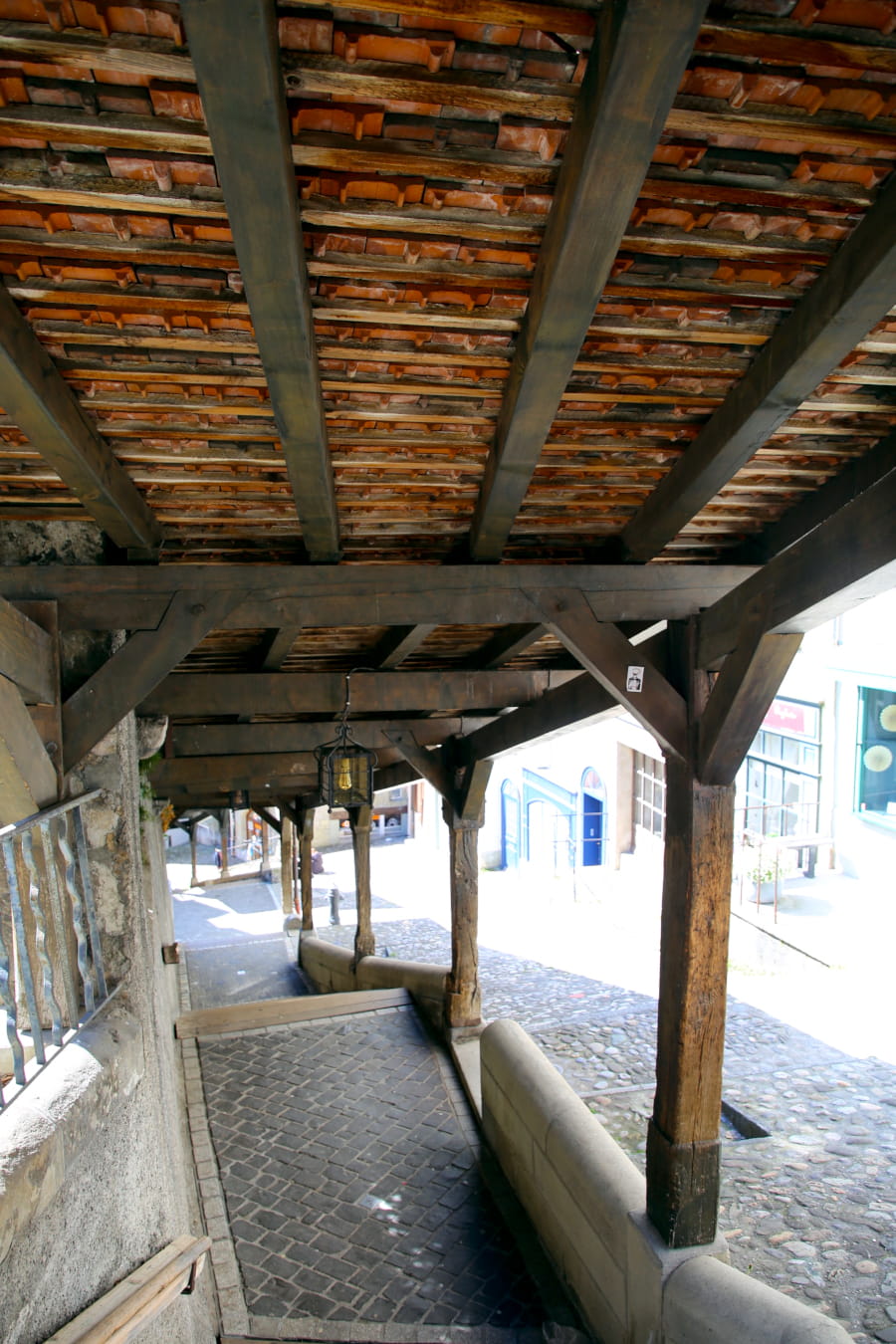
The Marché Stairs are a covered flight of steps leading from the bottom of Rue Mercerie up to the cathedral forecourt. The current wooden, covered stairs, built alongside a steeply sloping cobbled path, date from 1717–1719. Their continuity was interrupted in 1911 by the creation of Rue Pierre-Viret, which crosses their upper section, before a passageway was built beneath the road in 1975. They have been listed as part of the Vaud heritage since 25 May 1900.
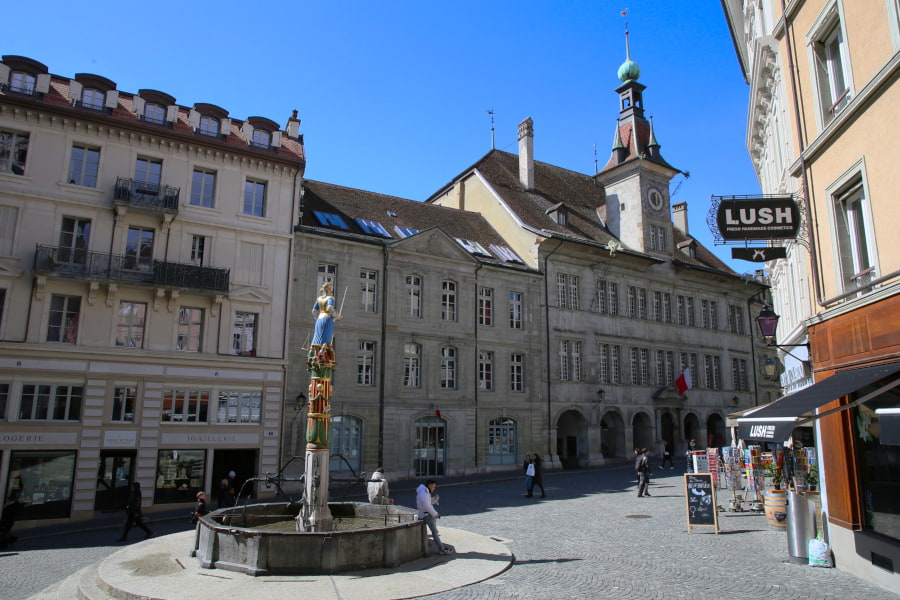
Place de la Palud is a pedestrianised square in the heart of Lausanne. It is home to the Town Hall and the famous Fountain of Justice, one of the city’s landmarks.
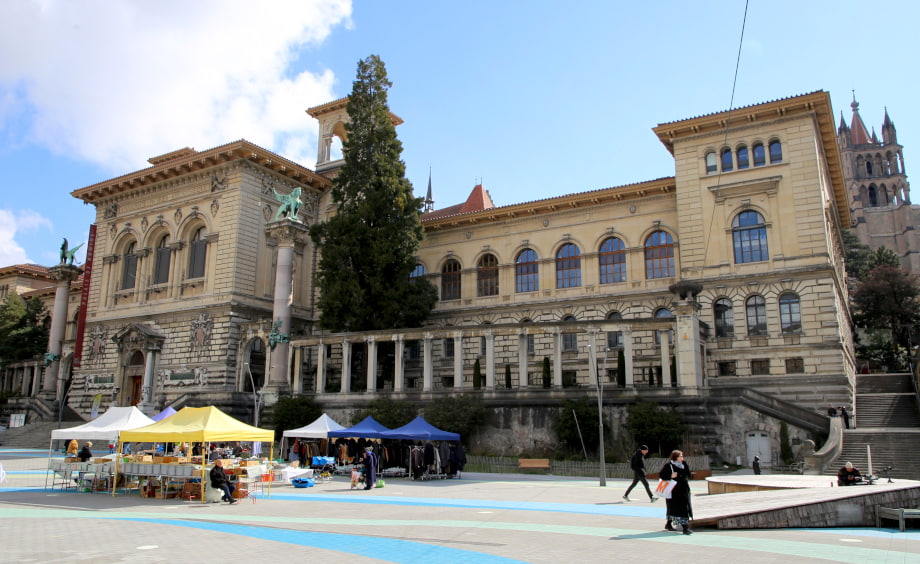
The Palais Rumine is a building in the Italianate style, constructed in the late 19th century. It is situated to the east of Place Riponne, near the Cité, right in the heart of the city.
It was here, in July 1923, that the Treaty of Lausanne was signed, a pivotal moment in the history of modern Turkey and the Southern Balkans.
In the 1980s, the university moved to Dorigny, on the shores of Lake Geneva, due to a lack of space. The Palais Rumine was restored. From 1 January 2023, the cantonal museums of geology, zoology and botany have merged to form the new Cantonal Museum of Natural Sciences.
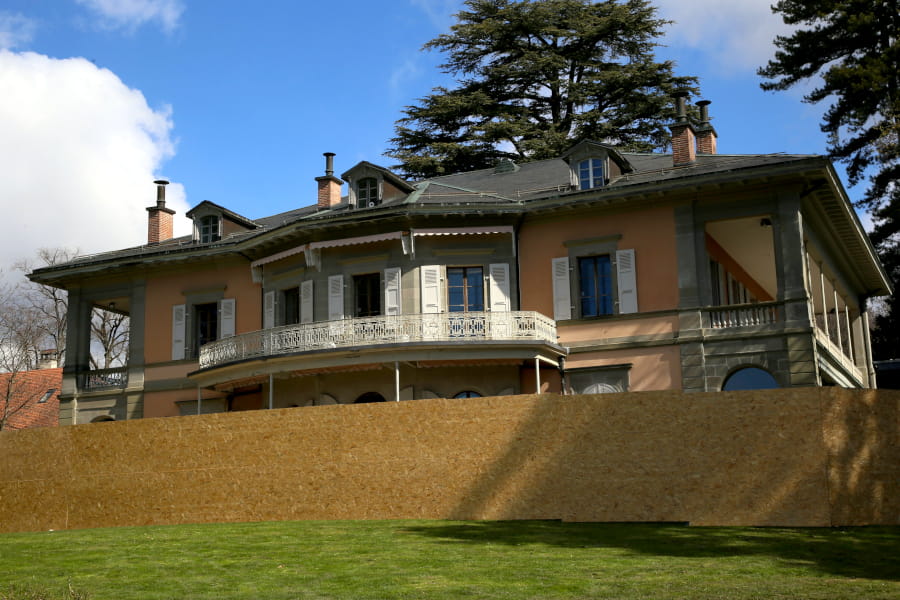
The Hermitage Foundation is a museum dedicated to the fine arts. The building is a mansion that was rebuilt between 1852 and 1855 and belonged at the time to Charles Bugnion.
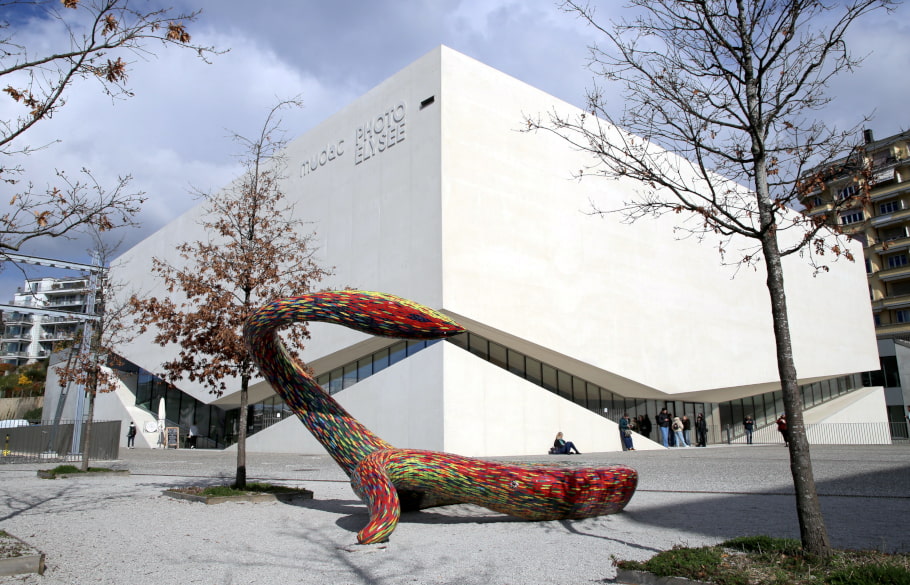
The Cantonal Museum of Fine Arts (MCBA) is an art museum based in Lausanne. Formerly housed in the Palais de Rumine, it moved to the Plateforme 10 museum complex in 2019.
The Cantonal Museum of Design and Contemporary Applied Arts (MUDAC) is a museum specialising in design, glass art, contemporary jewellery, ceramics and graphic art. It also aims to build up a collection dedicated to design from French-speaking Switzerland. A successor to the Industrial Museum founded in 1862, the MUDAC changed its name and location numerous times before settling in June 2022 in the same building as the Cantonal Museum of Photography, Photo Elysée, and within the Plateforme 10 museum complex.
Photo Élysée (formerly the ‘Musée de l’Élysée – Cantonal Museum of Photography’) is a museum dedicated to photography, founded in October 1985 by Charles-Henri Favrod.
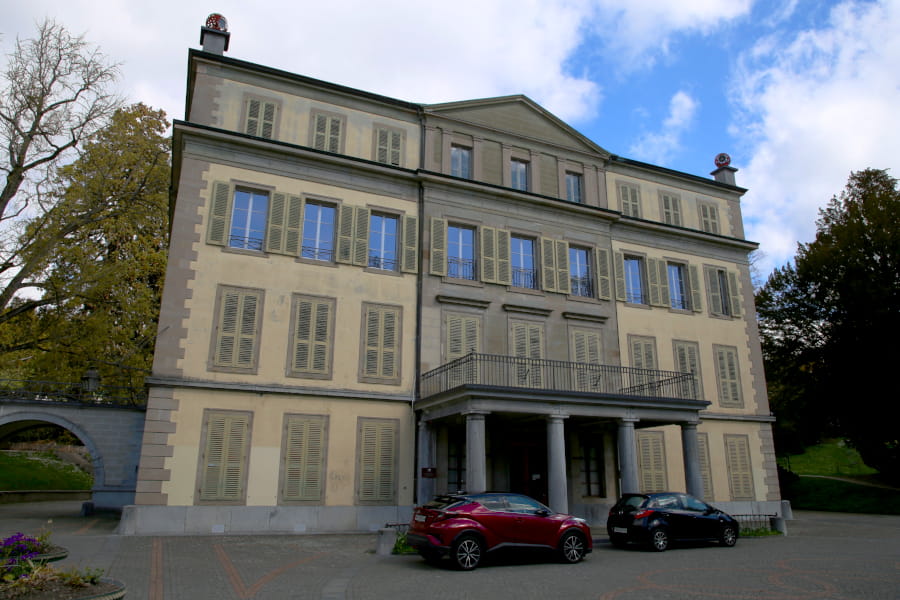
Mon-Repos Park is an English-style park located in the Mousquines/Bellevue district. It is home to the Mon-Repos estate, also known as the Villa de Mon-Repos.
Urbanisation
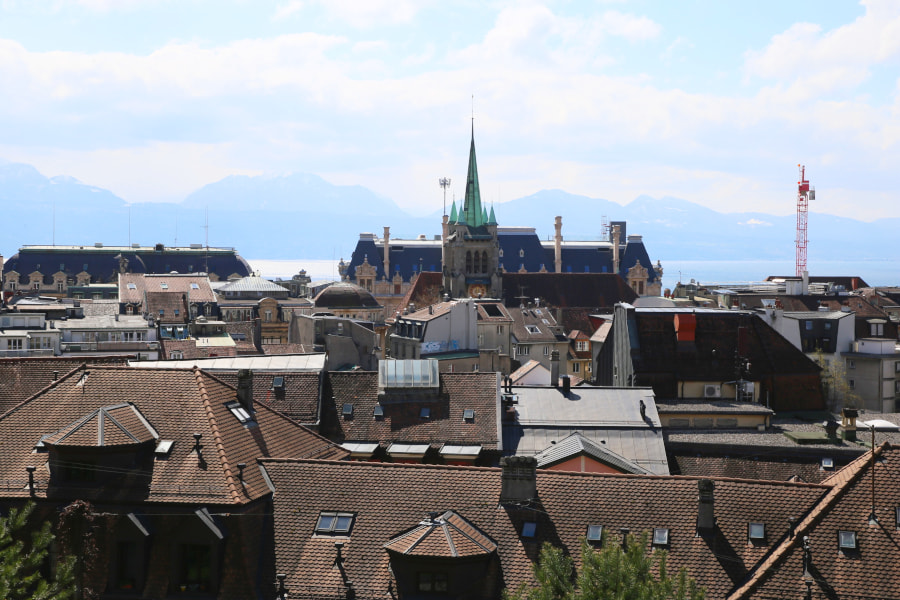
The urban layout of Lausanne is shaped by a rugged topography, characterised by several hills separated by two deep ravines carved out by the Louve and Flon rivers. The difficulties arising from this terrain have long posed an obstacle to traffic.
Lausanne was, in fact, a major crossroads where international routes to Italy, France and Germany converged, and heavy carriages, sometimes drawn by four, six or even eight horses, had to navigate narrow, winding streets with steep gradients.
A major breakthrough came in the 19th century with the construction, between 1836 and 1850, of the ‘Lausanne crossing’ based on the master plan by engineer Adrien Pichard. This project involved the construction of a ring road around the old medieval town, and overcame the main obstacles with a large bridge over the Flon ravine and a tunnel through the rocky outcrop of La Barre.
Restaurants and gastronomy
Lausanne, situated on the shores of Lake Geneva, is renowned for its rich and varied cuisine, which blends Swiss traditions with international influences. Among its specialities are fondue, raclette and perch fillet, as well as wines from the Lavaux vineyards. Thanks to its cosmopolitan population and international institutions, the city offers a wide variety of cuisines, ranging from Italian to Asian and Middle Eastern.
The town is home to several Michelin-starred restaurants:
- Restaurant de l’Hôtel de Ville de Crissier — three Michelin stars
- La Table du Lausanne Palace — two Michelin stars
- Pic at the Beau-Rivage Palace — two Michelin stars
- Le Berceau des Sens — one Michelin star
Transport
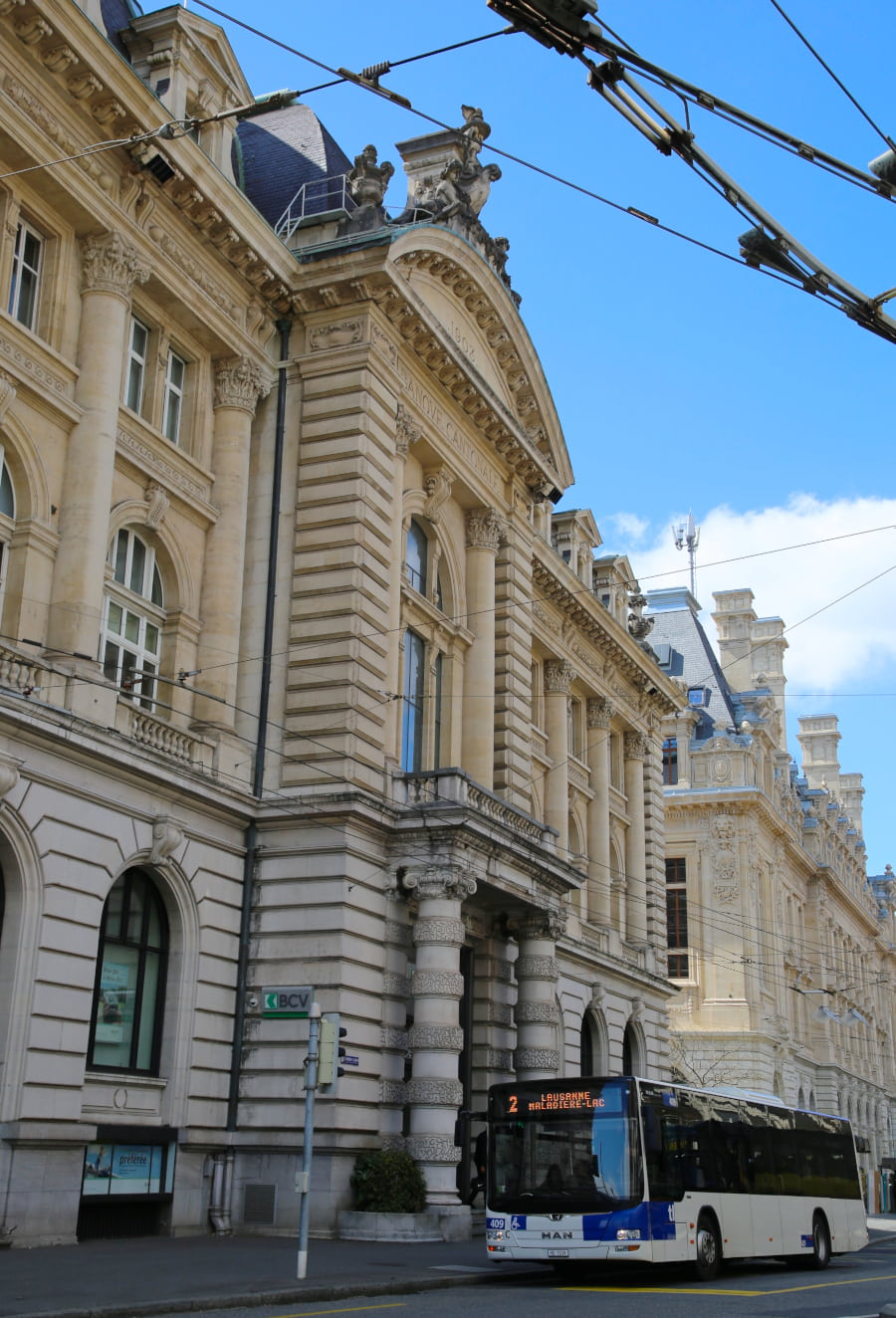
Transports publics de la région lausannoise (TL) is a public company founded in 1895 under the name Société des tramways lausannois, before adopting its current name in 1963. Its purpose is to operate the public passenger transport network of the same name in the city of Lausanne and its surrounding area.
Transports publics de la région lausannoise currently operates the two lines of the Lausanne metro, the ten lines of the Lausanne trolleybus network, the 30 lines of the TL bus network, the Service Pyjama night service and an on-demand transport service.
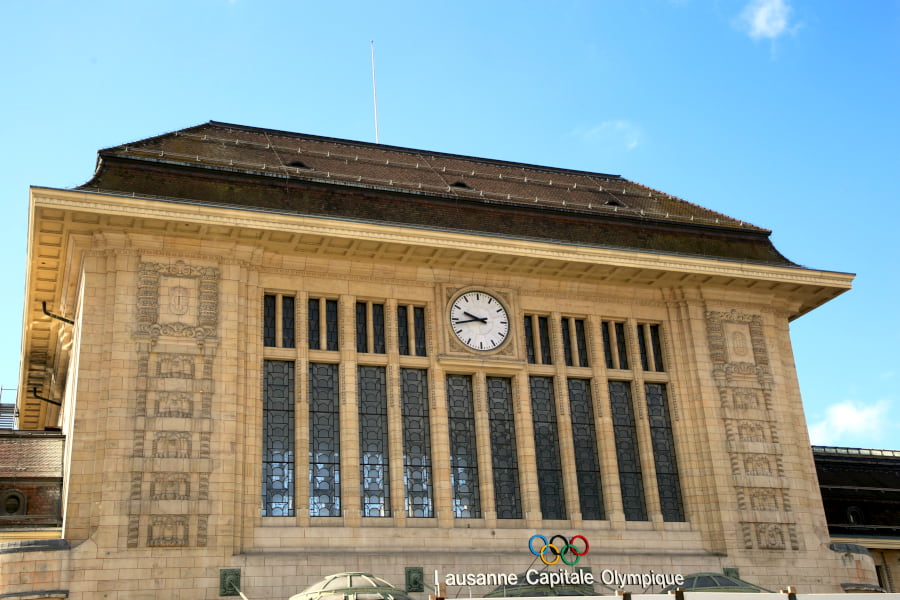
Lausanne railway station is a railway station in Lausanne, the main station in the canton of Vaud, serving over 650 trains a day. It was built between 1911 and 1916, modelled on Leipzig Central Station in Germany.
Lausanne-Blécherette Airport (ICAO code: LSGL) is a regional airport located north of Lausanne. It handles around 36,000 movements per year, mostly leisure and training flights, as well as 10% business flights.
The Lausanne Metro is one of the public transport systems serving Lausanne and its metropolitan area. It comprises two lines with very different characteristics and histories, totalling nearly 14 km. In 2025, the metro carried 52.9 million passengers. The Lausanne Metro is the only metro network in Switzerland.
Trolleybuses were introduced in 1932. It is also one of the oldest in the world still in operation, after those in Philadelphia and Shanghai. In 2023, the network comprises 11 routes operated by 89 trolleybuses, covering a total length of around 50 kilometres.
Main information
Canton: Vaud
Area: 41.38 km²
Coordinates: 46° 31′ 16″ N, 6° 37′ 52″ E
Languages: French, English
Population: 144,873
Currency: Swiss franc (CHF)
Visa: Schengen
Time: Central Europe UTC +2
See here Catalonia travel guide
See here Pyrenees travel guide
See here France travel guide
See here Spain travel guide




