

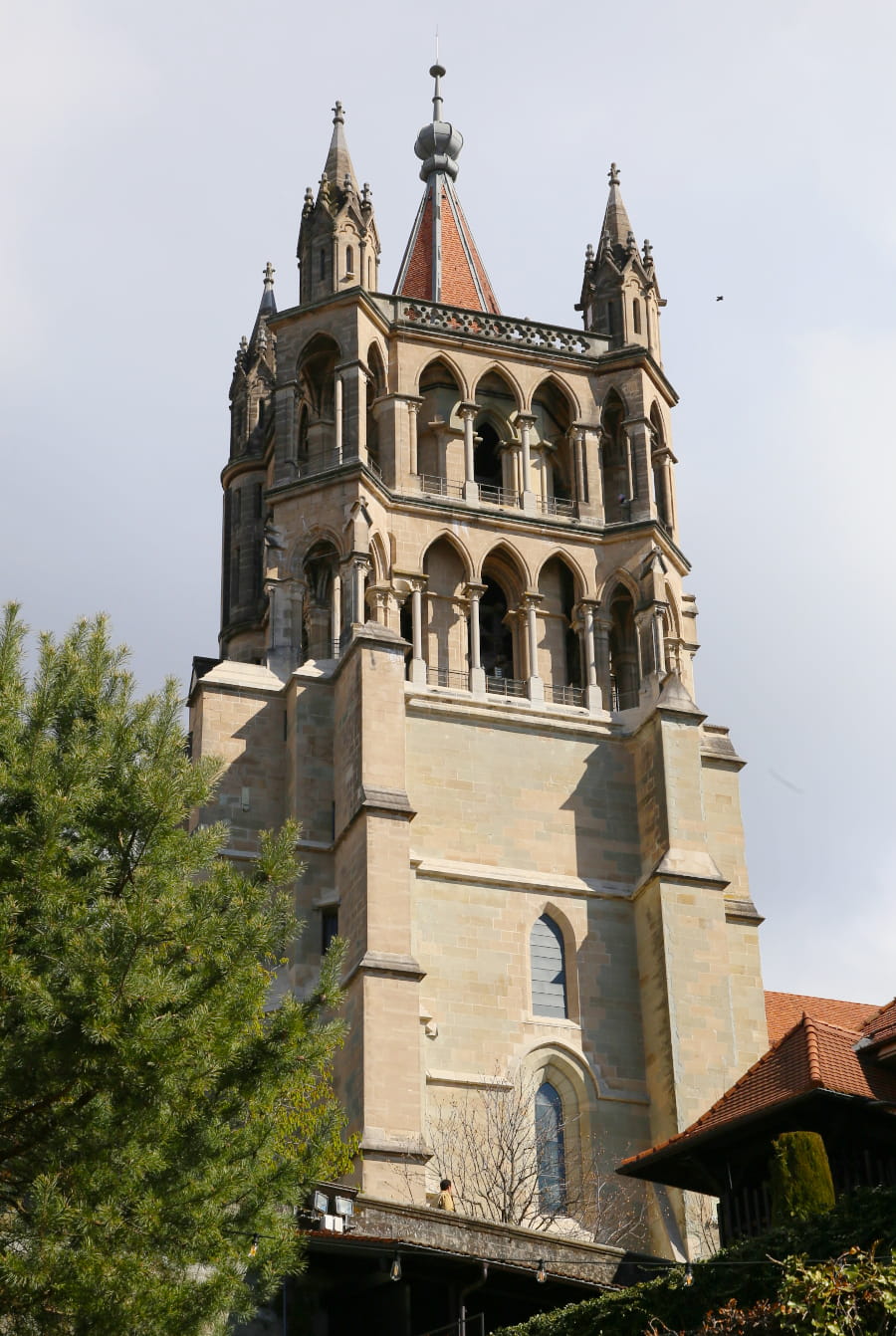
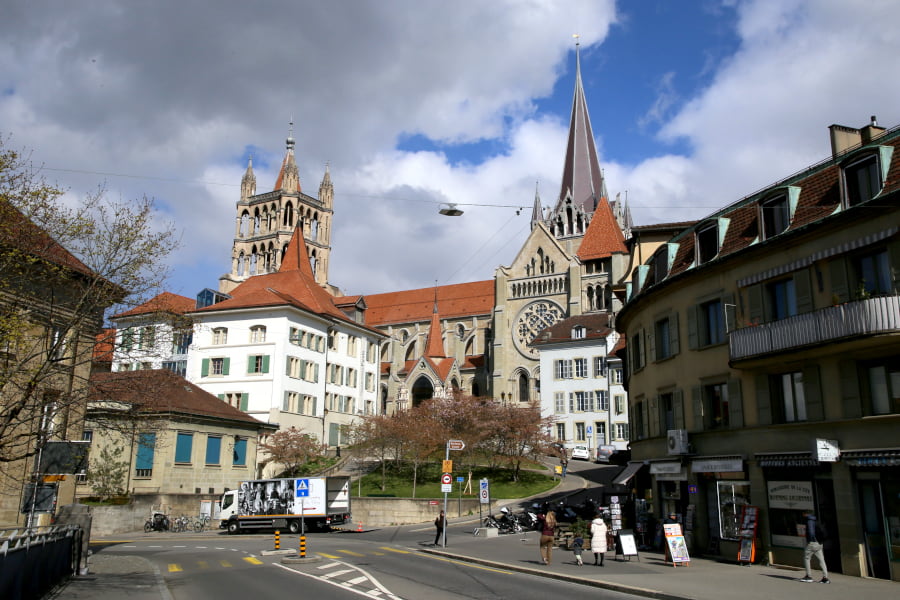
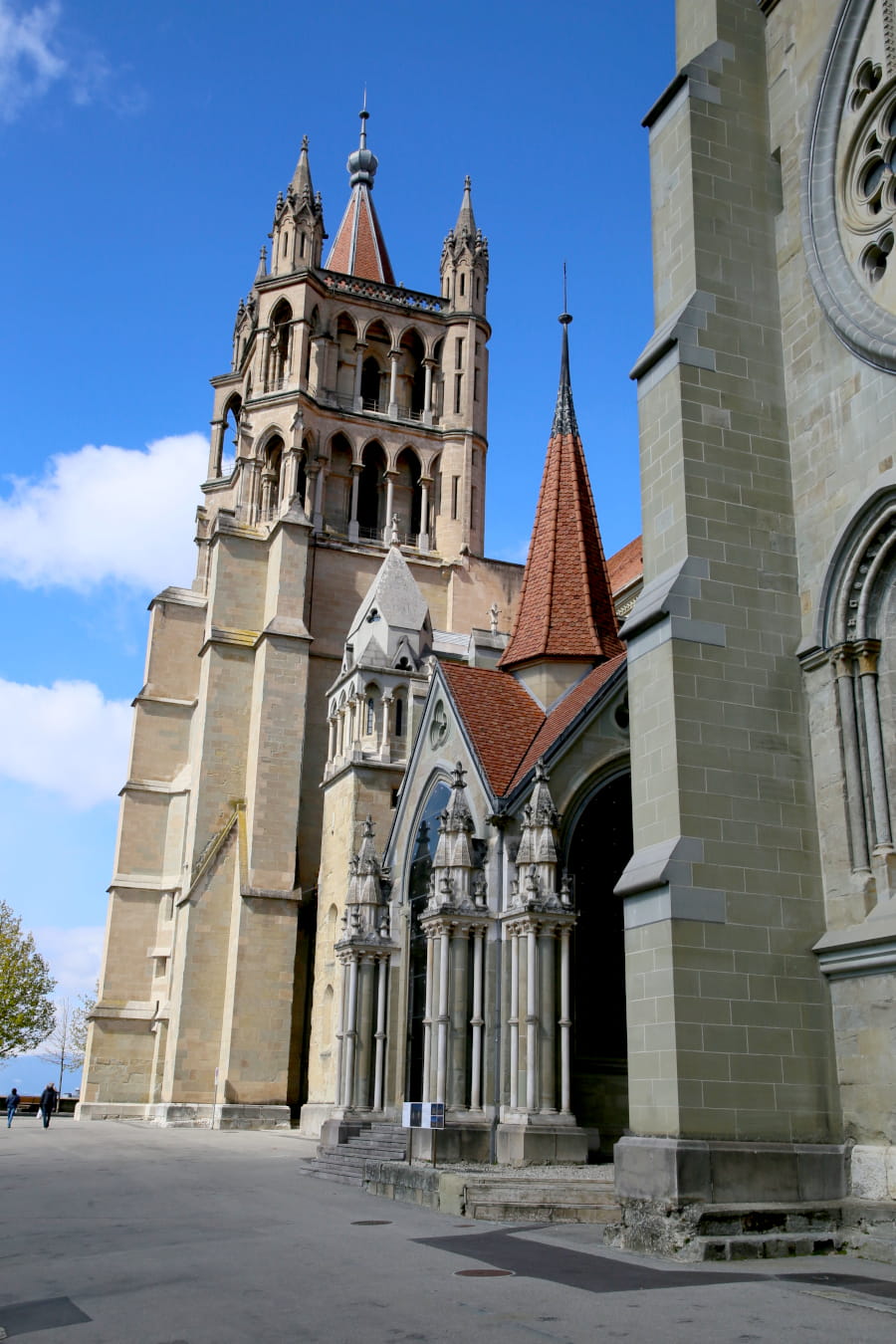
Lausanne Cathedral, formerly known as Notre-Dame Cathedral, is one of Switzerland’s most significant Gothic monuments. Dedicated to Protestant worship since 1536, it overlooks the city of Lausanne in the Swiss canton of Vaud. The parish is part of the Evangelical Reformed Church of the Canton of Vaud.
The building’s façade stretches 99.75 metres, and the lantern tower, restored by Viollet-le-Duc, stands 79.60 metres high.
History
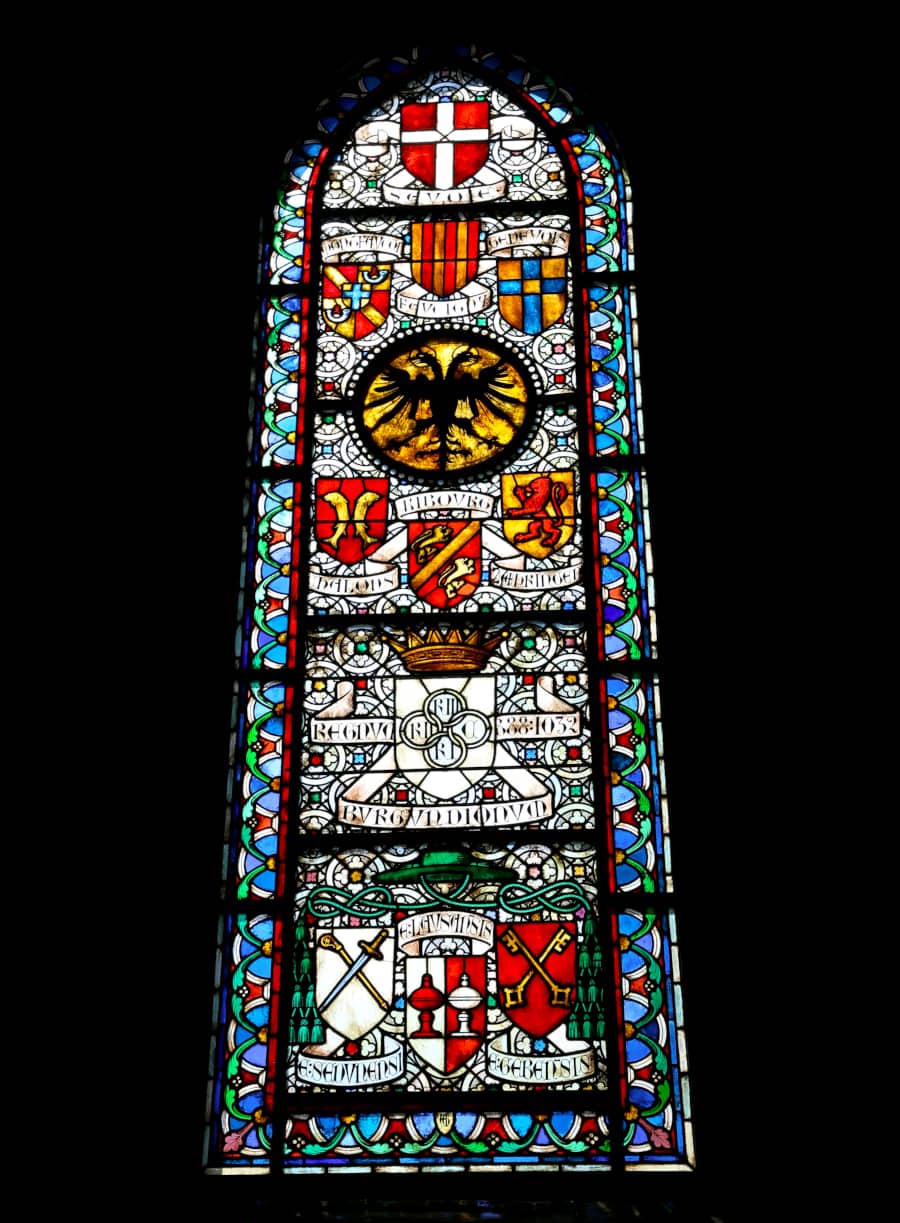
Replacing several earlier religious buildings (dating back to the 6th century), Lausanne Cathedral is a Gothic-style building constructed of molasse stone, work on which likely began during the episcopate of Landry de Durnes (1160 to 1174) and was completed around the mid-13th century, at a time when the region, with the exception of the city which was under the bishopric’s jurisdiction, was part of the County of Savoy. It was consecrated to the Nativity of the Blessed Virgin Mary under the title ‘Notre-Dame’ on 20 October 1275 in the presence of Pope Gregory X, the Bishop of Lausanne Guillaume de Champvent and Emperor Rudolf of Habsburg.
In the Middle Ages, it became a major pilgrimage site: 70,000 people visited it every year to venerate the miraculous statue of the Virgin, whilst Lausanne had a population of just 7,000.

The construction of Lausanne Cathedral took place between around 1170 and 1235. Whilst the initial work was carried out in the Romanesque style, successive master builders very quickly adopted the Gothic style in the decades that followed, a style more in keeping with the architectural trends of the time.
The nave and the painted portal were completed around 1230, whilst the western end was probably finished in time for the solemn consecration in 1275. The final phase is attributed to the master builder Jean Cotereel, who introduced forms characteristic of the English Gothic style. Over the course of its history, the cathedral suffered two major fires, the first in 1235 and the second shortly before 1320, both of which caused considerable damage.
Shortly before the Reformed Christianity, Bishop Aymon de Montfalcon undertook major works. The old, wide-open western porch was closed off by a large Flamboyant Gothic portal, construction of which began in 1515 but remained unfinished at the time of the Reformation. In its present state, it dates largely from the complete restoration of 1892–1909.

Now part of the parish of Chailly-la Cathédrale, the Protestant cathedral regularly hosts ecumenical services as well as cultural events (concerts). A few Catholic masses have also been authorised and celebrated in recent years.
The building is listed as a Swiss cultural asset of national importance.
On 28 May 2020, a delegation from the Vaud State Council announced the continuation of renovation work, as well as the replacement of the wicker chairs (in place since 1912) with benches featuring reversible backs.
Hours of working
Open every day from 9:00am to 5:30pm.
Main information
Canton: Vaud
Coordinates: 46° 31′ 21″ N, 6° 38′ 06″ E
Religion: Reformed (Calvinism)
Type: Cathedral
Affiliation: Evangelical Reformed Church of the Canton of Vaud
Architect: Jean Cotereel
Dominant Style: Gothic Architecture
Protection: Cultural Property of National Importance
See here Catalonia travel guide
See here Pyrenees travel guide
See here France travel guide
See here Spain travel guide




