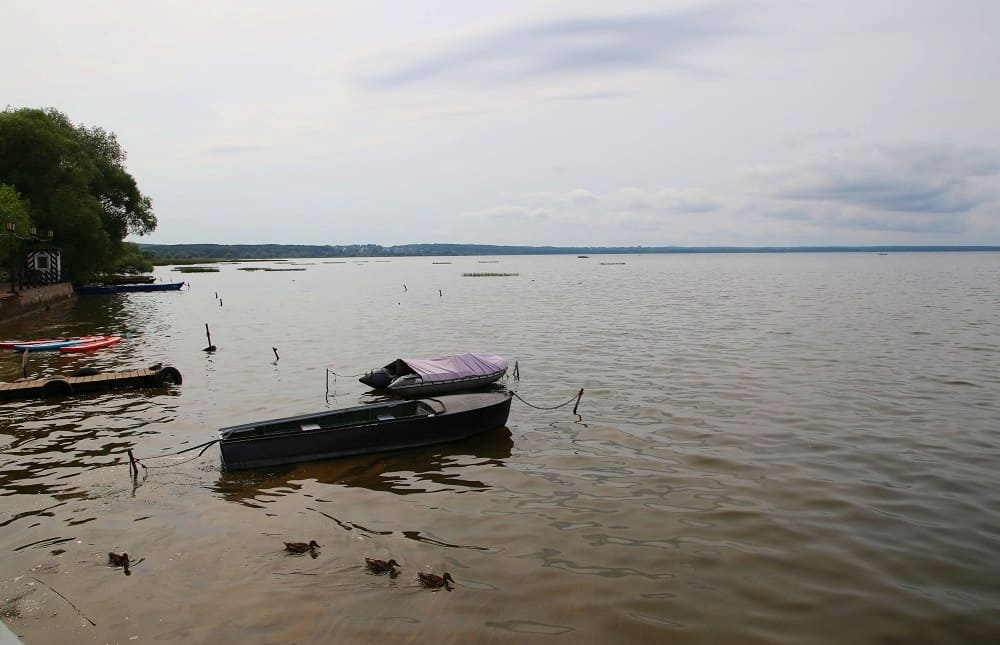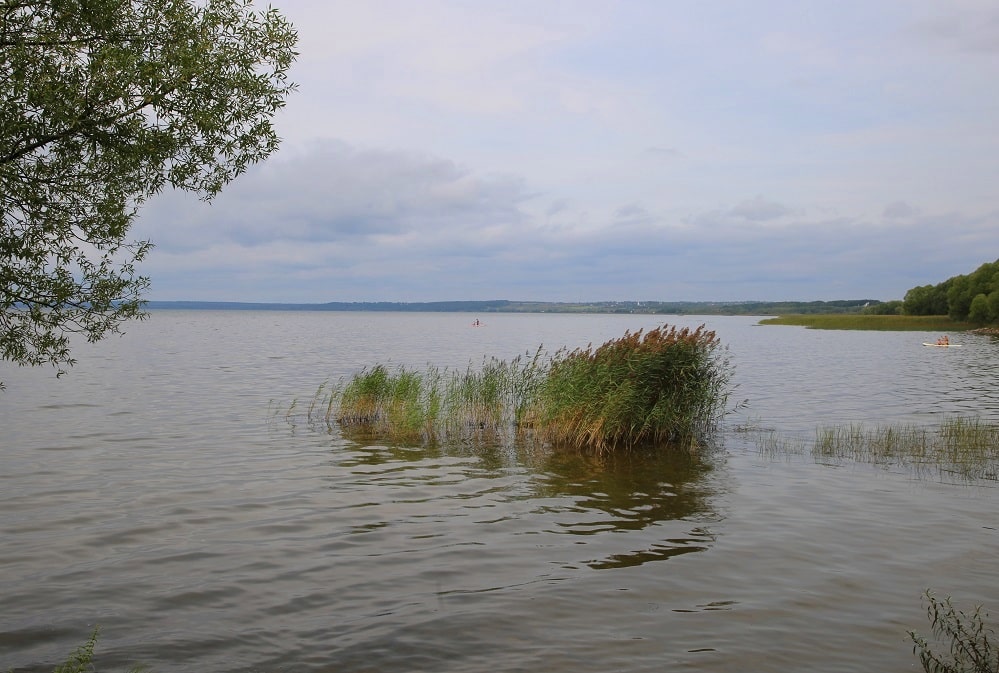
Lake Pleshcheyevo (Russian: Плещеево озеро) is a freshwater lake in the southwest of the Yaroslavl Region, Russia. It is part of Pleshcheyevo Lake National Park. The lake covers an area of 51.8 square kilometers, is 9.5 kilometers long, and 6.5 kilometers wide. Lake Pleshcheyevo is round, with flat, low-lying, and marshy shores. The lake’s depth can reach 25 meters, averaging 11 meters.
It is the second-largest lake in the Yaroslavl Region after Lake Nero.
The lake freezes over in November and melts in April. It is fed primarily by snow. Nineteen rivers and streams flow into it.
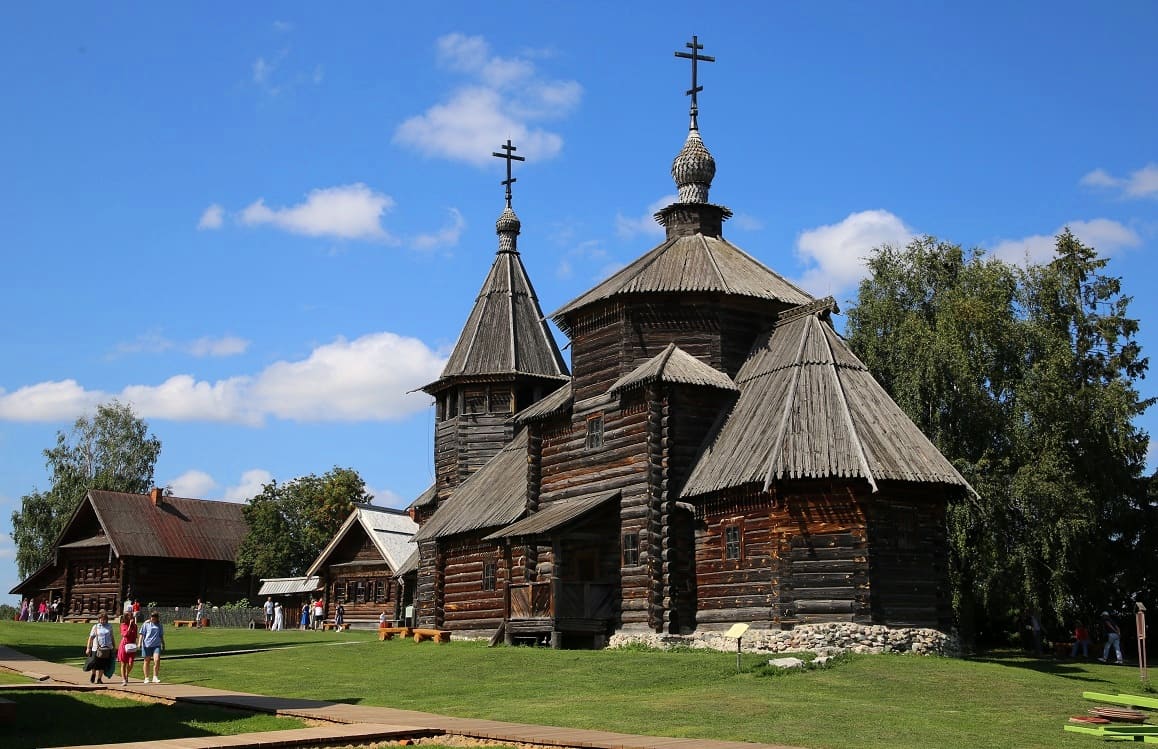
Nearby attractions include the Peter the Great “Botik” Museum, the Nikitsky Monastery, and the Kleshchinsky Archaeological Complex. The 12-ton Blue Stone on the northeastern shore is particularly striking.
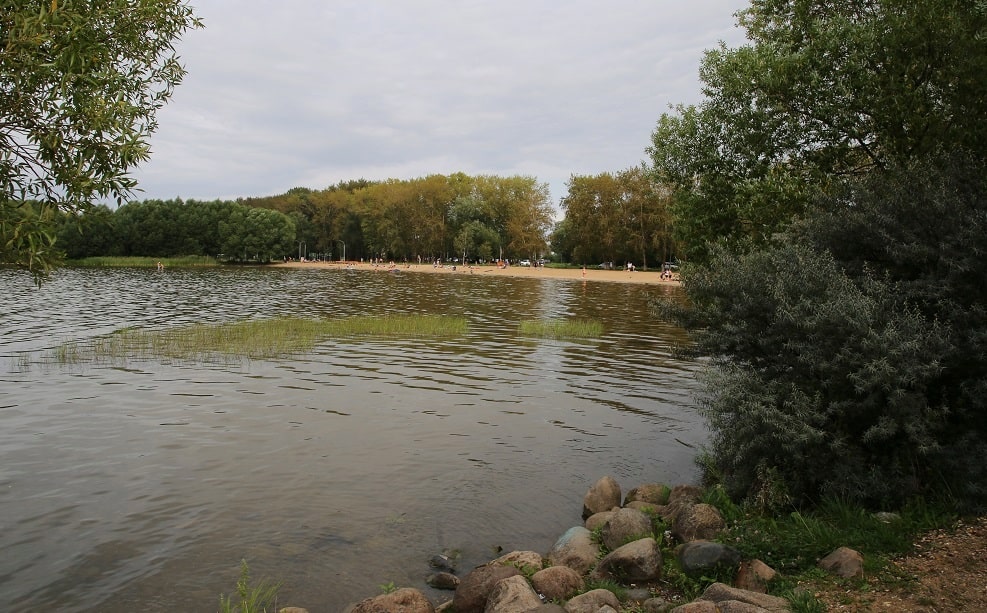
The main beach is located in Pereslavl-Zalessky. Parking and overnight accommodations are available nearby.
History
Lake Pleshcheyevo formed approximately 30,000 years ago after the retreat of continental glaciers. Geological evidence confirms its origin: the lake lies on the boundary of a glacial moraine and ancient alluvial deposits. In the past, the lake was significantly larger than it is today. Its former outlines are visible as an elevated rim to the east and south of the lake. The villages of Gorodishche, Bolshaya Brembola, Krasnoye, Veskovo, and Solomidino are located here.
At the end of the 17th century, Peter the Great built a training flotilla on Lake Pleshcheyevo for his “amusement” troops. It was revived for several years in the early 20th century.
Pleshcheyevo Ozero National Park
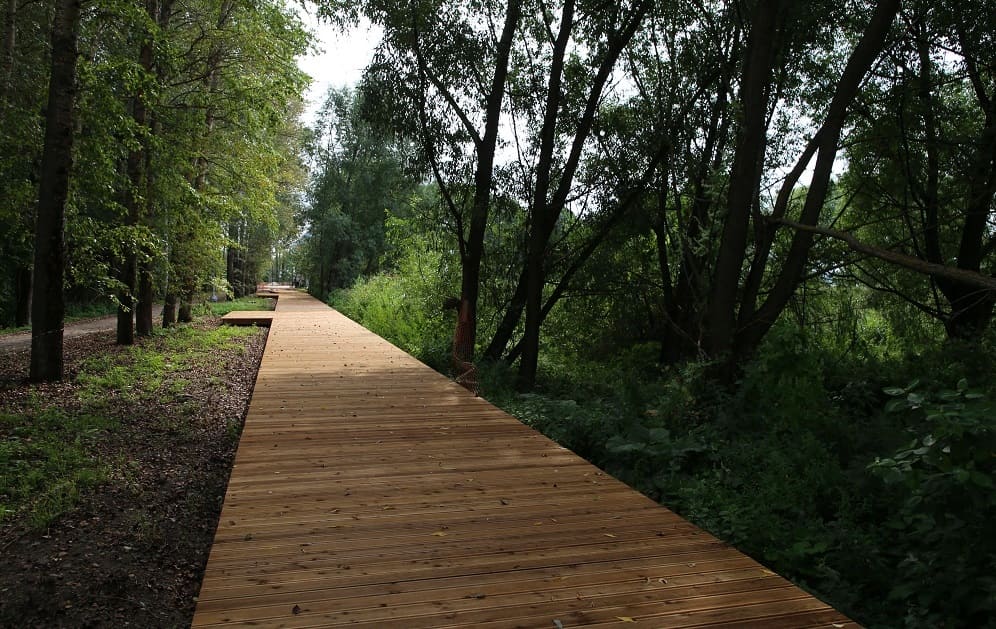
Pleshcheyevo Ozero (Lake) National Park (Национальный парк «Плещеево озеро») is located in the southwest of the Yaroslavl Region. It is located in Pereslavl District, in the center of the East European Plain, in the Upper Volga basin. The park is managed by the Ministry of Natural Resources and Environment of Russia.
Pleshcheyevo Lake National Park was founded on September 26, 1988.
The national park covers an area of 23,790 hectares. Of this, 15,271 hectares are forested, 5,963 hectares are aquatic, 554 hectares are agricultural, and 2,002 hectares belong to other land users. The park includes the Kriushkinsky Spring, 26 archaeological sites, two historical sites, and two architectural landmarks.
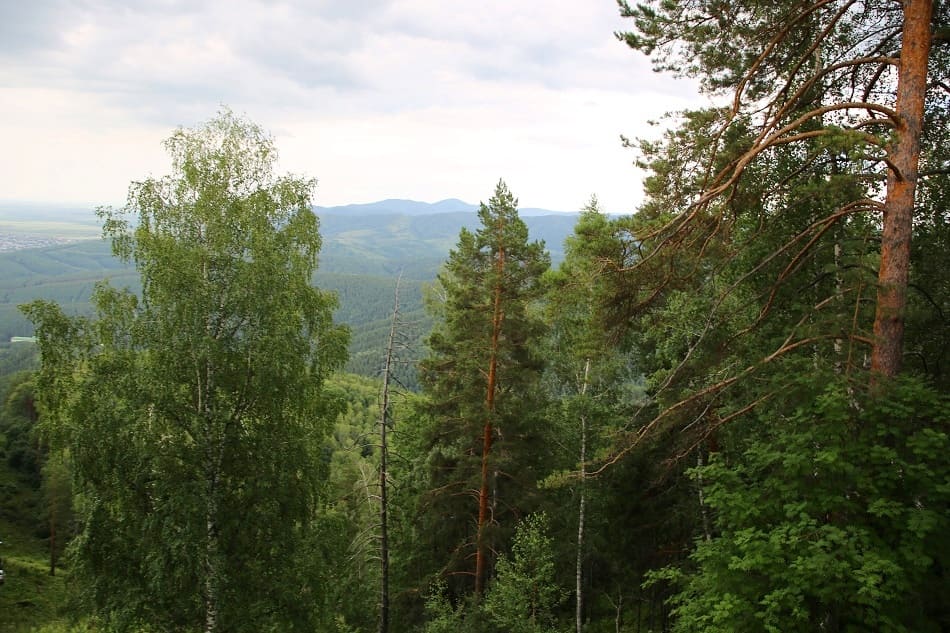
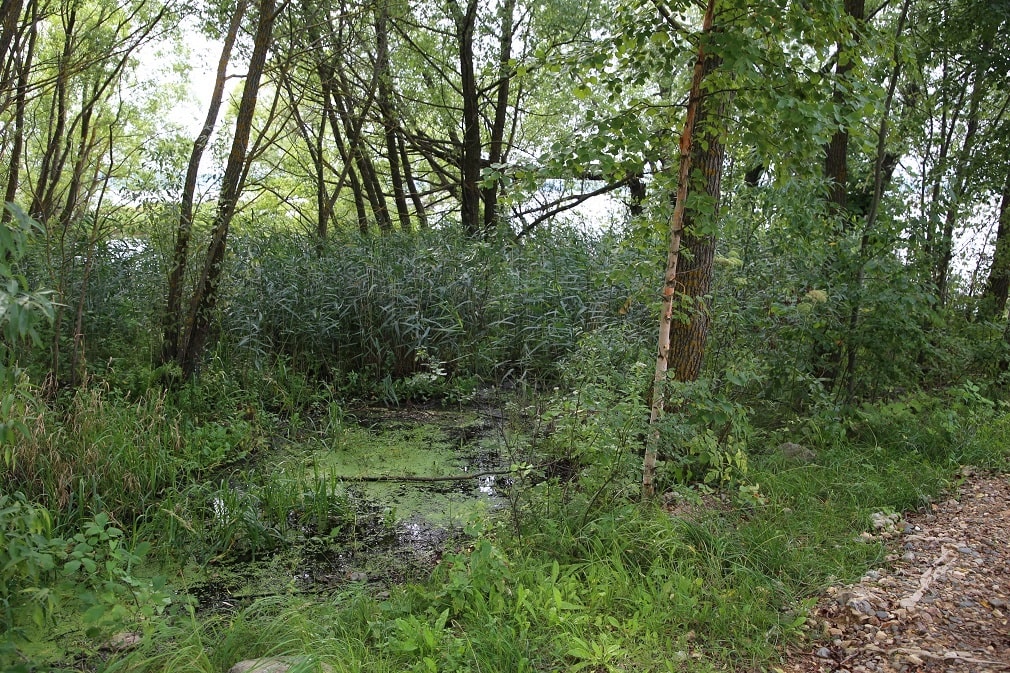
Forests and swamps occupy 48% of the park’s area. The main trees are small-leaved (aspen and birch) and dark conifers (spruce and pine). Oak, linden, maple, ash, and alder are also found. A total of 790 plant species from 98 families are found in the park. Nine of these are listed in the Red Book (list of endangered species), and 19 species are included in the regional list of rare and endangered plants in central Russia.
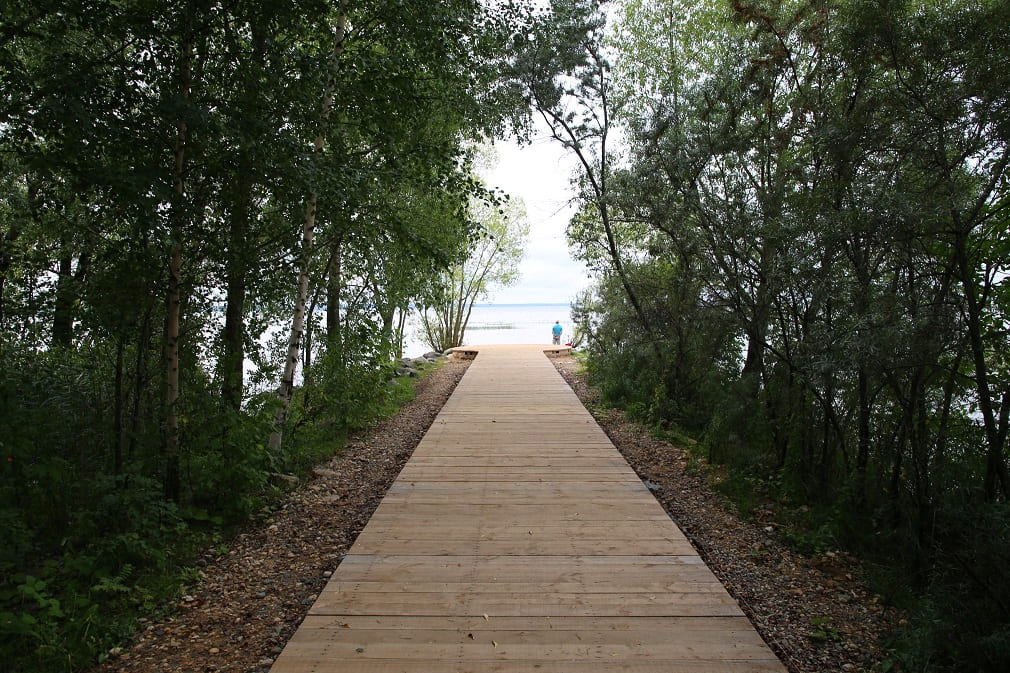
The park is home to approximately 300 vertebrate species. Near the village of Kukhmar, the “Grey Heron” nature trail operates within the park.
The lake is renowned for its diverse fish population: 16 species inhabit it. The reservoir is home to white bream, bream, burbot, perch, roach, vendace, bleak, and pike. You can also encounter loaches, ruffs, crucian carp, tench, gudgeon, and spined loach.
The lake’s shores are home to a variety of birds, including swans, white-tailed eagles, ospreys, ducks, herons, and gulls. Swans come here during migration.
How to get to?
From Yaroslavl: 2 hr (120 km) via М-8
From Moscow: 2 hr 15 min (140 km) via М-8