

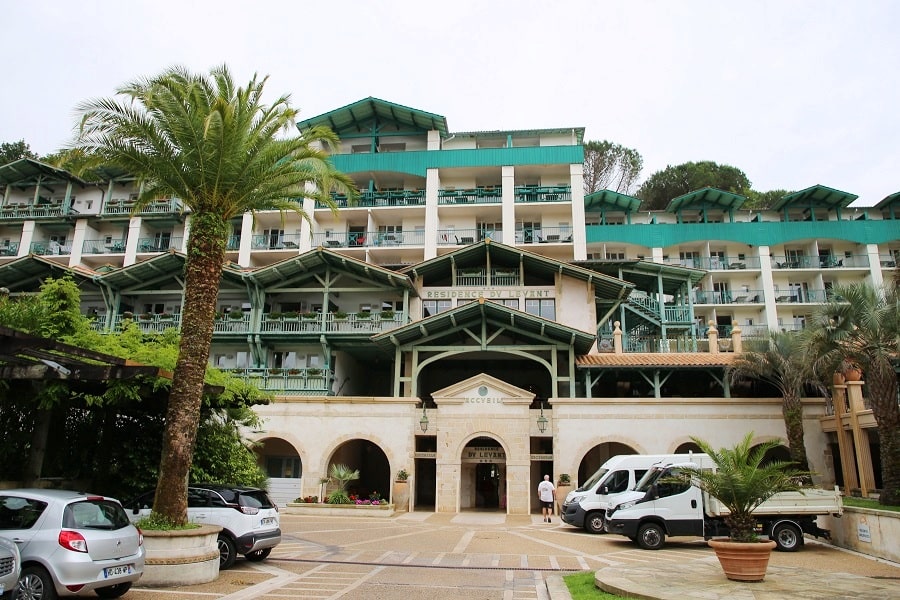
Cambo-les-Bains (Kanbo in Basque) is a French commune located in the Pyrénées-Atlantiques department, in the Nouvelle-Aquitaine region.
Historically and culturally, Cambo-les-Bains is part of the province of Labourd, one of the seven territories comprising the Basque Country (not to be confused with Basque Community).
The city is located on the Nive River.
A spa and health resort, Cambo has been known since ancient times for the properties of its waters. Its fame exploded in the 19th century with the popularity of thermal baths and the arrival of many prominent figures of the time, such as Empress Eugenie, Napoleon III, and King Edward VII.
Today, the town has become the 6th most popular spa destination in France and also the ideal starting point for exploring the Basque Country, enjoying nature, and discovering Basque traditions and culture.
Economy
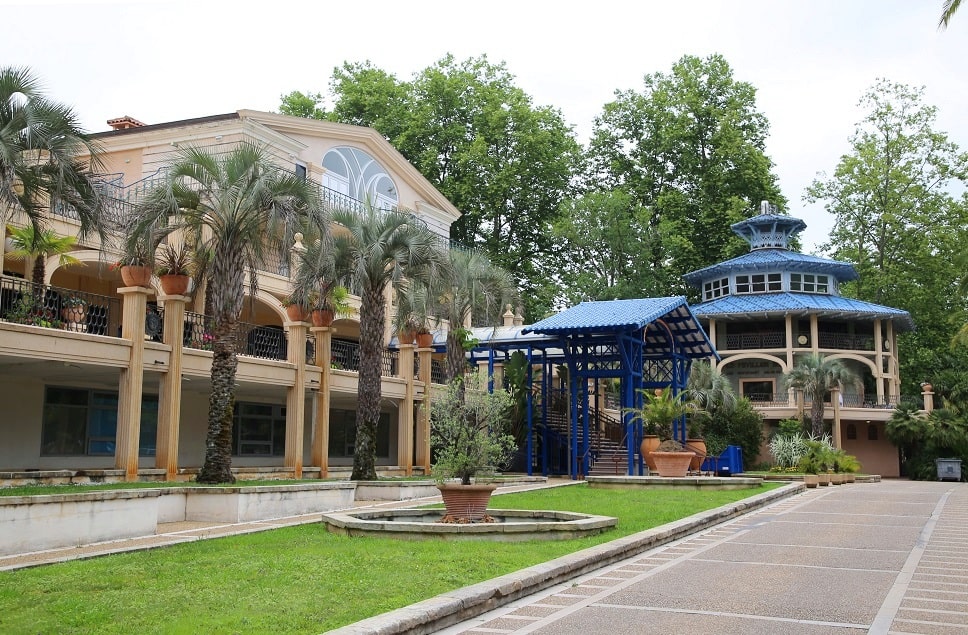
The town’s activity is strongly influenced by its spa vocation. A thousand jobs are directly dependent on it. Seventeen healthcare facilities are also located in the spa complex. The thermal baths are dedicated primarily to care and are reserved only for those concerned.
The rest of the economy is mainly oriented towards agriculture and horticulture. The town is part of the Ossau-Iraty appellation and the Espelette pepper production area.
Tourism
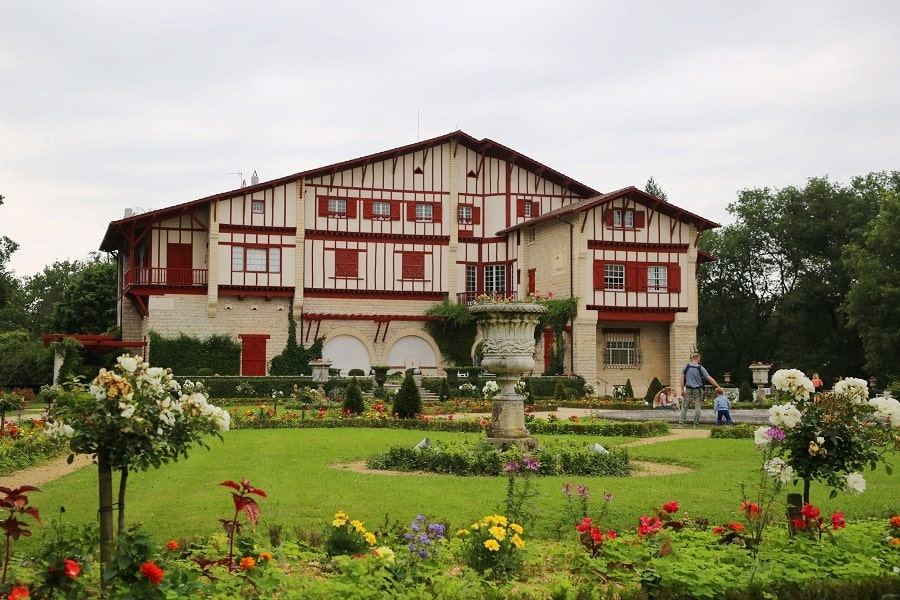
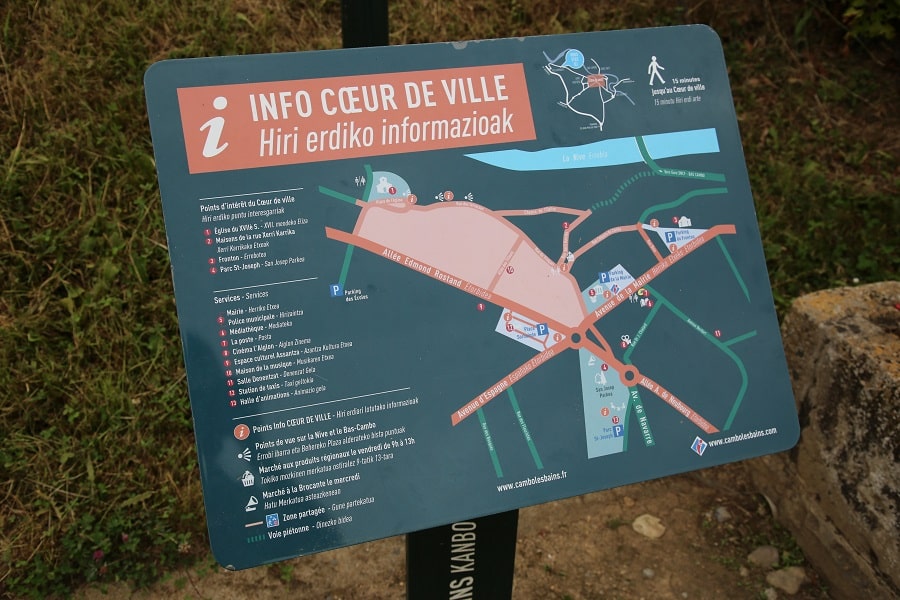
The Villa Arnaga is a villa built by Edmond Rostand (French poet, writer, and playwright) in Cambo-les-Bains at the beginning of the 20th century. The villa and its grounds, owned by the commune of Cambo-les-Bains since 1960, house the Edmond Rostand Museum.
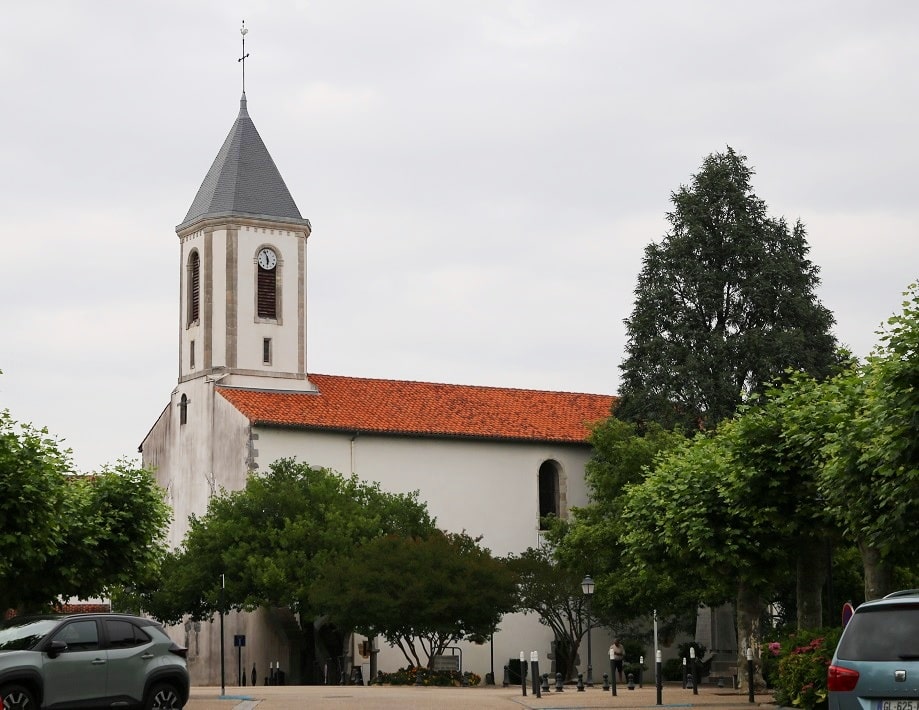
The Saint-Laurent church dates from the 16th century but was remodeled in the 17th century. Its bell tower was built in 1875. Outside, around the church, you can see old disc-shaped headstones on the site of the old cemetery of Cambo-les-Bains. These are emblematic funerary monuments symbolizing the passage of the deceased’s soul from earthly life to heavenly life. Very often, the round part is engraved with a Basque cross, the family name, or symbols representing the life or profession of the deceased. Inside the church, there is a 17th-century gilded wooden altarpiece, listed as a Historic Monument.
The thermal baths were already known in the Gallo-Roman period, but it was much later, in 1761, that the first thermal baths (buildings) were built. The establishment was destroyed and rebuilt in 1820, 1876, and then in 1930. After a cessation of activity for more than 40 years, thermal baths resumed in 1977, and the Cambo-les-Bains establishment is today one of the jewels of French thermal heritage.
Transport
Saint-Jean-Pied-de-Port station is a French railway station serving the Bayonne to Saint-Jean-Pied-de-Port line. It is an SNCF station served by trains on the TER Nouvelle-Aquitaine network. The city is also served by line 40 (Espelette—Bayonne) with a frequency of 2 hours. The trip takes 45 minutes and costs €1.40.
By car
From Pau: 1 hr 28 min (122 km) via A64
From Bordeaux: 2 hr 15 min (205 km) via A63
From Andorra: 5 hr 1 min (414 km) via A64
From Barcelona: 5 hr 46 min (567 km) via AP-2
From Paris: 7 hr 16 min (793 km) via A10

Main information
Area: 22.49 km²
Coordinates: 43°21’38.3″N 1°23’59.5″W
Population: 6715
Language: French
Currency: Euro (€)
Visa: Schengen
Time: Central-European UTC +1
See here Pyrenees travel guide
See here France travel guide
See here Spain travel guide
See here Andorra travel guide




