BMW R-50
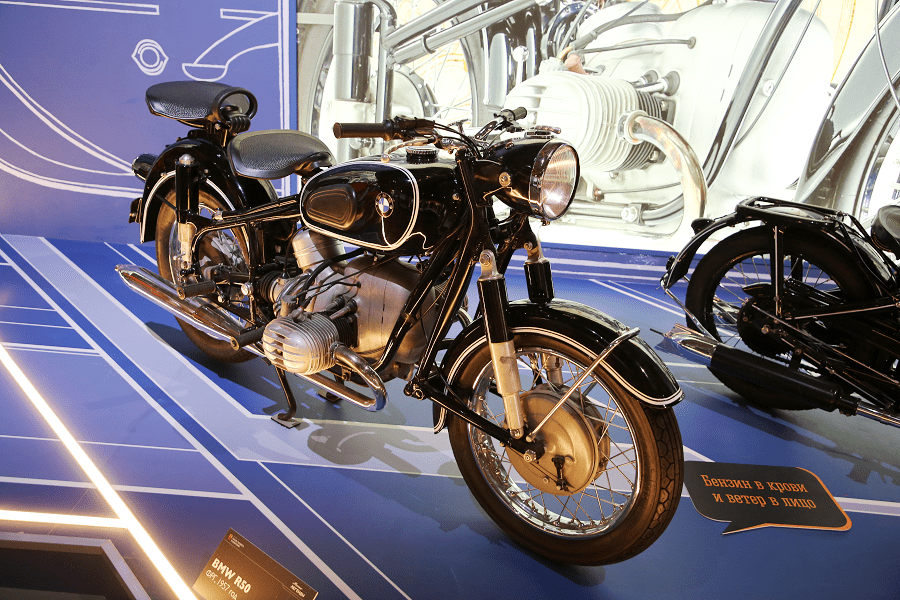
The BMW R 50 is a motorcycle manufactured by BMW in the second half of the 1950s with a 2-cylinder four-stroke OHV boxer engine. It is the basic model of a series of largely identical touring and sports motorcycles with engines of different power levels. The predecessor of the R 50 was the BMW R 51/3 model with 18 kW rated power, with telescopic fork and straight-travel suspension. The R 50, built from 1955, differs from it in that it has a full swinging chassis with a pushed long swinging arm and rear swinging arm as well as encapsulated suspension and the slightly increased engine power to 19 kW.
Design features
The double-tube frame is welded from tubular steel with ball heads attached to the side for sidecar operation. The TR 500 from Steib was a suitable sidecar, but required a special gear ratio for the cardan drive. The mudguards and the tank are made of sheet steel. The rims and solid hubs are made of aluminum.
The engine block, like the gearbox and the rear axle drive, is made of cast aluminum. The engine and exhaust system are bolted directly to the frame. Only the upper attachment of the engine to the frame is made of rubber disks. The gearbox housing is bolted to the engine block.
Engine
The engine is, like the previous model, a longitudinally installed two-cylinder four-stroke boxer engine. The cylinders are made of gray cast iron, the cylinder heads are made of aluminum. The camshaft, driven by a pair of gears, is located above the crankshaft. It operates the overhead valves via tappets, pushrods running in chrome-plated steel tubes and rocker arms. The rocker arms and the piston pin are mounted in bronze bushings in the upper connecting rod eye. The oil pump is installed at the front below the crankshaft. It is a simple gear pump (with appropriate reduction) driven by the crankshaft via gears. The watertight encapsulated DC alternator is located on the front crankshaft stub behind the aluminum cover. The charge regulator for the lead accumulator is located under the cover of the alternator. The heavy flywheel (with the ignition setting mark visible in the inspection hole) which accommodates the single-disk dry clutch sits on the rear crankshaft stub. The clutch is operated via a thrust bearing and a push rod running through the hollow main gearbox shaft.
The slide carburettors are 24 Bing float chamber carburettors (model: 1/22/45, -46, 1/22/131 or -132) with a conical needle in the round slide. The wet air filter element sits on the gearbox. The intake filter is a steel mesh that is moistened with oil and on which the dust adheres. It is used for coarse filtering of the intake air. The air filter is not changed for maintenance, but cleaned and re-moistened with oil.
Drive
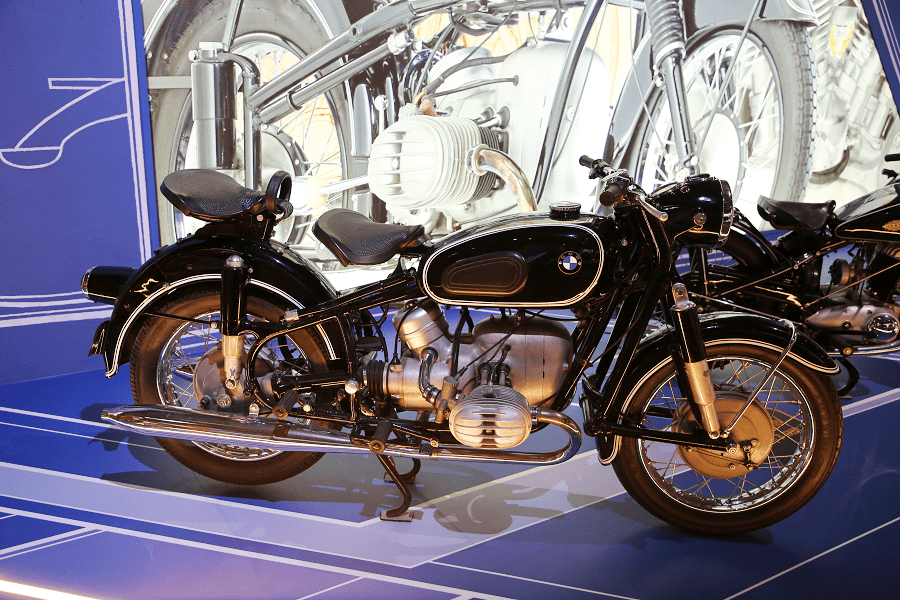
The R 50 has a foot-operated four-speed gearbox with dog clutch, idle indicator and kick starter. An additional hand shift lever, often found on earlier BMW motorcycles, is missing on this model. The drive train requires an angle-movable and length-tolerant torque transmission element at the gearbox output because of the movable swing arm. For this purpose, there is a cardan joint at the gearbox output and a length compensation at the input of the rear wheel gear. A Hardy disc was not used, as was still common on previous models. The cardan shaft to the rear wheel runs in the steel tube of the rear wheel swing arm, which at the end accommodates the aluminum angle gear with spiral bevel gear teeth (90° deflection). The entire drive train is encapsulated against dirt and moisture and is maintenance-free except for the oil change required every 12,000 km.
Wheels and brake system
The R 50 was the first two-cylinder motorcycle from BMW after the R 51/3 to have aluminum full-hub brakes and aluminum rims. The previous model R 51/3 still had steel half-hub brakes (“can lid” brakes) with steel rims, which do not achieve the same deceleration values as the modern aluminum hubs with a larger braking surface.
Chassis
The chassis is a welded double-tube frame made of steel. With the exception of minor changes during model maintenance, it was used in the entire series from the R 50 to the R 69 S. The front wheel is guided on a pushed long-arm swing arm with two spring struts and oil pressure shock absorbers, the rear wheel on a long swing arm, also sprung and dampened by two spring struts with integrated oil pressure shock absorbers. The rear spring preload can be adjusted in two stages for operation with a pillion passenger. A special feature is the sidecar operation option, which has been prepared down to the last detail: the front long swing arm can be adjusted to a short caster using a reversible threaded rod for easier steering when towing a sidecar. When using a sidecar, the rear wheel gear ratio must be changed and thus also the speedometer.
Manufacturer: Bayerische Motoren Werke AG (BMW)
Assembly: Germany
Years of production: 1955—1969
Production: 34,180 units
Length: 2125 mm
Width: 660 mm
Height: 980 mm
Engine: 2 cylinders; 494 cc
Power: 25 HP
Max speed: 145 km/h
Fuel consumption: 4 l/100 km
Weight: 195 kg
FSO Museum (VDNKh, Moscow, Russia)
See also Transport blog
See also Cars blog
See also Motorcycles blog
See also Buses blog
See also Shipbuilding blog
See also Motors and Engines blog
See also Trains and railways blog
See also Trucks and Cargo Vehicles blog
See also Tractors and Special Equipment blog
See also Tanks and Armored Vehicles
See also Airplanes blog
See also Helicopters blog
See also Artillery, Missiles and Rockets blog
See also Bicycles blog