BMW R-100
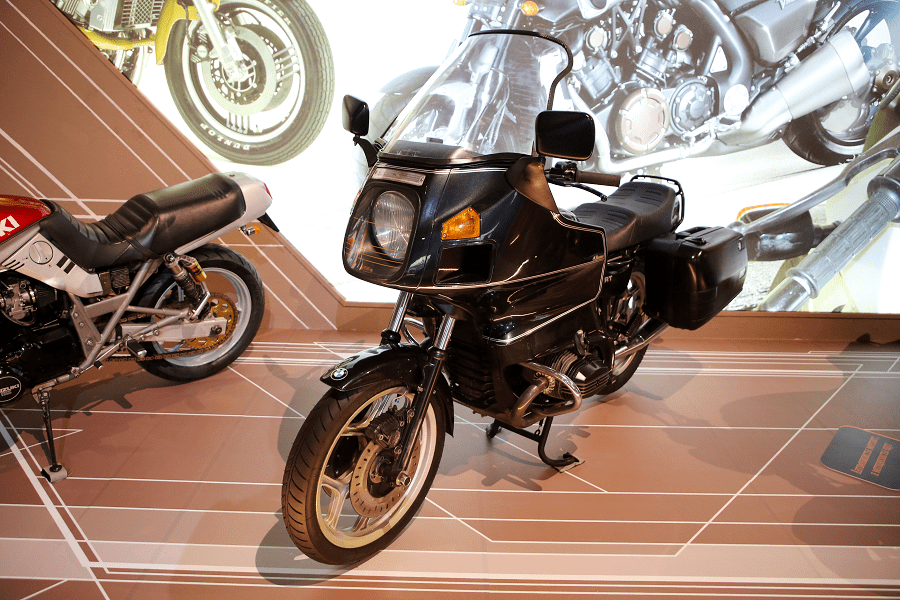
BMW R 100 RT
BMW R 100, without and with the additions T, S, CS, RS, RS Classic, RT, RT Classic, R and GS, is a name used by BMW for various motorcycle series, all of which have a two-cylinder four-stroke boxer engine with a displacement of almost 1000 cm³. The name was used for different models from 1976 to 1996.
First (/7) and second series
When the new series was introduced with the collective name “Stroke Seven”, there were the model variants BMW R 100 RS (70 HP), R 100 S (65 HP), R 100 (60 HP), R 75/7 (50 HP) and R 60/7 (40 HP). The internal designation was Type 247.
The R 100 RS was the first motorcycle with a full, frame-mounted fairing as standard. In addition, this fairing differed significantly from the usual fairings from various suppliers up to that point. The design, like that of the R 90 S, was created by Hans Muth. The 100 RS fairing weighs 9.5 kg.
The R 100 S (later CS for Classic Sport) has the same handlebar-mounted half-shell fairing as the previous model R 90 S and a rear apron.
Later, three more machines came in the same series, the R 80/7 as a slightly larger displacement replacement for the R 75/7, then a touring model (R 100 RT), essentially identical to the R 100 RS, but with a modified upper fairing and higher windshield, and the R 100 CS, an S with 5 HP more power.
With a top speed of over 200 km/h, the R 100 CS was one of the fastest production motorcycles in the world.
Brakes
The R-100 models received a double disc brake system in the front wheel. In the model years up to 1980 they received a swivel caliper brake from ATE with a cable-operated master brake cylinder under the tank. From model year 1981 the models received other fork tubes with Brembo fixed caliper brakes. The hand brake cylinder was placed on the right handlebar end. With the introduction of the Monolever models in 1986, the Brembo fixed caliper brakes were mounted on the front fork tubes. At the rear there was a full hub inner shoe drum brake (Simplex). From model year 1978 the R 100 RS and the RT received a disc brake with a fixed caliper from Brembo on the rear wheel, from model year 1986 the drum brake with rod operation again.
Wheels
The then new top models initially had wire spoke wheels like the previous models, but soon aluminum filigree cast wheels were added. But these wheels were not free of defects. There were isolated cases of broken spokes on the first cast front wheels, which is why these wheels were subsequently replaced with a reinforced version on all vehicles delivered.
Chassis
The telescopic fork on the front wheel has stanchions with a diameter of 36 mm without bellows. At the rear, up to model year 1984, there was a two-sided swing arm with two shock absorbers, from model year 1986 onwards, the single-sided swing arm, also known as a monolever, was used.
Ignition
Up to model year 1980, a contact-controlled high-voltage capacitor ignition was installed, initially open, later in a tin can. From model year 1980, a Hall sensor took over the function of the interrupter.
Restart the production in 1986
After 33,648 units built and the special model “Classic 500” of the R 100 RS alone, limited to 500 units, BMW wanted to push the water-cooled K75 and K100 models at the end of 1984 for environmental and marketing reasons and catch up with the technical lead of the Japanese motorcycle industry. The company also wanted to stop producing the “old” two-valve boxer models. After this decision led to protests from customers and dealers, BMW started supplying R 100 models again, but with modified, lower-horsepower engines with improved torque at 44 kW (60 HP). Then an 800 version with 37 kW (50 HP) was added. At the same time, in 1980, the R 80 G/S enduro model was released with a modified chassis (single-sided swing arm at the rear) and simpler equipment (without a tachometer), which was replaced by the GS model (without a slash) in model year 88. In 1981, 2,333 units were sold in West Germany.
From 1985, the street versions were also equipped with a single-sided swing arm. Many small details on the engine were improved. From 1988, the Paralever was introduced on the two-valve engine, first in the GS models R 80GS and R 100GS, and later also in the street versions R 80R and R 100R. The Paralever absorbs the righting moments of the load reactions on the cardan shaft and thus eliminates the righting moments of the older models. This also ended the reason for the saying “rubber cow” that motorcycle journalist Ernst Leverkus, known as “Klacks”, once coined. Production of the R 100RS ended in 1989, and in 1992 200 units were assembled from remaining stocks, making a total of 6081 units produced.
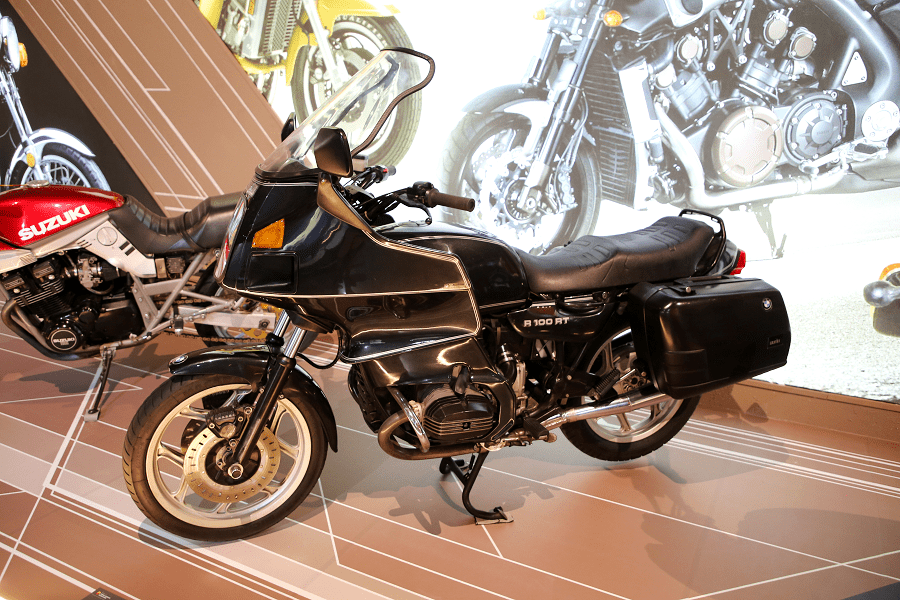
Manufacturer: BMW Motorrad (BMW)
Assembly: Spandau (Berlin, FRG)
Years of production: 1978—1996
Length: 2110 mm
Width: 746 mm
Height: 1465 mm
Engine: 2 cylinders; 980 cc
Power: 60 HP
Max speed: 200 km/h
Fuel consumption: 6 l/100 km
Weight: 229 kg
FSO Museum (VDNKh, Moscow, Russia)
See also Transport blog
See also Cars blog
See also Motorcycles blog
See also Buses blog
See also Shipbuilding blog
See also Motors and Engines blog
See also Trains and railways blog
See also Trucks and Cargo Vehicles blog
See also Tractors and Special Equipment blog
See also Tanks and Armored Vehicles
See also Airplanes blog
See also Helicopters blog
See also Artillery, Missiles and Rockets blog
See also Bicycles blog