Peugeot 406
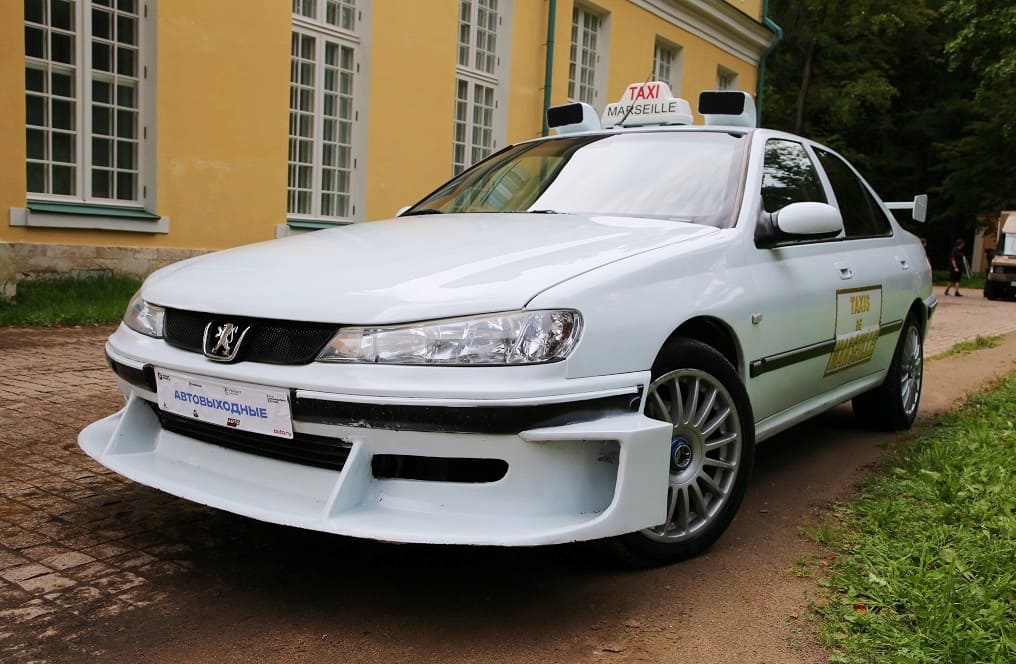
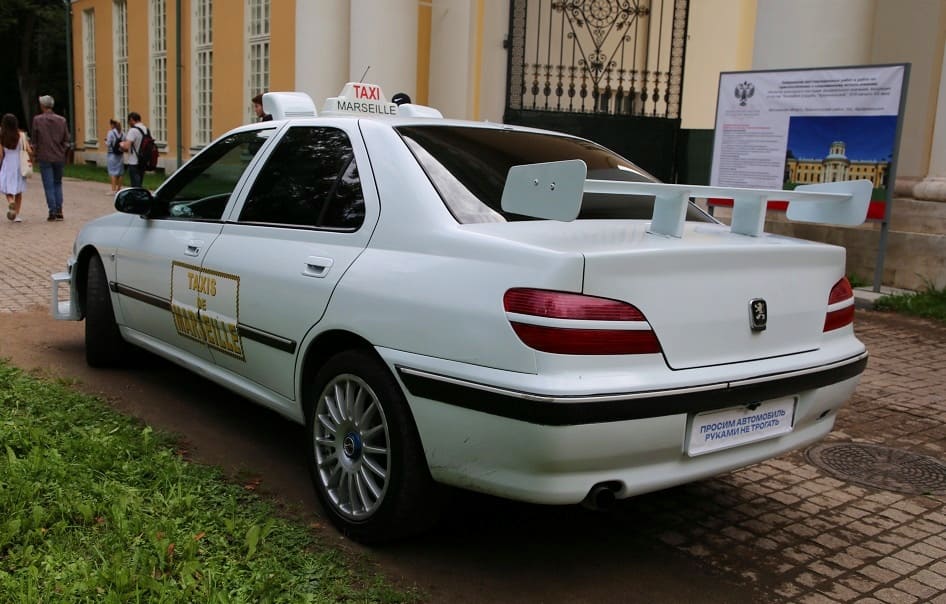
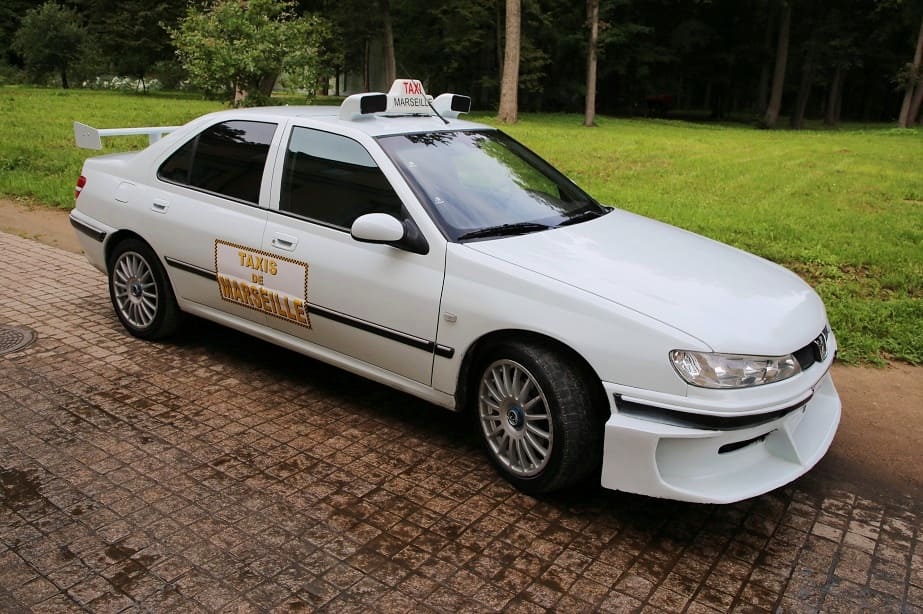
Peugeot 406 “Taxi Marseille” in Arkhangelskoye (Moscow region, Russia)
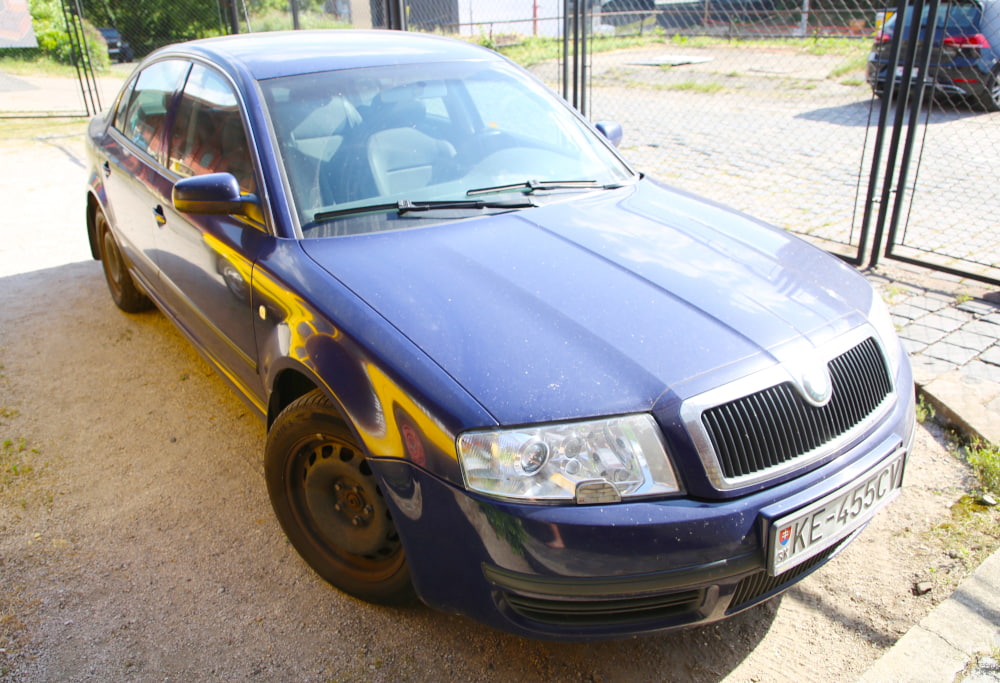
The Peugeot 406 is a sedan manufactured by the French company Peugeot. Production began on October 19, 1995, and ended on April 15, 2004. The car was built at the renowned Sochaux plant (Bourgogne).
The 406 replaced the 405, with sales beginning in 1995. The car was offered in three body styles: sedan, station wagon (since October 1996), and coupe (since May 1997).
The 406 V6 received a new 24-valve PSA-Renault V6 engine (ES 9) with a 60-degree valve angle. This replaced the old 90-degree PRV engine produced by the PSA Group. All 406 models feature a multi-link rear suspension.
The car was noted for its excellent handling and elegant design, which ensured its popularity. Peugeot sold over 1.6 million units of the 406. In 1995, the model won the award for most beautiful car of the year.
In 2004, the 406 gave way to the 407. However, in Nigeria and Egypt, it continued to be assembled as a complete knockdown (CKD) model until 2008.
History
In the early 1990s, Peugeot began work on the D8 project to replace the 405. The goal was to retain the recognizable style of its predecessor, but in a more compact form. The result was a lower, sportier, and sleeker sedan, reminiscent of the dynamic styling of BMW. The sedan’s development cost Peugeot 5.7 billion francs.
At the same time, starting in 1992, the company commissioned Pininfarina to create the Peugeot 406 coupe. Although it was a separate model, it shared the same wheelbase, chassis, engines, and most mechanical components as the saloon. Therefore, the Peugeot and Pininfarina teams collaborated closely throughout the project.
Generation (Phase) 1 (October 1995 – March 1999)
From March 1998, a new four-speed electronically controlled AL4 automatic transmission was available on some models with two-liter engines. It replaced the ZF4 HP 20. This was the first transmission developed by Renault and PSA. It ensured independence from ZF, which continued to supply the automatic transmission for the V6 engine. The AL4 is a self-adaptive transmission, meaning it adapts to driving style using a computer using fuzzy logic. A rear wiper was available as an option.
Phase 2 (March 1995 – June 2004)
In February 1999, the Peugeot 406 received a facelift. The updated hatchback now had a more elegant appearance. The radiator grille featured a honeycomb pattern. The taillights received body-color inserts, and the trunk lid became convex. The center console of the dashboard was slightly modified.
The car also received three new engines: a 2.0-liter 16-valve petrol (EW10J4), a 2.0-liter HDi diesel (DW10TD), and a 2.2-liter 16-valve petrol (EW12J4).
In July 2001, multiplexing introduced new electrical functions, including automatic low-beam headlights.
Coupé
This two-door coupe, unveiled at the 1996 Paris Motor Show, was created by the Italian design studio Pininfarina. The car was offered with a choice of two engines: a 2.0-liter four-cylinder or a 3.0-liter V6. In mid-2001, a version with a 2.2-liter HDi diesel engine was added. A total of 107,633 coupés were produced.
The coupe’s platform and suspension are identical to those of the sedan and wagon, but with improvements for improved handling. The front track is 16 mm wider thanks to special wheels, and the rear track is 36 mm wider thanks to a different axle and lower control arms. Ground clearance is lowered by 16 mm. The V6 engine received a 26 mm front strut tower bar and 305 mm Brembo front brake calipers.
The coupe’s interior is identical to the sedan and wagon, featuring the same dashboard, center console, and steering wheel. All models feature a five-gauge instrument cluster with chrome rings.
Model range
- Peugeot 406 1.6 90
- Peugeot 406 1.8 112
- Peugeot 406 1.8 117
- Peugeot 406 Coupé 2.0 135
- Peugeot 406 2.0 HPI 140
- Peugeot 406 2.0 150
- Peugeot 406 2.2
- Peugeot 406 3.0 194
- Peugeot 406 3.0 210
- Peugeot 406 1.9 TD 75
- Peugeot 406 1.9 TD 90
- Peugeot 406 2.0 HDi 90
- Peugeot 406 2.0 HDi FAP 110
- Peugeot 406 2.1 TD 110
- Peugeot 406 2.2 HDi FAP 136
Manufacturer: Peugeot
Assembly: Sochaux (France) / Val di Sangro (Italy) / Ryton (UK) / Cairo (Egypt) / Los Andes (Chile) / Kaduna (Nigeria) / Bangkok (Thailand) / Jakarta (Indonesia)
Years of production: 1995–2004
Production: 1,667,364 units
Length: 4555 mm
Width: 1765 mm
Height: 1396 mm
Engine: 4–6 cylinders; 1580–2946 cc
Power: 75–210 HP
Max speed: 160–230 km/h
Fuel consumption: 6–11 l/100 km
Weight: 1215–1505 kg
See also Transport blog
See also Cars blog
See also Motorcycles blog
See also Buses blog
See also Shipbuilding blog
See also Motors and Engines blog
See also Trains and railways blog
See also Trucks and Cargo Vehicles blog
See also Tractors and Special Equipment blog
See also Tanks and Armored Vehicles
See also Airplanes blog
See also Helicopters blog
See also Artillery, Missiles and Rockets blog
See also Bicycles blog