GAZ-7720 Next Electro
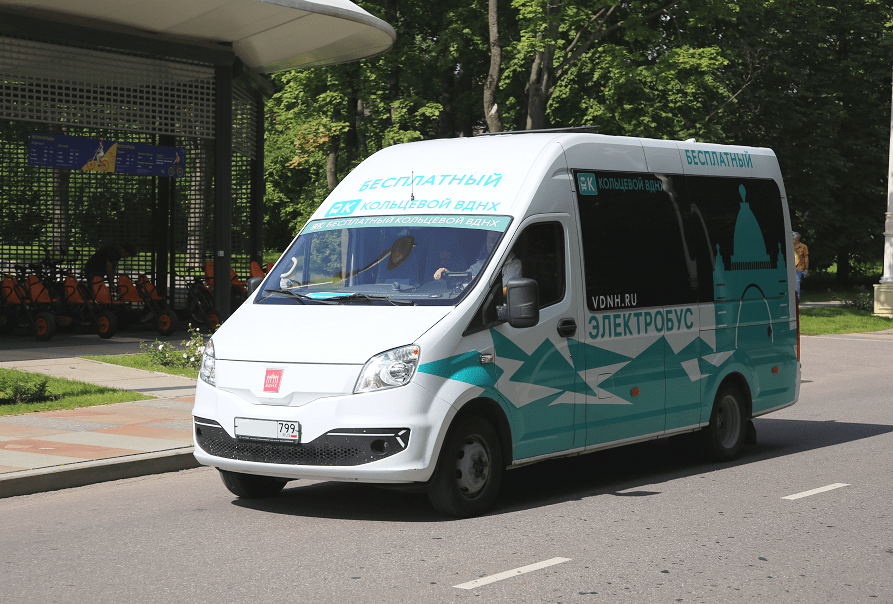
Next Electro is a project developped by SpetsAvtoInzhenering in Russia. The company has developed eco-friendly transport to reduce the burden on the environment. In addition, the use of electric charging will help get rid of dependence on the ever-increasing prices for gasoline.
Externally, this electric car is no different from its gasoline counterpart. The only difference is the absence of engine sound.
The development of this car took a long time. State companies did not want to invest in the project, so it was implemented through private investment.
Technical specifications
The electric vehicles are built on the basis of serially produced GAZelle City vehicles with an all-metal van body.
The electric vehicle complies with version U1 according to ГОСТ-15150 and is designed to operate at ambient temperatures from -25 to +40 degrees Celsius.
The power plant of the electric vehicle includes a Siemens traction motor and a power inverter-converter. All components of the electric drive are cooled with liquid. The motor and inverter-converter are installed between the frame side members located under the body.
The traction battery is based on lithium (NCM) cells that do not require maintenance. The battery is placed in sealed heated containers located under the floor of the electric vehicle. The nominal voltage of the battery is 346 volts, and the capacity is 49 kilowatt-hours.
The traction battery is equipped with a battery management system (BMS). It monitors the voltage and temperature of each cell, the current strength and balances the cells. Data on the battery condition is displayed on the instrument panel.
The electric vehicle is equipped with an on-board charger with a capacity of 22 kW. Thanks to this device, the car can be fully charged from charging stations of the European standard IEC 62196-2 in less than 3 hours. It is also possible to charge from a regular household electrical network.
The on-board electrical system operating at 12 V (this includes lighting, instrument cluster, windshield wiper, washer, light and sound alarm, as well as heating control systems, vacuum pump, etc.) is powered by a standard 55 Ah battery. This battery is recharged from the traction battery using a special DC converter.
The electric vehicle has a microprocessor control unit developed by the manufacturer. This unit is responsible for controlling the power plant, charger, and other systems of the electric vehicle. It also collects and transmits information about the battery status to the dashboard.
The electric vehicle uses a standard transmission from the GAZelle Business. Between the traction electric motor and the transmission, there is a gearbox with a fixed gear ratio of 2.3:1. Gear shifting is not provided in this system.
The braking system is standard for the GAZelle Next vehicle. An electric vacuum pump is used to operate the vacuum brake booster. It turns on automatically.
The average service life of the chassis of electric vehicles and main components before major repairs is at least 300 thousand kilometers.
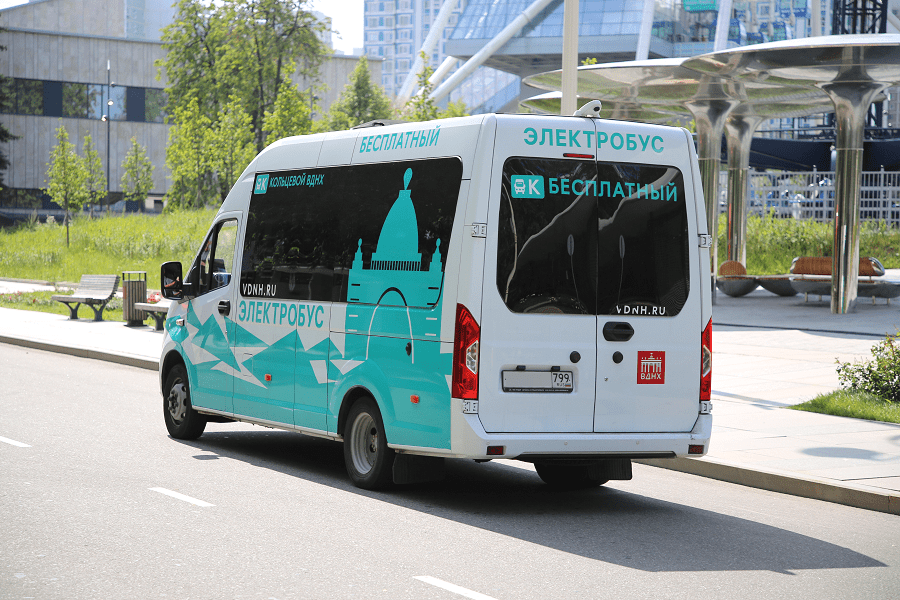
Assembly: Nizhniy Novgorod (Russia)
Years of production: 2017—
Production: 600 units
Length: 6207 mm
Width: 2068 mm
Height: 2753 mm
Passenger capacity: 16 seats
Battery: 70.5 kWh
Power: 280 HP
Max speed: 110 km/h
Range: 200 km
Weight: 3595 kg
See also Transport blog
See also Cars blog
See also Motorcycles blog
See also Buses blog
See also Shipbuilding blog
See also Motors and Engines blog
See also Trains and railways blog
See also Trucks and Cargo Vehicles blog
See also Tractors and Special Equipment blog
See also Tanks and Armored Vehicles
See also Airplanes blog
See also Helicopters blog
See also Artillery, Missiles and Rockets blog
See also Bicycles blog