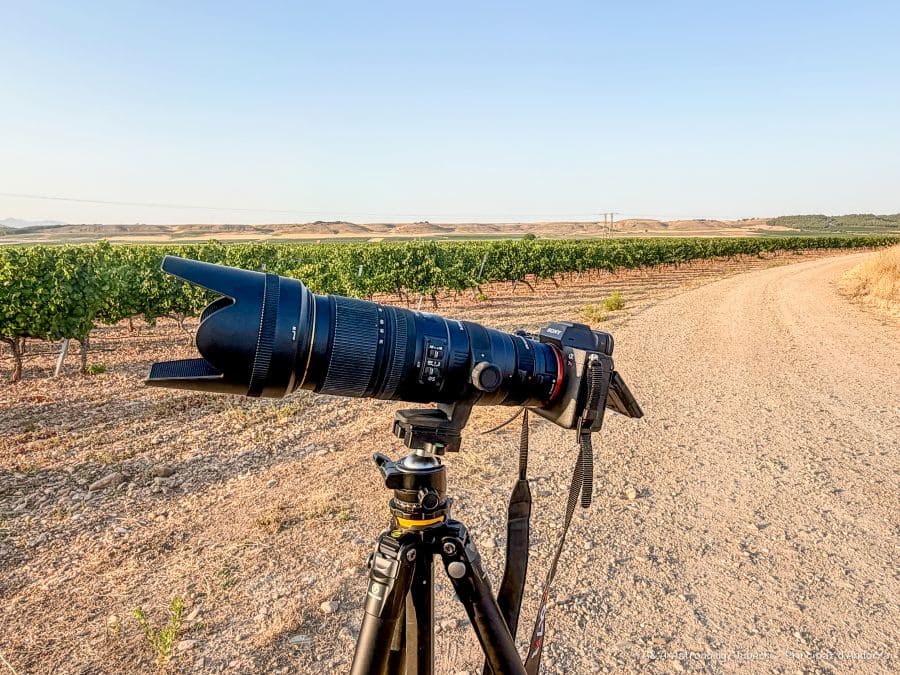
“It is evident that an amateur can never reach the same quality and detail as, for instance, the James Webb Space Telescope or even the Hubble Space Telescope, but these instruments can only image one object at a time. On Earth, hundreds of thousands of amateurs like me capture photos of objects simultaneously. If we could organize ourselves, the value of all these images would be significant! One fact is worth mentioning: about half of the new comets are discovered by amateurs”, – said Alexander Beening, professor at the University of Andorra, passionate about astronomy, astrophysics, and astrophotography.
Photos: Alexander Beening

“On Earth, light pollution is a big problem and worsens day by day. It is mainly caused by street lights, industries, agriculture (greenhouses), and cities, which severely spoil the visibility of the stars, the Milky Way, and other objects. Communities simply aren’t aware of what they are destroying for the public. Countries like the Netherlands, parts of Germany, and big cities like London, Paris, or Barcelona have effectively blocked the visibility of the sky”…
“…But some countries, like Andorra, have regulated light pollution through formal laws. In Andorra, since 2021, a dedicated regulation outlines measures to reduce light pollution. Today, this regulation is showing its results. Street lights have almost everywhere been replaced by LED types, illuminating only downwards. I have noticed a significant improvement in the noise present in my images. Anti-pollution filters, initially necessary to achieve acceptable quality, are now only needed when the sky is not entirely dark”.

“Looking at the size of our universe and the countless galaxies we can see, there must be life outside our solar system. The fact that we have never received any evidence about other civilizations is a point of worry. I refer to the “Fermi paradox,” which explains the discrepancy between the lack of this evidence and the likelihood of their existence. Fermi’s expression, “Where is everybody?” says enough”.

“Life on Earth had to survive a series of “filters” or events that could have wiped it out entirely. For example, around 200 million years ago, there was an enormous volcanic eruption – what we now know as the Siberian Traps – which covered a large part of the Earth. It was so intense that it’s reasonable to wonder whether life could have survived at all, considering the gases and catastrophic changes it caused”.

“I think that humanity must continue to observe the universe and try to find explanations for the questions that arise from the results”.

“Even today, Earth still faces risks. For example, if a large comet were headed toward us, we would have to act quickly. Sometimes there isn’t even a year to find a way to divert it or avoid catastrophe. So the risk of life on Earth ending is still present”.

“We should work harder to popularize and promote communication about space and meteorology”!