
Irisbus Agora
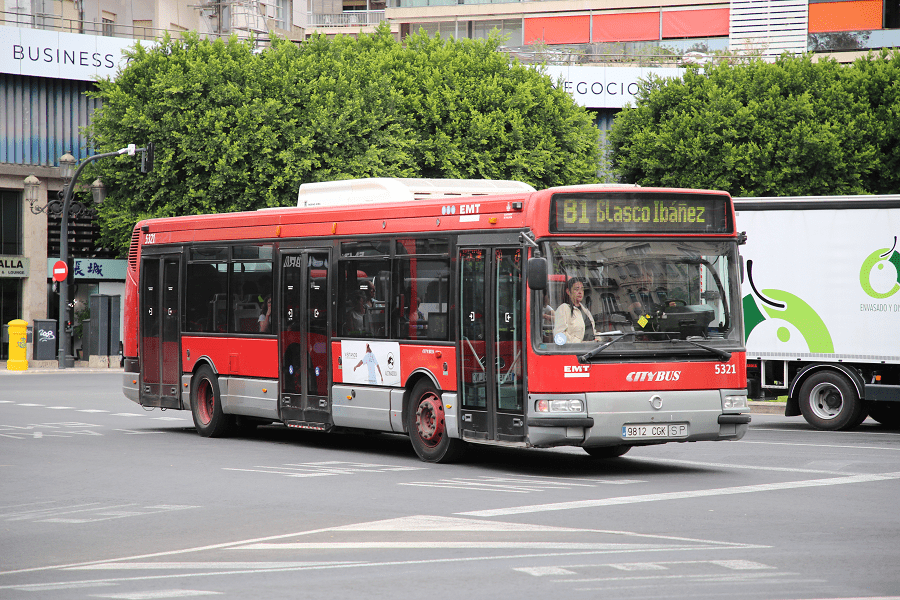
The Agora is a range of low-floor urban buses launched by Renault VI in 1995 at the UITP congress in Paris. It is the first French-built low-floor bus produced on a large scale. It is a direct successor to the R312, and indirectly to the PR 112 and PR 118.
The Agora was produced and marketed by Renault and then by Irisbus from 1995 to 2005, as well as by Karosa following its acquisition by Renault. It exists in a standard 12-metre version and an articulated 18-metre version.
Like the Civis, the Agora is capable of receiving the Optiguide-Optiboard optical guidance equipment marketed by Siemens. This equipment had been selected by the Rouen and Clermont-Ferrand networks.
History
From the beginning of the 1990s, sales of the R312, launched only in 1987, suffered from the emerging competition from low-floor buses. Renault presented its first low-floor bus chassis in 1994. That year, the Heuliez Bus firm launched its GX 317 model built on the new Renault platform.
In 1995, Renault launched the standard Agora, the first deliveries of which took place in France in 1996. At the same time, Renault marketed vehicles bodied by Heuliez in its own name to maintain its sales, and the Spanish networks received their first vehicles based on locally bodied Agoras.
In 1997, the articulated Agora was launched. Since the R312 was never available as an articulated bus, the articulated Agora had no direct ascendancy in the Renault range and de facto replaced the PR 118 in the catalog.
In 2002, Irisbus placed the dolphin on the Agora grille to replace Renault’s diamond.
Production of the Agora stopped in December 2005 with a total of 11,066 units produced. The last Agora was delivered to RATP on February 8, 2006.
Features
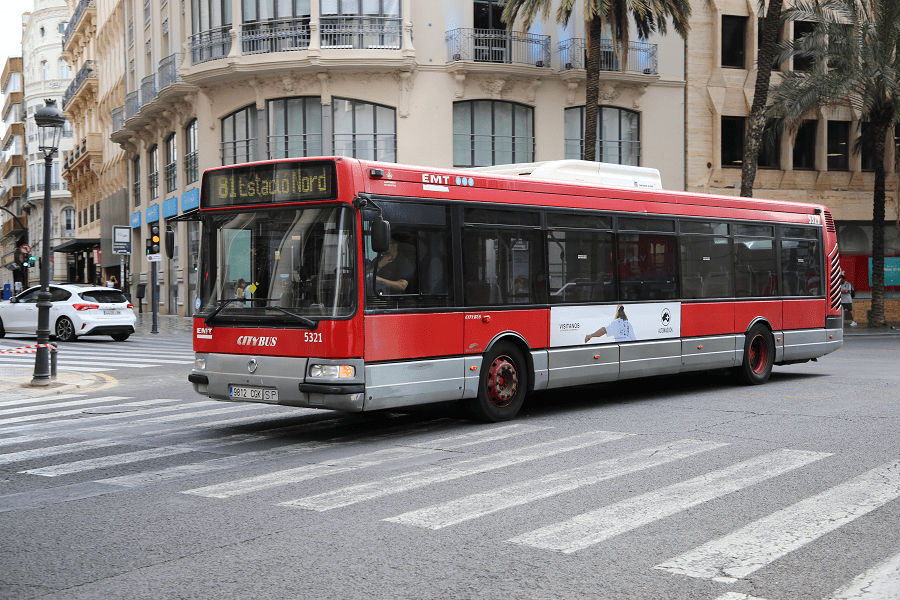
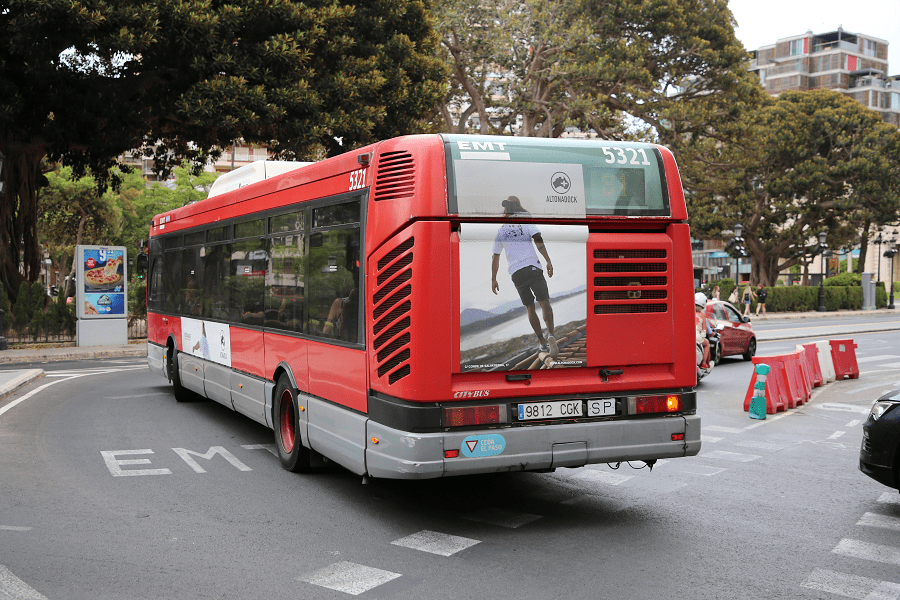
This vehicle has the particularity of being the first real low-slung city bus designed by Renault; no need to climb steps to access the interior of the bus, the completely low floor up to the central door (over the entire length of the vehicle from the Euro 3 version on standard vehicles) is 32 cm from the ground which greatly facilitates access for people with reduced mobility. Some buses are equipped with a retractable pallet located at the central door.
This was a great step forward in France, but 5 years behind the European standard developed by Iveco and EvoBus. By comparison, the floor of the Renault SC 10 was 62 cm high and 87 cm for the Berliet PH 10-100, a lowering of more than 50 cm in a few decades.
Engines
The Agora had a single six-cylinder engine when it was launched in May 1995. In October 1996, two new engines were released. There were a total of seven available, including five diesel and one electric. The Agora S GNV and Agora L GNV models are equipped with a natural gas engine in addition to the thermal engine. None are available anymore because they are no longer marketed.
Generations
The Agora was produced with 3 generations of engines, each with its own characteristics:
- Euro 1: built in 1995, with a Renault MIDR 06.20.45 F/L engine;
- Euro 2: built from 1996 to 2002, with a Renault MIDR 06.20.45 F/L engine;
- Euro 3: built from 2001 to 2005, with an IVECO Cursor 8 F2B engine.
Generations according to the RATP
The RATP designates 3 different generations for its Agora S and L:
- Agora V0 for the first version of Agora S;
- Agora V2 for Euro 2 with centered rear door;
- Agora V3 for Euro 3 with centered rear door.
Different versions
Agora S
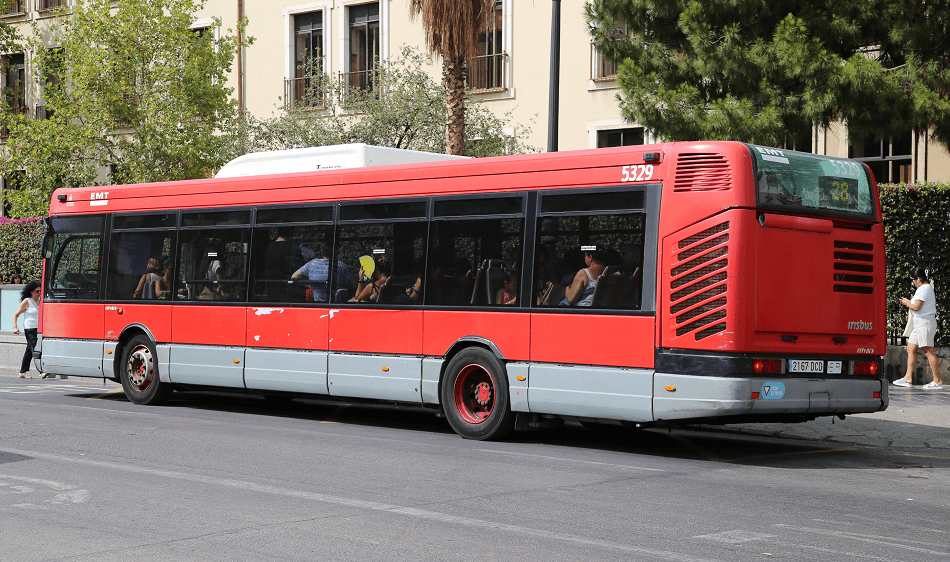
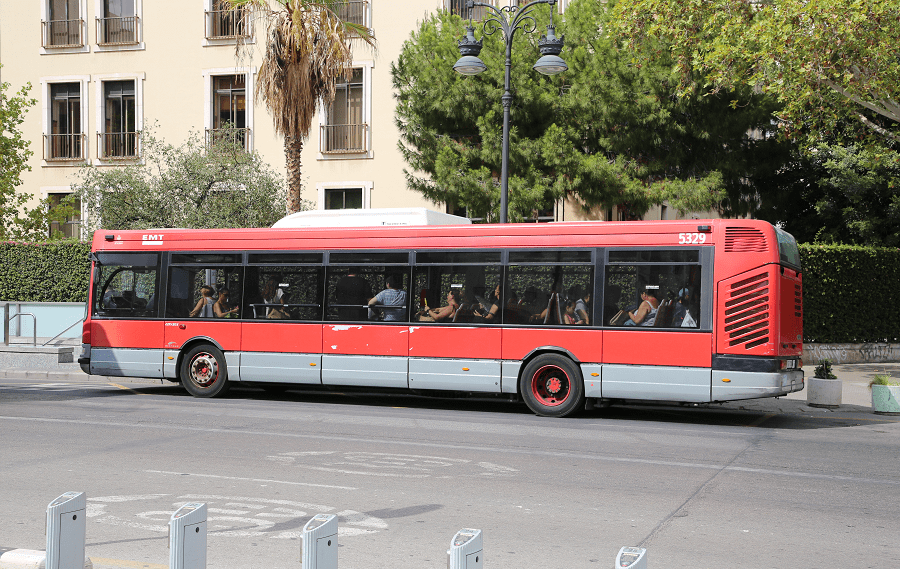
The Agora Standard (or Agora S) is a standard bus about 12 meters long, designed and manufactured by Renault from 1995 to 2002, then by Irisbus from 2002 to 2005. The Renault version is equipped with a Euro 2, 6-cylinder 10-liter supercharged air-cooled engine, available in two power ratings: 206 HP (152 kW) and 253 HP (186 kW). From the end of 2001, the Euro 3 standard was upgraded with an Iveco Cursor F2B engine of 245 or 290 HP. A NGV version is available with an MGDR 06.20.45 engine (Euro 2, then Euro 3) from 1997 to 2004, then Iveco Cursor 8 from 2004 to 2005. The Irisbus Citelis 12 succeeds it.
Agora L
The Agora Long (or Agora L) is an articulated bus about 18 meters long, with 2 doors in the first module and 1 or 2 doors in the second module, making a total of 3 or 4 doors. It appeared in 1997. The engine used is the 253 HP (186 kW) under the Euro 2 standard. The Euro 3 version which appeared at the end of 2001, benefits from an Iveco Cursor F2B engine of 290 HP. Like the standard model, a NGV version is also available only with a Renault MGDR 06.20.45 engine (Euro 2, then Euro 3). The Irisbus Citelis 18 succeeds it in 2005.
Agora Line
Designed as a suburban bus (cities on the outskirts of a built-up area), it is mainly ordered to be more economical than an Agora S. It appeared in December 1998. It is radically different from other Agoras by its rear part, made by the bodybuilder Safra in Albi (Occitania): its engine is installed longitudinally, which represents the main difference compared to an Agora S. This engine is a Renault MI7R, then an Iveco Cursor 8 F2B from 2002.
The Irisbus Citelis Line succeeds it.
Agora Moovy
The Irisbus Agora Moovy, predecessor of the low-floor coaches of the same brand, is produced on the same chassis. This version has specific doors and a different interior layout, with luggage racks, curtains and seats equipped with seat belts.
Agora Trolleybus
The trolleybus version of the Agora was produced under the Irisbus brand but also under Škoda which will produce the 24Tr Agora and 25Tr Agora. Under Irisbus, it will be manufactured in 12 and 18 meter versions.
It was produced only for the city of Cluj-Napoca, in Romania, with the help of the Skoda and Astra Bus companies. There are 26 Agora S Trolleys and 16 Irisbus Agora L Trolleys in service in Cluj-Napoca.
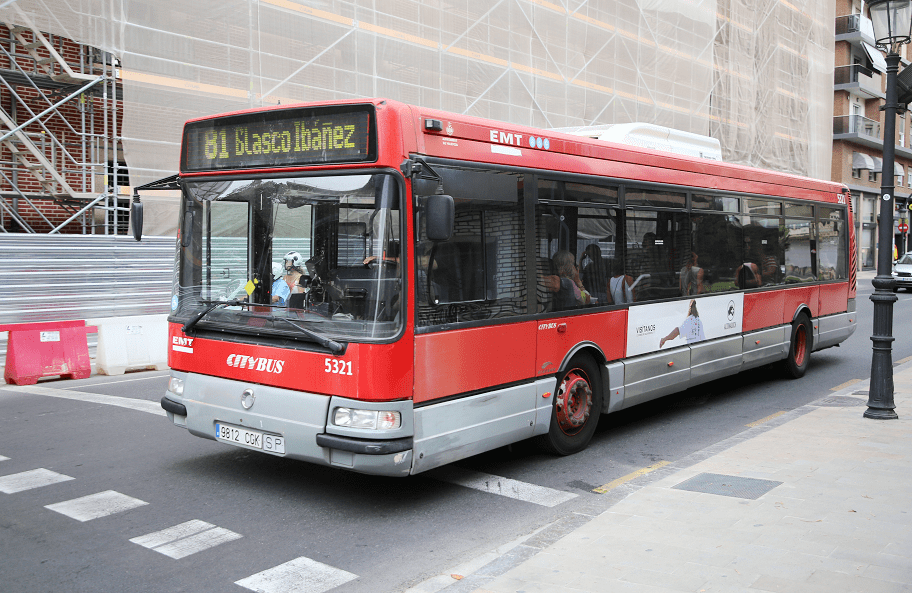
Assembly: Annonay (France)
Years of production: 1995—2005
Production: 11,066 units
Length: 11990 mm
Width: 2500 mm
Height: 2900 mm
Passenger capacity: 112 (34 seats)
Engine: 6 cylinders; 7790 cc
Power: 290 HP
Max speed: 85 km/h
Fuel consumption: 36 l/100 km
Weight: 11500 kg
See also Transport blog
See also Cars blog
See also Motorcycles blog
See also Buses blog
See also Shipbuilding blog
See also Motors and Engines blog
See also Trains and railways blog
See also Trucks and Cargo Vehicles blog
See also Tractors and Special Equipment blog
See also Tanks and Armored Vehicles
See also Airplanes blog
See also Helicopters blog
See also Artillery, Missiles and Rockets blog
See also Bicycles blog