Antonov An-2
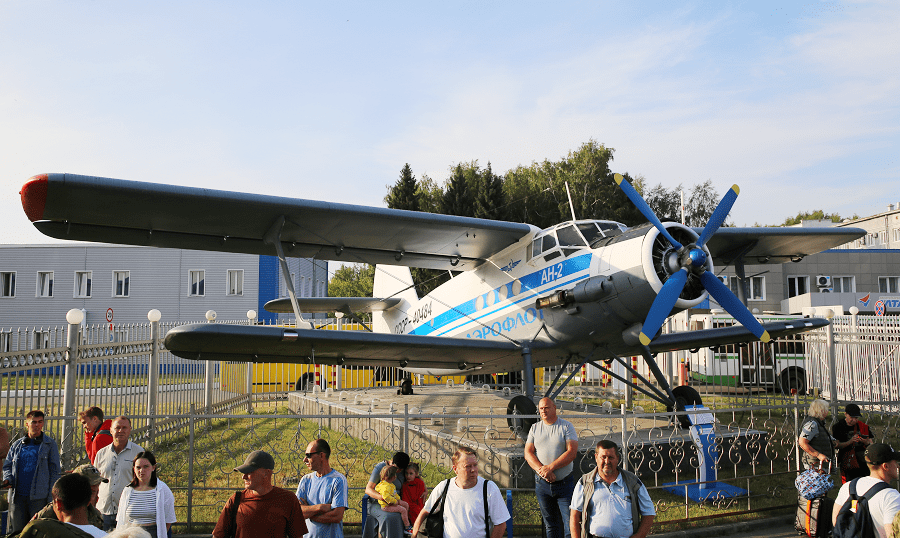
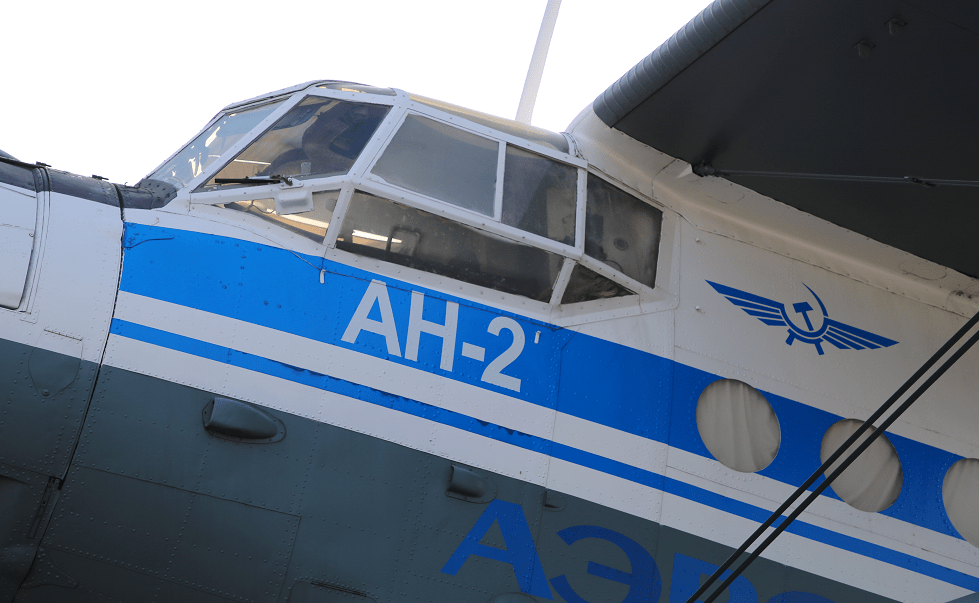
An-2 (NATO classification: Colt) is a Soviet light multi-purpose aircraft developed by the Antonov OKB Bureau.
It was nicknamed in USSR “Annushka”, “Kukuruznik” or“Six-wing”.
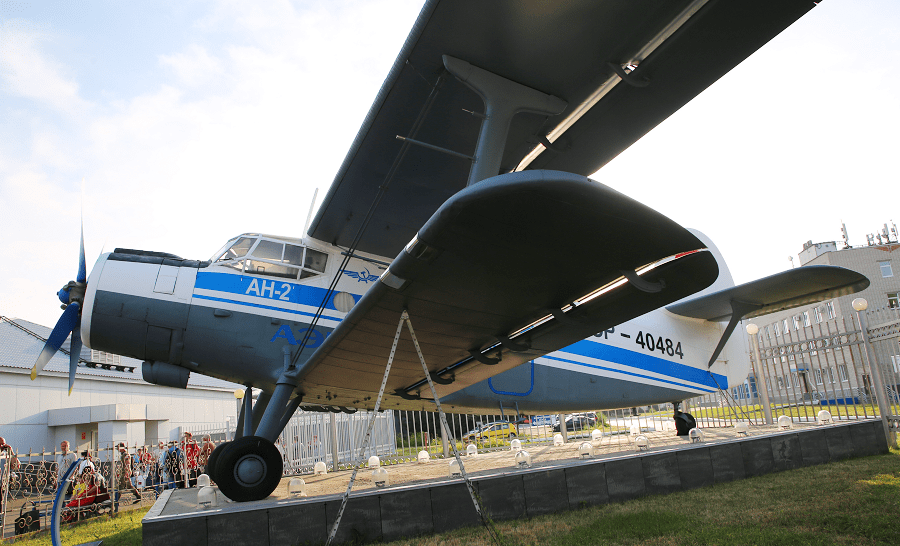
The An-2 and its modifications are a piston single-engine biplane with a braced wing. Equipped with an ASh-62IR engine designed by A. D. Shvetsov. The An-2 is used as an agricultural, sports, transport, training, and passenger aircraft and is in service with the air forces of many countries. Many aircraft have been in operation for more than 40 years, and some of them have flown more than 20 thousand hours.
The An-2 was produced in the USSR, Poland and, according to some sources, continues to be produced in China. In total, more than 16,000 units were built and they’re were exported to 26 countries. Before the appearance of the aircraft, the An-3 was the world’s largest single-engine biplane.
On March 6, 1946, OKB-153 for civil and transport aircraft was formed at the Novosibirsk Aviation Plant named after Chkalov. Its chief designer was Oleg Konstantinovich Antonov. The first task of the OKB was the agricultural aircraft SKhA-1, later renamed the An-2.
On August 31, 1947, test pilot P. N. Volodin first flew the first An-2 prototype, designated SHA, into the sky. The plane performed two large circles at an altitude of 1200 meters and landed after 30 minutes of flight. In December 1947, State tests began at the Air Force Research Institute, which continued until March 1948. On August 23, 1948, the aircraft, designated An-2, was adopted by the Air Force and supplied to the Civil Air Fleet. Serial production was organized at plant №473 in Kiev. On September 9, 1949, test pilot G.I. Lysenko took to the skies the first production An-2 (in a transport version).
The An-2 was mass-produced:
- 1949-1963 — at aviation plant №473 in Kiev, 3349 aircraft were produced.
- 1959-2002 — at the WSK PZL-Mielec aircraft plant in Poland, 11,915 aircraft were produced.
- 1966-1971 — at the Dolgoprudny Machine-Building Plant (Moscow Region), 506 An-2M modifications were produced.
- 1956-1968 — at aircraft factory №320 in Nanchang in China, 727 aircraft called 安-2 (“Fong Shu-2”) were produced.
- since 1970 — at the aircraft plant in Shijiazhuang in China, more than 300 aircraft called 运-5 (Yongshuzhi-5, Y-5) were produced.
Before the USSR joined ICAO, aircraft developed in the USSR did not receive a type certificate; instead, a Certificate of Fitness for Operation was issued. In 1999, the PZL-Mielec plant received type certificates for the An-2 and An-2T. According to some reports, the type certificate now belongs to Airbus Military.
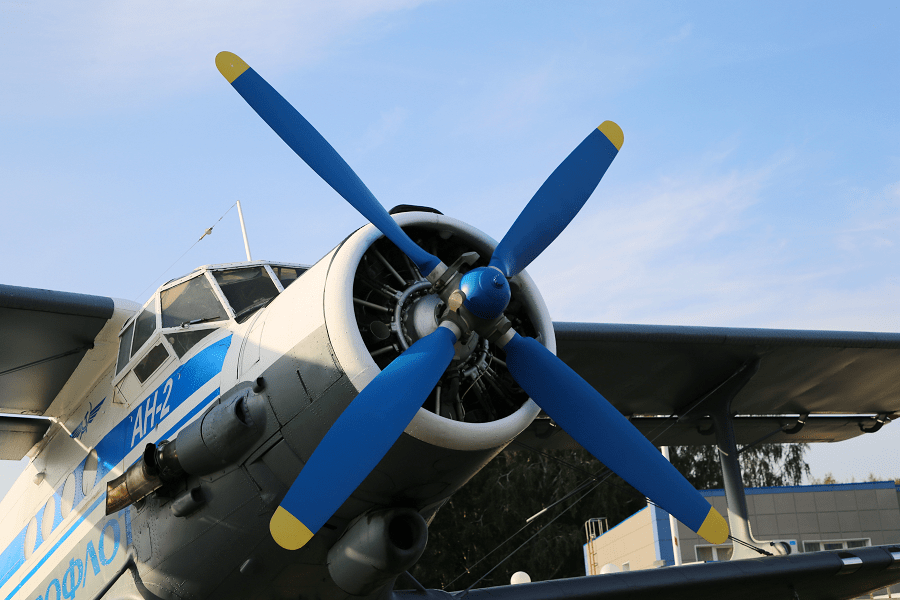
In the USSR, the aircraft was very widely used on local air lines for transporting passengers and cargo (often on lines connecting regional centers with district centers, as well as villages, towns), and performing various national economic works, in particular, aviation chemical work. It was also used in DOSAAF for landing amateur paratroopers.
Being easy to operate, suitable for takeoff and landing from unprepared ground areas and having a short takeoff and mileage, the aircraft was indispensable for work in the underdeveloped territories of Siberia, the Far North, and Central Asia, where it was used everywhere. Sometimes the An-2 is confused with the Po-2 aircraft, which was also popularly called a “corn grower”; it got this name from the U-2AP agricultural aircraft, which were used to cultivate fields, including corn, in Moldova and Ukraine.
As of 2012, 2,271 An-2s are in operation worldwide. Russia has 1,580 An-2 aircraft, of which 322 are operational. There are 135 An-2 aircraft in Ukraine, of which 54 are airworthy.
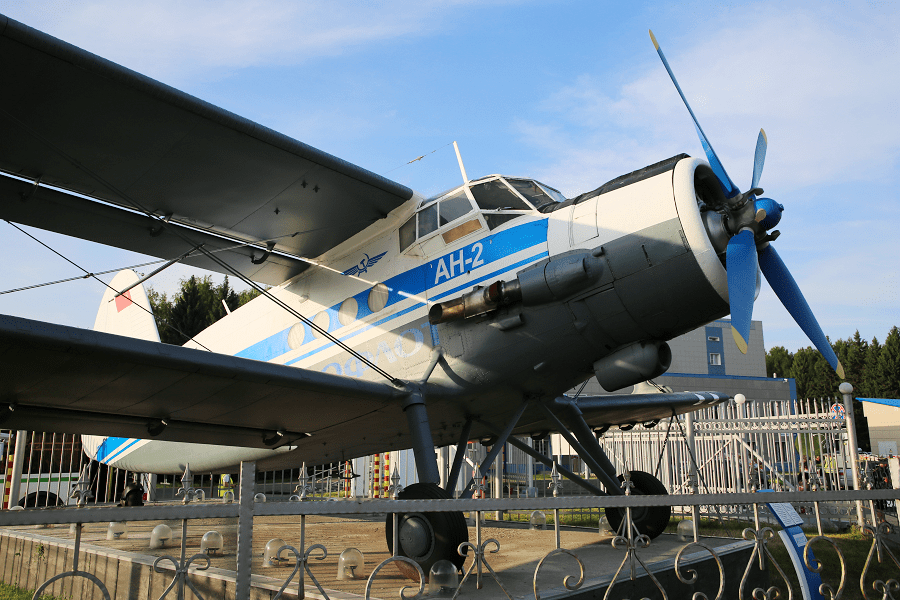
Assembly: aviation plant №473 / DMZ / PZL Mielec / SAMC / HAIG
First flight: 31 August 1947
Years of production: 1947—
Production: 16,290 (all modifications)
Length: 12.4 mm
Wingspan: 14.23 m
Height: 5.35 m
Crew: 2
Capacity: 12 passengers
Engine: 1× АШ-62ИР
Max speed: 258 km/h (139 kn; 160 mph)
Range: 980 km (529 nmi)
Ceiling: 4,200 m (13,779 ft)
Empty weight: 3,400 kg
See also Transport blog
See also Cars blog
See also Motorcycles blog
See also Buses blog
See also Shipbuilding blog
See also Motors and Engines blog
See also Trains and railways blog
See also Trucks and Cargo Vehicles blog
See also Tractors and Special Equipment blog
See also Tanks and Armored Vehicles
See also Airplanes blog
See also Helicopters blog
See also Artillery, Missiles and Rockets blog
See also Bicycles blog