Škoda 105/120/125
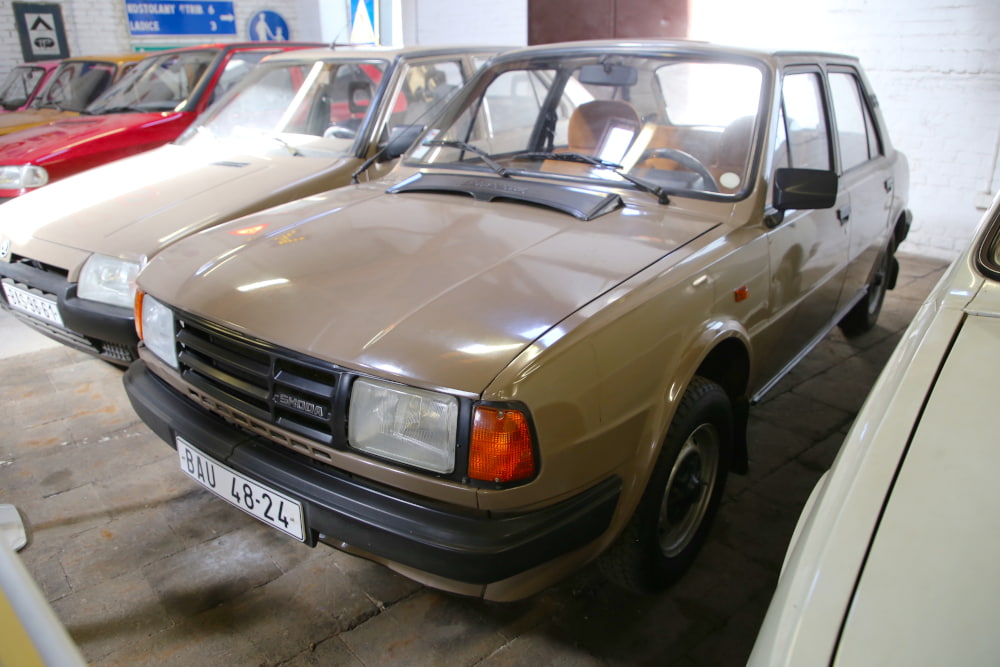
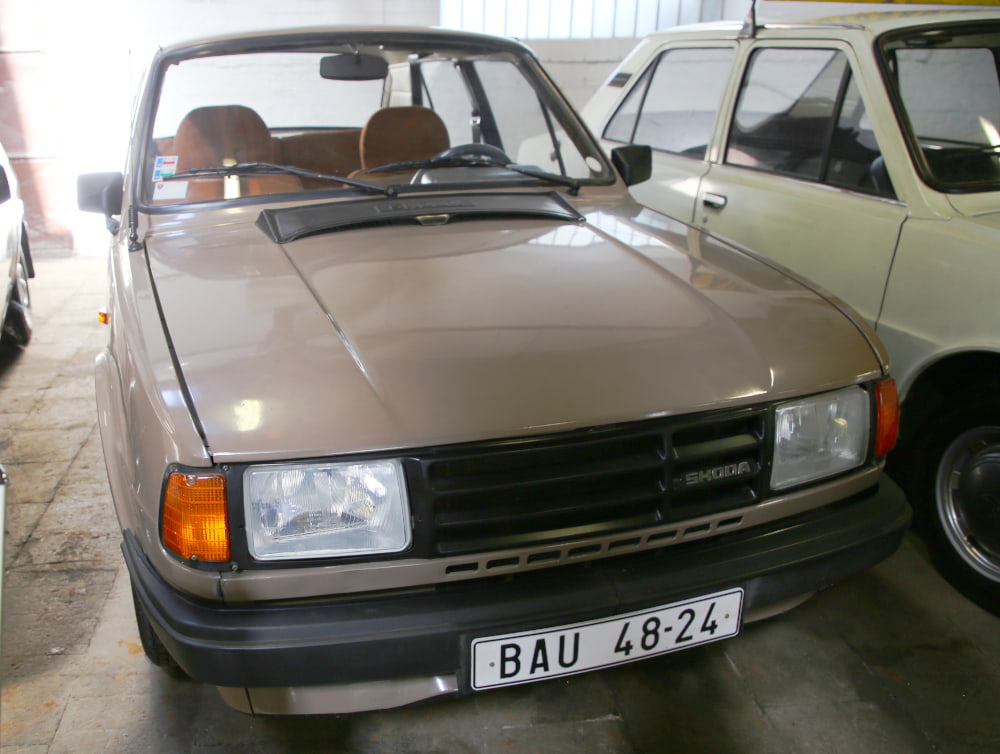
Brown Škoda 125L at the Bratislava Transport Museum (Bratislava, Slovakia)
The Škoda Type 742 is a family of rear-engine, rear-wheel-drive small family cars, produced by the automaker AZNP in Mladá Boleslav, Czechoslovakia, from 1976 to 1990. Over two million cars were built during the model’s 14-year production run.
The range was facelifted in 1983 with a revised design and engine improvements, along with the introduction of a new 1.3-liter version known as the Škoda 130. Further 1.3-liter models followed in 1987: the Škoda 135 and 136.
All 105/120/125 and 130 models are known by their Škoda internal designation as Type 742, while the later 135 and 136 models are called Type 746.
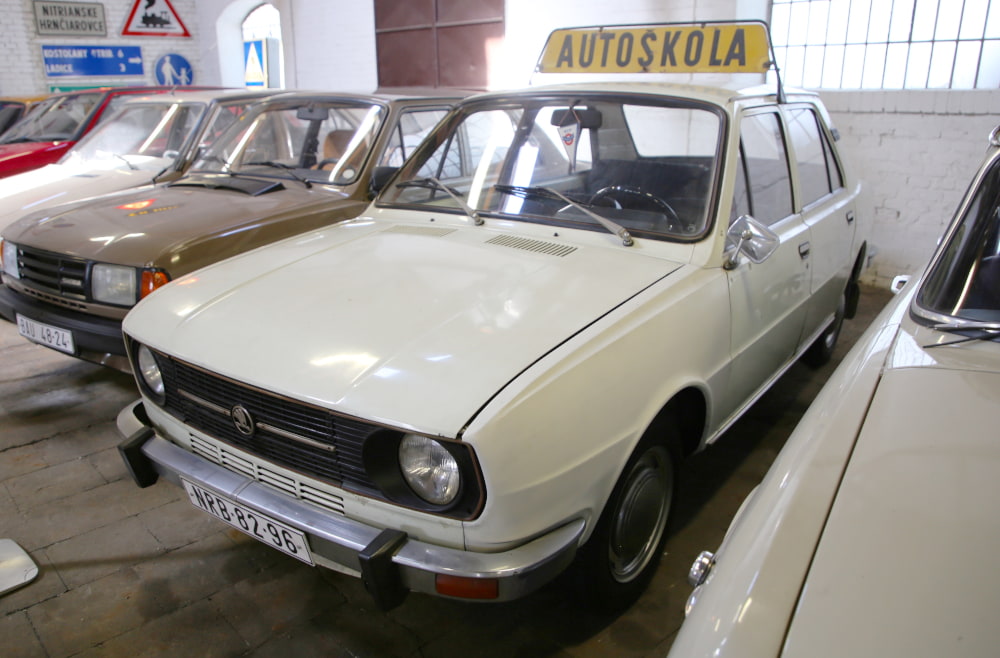
White Škoda 105L at the Bratislava Transport Museum (Bratislava, Slovakia)
History
Initial Design (A-Series)
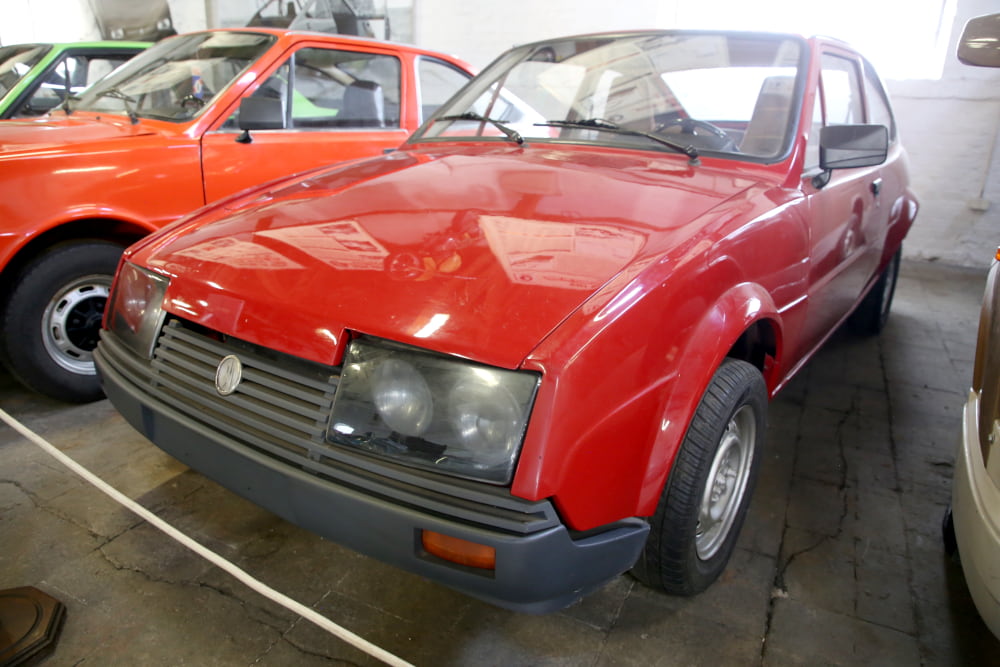
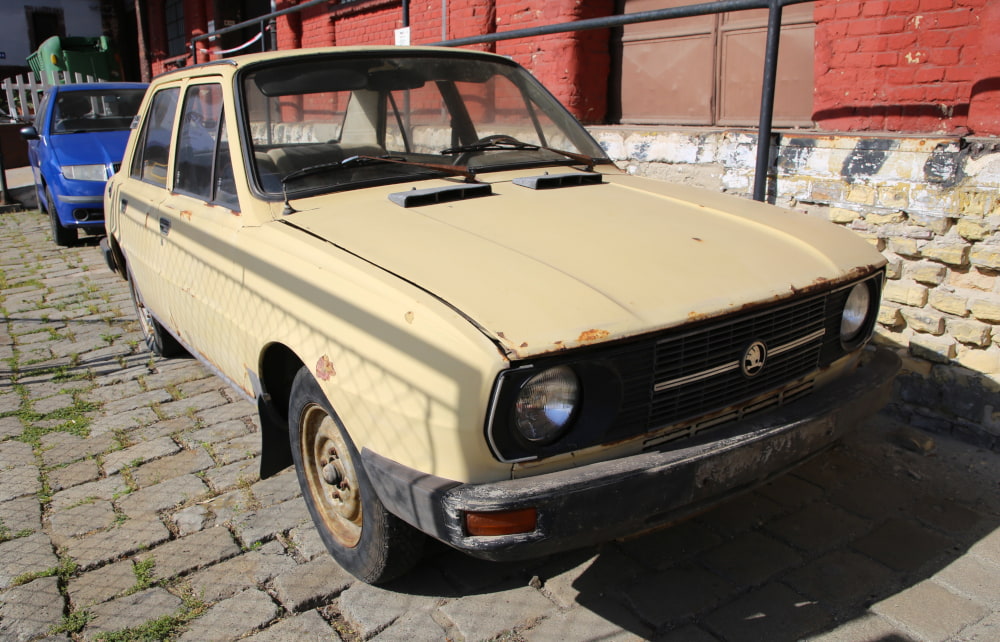
In the early 1970s, Škoda had originally intended to produce its successor to the 100/110 as a front-engine, front-wheel-drive model. However, due to a lack of funding, Škoda was refused a license and was forced to update the earlier 100/110. The main reason Škoda was not granted a license to produce its new car was that it could have been more modern than Soviet cars. At that time, most Soviet models had either a front engine driving the rear wheels (for example, Moskvich-408) or a rear engine driving the rear wheels (for example, ZAZ-968). The new Škoda 105/120 was nonetheless designed to accept a front-engine, front-wheel-drive layout at a later date. The company also completed a prototype with this layout, which looked almost identical to the rear-engine version.
The Škoda 105/120 (Type 742) went into production in August 1976. Under the skin it was largely the same as the 100/110, but it brought many improvements: a front-mounted radiator with a thermostatic fan, a heater built into the dashboard, and a fuel tank moved beneath the rear seat. It also had a side-hinged front trunk lid that opened like a concert grand’s. The 105 S and 105 L used a 46 HP, 1046 cc engine, while the 120 L had a 52 HP, 1174 cc engine. The more powerful 120 LS and 120 GLS (58 HP) followed in 1977 and 1978. In France the model was sold as the Škoda 1050 because Peugeot had trademarked “105.”
The lineup kept growing. Early cars had perforated slits in the engine lid, which proved unnecessary for cooling and let in dirt, so owners were advised to block them. The 105 GL arrived in March 1981 with the equipment level of the 120 GLS. In November 1981, the two-door Škoda Garde coupé introduced an improved semi-trailing-arm rear suspension, which paved the way for the later facelift models, and its facelifted successor became the Škoda Rapid. In November 1982, the 105 SP and 120 LE were added. The 105 SP was a commercial version sold only in Czechoslovakia, while the 120 LE had a modified final drive ratio for better fuel economy.
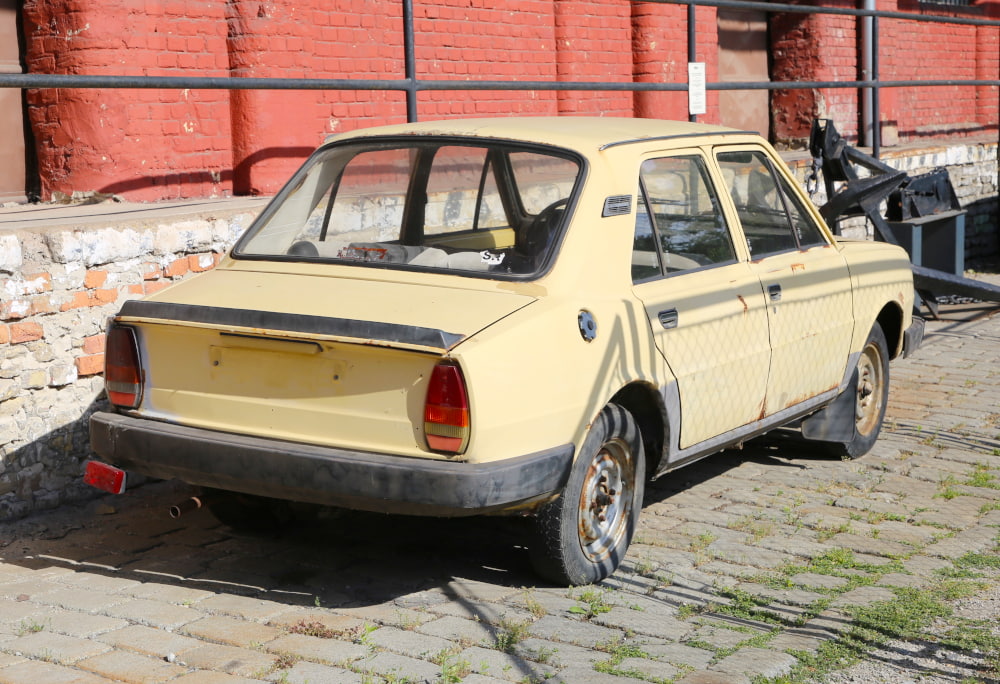
Yellow Škoda 120
Second Generation (M-Series)
In September 1983, the range received a facelift and technical modernization, becoming the “742M” in internal parlance. New rectangular headlamps and blocky, rubber bumpers made the car look more up-to-date and also improved its aerodynamics. The steering was updated to a rack-and-pinion system rather than the earlier recirculating-ball design.
The Škoda 130 models followed the next year, introducing additional improvements, some of which were also adopted by the existing 105/120 range. Developed from the earlier Škoda 105/120 models, the 130 series used a new 1289 cc engine and also received a redesigned rear suspension. The sedan versions of the new 130 series were available as the 130 L and 130 GL, and the coupe model was the 130 Rapid, all of which were broadly equivalent to the smaller-engine 120 LS and GLS sedans and the 120 Rapid coupe.
In 1987, with the introduction of the new Škoda Favorit, the Škoda 105/120 series was pared down to just the 105 L, 105 SP, 120 L, and 120 GL. The 125 L (a 120 L with a five-speed transmission) was added in October 1988 and was the final new model to emerge from the 105/120 series.
Characteristics
Manufacturer: AZNP (now Škoda Auto)
Assembly: Mladá Boleslav (Czechoslovakia)
Years of production: 1976—1990
Length: 4160–4200 mm
Width: 1595–1610 mm
Height: 1400 mm
Engine: 4 cylinders; 1046–1289 cc
Power: 46–62 HP
Max speed: 140 km/h
Fuel consumption: 8 l/100 km
Weight: 850–950 kg
See also: