Photo: news.cgtn
The 2026 Winter Olympic Games in Milan–Cortina d’Ampezzo concluded on February 22, showcasing historic performances, debut sports, and memorable national achievements. Nearly 3,000 athletes from over 90 countries competed across 116 medal events.
Norway topped the standings with 18 golds and 41 total medals, led by cross‑country sensation Johannes Høsflot Klæbo.
Klæbo was the standout athlete of the Games, achieving an unprecedented feat: six gold medals in a single Winter Olympics — a historic first. His victories spanned the men’s sprint, 10 km freestyle, 20 km skiathlon, team sprint, 4 × 7.5 km relay, and 50 km mass start classic, bringing his career Olympic gold total to 11 and placing him among the most decorated Winter Olympians in history.
In the men’s 50 km classical, Norway achieved a podium sweep with Klæbo (gold), Martin Løwstrøm Nyenget (silver), and Emil Iversen (bronze), highlighting the team’s depth and dominance.
Norway’s success extended across several disciplines. In biathlon, athletes including Johannes Dale‑Skjevdal contributed to gold medals in both individual and relay events. In Nordic combined, ski jumping, and freestyle skiing, Norwegian competitors consistently reached podiums and top‑eight finishes, demonstrating the country’s broad winter sports program.
The United States finished second in the medal standings with 12 golds, 12 silvers, and 9 bronzes — 33 medals total. Jack Hughes, whose game‑winning goal helped the U.S. men’s ice hockey team capture gold for the first time since 1980. Eileen Gu (freestyle skiing), who defended her halfpipe title and added her sixth Olympic medal, setting a new record in freestyle skiing. Alysa Liu (figure skating), securing medals in both the team event and women’s singles. The U.S. also earned podium finishes in speed skating, bobsleigh, and skiing, marking one of its strongest Winter Games ever.
Italy, competing on home snow, finished third with around 10 golds, 6 silvers, and 14 bronzes — 30 medals total. Federica Brignone won two gold medals at the 2026 Winter Olympics: Gold in the Women’s Super‑G and Gold in the Women’s Giant Slalom. She became the first Italian woman alpine skier to win two Olympic golds at the same Winter Games, doing so less than a year after a serious injury.
Italian teams excelled in speed skating and ski cross, securing podium finishes. Strong performances in short track, biathlon, and other skiing disciplines contributed to Italy’s impressive medal haul.
France claimed 8 medals across a variety of disciplines. Quentin Fillon Maillet and Julia Simon in biathlon, winning medals in individual and mass start events. Emily Harrop and Thibault Anselmet, who captured gold in the inaugural Ski Mountaineering mixed relay.
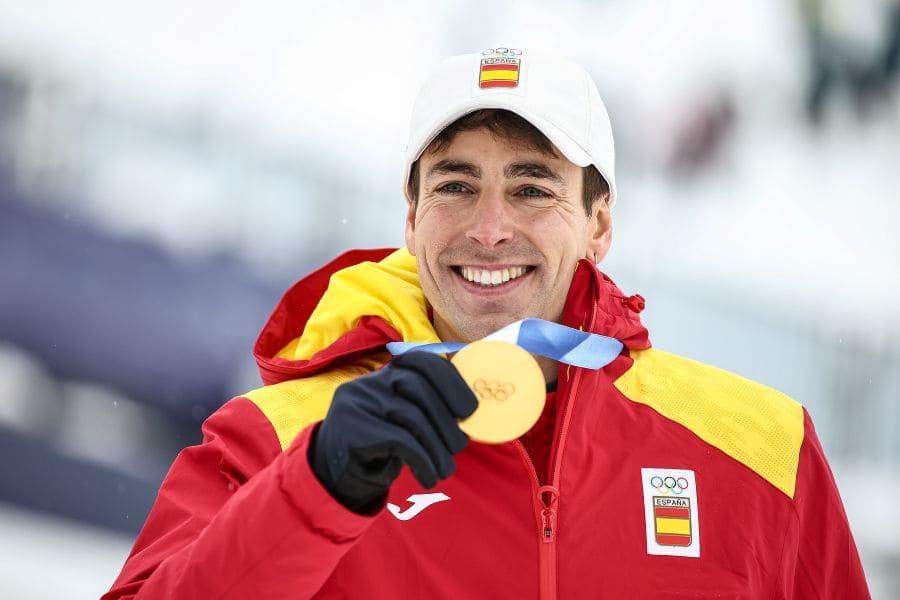
Spain celebrated a landmark achievement in the Olympic debut of Ski Mountaineering (SkiMo): Oriol Cardona Coll won gold in the men’s ski mountaineering sprint. This is Spain’s first Winter Olympic gold in 54 years, the last being in 1972. Ana Alonso Rodriguez won bronze in the women’s sprint and, together with Cardona, earned bronze in the mixed relay.
Andorra did not secure any medals, but athletes achieved notable personal milestones: Joan Verdú — 10th in men’s giant slalom, the best finish for the Andorran alpine team; Xavier Cornella — 21st in men’s slalom; Jordina Caminal — 24th in women’s downhill; Gina del Rio — 35th in women’s 10 km cross‑country skiing, one of the top results for Andorran skiers.