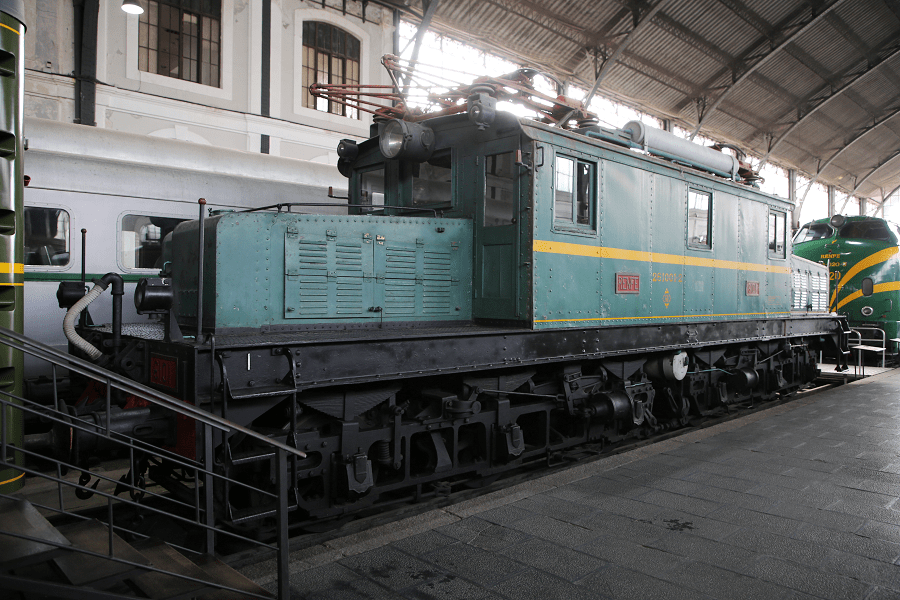
SECN Norte 6100 (RENFE 261-001-006)

Norte 6101 (RENFE 261-001·2)
Norte 6100 (later Renfe 261) is a series of six electric locomotives built in 1924 by Sociedad Española de Construcción Naval (SECN) and Westinghouse and Baldwin for Compañía del Norte.
These locomotives, like their predecessors in the 260 series, were used on the Pasajes line, which connects Venta de Baños with Gijón.
History
In the early 1920s, Compañía del Norte decided to electrify the 62-kilometre single-track line between Busdongo (León) and Ujo (Asturias). Twelve electric locomotives were purchased for this purpose, six of which formed the 6101-6106 series, the first to be built in Spain.
Operating on 3,000 volts direct current, these locomotives received their power from the overhead contact line via diamond-shaped pneumatic pantographs. The central cab and two side hoods housing the electrical equipment were mounted on two rotating carriages, or articulated bogies, each with three axles.
Painted white from the factory, these locomotives were popularly nicknamed “pigeons”. Their introduction into service doubled the freight traffic on this section. They continued to operate until the 1950s, when they were replaced by the more powerful 7500 series. In 1983, one of these locomotives was moved to Delicias and became part of the museum.

Manufacturer: SECN / Westinghouse / Baldwin Locomotive Works
Assembly: Spain
Year of production: 1924
Production: 6 units
Length: 14,128 mm
Height: 3645 mm
Track gauge: 1668 mm
Power: 1620 HP
Max speed: 55 km/h
Tension: 3000 V (CC)
Weight: 75 t
Madrid Railway Museum (Madrid, Community of Madrid, Spain)
See also Transport blog
See also Cars blog
See also Motorcycles blog
See also Buses blog
See also Shipbuilding blog
See also Motors and Engines blog
See also Trains and railways blog
See also Trucks and Cargo Vehicles blog
See also Tractors and Special Equipment blog
See also Tanks and Armored Vehicles
See also Airplanes blog
See also Helicopters blog
See also Artillery, Missiles and Rockets blog
See also Bicycles blog