Saab 90
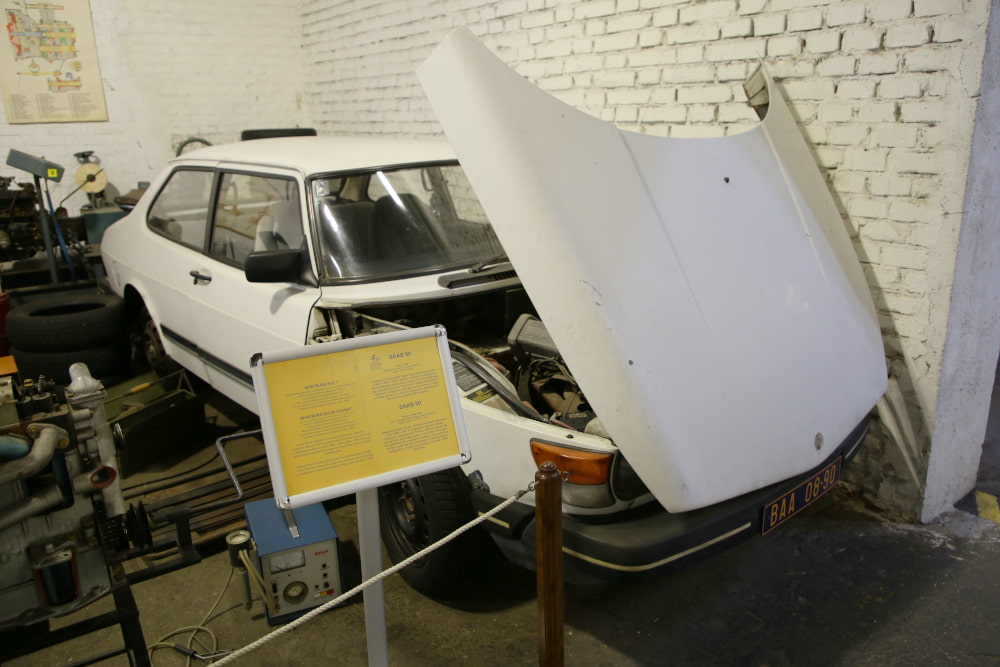
White Saab 90 at the Bratislava Transport Museum (Bratislava, Slovakia)
The Saab 90 is a family car produced by Saab from September 1984 until 1987. The production took place only in Uusikaupunki, Finland, by Valmet Automotive. The 90 was a continuation of the Saab 99, and it was basically a Saab 99 from the B-pillar forward combined with the rear of a Saab 900 sedan. In total, 25,378 Saab 90s were made.
Overview
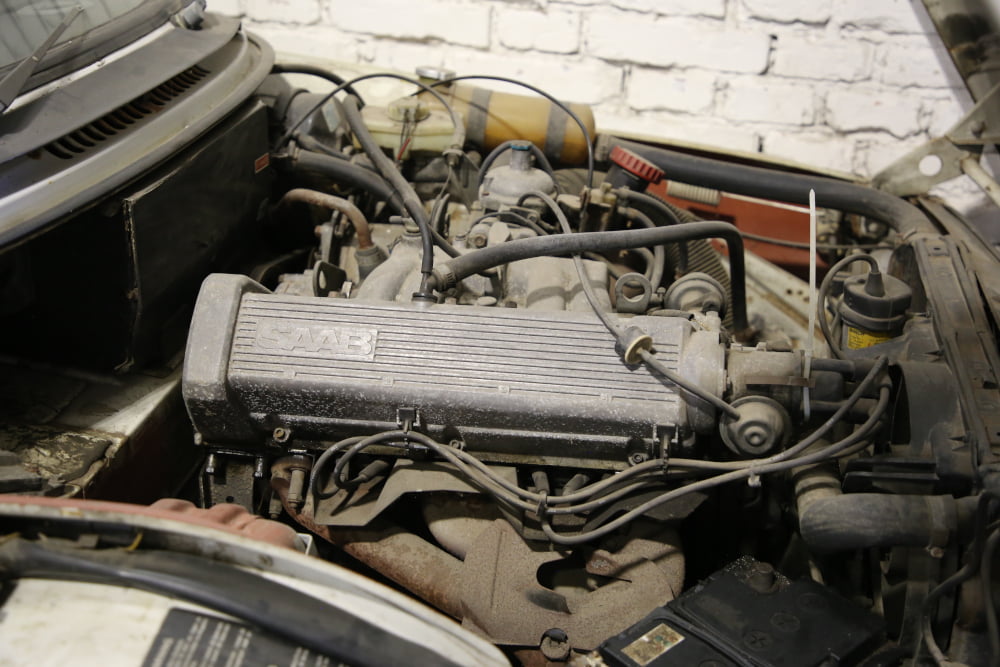
In 1985, the Saab 90 was available only as a two-door sedan, and it came with the 2.0-liter Saab H engine, which produced 99 HP (74 kW).
It was available with both a four-speed and a five-speed manual transmission, with the five-speed getting closer gearing, front and rear spoilers, and lower-profile tires. The transmission was also changed, and with the new rear end, the volume of the fuel tank increased, and the luggage compartment volume grew from 320 to 377 liters. The car got a modern rear suspension, which was also cheaper to manufacture. The valve seats were hardened so that the engine could run on unleaded fuel. It also had a new starter motor, and the steering wheel sat more upright than that of the 99.
In 1986, it underwent some minor cosmetic changes. It gained a radio option and side turn signals. The four-speed model got 5.5-inch-wide wheels and was fitted with modified shock absorbers. In 1987, the Zenith carburetor was altered to make it easier to start in cold weather.
Characteristics
Manufacturer: Saab Automobile AB
Assembly: Uusikaupunki (Finland)
Years of production: 1984—1987
Length: 4344 mm
Width: 1675 mm
Height: 1429 mm
Engine: 4 cylinders; 1985 cc
Power: 99 HP
Max speed: 166 km/h
Fuel consumption: 9 l/100 km
Weight: 1050 kg
See also: