Škoda 100/110
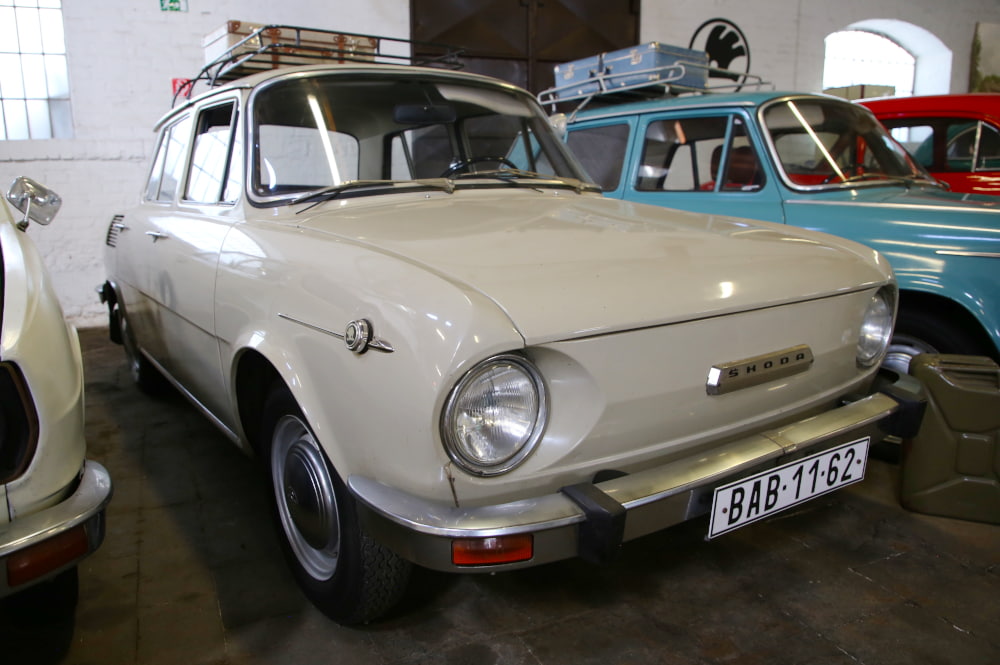
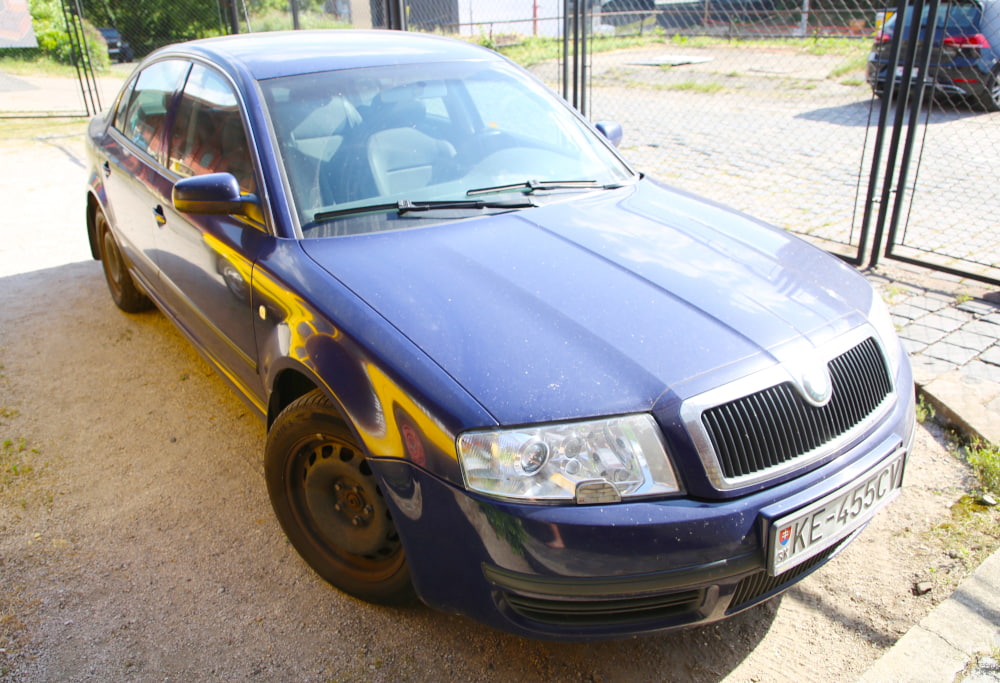
Škoda 100 at the Bratislava Transport Museum (Bratislava, Slovakia)
The Škoda 100 and Škoda 110 are small family cars produced by the Czechoslovak automaker AZNP in Mladá Boleslav from 1969 to 1977. They replaced the 1000/1100 MB, of which they were a modernization, and were the last Škodas whose body was styled by AZNP itself.
History
In 1969, a modernized version of the Škoda 1000 MB entered production. The update included a facelift of the body and a revised chassis. The new Škoda received disc brakes on the front axle and a dual-circuit braking system (except for the first production series). Because of political pressure, a more extensive redevelopment of the car was not possible, and it gradually became outdated.
The Škoda 100/110 was produced until 1977. Because of tightening ECE regulations, there was a risk that it could no longer be sold abroad. Since AZNP did not have a new model ready (the Škoda 760), the company had to hurriedly modernize the 100/110 with a new body, creating the 105/120 series, which was built from 1976 until 1990. A total of 819,787 cars of the 100/110 series were built.
Overview
The car is a four-door sedan with unibody construction. It has independent suspension on all four wheels, with coil springs and telescopic shock absorbers at the front and rear. The front seats slide and recline into a bed position, and the rear seats fold forward to reveal a small storage area of 0.12 m³ (4.2 cu ft). The main luggage compartment is under the front hood and is relatively small, as the rest of the space is taken up by the spare tire and the fuel tank. Typical of AZNP, a few minor “innovations” arrived in 1972: new door handles, a new fuel filler cap and ventilation grilles on the rear pillars.
The 100 was well known for its serious rust problems, just like its predecessor, the 1000 MB. At the time, AZNP was one of the last European automakers that did not use electrophoretic (e-coat) rust protection on its bodies.
Motors
The car is powered by a water-cooled, inline four-cylinder carburetor engine mounted longitudinally behind the rear axle, in one block with the differential and transmission. Three power levels were offered in two displacement classes:
- Škoda 100: base engine, with a displacement of 988 cc and an output of 30.9 kW (41 HP) at 4,650 rpm. It was essentially identical to the engine of the 1000 MB.
- Škoda 110: a larger 1107 cc engine producing 35.3 kW (47 HP) at 4,650 rpm.
- Škoda 110 LS: same displacement as the 110, but with a different camshaft and a twin-barrel carburetor, giving up to 46 kW (62 HP).
All cars had a four-speed manual transmission with a standard final drive ratio of 4.44. A “mountain” final drive of 4.6 was available on request. The top speed of the Škoda 110 was 140 km/h (87 mph).
Trim levels
The cars were offered in three trim levels:
- Standard (Škoda 100): basic level, with chrome wheel covers and bumpers, vinyl upholstery and fixed windows in the rear doors.
- de Luxe (Škoda 100/110 L): added decorative trim on the front grille, optional side trim, cloth upholstery and an intermittent wiper function.
- de Luxe Sport (Škoda 110 LS): top trim level, with a second pair of headlights, an electric windshield washer, roll-down rear windows and the more powerful 110 LS engine.
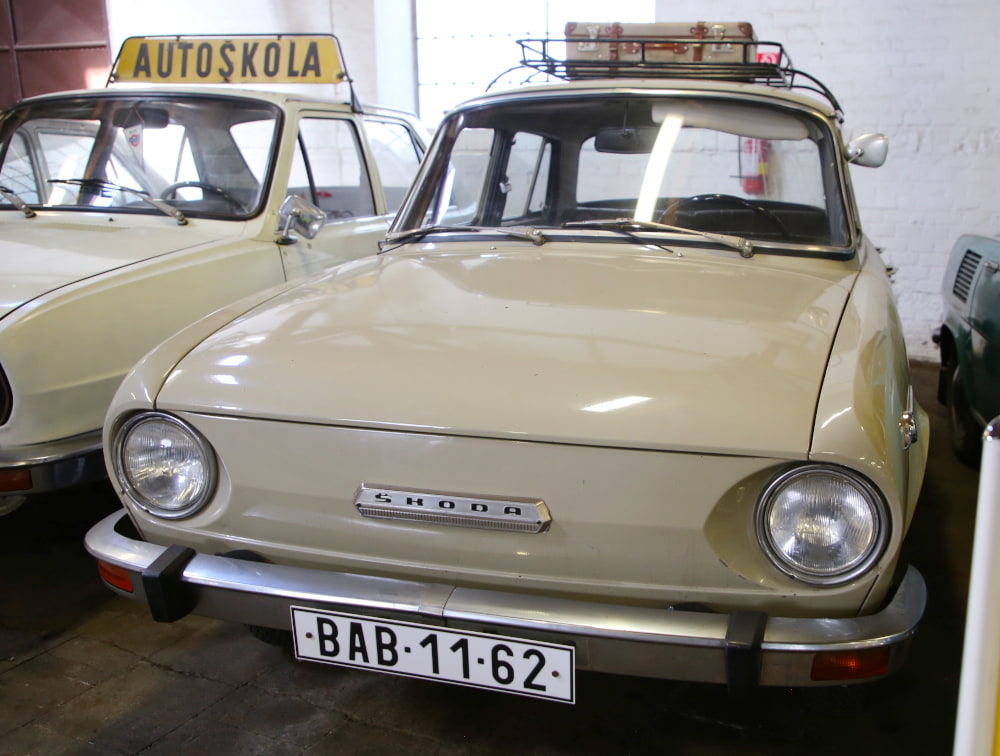
Characteristics
Manufacturer: AZNP (now Škoda Auto)
Assembly: Mladá Boleslav (Czechoslovakia)
Years of production: 1969—1977
Production: 1,079,708 units
Length: 4155 mm
Width: 1620 mm
Height: 1380 mm
Engine: 4 cylinders; 988 cc
Power: 42 HP
Max speed: 125 km/h
Fuel consumption: 7 l/100 km
Weight: 805 kg
See also: